

Developing an effective AI strategy has become a critical priority for businesses striving to leverage the power of artificial intelligence to stay competitive. A well-executed AI business strategy is essential for harnessing AI’s potential to enhance decision-making, streamline operations, and create innovative customer experiences.
To implement a successful corporate AI strategy, companies must align AI technologies with their overall business objectives, ensuring that AI investments generate tangible outcomes. This requires a deep understanding of how AI can be applied across various functions, from automating processes to providing data-driven insights that inform strategic decisions.
Successfully integrating AI into business operations involves careful planning, scalability considerations, and a clear roadmap to manage the adoption process effectively. As AI continues to evolve, organisations need to develop adaptable strategies that not only address current needs but also pave the way for future advancements in AI technologies.
You can listen to this blog here.
What is the Role of AI in Business Strategy?
AI is no longer an isolated tool; it has become a critical component of business strategy. It drives decision-making, automates processes, and unlocks new avenues for innovation. An effective AI business strategy ensures that AI is integrated seamlessly into a company’s broader objectives, positioning the organisation to thrive in an increasingly data-driven environment.
The role of AI in business strategy extends beyond simple automation. It allows companies to analyse vast amounts of data in real time, providing actionable insights that inform critical decisions. AI’s ability to optimize operations and deliver personalized experiences is reshaping industries, from retail to finance, healthcare, and beyond.
AI is no longer just a technology to improve internal processes; it also enables businesses to develop new products and services. By enhancing customer engagement, personalizing marketing efforts, and streamlining supply chains, AI-driven productivity is paving the way for enhanced customer satisfaction and stronger competitive positioning. Leaders need to understand how AI fits into the overarching goals of their company to drive meaningful transformation.
How Do You Align AI Strategy with Business Objectives?
Aligning your strategy with business objectives is essential for ensuring AI efforts drive measurable value. To achieve this, AI must directly support the company’s goals, whether that’s increasing efficiency, improving customer experience, or enabling innovation.
Key steps to align AI with business objectives:
- Define Clear Business Goals: Start by pinpointing your organization’s core goals, like enhancing customer satisfaction or reducing operational costs. Understanding these objectives allows you to identify where AI can have the most impact.
- Prioritize AI Use Cases: Focus on AI applications that align with your goals. For example, if improving customer engagement is a priority, consider using AI for personalized marketing or chatbots.
- Integrate AI with Existing Systems: AI should complement, not disrupt, current business processes. Ensure AI tools integrate smoothly with existing infrastructure to improve efficiency without causing major disruptions.
- Measure Success with KPIs: Track AI’s effectiveness with KPIs that align with business goals, such as customer satisfaction, productivity rates, or cost savings. This helps refine AI efforts for continuous improvement.
Aligning AI with business objectives ensures that AI isn’t just an isolated tool but a driver of growth and efficiency across your organization.
What Are the Key Components of a Successful AI Strategy?
A successful AI strategy goes beyond just adopting AI tools; it involves a comprehensive approach that integrates AI with existing business functions and long-term goals. Here are the core components that ensure a strategy delivers value:
- Data Infrastructure: AI depends on quality data. A strong data infrastructure allows businesses to store, manage, and access data efficiently, ensuring that AI models can deliver accurate insights.
- Technology and Tools: Choosing the right AI technologies is crucial. Whether it’s machine learning, natural language processing, or predictive analytics, the tools should align with the business needs and objectives.
- Talent and Expertise: Building a team with the necessary AI expertise is essential. From data scientists to AI engineers, having the right talent ensures the strategy is executed effectively.
- Scalability: A successful strategy should be scalable. As businesses grow, so should their AI capabilities. Planning for scalability ensures that AI solutions can handle increasing data volumes and more complex tasks as the organization evolves.
- Governance and Ethics: Ethical considerations and governance policies ensure that AI is used responsibly, particularly when it comes to privacy and bias.
By integrating these components, businesses can create a strategy that not only delivers immediate benefits but also lays the foundation for future growth.
How Do You Build an AI-Driven Culture Within Your Organization?
Building a culture that embraces AI is essential for ensuring the success of your AI strategy. A successful AI business strategy isn’t just about technology; it’s about fostering an environment where AI is integrated into daily operations and accepted across all levels of the organization.
Key steps to building an AI-driven culture:
- Leadership Commitment: It starts at the top. Leaders must champion AI initiatives and create an environment that encourages the adoption of AI tools. When leadership embraces AI, it sets the tone for the entire organization.
- Employee Training: AI can seem daunting, so it’s important to provide ongoing training to upskill employees. Whether through workshops, courses, or hands-on projects, training ensures that employees understand how AI can be applied in their roles.
- Collaboration Between Teams: AI is most effective when cross-functional teams collaborate. Encourage teams from different departments, such as marketing, IT, and operations, to work together on AI initiatives to ensure that the strategy is well-rounded and impactful.
- Encourage Innovation: Create an environment where employees feel empowered to experiment with AI solutions. Encourage innovation by allowing room for failure, learning, and iteration.
Fostering a culture that embraces AI ensures that the technology is integrated effectively across all levels of the business, maximizing its impact and long-term success.
How Do You Measure the Success of Your AI Strategy?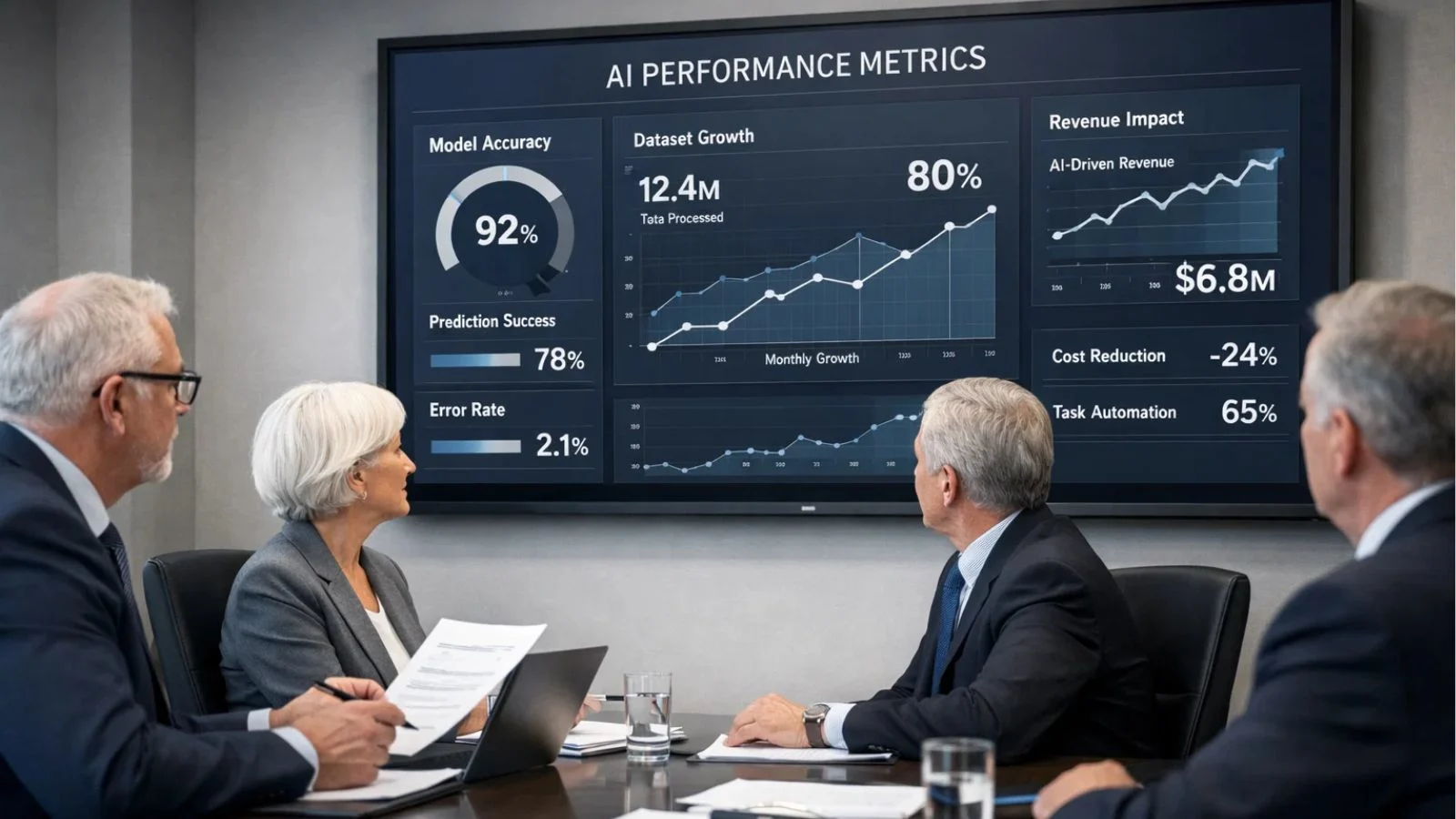
Once an AI strategy is implemented, measuring its success is essential to ensure that it delivers value and aligns with business goals. Without proper metrics and KPIs, it’s difficult to assess whether AI initiatives are achieving the desired outcomes.
Here’s how to effectively measure the success of your AI business strategy:
- Define Clear KPIs: Establish specific, measurable goals that align with business objectives. KPIs could include metrics like productivity improvement, cost reduction, customer satisfaction, or time saved through automation. For example, if your goal is to improve customer service, track metrics like response time and resolution rates.
- Monitor AI Performance: Use monitoring tools to track how well AI systems are performing over time. Are they delivering the expected results? Are they improving business processes? Regular performance reviews will help determine if adjustments are needed.
- ROI Calculation: Assess the return on investment (ROI) by comparing the costs of implementing AI solutions to the benefits gained. For instance, automation might save labour costs or improve decision-making, which can be quantified in financial gains.
- Customer and Employee Feedback: Gathering feedback from end-users, whether customers or employees, helps measure the impact of AI on user experience. Are your customers finding your AI-powered tools helpful? Are employees adopting AI solutions effectively in their daily tasks?
Measuring the success of AI initiatives ensures that your AI strategy is delivering meaningful results and helps refine it for continuous improvement.
What Are the Risks and Challenges in Implementing AI Strategy?
While AI can provide tremendous benefits, implementing an AI strategy is not without its challenges. Businesses must be aware of potential risks and obstacles that could hinder successful AI adoption. Being proactive in identifying and addressing these risks ensures a smoother transition and better long-term results.
Key challenges in implementing a strategy:
- Data Privacy and Security: AI systems rely on vast amounts of data, some of which may be sensitive or personal. Ensuring that data is securely stored and processed in compliance with privacy regulations (such as GDPR) is a key concern. Businesses must invest in robust data protection measures and transparent data usage policies.
- Bias and Fairness: AI models can inadvertently perpetuate biases if they are trained on biased data. This can lead to unfair or discriminatory outcomes, especially in applications like hiring, credit scoring, or law enforcement. Mitigating bias through careful data curation and regular audits is crucial for maintaining fairness.
- Talent Shortage: There is a shortage of skilled AI professionals, making it difficult for businesses to build internal teams capable of executing a sophisticated corporate AI strategy. To overcome this, companies should invest in training their existing workforce and consider strategic partnerships or outsourcing to fill the gap.
- Integration with Legacy Systems: Integrating AI with existing legacy systems can be challenging, especially in older businesses with outdated IT infrastructure. It’s essential to plan for seamless integration and possible system upgrades to ensure that AI technologies work effectively within the organization.
Despite these challenges, with careful planning and strategic execution, businesses can overcome these barriers and successfully implement their AI business strategy.
How Can Globussoft.ai Help in Crafting and Implementing AI Strategy?
For businesses looking to implement a successful AI strategy, partnering with an experienced provider like Globussoft.ai can significantly ease the process. Globussoft.ai offers end-to-end AI solutions tailored to your specific needs, from strategy formulation to execution.
With years of experience in AI business strategy, Globussoft.ai helps organizations integrate AI technologies into their existing systems, ensuring a smooth transition and maximizing the return on investment. The company’s expertise spans various industries, allowing for personalized solutions that align with each business’s unique challenges and goals.
Why Choose Globussoft.ai?
- Customized AI Solutions: Globussoft.ai works closely with businesses to create corporate AI strategies that are specifically designed to meet their objectives, whether it’s improving efficiency, enhancing customer experiences, or boosting sales.
- Expertise Across Industries: With a deep understanding of AI applications in sectors like healthcare, finance, retail, and more, Globussoft.ai ensures that businesses stay competitive and ahead of the curve.
- Scalable AI Solutions: Whether you’re just starting to explore AI or looking to expand your existing AI capabilities, Globussoft.ai offers scalable solutions that grow with your business.
By collaborating with Globussoft.ai, businesses can confidently implement AI in their operations, knowing they have a trusted partner guiding them through every step of the AI journey.
Shaping the Future with AI Strategy
Developing a clear and aligned AI strategy is essential for businesses looking to leverage the full potential of AI. A well-crafted strategy ensures that technology is integrated with business goals, driving measurable results and long-term success. From streamlining operations to improving decision-making, the right strategy can unlock new growth opportunities.
By addressing key questions, leaders can implement an AI business strategy that aligns with their objectives.
Also Read,
How To Leverage An AI Powered Chatbot For Customer Support?
Machine Learning Consulting Services In 2025: A Complete Guide
FAQ’s
1. What is an AI strategy, and why is it important for businesses?
It is a plan that outlines how artificial intelligence can be leveraged to meet business goals, improve efficiency, and foster innovation. An effective AI business strategy ensures that AI technologies align with business objectives, helping organizations achieve measurable outcomes and stay competitive in an increasingly digital world.
2. How do I align AI with my business goals?
Aligning strategy with business goals involves defining clear objectives, prioritizing AI use cases that align with those goals, and integrating AI into existing workflows. It’s important to measure success using KPIs and adjust the strategy as the business evolves.
3. What are the key components of a successful AI strategy?
The core components of a successful strategy include:
- Data infrastructure: Ensuring access to clean, well-organized data.
- AI tools and technologies: Selecting the right AI solutions for the business.
- Talent and expertise: Building a skilled team for AI implementation.
- Scalability: Planning for future growth and AI expansion.
- Ethical governance: Addressing data privacy and fairness.