

If you have spent any real time doing OpenClaw testing, you already know it is not as simple as it looks. I started with zero expectations and ended up clocking over 1000 hours across dozens of test environments, configurations, and use cases. What I found surprised me, both in how capable OpenClaw is and in how easy it is to misuse. This blog breaks down everything I learned, from the early setup struggles to the deep performance insights that only come with time. Whether you are just getting started or already knee-deep in your own OpenClaw testing journey, there is something here for you. Let us get into it.
Listen To The Podcast Now!
What Is OpenClaw and Why Does It Matter?
The First 100 Hours: Getting Past the Learning Curve:
The first stretch of OpenClaw testing is where most people quit. The documentation is solid, but the real learning happens when things break in ways you did not expect. I spent the first 100 hours just building a reliable baseline, understanding how OpenClaw handles input variation, manages test dependencies, and logs failure states.
One of the biggest early wins was learning to structure test cases hierarchically rather than running everything as a flat batch. This alone improved clarity and significantly cut debug time. Another key lesson was environmental parity. Openclaw testing results can shift dramatically between local and staging environments if you are not careful about how you configure your runtime settings. Get this right early, and the rest of the process becomes far more predictable.
Stress Testing: Where Most Setups Fall Apart:
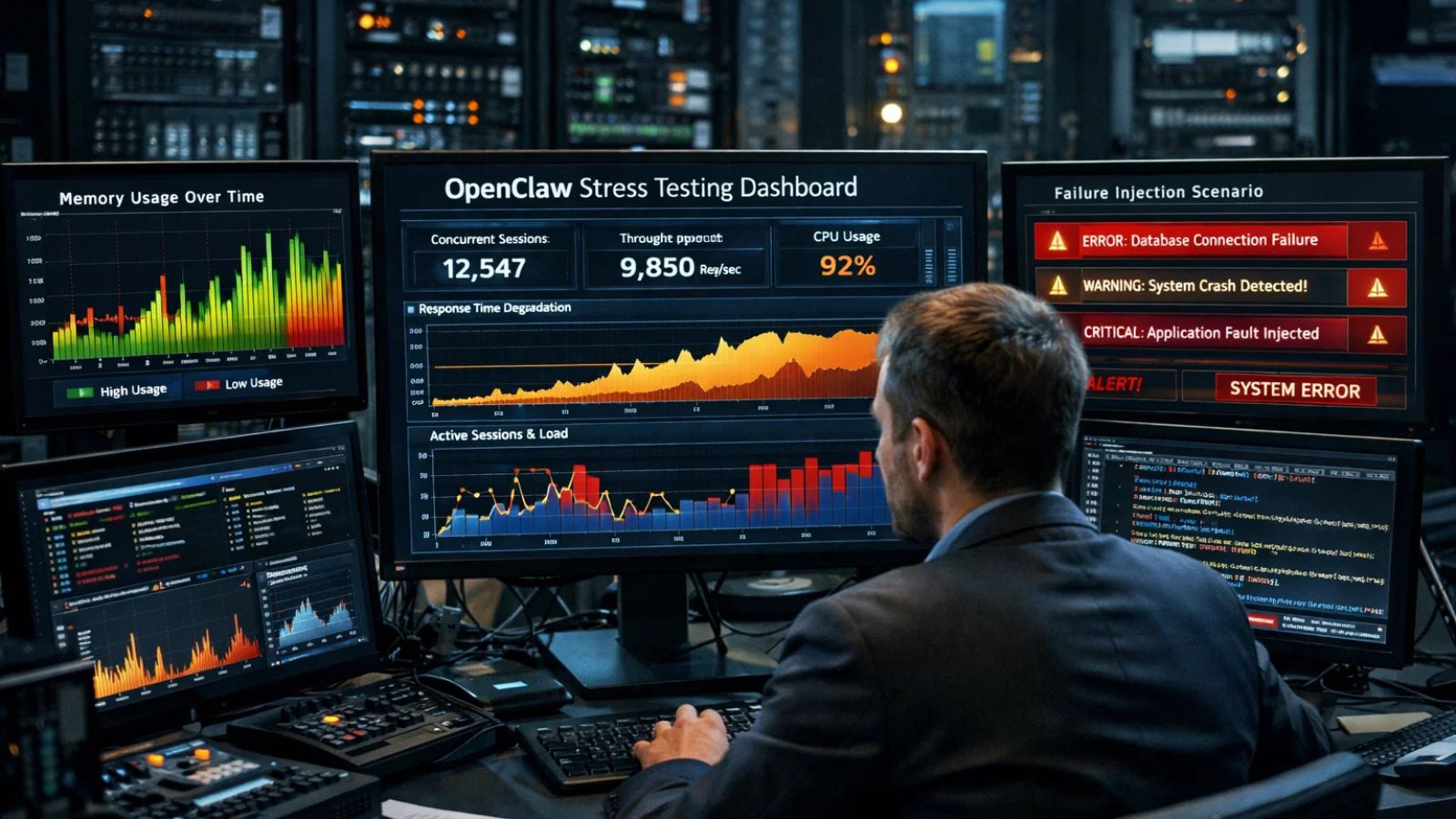
Around the 300-hour mark, I started pushing OpenClaw testing into stress territory, high-volume loads, concurrent sessions, and failure injection scenarios. This is where most setups reveal their real weaknesses. Memory handling under sustained load was the first thing I noticed. Without proper teardown logic, test runs would bloat over time and produce unreliable results.
The second issue was the timeout configuration. Default settings are rarely appropriate for stress scenarios, and openclaw testing under load requires intentional tuning. I found that setting conservative but realistic thresholds, rather than aggressive ones, produced more actionable failure data. Stress testing is not just about finding breakpoints; it is about learning how your system degrades, and OpenClaw gives you the visibility to do that well if you set it up correctly.
Performance Benchmarking: Numbers That Actually Mean Something:
By the midpoint of my OpenClaw testing journey, I had enough data to start building meaningful benchmarks. Raw speed numbers are tempting to chase, but they are misleading without context. What I cared about was consistency: how much did results vary across repeated runs under identical conditions? OpenClaw handles this well out of the box with its run-comparison tooling, but the real value comes when you start tagging test runs with metadata like environment version, data set size, and dependency state. Over time, this creates a benchmarking history that shows trends rather than snapshots. Good OpenClaw testing is not about one perfect run; it is about building a track record you can trust. This shift in thinking was one of the most valuable things those hundreds of hours gave me.
Accuracy and Edge Cases: The Details That Break Things:

Edge case handling is where OpenCLAW testing really earns its reputation. I dedicated significant time to probing boundary conditions, null inputs, unexpected data types, schema mismatches, and race conditions in async flows. OpenClaw’s assertion engine is expressive enough to write precise checks, but you have to be deliberate about coverage.
What I found was that most production bugs were hiding in scenarios that felt “unlikely” during design. The lesson here is simple: if a data path exists, test it. Using OpenClaw testing with a coverage mindset rather than a checklist mindset changed how I wrote test suites entirely. I stopped asking, “Does this pass?” and started asking, “What conditions would make this fail?” That reframe led to catching several critical issues before they reached production.
Common Mistakes I Made and How to Avoid Them:
After all this time using OpenCLAW, I have made just about every common mistake there is. The most costly was over-relying on happy-path tests in the early stages of OpenClaw testing. Everything looks fine until it does not, and by then the failure is usually in a path you never thought to test. Another common trap is neglecting test isolation. When tests share state, even unintentionally, failures cascade in confusing ways.
OpenClaw makes isolation straightforward if you follow its setup and teardown conventions, but it is easy to skip these steps under deadline pressure. The third mistake was ignoring flaky tests. A test that sometimes passes and sometimes fails is not a minor inconvenience; it is a signal that something in your environment or logic is unstable. Treat every flaky result as a serious finding.
Also Read:
GlobussoftAI OpenClaw Services: Professional Installation & Custom Development
How to Set Up Professional OpenClaw Implementation by Globussoft AI
How GlobussoftAI Can Take Your OpenClaw Results Further?

If you want expert support to get more out of your testing investments, GlobussoftAI is worth serious attention. Globussoft.ai provides enterprise-grade Generative AI and ML services designed to improve workflows, reduce errors, and scale operations intelligently. Their Clawbot Expert Service is purpose-built for teams working within the OpenClaw ecosystem, giving you professional guidance without the guesswork.
Here is what makes Globussoft.ai stand out:
- AI Agent Development: Deploy intelligent agents that automate repetitive testing workflows and reduce human error
- LLM Testing & Fine-Tuning: Continuously evaluate and refine AI models for high accuracy aligned to your business goals
- AI/ML Consulting: Get clear, actionable strategies tailored to your industry needs
- End-to-End Support, From consultation to deployment, their experts guide you through every stage
- 20% Faster Delivery: Their agile approach accelerates go-to-market without disrupting existing workflows
- Industry-Specific Customization: Solutions fine-tuned for healthcare, finance, retail, and more
If your team is serious about quality and scalability, Globussoft.AI brings the expertise to back it up.
Conclusion:
After 1,000+ hours, the biggest takeaway from OpenClaw testing is this: the tool rewards intentionality. Invest in setup, stay rigorous about coverage, and treat every unexpected result as useful data rather than noise. OpenClaw is genuinely powerful, but only for those willing to learn its depth properly. Pair that commitment with the right expert support, like GlobussoftAI’s Clawbot Expert Service, and you dramatically shorten the path to reliable, production-ready results. The hours you put in now will save you far more down the road.
FAQ’s:
Q1: How long does it take to get comfortable using OpenClaw?
Ans: Most teams reach a solid, reliable baseline within 40–60 hours of consistent practice and structured experimentation.
Q2: Is this framework suitable for small teams or solo developers?
Ans: Absolutely. Its scalability means it works just as well for individual developers as it does for large, dedicated QA teams.
Q3: Where can I get professional expert help for my testing needs?
Ans: GlobussoftAI offers a dedicated Clawbot Expert Service at Globussoft.ai, purpose-built for teams working within the OpenClaw ecosystem.
Q4: What is the most common OpenClaw testing mistake to avoid?
Ans: Neglecting edge cases and allowing shared state between tests both cause cascading failures that are difficult and time-consuming to debug.
Q5: Can OpenClaw be integrated into an existing CI/CD pipeline?
Ans: Yes. OpenClaw is designed for integration-friendly deployment, and with proper configuration, it fits cleanly into most modern CI/CD workflows without major disruption.