
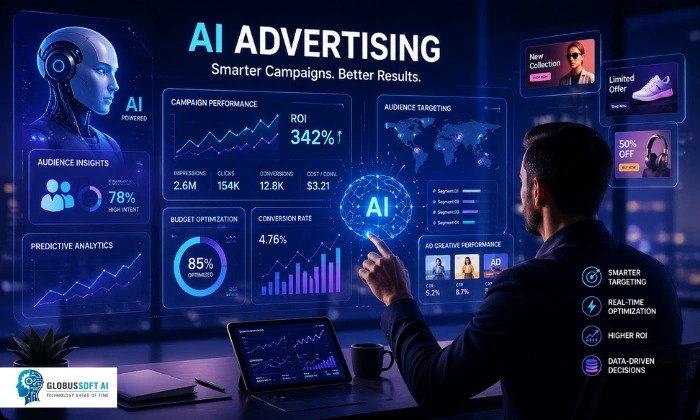
AI advertising works best when it blends machine efficiency with human judgment. It is not just about automating tasks. It is about making smarter decisions at scale using data, patterns, and continuous learning.
At its core, AI in advertising helps analyze behavior, predict outcomes, and adjust campaigns in real time. But effectiveness comes from how well you guide that system, not how much you automate.
Here’s what strong AI advertising campaigns consistently do well:
- Focus on a clear objective before using AI tools
- Use AI to enhance targeting, not blindly replace strategy
- Combine automation with human review at key decision points
- Continuously test and validate performance
- Prioritize meaningful metrics over surface-level results
Think of it this way. AI handles speed and scale. You handle direction and quality. When both work together, campaigns don’t just run faster; they perform better.
Read Aloud!
Before You Begin – The Mindset Shift That Changes Everything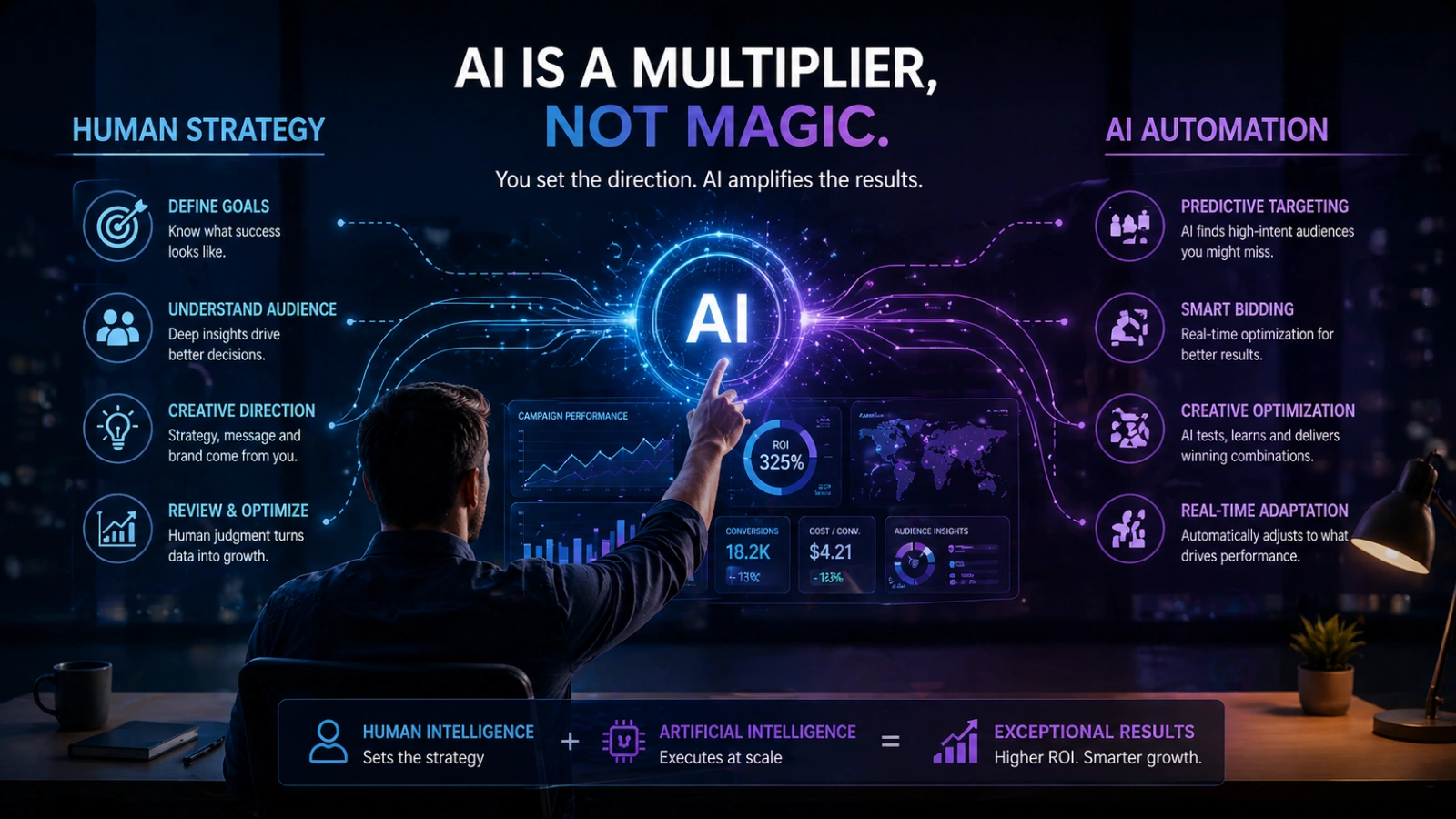
Most people approach AI advertising expecting it to fix weak campaigns. It doesn’t. It amplifies whatever you give it, whether that is a strong strategy or poor inputs.
If your targeting is unclear or your messaging is generic, AI will scale those problems quickly. That is why the foundation matters more than the tool itself.
Another key shift involves control. Many assume AI should run independently. In reality, the best results come from a human-in-the-loop approach. You guide the system, review outputs, and refine direction over time.
Data quality also plays a huge role. Clean, structured, and relevant data helps AI learn faster and make better predictions. Without it, even the best tools struggle.
So before diving into tactics, ask yourself a simple question. Are you using AI as a shortcut or as a multiplier? That answer often determines the outcome.
The 10 Tips: A Practical Playbook for AI Advertising That Performs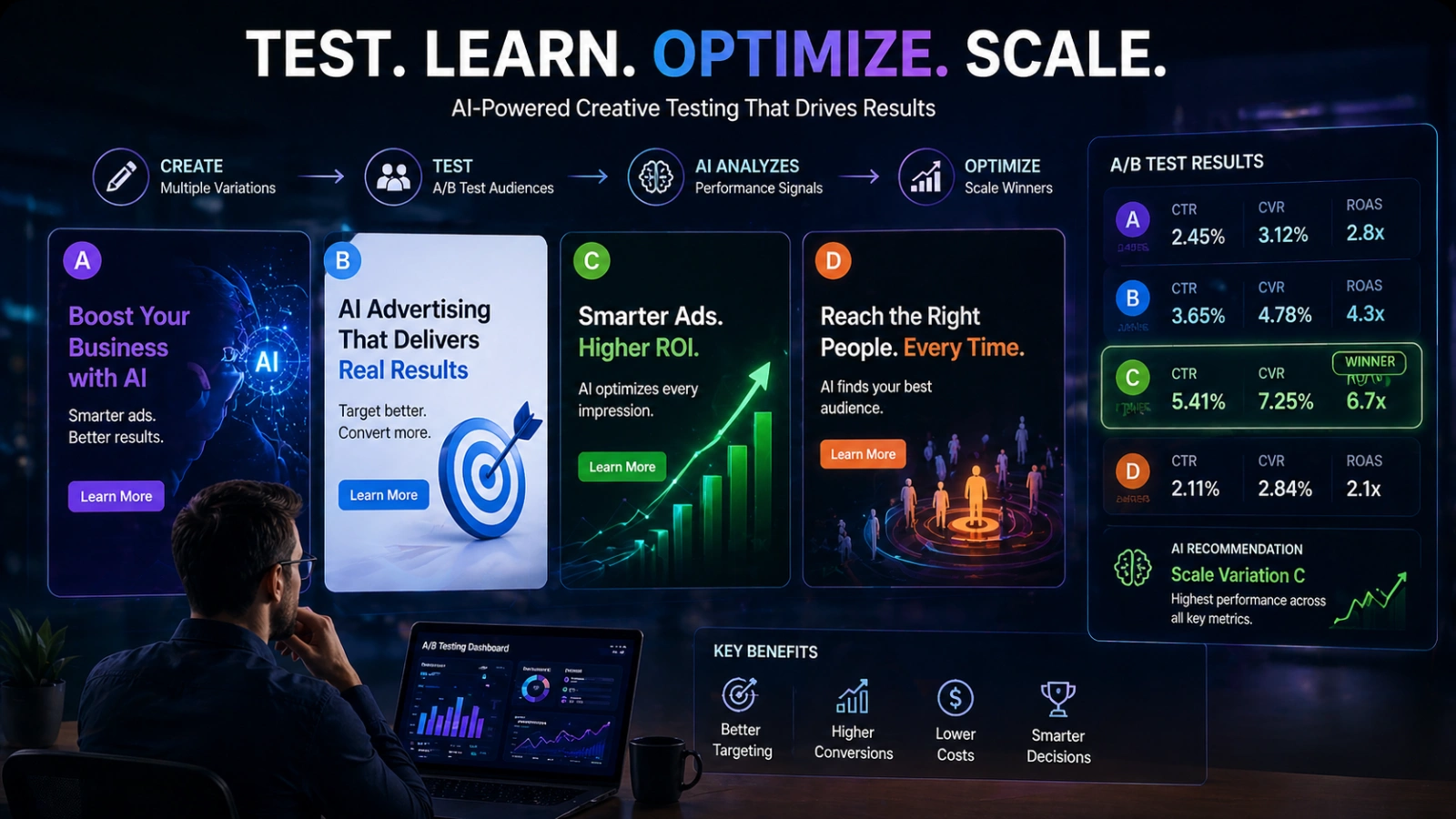
Tip 1: Start with One Use Case, Not the Whole Stack
It is tempting to apply AI everywhere at once. Targeting, creative, bidding, reporting. That approach usually leads to confusion rather than results.
Instead, begin with one area where AI can make a clear impact. For some, that might be audience targeting. For others, it could be creative optimization or bid management.
This focused approach helps you learn faster. You understand what works, what doesn’t, and why. Once you see consistent results, you can expand gradually.
Think of it as building confidence before scaling complexity. That mindset often leads to stronger long-term performance in AI advertising.
Tip 2: Let AI Expand Your Audience, Then You Validate It
One of the biggest strengths of AI for personalized advertising is its ability to uncover audiences you might never find manually.
AI analyzes patterns across user behavior, interests, and intent signals. It then builds segments that go beyond basic demographics. This is where predictive targeting comes into play.
But here’s the catch. Not every AI-generated audience is valuable. Some may look promising but fail to convert.
That is where human validation matters. Review the segments. Test them. Compare performance against your existing audiences.
AI helps you explore. You decide what is worth scaling.
Tip 3: Feed Your AI the Right Creative Inputs (Garbage In, Garbage Out)
Creative quality often gets overlooked in AI advertising. Many assume the system will generate winning ads automatically.
In reality, AI can only work with what you provide. Weak visuals, unclear messaging, or inconsistent tone will limit results.
Before using AI tools, prepare strong inputs:
- Clear brand voice guidelines
- High-quality visuals and variations
- Multiple call-to-action options
This acts as a creative foundation. From there, AI can mix, test, and optimize combinations effectively.
Think of it as giving a chef better ingredients. The outcome improves naturally.
Tip 4: Use Personalization at the Message Level, Not Just the Audience Level
Most marketers stop at audience targeting. They personalize who sees the ad, but not what the ad says.
That is a missed opportunity.
AI for personalized advertising allows you to adapt messaging based on behavior, preferences, or context. This goes beyond segmentation. It shapes the experience.
For example, an eCommerce brand might show different product benefits to first-time visitors than to repeat buyers: the same audience category, a different message.
This approach increases relevance. And relevance often drives conversion.
Tip 5: Set Up Automated Bidding with the Right Goal Signal
Automated bidding sounds simple. You pick a goal, and AI handles the rest. But the choice of that goal changes everything.
Optimizing for clicks is not the same as optimizing for revenue. And optimizing for conversions without value data can limit profitability.
The most effective AI advertising campaigns feed platforms with real business signals. That could be purchase value, customer lifetime value, or profit margins.
When AI understands what matters most, it makes better decisions. Not just more efficient ones.
Tip 6: Run Controlled Tests Before Scaling AI Decisions
It is easy to trust AI-generated results, especially when dashboards show strong numbers. But not all performance is as real as it seems.
Before scaling, validate results through controlled testing. A simple method is a holdout test. You compare a group exposed to AI optimization with one that is not.
This helps you understand the true impact. Not just reported improvements.
Skipping this step often leads to overconfidence. Testing brings clarity.
Tip 7: Build AI Governance Into the Workflow, Not After the Fact
AI can generate content quickly for AI advertising. But speed without oversight creates risk.
Governance is not just about compliance. It protects brand consistency, accuracy, and trust.
Before launching AI-generated ads, check for:
- Brand alignment
- Bias or unintended messaging
- Factual accuracy
- Tone consistency
Building this into your workflow saves time later. It also prevents costly mistakes.
Responsible use of AI in advertising is quickly becoming a competitive advantage.
Tip 8: Combine AI Targeting with Contextual Intelligence
As privacy rules evolve, relying only on user data becomes risky. This is where contextual targeting gains importance.
AI can analyze the content of a webpage or platform and match ads accordingly. For example, showing fitness products alongside health-related content.
This approach does not rely heavily on personal data. Yet it still delivers relevance.
Combining behavioral insights with contextual signals creates a more balanced strategy. It also prepares you for a privacy-first future.
Tip 9: Use AI to Fight Ad Fatigue, Not Just Launch Ads
Many campaigns start strong but lose momentum over time. This often happens due to ad fatigue.
With AI advertising, one can detect when performance begins to drop. It can then generate new variations or rotate creatives automatically.
This keeps the campaign fresh without constant manual effort.
Instead of reacting late, you stay ahead. That small shift can make a big difference in long-term performance.
Tip 10: Measure Incrementality, Not Just Reported Performance
Reported metrics can be misleading. A high return on ad spend does not always mean your campaign is driving new value.
Incrementality answers a deeper question. Would this result have happened without the ad?
To measure this, use methods like:
- Holdout testing
- Geo-based experiments
- Marketing mix modeling
This approach gives you a clearer picture of real impact.
Advanced AI advertising strategies rely on this level of measurement. It separates surface-level success from true growth.
Where Globus Soft AI Fits Into This Framework
Turning strategy into consistent execution is often the hardest part of AI advertising. GlobussoftAI helps bridge that gap by bringing key functions into one streamlined workflow.
Instead of switching between tools, you can manage and optimize AI in advertising more efficiently from a single place.
Here’s what it offers:
- AI-powered ad creative generation
Create multiple ad variations quickly while staying aligned with your brand voice. - Smart audience segmentation
Discover high-intent users using data-driven insights, supporting better AI for personalized advertising. - Real-time campaign optimization
Adjust bids, creatives, and targeting automatically based on performance signals. - Dynamic personalization
Deliver tailored messages based on user behavior and engagement. - Multi-channel management
Run and monitor campaigns across platforms with greater consistency. - Brand safety controls
Ensure AI-generated content meets quality and compliance standards. - Built-in testing and insights
Run A/B tests and quickly identify what drives results.
It works best as a support system, helping you execute faster while keeping control over strategy. Alongside these capabilities, GlobussoftAI also offers solutions with OpenClaw and Kimi OpenClaw, designed to further enhance automation and performance across campaigns.
Start Smarter, Not Just Faster
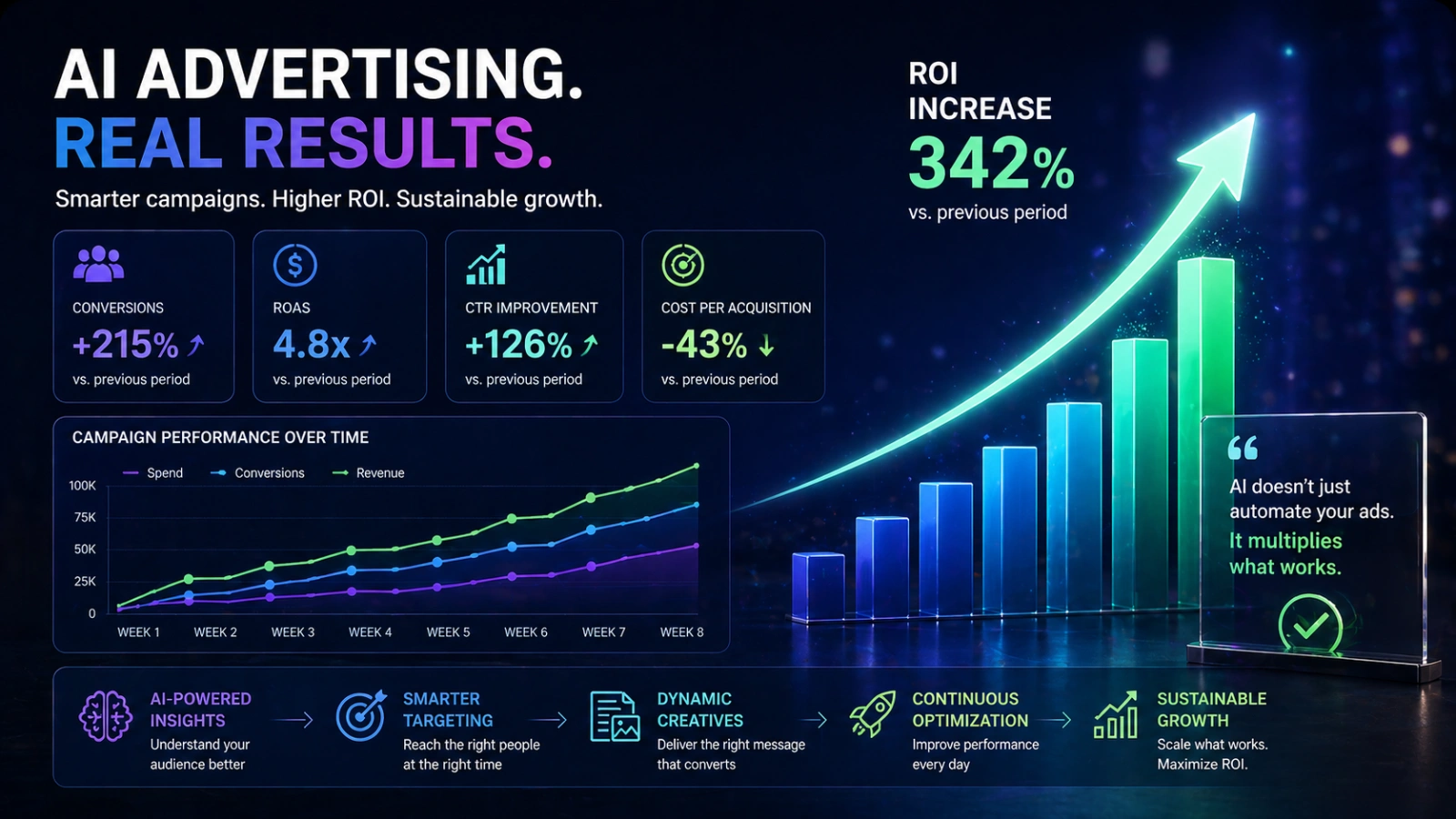
AI advertising rewards clarity more than speed. When your goals are clear, your inputs are strong, and your testing is disciplined, results tend to follow.
It is easy to feel like you need to apply all ten tips at once. In practice, most high-performing teams start small. They choose one or two areas and execute them well before expanding.
If you are unsure where to begin, focus on one improvement this week. It could be refining your audience strategy or testing message-level personalization. Small, focused changes often create the biggest momentum.
The real advantage comes from consistency. Keep learning, keep testing, and let your AI in advertising evolve with better data and sharper decisions.
FAQ: Real Questions Advertisers Are Asking
What is the difference between AI advertising and traditional digital advertising?
Traditional advertising relies more on manual setup and reactive decisions. AI advertising uses data and algorithms to predict outcomes, automate optimization, and improve performance in real time.
Do I need a large budget to use AI in advertising?
Not at all. Many platforms already include AI features that work on smaller budgets. The key is how you use them, not how much you spend.
How do I know if my AI advertising campaign is actually working?
Look beyond platform-reported metrics. Use testing methods like holdouts or comparisons to measure real impact. Focus on whether the campaign drives additional results, not just reported ones.
What types of ads can AI generate?
AI can create ad copy, images, video variations, and even audio content. It helps speed up production while allowing you to test more variations efficiently.
How does AI personalize ads without violating privacy?
Most systems rely on first-party data, user consent, and contextual signals rather than personal identifiers. This allows AI for personalized advertising while respecting privacy guidelines.