
An AI chatbot for e-commerce is quietly solving one of the biggest causes of lost sales: slow or missing responses.
A customer lands on your site late at night, ready to buy, but they have a quick question. No one replies. Within a minute, they leave. That’s not just a missed order. It’s a customer you may not get back.
That gap between intent and response is where sales are lost. Chatbots help close it.
The problem is easy to miss. In your analytics, it looks like a normal drop-off. But often, it’s just an unanswered question that stops someone from buying.
Today’s shoppers don’t wait. If they don’t get clarity right away, they move on. AI chatbots fix this by giving instant answers and keeping the buying journey on track.
In this blog, you’ll see how AI chatbots can recover lost sales, reduce support workload, and help you convert more visitors without increasing costs.
Read Aloud!
Why AI Chatbots Are Becoming Essential for E-commerce

AI chatbots help online stores reply faster, sell better, and reduce workload. They answer common questions instantly, help customers choose the right products, and take pressure off support teams.
In simple terms, here’s why more brands are using them:
- They provide support 24/7 without needing more staff.
- Faster replies help turn more visitors into buyers.
- They reduce costs by handling repetitive questions.
- They offer personalized suggestions to many customers at once
The Real Role of an AI Chatbot in an E-commerce Business (Beyond Just “Support”)
Most people think of a chatbot as an FAQ section. That framing undersells what modern AI can actually do. A well-deployed AI chatbot solution for e-commerce does not just answer questions; it participates in the sale.
less like a help desk and more like a knowledgeable sales assistant who knows your entire catalog, remembers what a shopper browsed last time, and can suggest the right product at exactly the right moment. That is a fundamentally different value proposition than a static FAQ page.
Traditional rule-based chatbots followed scripts. Ask something off-script, and they broke down immediately. AI chatbots are different because they understand context. They can interpret intent, follow a conversation naturally, and adjust responses based on what the customer has already said or done. That shift from scripted to contextual is what makes them genuinely useful.
They also work across the entire funnel. A customer discovering your brand for the first time gets a different experience than a returning buyer checking on a delayed order. The chatbot adapts, which means it functions as a product recommender, a retention tool, and a support agent all in a single interaction.
10 Game-Changing Benefits of AI Chatbots for E-commerce Growth

AI chatbots for e-commerce are more than just a support tool. They directly impact how customers shop, decide, and return.
Here are the key benefits that make them a powerful growth driver for modern online stores.
1. 24/7 Customer Support Without Hiring More Staff
An AI chatbot for e-commerce allows your store to respond to customers at any time, without depending on business hours. Whether someone visits your site early in the morning or late at night, they can still get instant answers to their questions.
This removes the constant pressure to hire more support agents as your business grows. Instead of increasing costs with every rise in customer queries, the chatbot handles volume effortlessly. It also prevents lost sales that happen when customers don’t get timely responses and decide to leave.
2. Higher Conversion Rates Through Instant Responses
An AI chatbot for e-commerce plays a direct role in improving conversion rates by reducing response time. When a customer asks a question and gets an answer immediately, they feel more confident about moving forward with the purchase.
Even a short delay can create doubt or hesitation. Fast responses remove that uncertainty and keep the buying process smooth. This is especially important for new customers who are still deciding whether they can trust your brand.
3. Personalized Shopping Experiences at Scale
An AI chatbot for e-commerce can offer personalized recommendations based on customer behavior, such as browsing history or past purchases. This helps shoppers discover products that actually match their needs instead of going through endless options.
The experience feels more like getting help from a knowledgeable assistant rather than browsing alone. What makes this powerful is that it works for every visitor at the same time, something that would be difficult to achieve with a human team.
4. Reduced Cart Abandonment
An AI chatbot for e-commerce can help recover sales that would otherwise be lost during checkout. Many customers abandon their carts because of small doubts or unanswered questions.
The chatbot can step in at the right moment, answer concerns about shipping or returns, and gently remind users about their cart. These interactions feel helpful rather than intrusive, and they often make the difference between a completed purchase and a lost one.
5. Lower Support Costs with Automation
A large portion of customer queries in e-commerce is repetitive. Questions about delivery times, return policies, or product details come up again and again. An AI chatbot for e-commerce can handle these instantly without involving a human agent.
This allows your support team to focus on more complex issues that actually need human attention. Over time, this reduces operational costs while still maintaining a high level of customer satisfaction.
6. Faster Decision-Making for Customers
An AI chatbot for e-commerce helps customers make quicker decisions by providing clear and immediate answers. When shoppers don’t have to search through multiple pages or wait for replies, the entire buying process becomes smoother.
By removing confusion and saving time, the chatbot reduces friction. This leads to fewer drop-offs and increases the chances of customers completing their purchase.
7. Seamless Order Tracking and Post-Purchase Support
After placing an order, customers often want quick updates. An AI chatbot for e-commerce can provide real-time order tracking and answer post-purchase questions instantly.
This reduces anxiety and improves the overall experience. When customers feel informed and supported even after buying, they are more likely to trust your brand and return in the future.
8. Data Collection That Drives Better Decisions
Every interaction with an AI chatbot for e-commerce provides valuable insights into customer behavior. You can understand what questions customers ask most, where they face issues, and what influences their buying decisions.
This data helps you improve your products, website, and marketing strategies. Instead of guessing, you make decisions based on real customer interactions.
9. Scalable Support During High Traffic
During peak times like sales or product launches, handling customer queries becomes challenging. An AI chatbot for e-commerce can manage thousands of conversations at the same time without slowing down.
This ensures that every customer gets quick support, even during high traffic. It helps you maintain a consistent experience and avoid losing sales during important business moments.
10. Improved Customer Retention and Experience
An AI chatbot for e-commerce helps create a smooth and consistent experience for your customers. Quick responses and helpful interactions build trust over time.
When customers feel supported at every step, they are more likely to return and make repeat purchases. This improves retention and strengthens your overall brand experience without relying heavily on discounts or promotions.
Where AI Chatbots Actually Make the Biggest Impact (Real Use Cases That Matter)
An AI chatbot for e-commerce makes the biggest difference in the moments that directly impact buying decisions.
From product discovery to post-purchase support, they step in where customers need quick help and keep the entire journey smooth.
Product Discovery Assistant
A customer types, “I need a gift for my mom who loves gardening.” A well-trained chatbot does not just return a list of search results. It asks a follow-up question about budget, surfaces three or four curated recommendations, and links directly to each product. That is a shopping experience comparable to walking into a well-staffed boutique, and it scales to every visitor on the site simultaneously.
Customer Support Automation
The bulk of e-commerce support volume is entirely predictable. Return windows, shipping policies, and product availability can all be handled without human involvement. Automating this layer with an AI chatbot for e-commerce website dramatically reduces ticket volume and average handle time, which brings down costs and improves satisfaction scores.
Upselling and Cross-Selling
Post-add-to-cart is a powerful moment. A chatbot can recognize what just went into the cart and suggest a complementary product with genuine relevance: a phone case after a phone purchase, a protein supplement after someone adds workout equipment. These suggestions feel natural in conversation and convert far better than static “you might also like” banners.
Lead Generation via Chat
Not every visitor is ready to buy. Some are researching. A chatbot can identify these visitors through conversational signals and capture their contact information by offering something genuinely useful, such as a discount, a comparison guide, or a sizing tool. That turns browsing traffic into a lead list without any additional advertising spend.
Post-Purchase Engagement
The relationship does not end at checkout. AI chatbots can follow up with delivery confirmations, proactively address potential issues before customers complain, and prompt satisfied customers to leave a review at exactly the right moment. Small automations like these build a post-purchase experience that most brands ignore entirely.
Redesign and relaunch the client’s e-commerce store within eight weeks, including integration of an AI chatbot for the e-commerce website to improve customer support response time and increase conversions.
How GlobussoftAI Helps You Get More from AI Chatbots
AI chatbot for e-commerce works best when it’s built and integrated properly. That’s where GlobussoftAI helps.
They focus on building AI solutions that fit your business and improve how your workflows run day to day.
- AI Agent Development: Automates customer support and routine tasks, helping you respond faster and reduce manual effort
- LLM-Powered Chatbots: Trained on your business data to deliver accurate and relevant responses
- AI/ML Integration: Connects smoothly with your existing systems for better workflow efficiency
- Workflow Automation: Handles tasks like order updates, queries, and internal processes with less effort
- Scalable Solutions: Grows with your business without needing constant changes
The result is simple: faster operations, fewer errors, and a more efficient system that supports your growth.
Also Read
What Makes an AI Advertising Campaign Actually Effective?
Common Mistakes E-commerce Brands Make with AI Chatbots
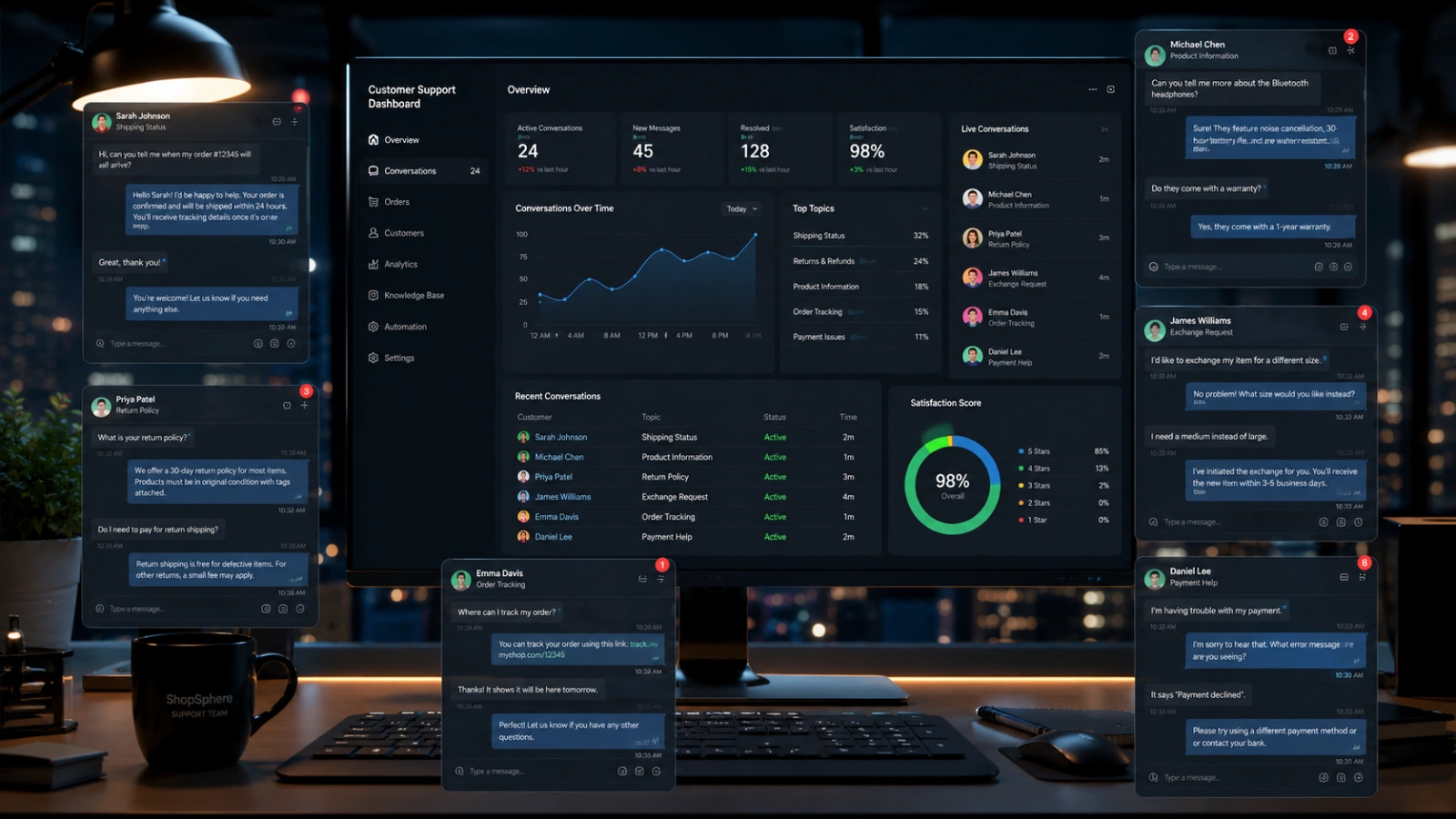
An AI chatbot for e-commerce can deliver strong results, but only when used the right way.
Many brands rush implementation and end up making mistakes that hurt the customer experience instead of improving it.
Over-Automation Without a Human Fallback
The most frequent mistake is treating a chatbot as a complete replacement for human support. It is not. Complex complaints, emotionally charged interactions, and edge-case scenarios all need a human agent. Brands that remove that fallback entirely end up with frustrated customers who feel trapped in a loop with a bot that cannot help them. Build a clear escalation path. Make it easy to reach a person when needed.
Poor Training Leads to Irrelevant Answers
A chatbot is only as good as the information it is built on. Deploying one without thoughtful training using your actual product catalog, real customer questions, and accurate policy information produces an experience that confuses more than it helps. Invest time in the setup. The quality of the training directly determines the quality of every conversation the chatbot will ever have.
Ignoring the User Experience
Some brands configure chatbots that are technically functional but genuinely unpleasant to interact with. Slow responses, robotic phrasing, pop-ups that appear at the wrong time, these friction points undo the benefit of having a chatbot at all. Test the experience from the customer’s perspective regularly. If it feels awkward to use, customers will close it and look for help elsewhere.
Deploying Without a Clear Goal
An enterprise ai chatbot solution for ecommerce built without a defined purpose tends to do everything adequately and nothing well. Is the primary goal to reduce support costs? Increase conversion rates? Improve post-purchase retention? The answer shapes how the chatbot should be configured, what metrics matter, and how success gets measured. Start with the goal, then build toward it, not the other way around.
Conclusion
AI chatbots for e-commerce are no longer just a support tool. They help recover lost sales, improve conversions, and reduce support workload.
In this blog, you’ve seen how they impact every stage of the customer journey, from product discovery to post-purchase support, and where they deliver the most value.
The key takeaway is simple: when implemented correctly, AI chatbots make your store faster, more efficient, and easier for customers to buy from.
FAQ
- How much does an AI chatbot for e-commerce cost to implement?
The cost of an AI chatbot varies widely depending on features, ranging from basic rule-based bots ($10–$50/month) to advanced AI-driven solutions ($500–$5000+/month). Pricing depends on factors like NLP capabilities, integrations, customization, and conversation volume.
- Can an AI chatbot increase sales and conversion rates in e-commerce?
Yes, AI chatbots can improve conversion rates by offering real-time assistance, reducing cart abandonment, and providing personalized product recommendations. Many businesses see measurable increases in sales due to faster response times and 24/7 availability.
- What platforms can an e-commerce AI chatbot integrate with?
Most modern AI chatbots integrate with platforms like Shopify, WooCommerce, Magento, and CRM tools. They can also connect with messaging channels like WhatsApp, Facebook Messenger, and Instagram to create a seamless omnichannel experience.
- How does an AI chatbot personalize the shopping experience?
AI chatbots use customer data such as browsing history, past purchases, and preferences to recommend products, answer queries, and guide users through the buying journey, creating a more tailored and engaging shopping experience.
- What is the best AI chatbot for an e-commerce website?
The best AI chatbot for an e-commerce website is one that fits your needs, offering easy integration, automation, and personalization to improve customer support and boost conversions.