
Artificial intelligence is no longer just a futuristic concept; it’s quickly becoming a core part of how businesses, developers, and everyday users interact with technology. From writing content to automating workflows and building smarter applications, AI tools are reshaping industries at a rapid pace.
While many people are familiar with companies like OpenAI, there’s another major player gaining serious attention: anthropic. Known for its strong focus on safety and reliability, this emerging name is carving out a unique space in the AI ecosystem.
What makes Anthropic AI stand out isn’t just its technology, but its philosophy. In a world where AI capabilities are advancing faster than ever, the company is taking a more cautious and structured approach, aiming to build systems that are not only powerful but also aligned with human values.
One of its most well-known innovations, Claude, has already started competing with leading AI assistants, offering users a different kind of experience rooted in clarity and control.
You can Listen to this Blog here.
What Is Anthropic?
At its core, Anthropic is an artificial intelligence company focused on building advanced AI systems that are safe, interpretable, and aligned with human intent.
If you’re wondering what is Anthropic, the simplest way to understand it is this: it’s a company dedicated to creating AI models that don’t just perform tasks well, but also behave responsibly. That distinction is important, especially as AI becomes more powerful and widely used.
Anthropic was founded by a group of former AI researchers who wanted to take a different approach to development one that prioritizes safety alongside innovation. Instead of simply pushing the limits of what AI can do, the company emphasizes how AI should behave in real-world scenarios.
As part of the broader Anthropic AI ecosystem, the company develops large language models similar to other leading AI systems. However, its focus goes deeper into ensuring these models are predictable, transparent, and less likely to produce harmful or misleading outputs.
Today, Anthropic is recognized as a serious contender in the AI space, not just because of its technology, but because of its mission: to build AI that people can truly trust.
The Story Behind Anthropic AI
The rise of Anthropic isn’t accidental, it’s rooted in a clear vision to rethink how artificial intelligence should be built and deployed. The company was founded by former AI researchers who believed that as AI systems grow more powerful, the need for safety and alignment becomes just as important as performance.
From the beginning, Anthropic AI was designed with a different philosophy. Instead of racing to release the most advanced models as quickly as possible, the focus has been on creating systems that are reliable, interpretable, and less prone to harmful behavior. This approach reflects a broader concern within the tech community: powerful AI without proper safeguards can lead to unintended consequences.
One of the key ideas driving anthropic is “AI alignment” ensuring that AI systems behave in ways that match human values and expectations. Rather than relying solely on human feedback during training, the company has explored structured methods to guide how AI responds, making outputs more consistent and trustworthy.
Over time, this careful approach has helped anthropic ai gain credibility among businesses, developers, and investors alike. The company has secured significant funding and partnerships, signaling strong confidence in its long-term vision.
In a competitive landscape filled with ambitious AI players, anthropic stands out by prioritizing responsibility alongside innovation positioning itself as a company not just building smarter AI, but building safer AI.
What Is Claude by Anthropic AI?
One of Anthropic AI’s most notable innovations is Claude, a large language model designed to assist with tasks ranging from drafting text to answering complex questions. Named presumably as a nod to Claude Shannon, a pioneer in information theory, Claude represents the company’s commitment to creating AI that is both intelligent and aligned with user intentions.
Unlike some AI models that prioritize raw capabilities, Claude emphasizes clarity, reliability, and safety. Users can interact with Claude to generate content, summarize information, brainstorm ideas, and even handle basic coding tasks. Its design reflects Anthropic’s focus on ethical and predictable AI behavior, which can reduce the chances of producing misleading or harmful outputs.
Claude also incorporates the company’s innovative training methods. Through a process sometimes referred to as Constitutional AI, the model is trained to follow guiding principles that shape responses in a safe and user-friendly manner. This makes Claude particularly appealing to organizations and developers who want an AI assistant they can trust for sensitive or high-stakes tasks.
The versatility of Claude extends across multiple industries. Businesses can use it for customer support, content creation, data analysis, and more. In essence, Claude serves as a practical example of how Anthropic AI is translating its mission of safe, aligned AI into real-world tools that are accessible and impactful.
How Anthropic AI Works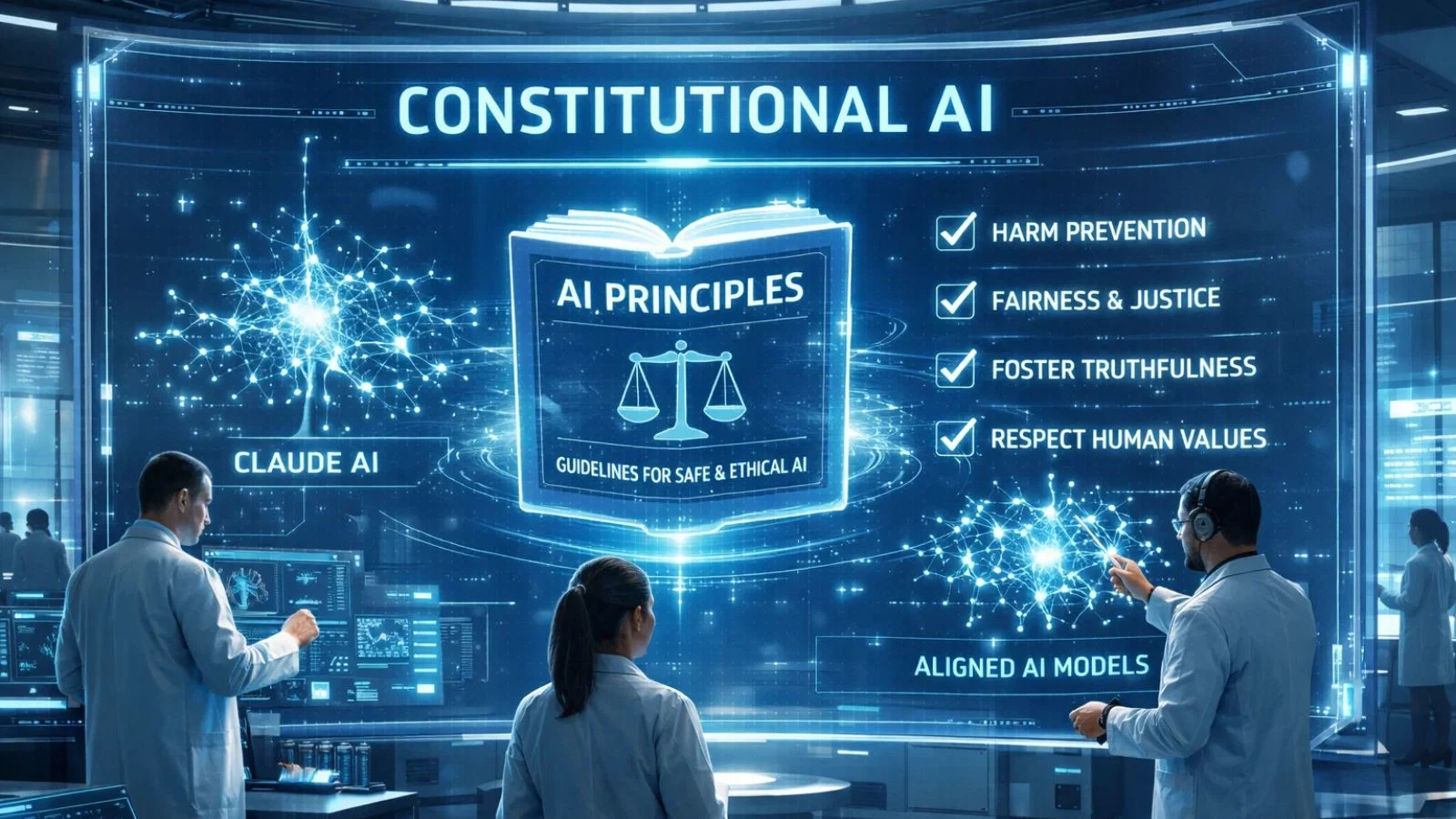
Understanding how Anthropic AI works starts with recognizing its focus on building AI that is both powerful and safe. At a high level, the company develops large language models like Claude that are trained to understand and generate human-like text. But what sets Anthropic apart is its method for guiding these models’ behavior.
One of the company’s key innovations is called Constitutional AI. Unlike traditional AI training methods that rely heavily on human feedback for every decision, Constitutional AI uses a set of principles or “guidelines” to shape the model’s responses. Think of it as a rulebook that the AI follows, ensuring that its outputs remain aligned with safety and ethical standards while still being flexible enough for practical tasks.
Training involves exposing the AI to vast amounts of text and then fine-tuning it to respond in ways that are consistent with these principles. This approach helps reduce the risk of generating harmful, biased, or misleading content, a common concern with other AI models. In other words, the AI isn’t just learning facts or patterns; it’s learning how to behave responsibly.
From a practical perspective, this means users interacting with Claude or other Anthropic models can expect outputs that are accurate, relevant, and aligned with human values. Whether it’s drafting a business email, generating content ideas, or assisting in research, the AI is built to act as a dependable partner rather than just a tool.
By combining advanced machine learning with ethical guardrails, Anthropic AI demonstrates a model for responsible innovation in artificial intelligence, a model that other companies are now watching closely.
Anthropic vs OpenAI: Key Differences
While both anthropic and OpenAI are major players in the AI space, there are some important distinctions in how they operate and approach AI development.
- Philosophical Approach:
OpenAI focuses heavily on pushing the limits of AI capabilities and delivering powerful models like ChatGPT. Anthropic, on the other hand, emphasizes safety, reliability, and alignment. Its goal isn’t just intelligence, it’s responsible intelligence. - Model Training and Safety:
OpenAI relies primarily on large-scale data and reinforcement learning from human feedback (RLHF) to improve its models. Anthropic introduces the concept of Constitutional AI, where models follow a set of guiding principles to ensure safer, more predictable outputs. - Products and Use Cases:
OpenAI’s ChatGPT is widely used for general-purpose tasks, from casual conversations to coding. Claude, by Anthropic AI, is similarly versatile but designed with stricter alignment principles, which makes it appealing for sensitive business or enterprise applications. - Market Positioning:
OpenAI has a broader consumer focus, whereas Anthropic positions itself as a thought leader in AI safety and ethics. This distinction has attracted investors and companies that prioritize responsible AI deployment. - Transparency and Ethical Emphasis:
Anthropic’s mission is explicitly focused on long-term AI alignment. While OpenAI also values safety, Anthropic integrates ethical guardrails more systematically into its core model design.
In essence, while both companies compete in the AI landscape, anthropic distinguishes itself by building AI with a “safety-first” philosophy. For businesses and developers concerned about responsible AI, this approach can be a decisive factor when choosing which model to adopt.
Why Anthropic Matters in the AI Industry
Anthropic is significant because it demonstrates that AI can be both powerful and safe. By prioritizing alignment and ethical guidelines, the company sets a standard for responsible AI development. Its models, like Claude, influence how businesses, developers, and even competitors think about building AI systems.
In a rapidly expanding AI market, Anthropic’s approach helps prevent harmful outputs, earning trust from users and organizations seeking reliable tools. Its focus on safety, combined with practical applications, positions it as a key player in shaping the future of artificial intelligence.
Challenges and Criticism
No company is without hurdles. Anthropic faces challenges such as intense competition from OpenAI and other AI startups. Critics also point out that a strong focus on safety may slow innovation compared to competitors.
Balancing ethical AI with cutting-edge performance is difficult, and ensuring Claude remains accurate while aligned with principles requires continuous refinement. Despite these challenges, the company’s cautious approach appeals to users who prioritize trustworthy AI.
How Businesses Can Use Anthropic AI
Businesses can leverage Anthropic AI for tasks like customer support automation, content generation, data analysis, and internal research. Claude’s structured and reliable outputs make it suitable for sensitive operations, where accuracy and alignment matter.
Integrating Anthropic AI into workflows can improve efficiency while maintaining ethical standards, making it a practical choice for organizations exploring AI adoption.
Boost AI Capabilities with GlobussoftAI
While Anthropic AI provides advanced AI tools, companies can further enhance AI integration with GlobussoftAI. This platform helps businesses adopt AI solutions for automation, analytics, and content creation seamlessly.
By combining Claude’s intelligence with GlobussoftAI’s implementation support, organizations can accelerate productivity and get actionable insights without compromising on safety or reliability.
The Future of Anthropic AI
Looking ahead, Anthropic aims to expand Claude’s capabilities while keeping safety at the core. Expect improvements in understanding context, generating more accurate outputs, and supporting enterprise-level applications.
As AI adoption grows globally, Anthropic’s emphasis on ethical and aligned AI could influence industry standards, encouraging responsible innovation across the sector.
Also Read,
How Can Claude Improve My Daily Tasks?
Openclaw Vs Chatgpt: I Used Both For 90 Days. Here’s The Winner
Conclusion
Anthropic is more than just an AI company it represents a careful, responsible approach to building advanced artificial intelligence. With Claude and its safety-first philosophy, the company is competing with major players like OpenAI while setting benchmarks for ethical AI.
For businesses and developers seeking reliable and aligned AI solutions, Anthropic offers a blend of innovation, trust, and practicality.
FAQ’s
1: Who founded Anthropic?
A: Anthropic was founded by former AI researchers focused on AI safety and alignment.
2: Is Claude better than ChatGPT?
A: Claude emphasizes safety and aligned outputs, making it a strong choice for businesses that need predictable, reliable AI behavior.
3: How does Anthropic make money?
A: Anthropic offers AI products like Claude to businesses and developers, often through licensing or API access.