Artificial intelligence continues to move beyond static copilots and scripted automation. Modern enterprises now demand systems that adapt, evolve, and scale without constant retraining cycles. This shift has placed significant attention on OpenClaw Github, where developers and organizations explore modular AI agent architecture built for adaptability.
In this guide, we break down what OpenClaw Github represents, how the architecture works, why enterprises are evaluating it, and how organizations can implement it strategically with expert support from GlobussoftAI.
In a hurry? Listen to the blog instead!
What Is Openclaw And Why Is It Gaining Attention?
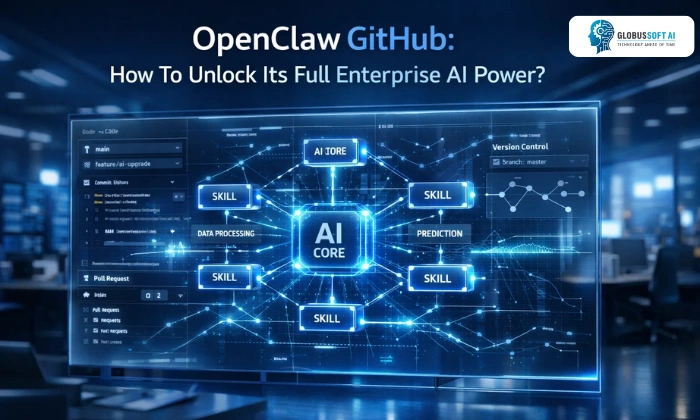
OpenClaw is an agent-based AI framework designed to expand capabilities through structured skill modules rather than repeated full-model retraining. Instead of freezing intelligence after deployment, it enables agents to load new expertise dynamically.
This architectural shift has made OpenClaw Github a focal point for teams exploring adaptive AI systems.
Unlike traditional pipelines that depend heavily on fine-tuning loops, OpenClaw promotes:
- Persistent AI agents
- Modular skill loading
- Reusable expertise packaging
- Structured workflow execution
- Continuous capability expansion
This design aligns with the growing enterprise need for AI systems that improve after deployment rather than stagnate.
How Does OpenClaw Differ From Traditional AI Training?

Traditional AI deployment follows a rigid lifecycle:
- Pre-train
- Fine-tune
- Deploy
- Freeze
If behavior needs modification, teams return to training pipelines. That process consumes time, budget, and infrastructure.
OpenClaw disrupts that pattern.
Through the architecture available on OpenClaw Github, organizations can attach new “skills” to agents without rebuilding the entire model. These skills include structured instructions, workflows, and sometimes executable scripts.
The result?
- Faster iteration cycles
- Lower retraining costs
- Modular knowledge expansion
- Improved deployment agility
This changes the core enterprise question from “How do we retrain?” to “How do we package expertise effectively?”
That difference significantly reduces operational friction.
Also Read:
Can OpenClaw Be Enterprise-Grade? We Tested It for 6 Months
What Should You Know About the GitHub OpenClaw Ecosystem?
When exploring GitHub OpenClaw resources, businesses typically encounter several foundational components that shape how the framework operates and scales:
Agent Framework Documentation:
Comprehensive technical documentation explaining the agent architecture, execution logic, configuration setup, and system dependencies required to run adaptive AI agents effectively.
Skill Packaging Structure:
Clear guidelines on how to design, format, and organize skill modules, including workflow logic, contextual instructions, reusable scripts, and structured metadata for version control.
Execution Environment Guidance:
Instructions for setting up runtime environments, managing dependencies, configuring servers, and ensuring stable performance across development and production systems.
Version Control Models:
Structured repositories that support collaboration, skill iteration, change tracking, rollback mechanisms, and controlled deployment pipelines.
Contribution Workflows:
Defined processes for submitting improvements, testing new modules, reviewing pull requests, and maintaining ecosystem integrity through community governance.
The open repository encourages experimentation and collaborative innovation. However, open-source access alone does not guarantee production readiness. Enterprises still require governance frameworks, structured testing protocols, validation layers, security safeguards, and system integration planning before full-scale deployment.
That distinction matters.
Why Enterprises Are Watching OpenClaw Closely?
Several macro trends push companies toward adaptive AI agents:
- Growing automation demand
- Escalating retraining costs
- Rapid knowledge evolution
- Need for internal AI customization
- Pressure to reduce operational latency
Through OpenClaw Github, organizations gain visibility into a framework that supports skill-based modular expansion.
This model allows enterprises to:
- Capture internal expertise
- Convert workflows into reusable AI skills
- Standardize knowledge execution
- Maintain version control over automation logic
Instead of relying solely on external AI vendors, teams can build structured internal intelligence layers.
The Strategic Advantage Of Skill-Based AI
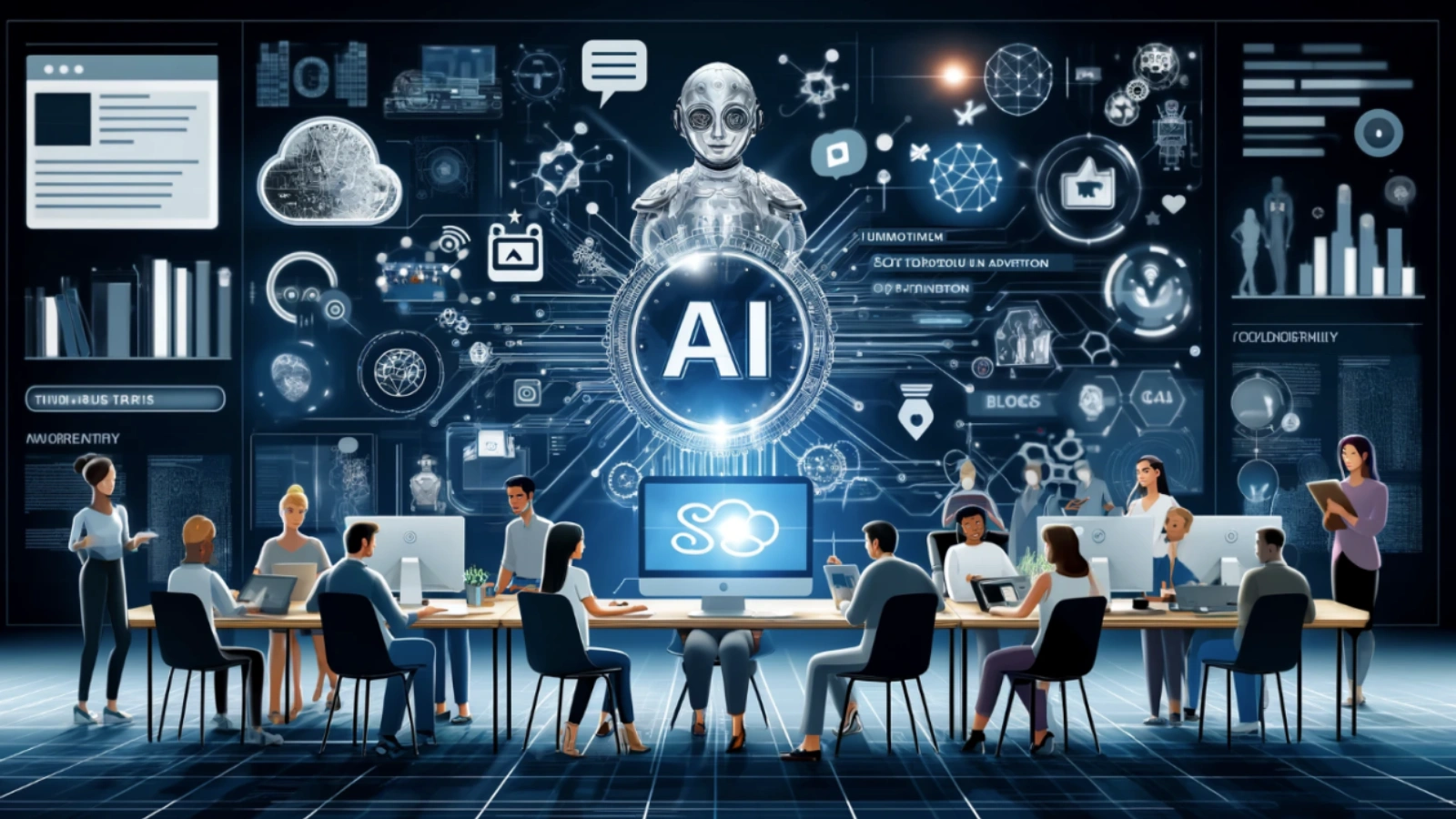
OpenClaw’s defining innovation lies in structured skill modules that expand an agent’s capabilities without requiring full retraining cycles.
A skill can include:
- Task Instructions: Clear, structured directions that define what the agent must accomplish, ensuring consistent execution across similar scenarios.
- Workflow Sequencing: Step-by-step process mapping that guides the agent through multi-stage tasks in a logical and repeatable order.
- Domain-Specific Context: Specialized knowledge tailored to industries such as finance, legal, healthcare, or operations, allowing the agent to perform with deeper relevance.
- Execution Logic: Conditional rules and decision-making frameworks that help the agent determine how to respond based on inputs and context.
- Tool Integrations: Connections to external systems, APIs, databases, or enterprise platforms that enable the agent to take real actions beyond conversation.
This design transforms institutional knowledge into structured, version-controlled intelligence assets that teams can manage and improve over time.
On OpenClaw Github, developers actively experiment with packaging expertise across finance, legal, operations, and engineering domains. Each skill becomes a portable intelligence module that can be reused, refined, and deployed across multiple environments.
For enterprises, that portability creates:
- Scalability: Organizations can replicate proven skills across departments without rebuilding workflows from scratch.
- Repeatability: Standardized skill structures ensure consistent output quality across teams and use cases.
- Auditability: Version control and structured logic make it easier to track changes, review decisions, and maintain compliance standards.
- Cross-Team Collaboration: Multiple departments can contribute domain expertise in a shared framework, accelerating innovation without silos.
This modular approach significantly reduces reliance on repeated fine-tuning cycles while maintaining flexibility and control.
Find Out More:
OpenClaw GitHub: Why It Got 175K Stars In Two Weeks
Is OpenClaw AI GitHub Ready For Enterprise Scale?
The OpenClaw AI GitHub repository provides transparency, modularity, and strong experimentation capabilities. It enables teams to explore adaptive agent architecture and structured skill deployment in an open environment. However, moving from experimentation to enterprise-scale implementation requires additional layers of control and discipline.
Organizations must establish governance frameworks, enforce data security standards, validate compliance requirements, and implement structured skill review workflows before deploying agents in production. Continuous performance monitoring and cost management strategies are also essential to maintain long-term stability.
Open-source architecture creates opportunity, but it does not automatically ensure enterprise reliability. Strategic planning, oversight, and structured engineering practices remain critical for consistent, scalable results.
The Economic Impact Of OpenClaw
AI post-training costs continue to rise. Data labeling, reinforcement learning loops, and evaluation pipelines consume significant budgets.
By reducing retraining cycles, OpenClaw Github influences AI economics in meaningful ways:
- Faster deployment timelines
- Lower iterative costs
- Reduced labeling dependencies
- Greater internal control
This shift allows smaller AI teams to build systems that previously required large infrastructure investments.
Instead of repeatedly fine-tuning, teams refine skill modules.
That economic flexibility appeals strongly to growth-focused enterprises.
How Does OpenClaw Impact Vertical Industries With Complex Knowledge Layers?
Industries with dense knowledge layers benefit most:
- Legal services
- Financial analysis
- Healthcare operations
- Compliance management
- Enterprise SaaS workflows
The OpenClaw project’s OpenClaw Github environment demonstrates how domain-specific skills can encode structured workflows.
However, challenges remain:
- Skill consistency
- Documentation quality
- Domain depth representation
- Validation across edge cases
Enterprises must treat skill authoring as a structured engineering discipline.
Why Implementation Strategy Matters?
Deploying AI agents requires more than cloning a repository.
Successful implementation involves:
Infrastructure Planning:
Designing scalable compute environments, secure hosting setups, and deployment pipelines that support stable agent performance in production.
Skill Lifecycle Management:
Defining how skills are created, reviewed, versioned, updated, and retired to prevent conflicts and maintain quality standards.
Evaluation Protocols:
Establishing testing frameworks that measure accuracy, reliability, compliance, and task consistency before large-scale rollout.
Performance Benchmarking:
Tracking key performance indicators to compare agent outputs against defined business objectives and improvement targets.
Integration with Existing Systems:
Connecting agents with CRMs, ERP platforms, internal databases, and communication tools to ensure real operational impact.
Monitoring and Optimization:
Continuously analyzing outputs, usage data, and cost efficiency to refine workflows and maintain long-term system health.
The OpenClaw AI agent GitHub repository provides the base framework. Production success depends on structured execution.
That is where strategic AI partners become essential.
How GlobussoftAI Strengthens OpenClaw Deployments?]
Organizations exploring OpenClaw Github often reach a turning point: experimentation works, but scaling proves complex.
GlobussoftAI bridges that gap.
Through its OpenClaw Expert Services, GlobussoftAI transforms experimental agent frameworks into production-grade AI ecosystems.
What Globussoft AI Delivers
AI Agent Development:
Designs intelligent agents aligned with business workflows and measurable KPIs. Helps automate operations while improving efficiency and accuracy.
LLM Testing & Fine-Tuning:
Optimizes model performance to reduce errors and improve reliability. Builds a stable foundation before scaling skill-based capabilities.
AI/ML Integration:
Seamlessly connects AI agents with CRMs, ERPs, databases, and enterprise tools. Ensures smooth automation within existing infrastructure.
AI Pipeline Replication:
Standardizes proven AI workflows for consistent deployment across departments. Enables scalable automation without rebuilding systems.
AI Consulting & Architecture Planning:
Provides strategic guidance on AI system design, governance, and cost control. Ensures long-term scalability and operational alignment.
Guide organizations on cost modeling, governance design, and scalability frameworks.
While OpenClaw Github provides the foundation, GlobussoftAI ensures that the architecture aligns with real operational environments.
This distinction separates experimentation from transformation.
The Future Of Skill-Based AI
Skill modularity reflects a major shift in how AI systems are designed. Instead of building monolithic models that require repeated retraining, enterprises now focus on layered and adaptable architectures.
Organizations develop core intelligence layers for foundational reasoning, add modular expertise extensions for domain-specific capabilities, and implement continuous learning loops to refine performance over time.
The architecture highlighted on OpenClaw Github supports this flexible approach. As AI advances, adaptability delivers more long-term value than static precision, giving forward-thinking organizations a clear competitive advantage.
Final Takeaway
The conversation around OpenClaw Github reflects a broader transformation in AI architecture. Enterprises no longer want static copilots. They demand adaptive agents capable of continuous capability expansion.
OpenClaw introduces modular skill-based intelligence that reduces retraining friction and accelerates iteration cycles.
However, open-source access alone does not guarantee enterprise success.
Organizations must combine:
- Technical architecture
- Governance frameworks
- Integration strategy
- Performance monitoring
- Expert guidance
With structured implementation and support from GlobussoftAI, adaptive AI agents can evolve from experimental tools into operational growth engines.
The opportunity does not lie in downloading a repository.
It lies in designing a scalable intelligence system around it.
Businesses that move early, plan carefully, and execute strategically will define the next phase of enterprise AI adoption.
FAQs
1. What is OpenClaw Github and why is it important?
OpenClaw Github is a repository that provides access to a modular AI agent framework built around skill-based architecture. It enables developers and enterprises to experiment with adaptive AI systems that expand capabilities without full retraining cycles.
2. How does skill-based architecture differ from traditional AI training?
Traditional AI relies heavily on retraining and fine-tuning when new capabilities are required. Skill-based architecture allows agents to load structured expertise modules, reducing cost and accelerating deployment.
3. Is OpenClaw Github suitable for enterprise use?
Yes, but enterprises must implement governance, security controls, validation frameworks, and integration planning before deploying in production environments. Open-source access alone does not guarantee enterprise readiness.
4. Can businesses combine OpenClaw with fine-tuned models?
Absolutely. Many organizations adopt a hybrid model where fine-tuned systems provide baseline intelligence while adaptive agents expand functionality through structured skills.