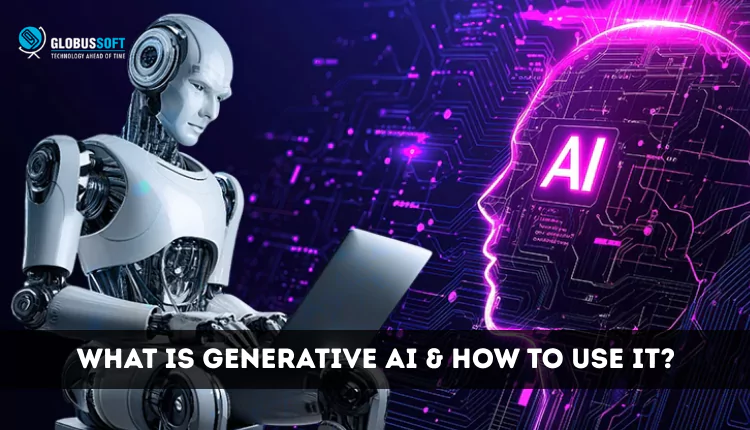
Artificial intelligence is no longer just about automation or processing data—it has stepped into the creative zone. What once felt limited to human imagination is now being supported by technology capable of producing text, images, audio, and even code. This shift is largely powered by generative AI, a branch of artificial intelligence that goes beyond analysis to generate entirely new content. Businesses, creators, and developers are quickly realizing that this is not just another tech trend but a game-changing approach to innovation.
In this blog, we will explore what makes this technology so transformative, look at practical applications, and discuss how organizations can adopt it effectively. By the end, you will see how it is shaping industries while also learning about tools that can make this shift easier. Let’s start with the fundamentals before diving deeper into its broader impact.
In a hurry? Listen to the podcast now.
What Is Generative AI?
 Before exploring advanced applications, it’s important to understand the basics. So, what is generative AI? Simply put, it is a type of artificial intelligence designed to create new data rather than just recognize or categorize existing information. Unlike traditional AI, which identifies patterns and provides predictions, generative models produce fresh outputs based on patterns they’ve learned from large datasets.
For example, when you ask a generative model to write a short story, it doesn’t just retrieve text—it crafts an original narrative. Similarly, when trained on millions of images, it can produce unique artwork that looks convincingly human-made. This ability to generate original outcomes makes it one of the most revolutionary tools in AI history.
This foundation leads us directly to the exciting part: how these models are applied in real-world settings.
Generative AI Examples In Daily Life
The concept might sound futuristic, but chances are you’ve already encountered multiple generative AI examples without realizing it. Personalized recommendations on streaming platforms often use text and content generation models to refine suggestions. In entertainment, AI-driven video game characters now behave more dynamically because the system generates responses rather than sticking to pre-programmed scripts.
Content creation is another powerful example. Writers and marketers use these tools to draft blog posts, craft ad copies, or generate social media visuals in seconds. In healthcare, researchers rely on AI-generated molecular structures to accelerate drug discovery. Even industries like fashion have adopted it, where AI produces fresh clothing designs inspired by past collections.
These examples highlight how generative systems are not limited to niche experiments. They’re actively reshaping the way industries operate. But how did this transformation come about? Let’s move into the bigger picture with a structured generative AI overview.
Generative AI Overview
 When we talk about a generative AI overview, we’re really looking at the convergence of algorithms, neural networks, and vast amounts of data. At its core, this technology is built on models like Generative Adversarial Networks (GANs) and transformer architectures, which have redefined machine learning capabilities.
GANs operate with two models—the generator and the discriminator—working together to create realistic outputs. Transformers, on the other hand, handle vast sequences of data to produce coherent text or other types of content. Together, they make the system capable of producing results that are not only convincing but also contextually relevant.
However, an overview is incomplete without considering how these technologies impact organizations. To understand that, we need to explore how generative AI development is shaping business processes.
Generative AI Development
Businesses have realized that adopting AI is no longer a choice but a necessity. Generative AI development focuses on building custom models, fine-tuning them for industry needs, and integrating them into existing workflows. The development process often begins with training on domain-specific data. For example, a legal firm might train a model exclusively on contracts and case studies to generate drafts quickly.
Another key aspect of development lies in scalability. Companies want models that not only create but also improve as they are used. This means integrating feedback loops and ensuring compliance with data privacy standards. The more refined the development process, the more efficient the system becomes in real-world applications.
And while development is technical, the impact of this technology is far-reaching, affecting industries, professionals, and end-users alike. This leads us to explore its growing influence under the broader term generative artificial intelligence.
Generative Artificial Intelligence In Industries
 The phrase generative artificial intelligence encompasses the wide scope of this technology across different sectors. In media, journalists use it to draft articles that are later polished by editors, significantly reducing turnaround time. In architecture, designers leverage AI to create innovative building plans that combine aesthetics with functionality.
Finance companies utilize AI to simulate market conditions and stress-test investment strategies. Meanwhile, educators are experimenting with AI-generated course materials to make learning more interactive and adaptable to student needs. The spread of generative systems shows that this is not a tool limited to creatives; it’s equally beneficial for strategic, technical, and analytical tasks.
As industries evolve, so does the need for reliable platforms and services that help integrate these solutions smoothly. This is where companies like Globussoft AI enter the picture.
Generative AI Services By Globussoft AI
 Globussoft AI offers a suite of services designed to help businesses adopt, scale, and benefit from generative technologies. These services are not just about experimenting with AI but about creating measurable business value. Here are some of the most impactful ones:
AI Agent Development
Globussoft AI builds intelligent AI agents that can handle tasks like customer support, process automation, and personalized recommendations. These agents learn and improve over time, making interactions smarter and more efficient.
Chatbots Powered by LLMs
Large Language Model–based chatbots go beyond standard scripts. They can understand context, answer complex queries, and provide natural, human-like responses—helping businesses improve customer engagement.
Model Training and Fine-Tuning
Every business is unique, and Globussoft AI specializes in training and fine-tuning models on domain-specific data. This ensures the AI produces outputs that are accurate, relevant, and aligned with organizational goals.
AI/ML Pipeline Development
The team creates scalable AI/ML pipelines that streamline workflows, making it easier for businesses to move from experimentation to full-scale deployment without bottlenecks.
AI/ML Consulting
Adopting AI can feel overwhelming. Globussoft AI provides consulting to identify opportunities, build roadmaps, and implement solutions that deliver results instead of just hype.
Seamless Integration Services
AI solutions are designed to fit directly into existing systems, minimizing disruption and helping businesses start generating value quickly.
These features highlight why Globussoft AI is more than just a technology provider—it’s a trusted partner for businesses looking to harness the full potential of generative technologies. Next, let’s consider how future advancements in this space will continue shaping industries and opportunities.
Future Of Generative AI
Looking ahead, the trajectory of this technology is only set to rise. As models become more efficient, they will require fewer resources while producing even better results. Collaboration between humans and machines will also become smoother, making creativity and productivity more accessible across all levels of expertise.
Ethical frameworks are expected to play a bigger role, ensuring that generated outputs are transparent and unbiased. Regulation will likely mature as governments and institutions step in to guide responsible use. For businesses, this means opportunities to innovate while maintaining trust with their customers.
The future shows that this technology is not a replacement for human creativity but a partner that amplifies it. With Globussoft AI and similar platforms at the forefront, organizations have an opportunity to shape this journey meaningfully.
Final Thoughts
From understanding what is generative AI to seeing real-world generative AI examples, this blog has explored how the technology is transforming industries. We’ve looked at a generative AI overview, examined the importance of generative AI development, and understood the role of generative artificial intelligence in reshaping workflows. Along the way, we highlighted the role of Globussoft AI and its generative AI tools in making adoption smoother for organizations.
As the journey continues, one thing remains clear: generative AI is no longer a distant concept—it is a present-day reality with the power to redefine how we create, work, and innovate.
FAQs
Q1. How is generative technology different from traditional automation tools?
Traditional automation tools are designed to repeat predefined tasks, while generative technology creates new outputs, such as text, images, or designs, based on learned patterns.
Q2. Can small businesses benefit from this technology, or is it only for large enterprises?
Small businesses can benefit significantly. They can use affordable tools for content creation, customer service chatbots, and personalized marketing without needing massive budgets.
Q3. What skills are required to start working with generative systems?
While technical knowledge helps, many platforms now offer user-friendly interfaces. A basic understanding of data, creativity, and business objectives is often enough to get started.
Q4. Are there risks of over-relying on this type of technology?
Yes, over-reliance can lead to reduced human oversight, potential inaccuracies, and ethical challenges. Balancing automation with human creativity and judgment is essential.
Q5. How can organizations ensure the ethical use of generative models?
Companies should establish guidelines for transparency, monitor bias in outputs, and use responsible data sources. Clear policies help maintain trust and accountability.