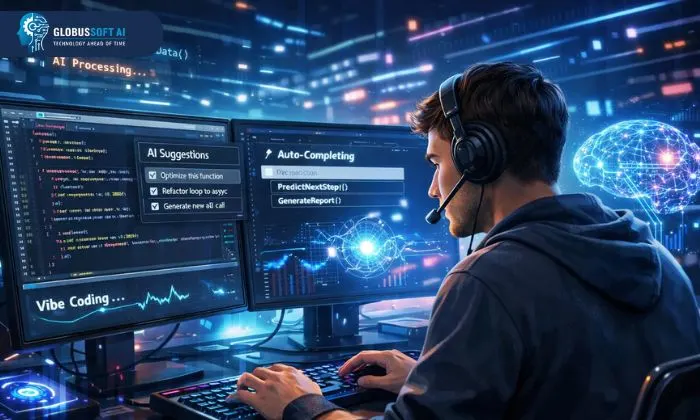
Vibe coding is rapidly gaining attention as one of the most talked-about shifts in modern development. With the rise of AI programming tools, it promises a faster, more intuitive way to build software. But the real question remains: is it just hype, or does it represent the future of coding?
At its core, vibe coding refers to relying on AI for code generation, refinement, and completion instead of writing everything manually. Developers can now turn simple ideas into working code within minutes, making the process faster and more accessible, especially for prototyping and early-stage projects.
Yet as projects grow in complexity, the cracks begin to show. Limitations in structure, reliability, and long-term maintainability are forcing developers to rethink how far they can rely on this approach. What starts as a powerful shortcut can quickly become a challenge when building scalable, production-ready systems.
This raises an important question: Is vibe coding a genuine evolution in software development or just another overhyped trend?
Listen to the Podcast
What Is Vibe Coding?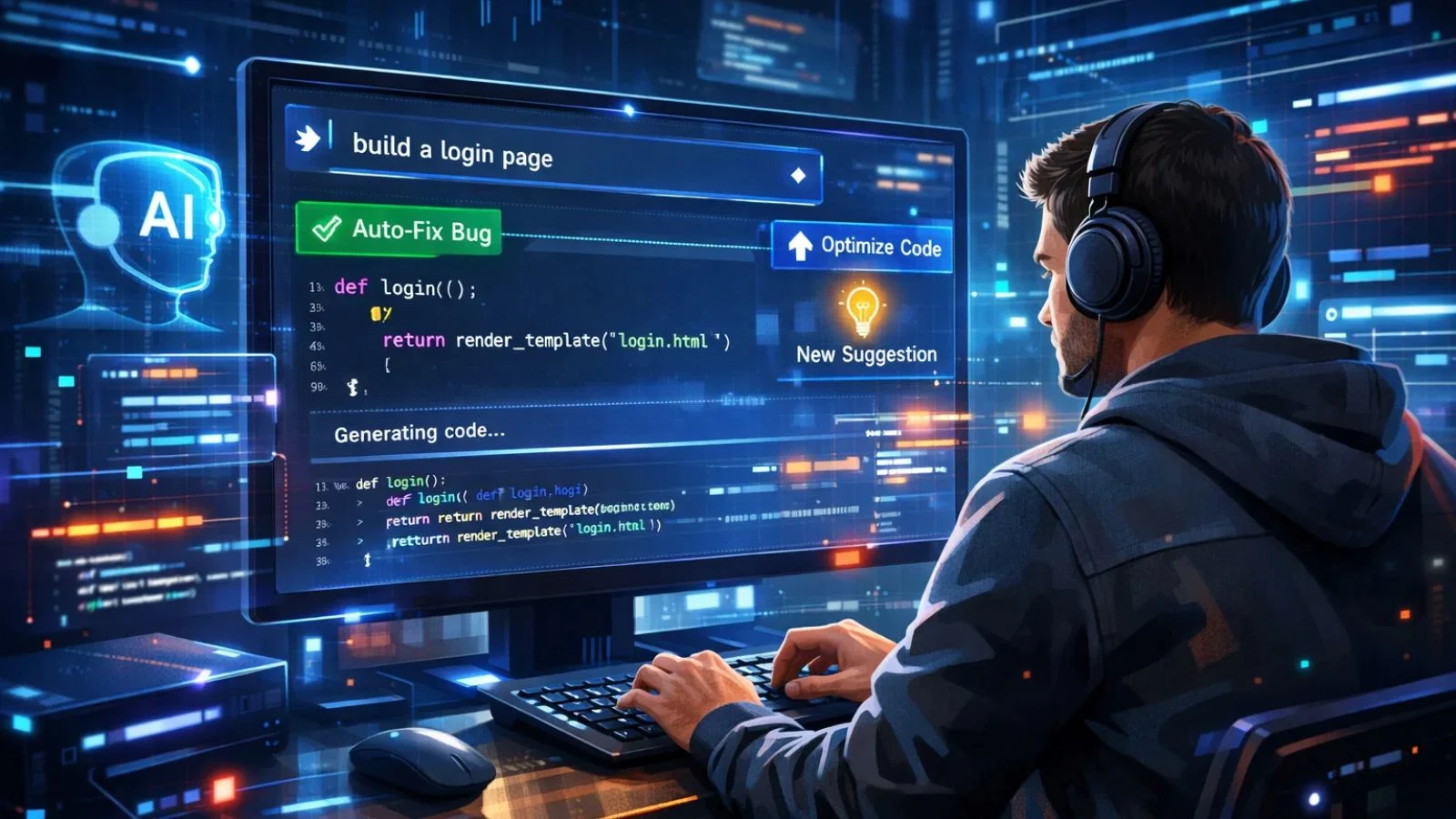
Vibe coding is often described as a glimpse into the future of software development, but understanding it clearly is key to judging whether it lives up to the hype. At its core, vibe coding is an approach where developers rely heavily on AI to generate code based on intent rather than writing it manually line by line.
Instead of starting with syntax and structure, the focus shifts to describing what you want to build. Developers use AI programming tools to give prompts like “build a login page” or “create a REST API,” and the system generates functional code almost instantly. Powered by AI for code, these tools can understand context, refine outputs, and even fix errors in real time.
This is where the excitement comes from. With code generating AI, ideas can quickly turn into working prototypes. It makes development faster, more accessible, and lowers the barrier for beginners or even non-developers to start building.
But this is also where the debate begins. Vibe coding prioritizes speed and momentum over deep control. Developers often accept and tweak AI-generated code rather than designing systems from the ground up. While this can accelerate early progress, it can also lead to gaps in understanding, weaker architecture, and challenges in maintaining projects as they grow.
So while vibe coding feels like the future on the surface, its real value depends on how well it holds up beyond the initial excitement.
Also Read,
Why VPS Is Essential for Running AI Agents Efficiently
Why Did Vibe Coding Become So Popular?
The rise of vibe coding is closely tied to how AI has transformed software development. Tasks that once took hours can now be completed in minutes, making the process faster and more efficient.
Speed is a major reason for its popularity. Developers can quickly build prototypes, test ideas, and launch early versions without getting stuck in complex coding tasks. With AI for code, repetitive work is handled instantly, allowing more focus on ideas.
Accessibility has also played a key role. Code generating AI has made it possible for beginners, founders, and non-developers to start building without deep technical knowledge. This has made vibe coding especially appealing for startups and quick projects.
At the same time, trust in AI tools has grown. As AI programming tools become more accurate and reliable, developers are more comfortable using them for larger parts of their workflow. This combination of speed, ease, and trust has driven its rapid adoption.
Why Are Developers Moving Beyond Vibe Coding?
Vibe coding works well for speed, but developers often move beyond it when real-world complexity starts to show.
One common issue is structure. AI-generated code can lack consistency, which becomes a problem as projects grow.
For example, a developer builds different features using AI prompts, but each module follows a different pattern. When the team tries to scale the app, the codebase feels disorganized and hard to maintain.
Another challenge is understanding. Relying too much on AI for code can create gaps in how the system actually works.
For example, a developer uses AI to generate authentication logic, but when users start facing login errors, they struggle to debug because they did not build or fully understand the flow.
Reliability is also a concern. AI can generate code that works on the surface but fails in real scenarios.
For example, an AI-generated API handles basic requests correctly but misses proper validation, leading to security issues when real users interact with it.
Because of these limitations, developers are shifting toward a more balanced approach where AI supports development, but critical decisions and system design remain in human control.
What Is Replacing Vibe Coding?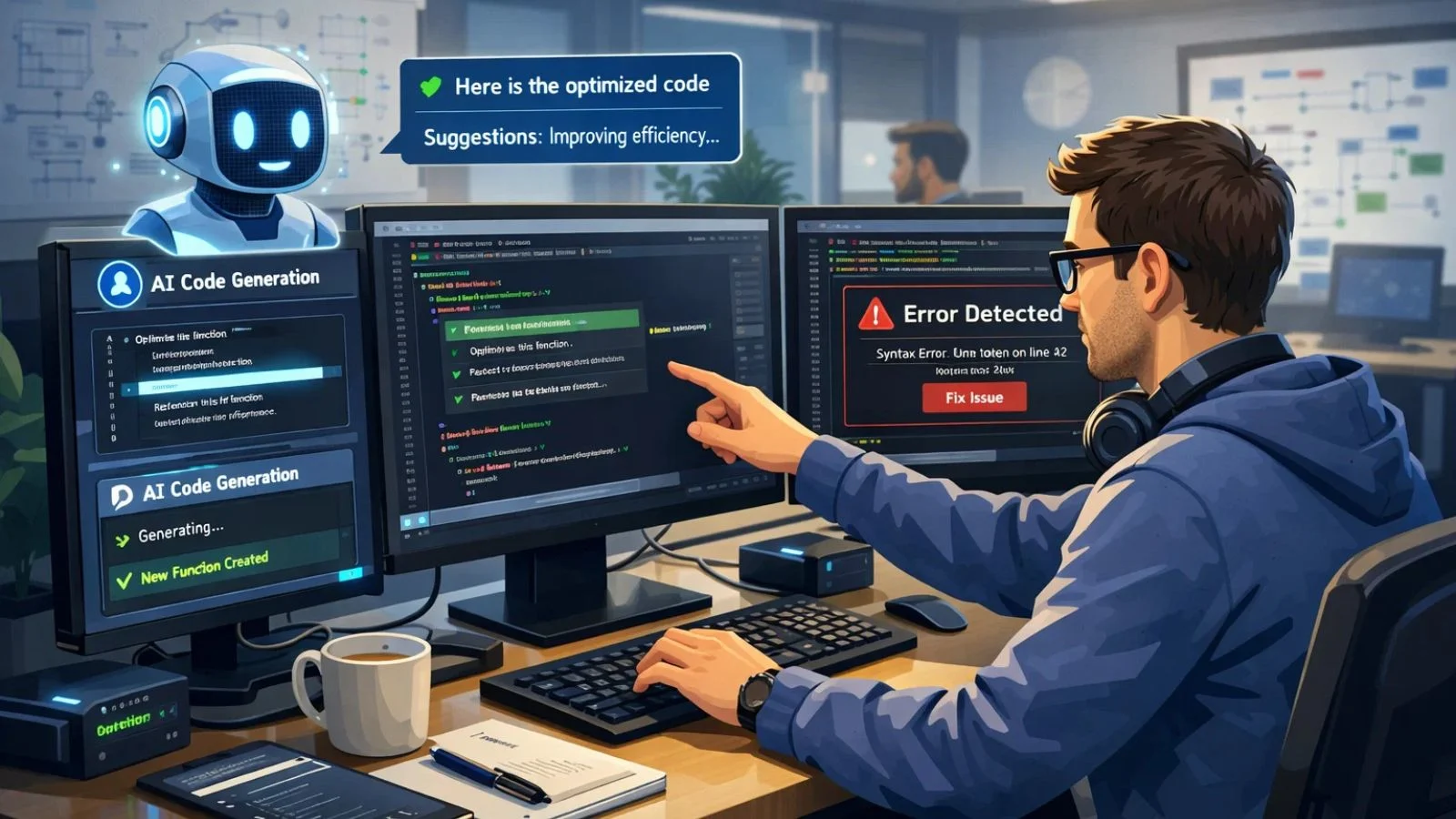
Instead of abandoning vibe coding, many developers are evolving toward a more structured approach known as AI-assisted development. In this model, AI programming tools are still an important part of the workflow, but they are used with clear intent and oversight rather than blind reliance.
For example, consider a team building a production-ready web application. Instead of generating large sections of the system through a single prompt, they break the project into smaller components such as authentication, APIs, and UI layers. AI is used to speed up tasks like generating boilerplate code or suggesting improvements, but every output is reviewed, tested, and aligned with predefined architecture standards.
This approach ensures consistency across the codebase and reduces the risk of hidden errors or poor design decisions. Developers guide AI for code generation rather than depending on it entirely, which allows them to maintain control over logic, security, and scalability.
In this way, AI code generation becomes a collaborative tool that enhances productivity, while human decision-making continues to shape the overall quality and reliability of the system.
How to Use AI for Coding the Right Way?
Using AI effectively in development is less about asking it to write everything and more about guiding it with intent. The difference between poor and strong outcomes often comes down to how developers interact with AI programming tools.
Define clear goals
Before generating any code, developers need to be specific about what they want to build. Vague prompts usually lead to generic or inconsistent results. Clear requirements such as expected inputs, outputs, tech stack, and constraints help AI produce code that fits the use case more accurately. This reduces rework and improves alignment with the overall system design.
Validate outputs
AI-generated code should never be treated as production-ready by default. Developers review the logic, check for edge cases, and ensure proper error handling. This includes validating security practices such as input sanitization, authentication flows, and dependency usage. In many cases, AI produces code that works functionally but misses best practices, which makes validation a critical step.
Combine with expertise
AI is highly effective for repetitive and well-defined tasks such as generating boilerplate, writing standard functions, or suggesting refactors. However, decisions around system architecture, scalability, and performance still require human judgment. Developers use AI to speed up execution while they focus on designing clean, efficient, and maintainable systems.
Iterate and refine
AI outputs are rarely perfect on the first attempt. Developers treat code generating AI as an iterative tool. They refine prompts, adjust requirements, and improve outputs step by step. This process is similar to code review cycles, where each iteration brings the result closer to production quality.
When used this way, AI becomes a practical development partner rather than a shortcut. It accelerates workflows without compromising reliability, allowing developers to maintain control while benefiting from increased speed and efficiency.
Globussoftai: The Smarter Way to Leverage AI for Code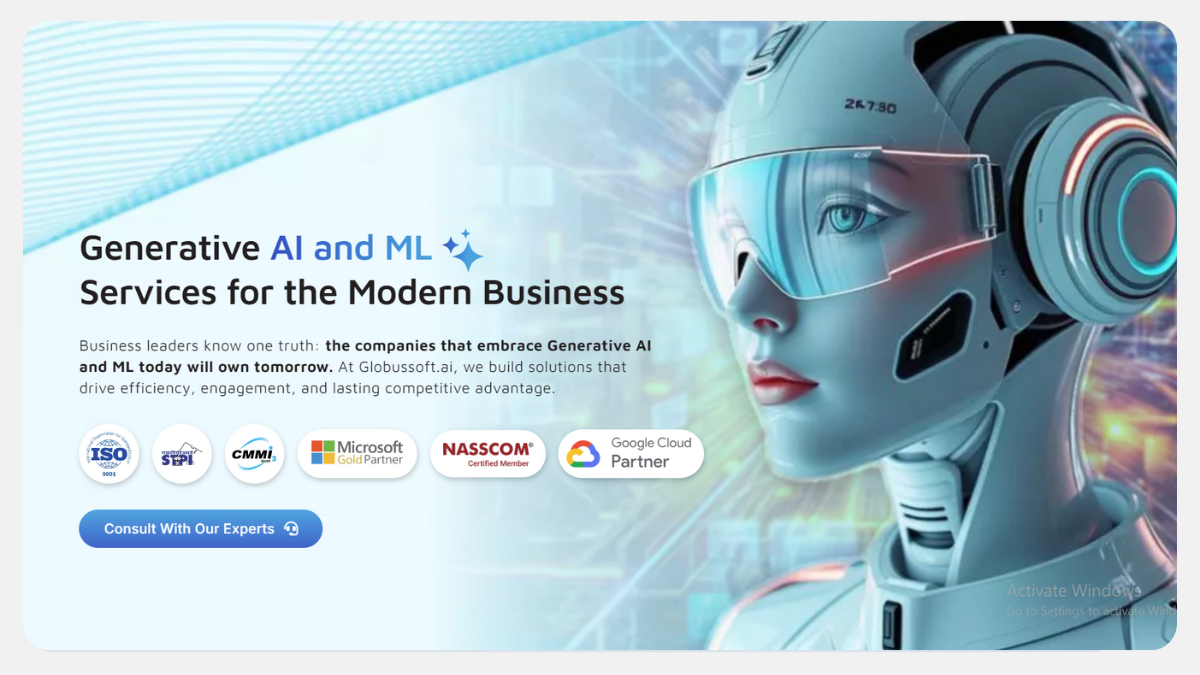
GlobussoftAI is a service-based AI development company specializing in the design and delivery of scalable, production-grade solutions. The approach is centered on structured AI-assisted development, where code generation is guided, reviewed, and aligned with well-defined architectural standards rather than relying on unstructured outputs.
The company focuses on building custom AI agents and domain-specific AI tools tailored to business requirements. Each engagement is executed by an experienced development team supported by a dedicated testing function, ensuring that every component meets strict quality, security, and performance benchmarks. Architectural decisions are overseen by senior experts, with continuous validation throughout the development lifecycle to maintain consistency and reliability.
Key Features of Globussoftai
AI-assisted development: Apply AI in a controlled manner to improve development efficiency while maintaining clarity in logic, structure, and system design.
Custom AI agents and tools: Design and implement AI-driven solutions aligned with specific operational and business objectives.
Code validation and testing: Enforce rigorous testing practices to ensure correctness, security, and maintainability of the codebase.
Architecture-led development: Establish strong system foundations through well-defined architectural patterns and standards.
System integration: Deliver solutions that integrate cleanly with existing technologies and workflows.
GlobussoftAI emphasizes a disciplined use of AI, where automation supports development without compromising control, traceability, or long-term maintainability.
Future of Coding: What’s Next After Vibe Coding?
The future of software development is not defined by replacing developers with AI, but by integrating AI in a way that strengthens how software is built. AI programming tools are becoming a core part of the workflow, but their value depends on how they are used.
Several clear shifts are already shaping this direction:
Collaborative AI
AI is evolving into a coding partner that supports development, while developers retain control over logic, architecture, and decision-making.
Smarter validation
Code generation is increasingly paired with automated testing, validation, and review processes to ensure reliability from the start.
Domain-focused AI
Tools are becoming more specialized, delivering better results when applied within specific languages, frameworks, and business contexts.
Focus on maintainability
Long-term scalability, clean architecture, and consistency are taking priority over quick, short-term outputs.
So, is vibe coding overhyped or the future?
It is both. As a concept, it highlighted how fast and accessible development can become with AI. But in its raw form, it is often overhyped for real-world use where structure and reliability matter. The future lies in a more disciplined approach where AI is used deliberately, not passively.
Vibe coding opened the door, but sustainable software development will be built on structured, AI-assisted practices that balance speed with control and innovation with engineering discipline.
Also Read,
How to Set Up Professional OpenClaw Implementation by Globussoft AI
FAQs
- Is vibe coding still useful in 2026?
Yes, it’s still great for prototypes and small projects but not ideal for large-scale, maintainable systems. - How is vibe coding different from AI-assisted development?
Vibe coding relies heavily on AI with minimal human guidance, while AI-assisted development combines AI output with developer oversight for better structure and reliability. - Can AI completely replace developers?
Not yet. AI can speed up coding, but human expertise is crucial for architecture, debugging, and decision-making. - How does Globussoftai improve AI code generation?
Globussoftai provides structured AI guidance, real-time error checking, and project-wide consistency, making AI a reliable coding partner rather than a shortcut. - Do I need coding experience to use Vibe coding tools?
Basic tools may allow beginners to start, but understanding programming principles ensures better, more maintainable results.