Technology leaders rarely witness a repository attract 175,000 stars within two weeks. Yet that surge placed OpenClaw GitHub at the center of enterprise AI discussions worldwide. Executives, developers, and investors all examined the same question: what makes this project so compelling?
The rapid rise of GitHub OpenCLAW signals more than developer enthusiasm. It reflects a structural shift in how companies approach AI ownership, automation, and infrastructure control. When a project achieves viral traction at this scale, business leaders must evaluate its strategic value.
The growth of OpenClaw GitHub shows strong demand for AI systems that enterprises can fully control. Decision-makers no longer want to depend entirely on closed SaaS platforms. They want flexibility, sovereignty, and long-term cost clarity. That shift explains why OpenClaw GitHub reached record adoption in days rather than months.
Let’s dive in!
What Is The OpenClaw Project?
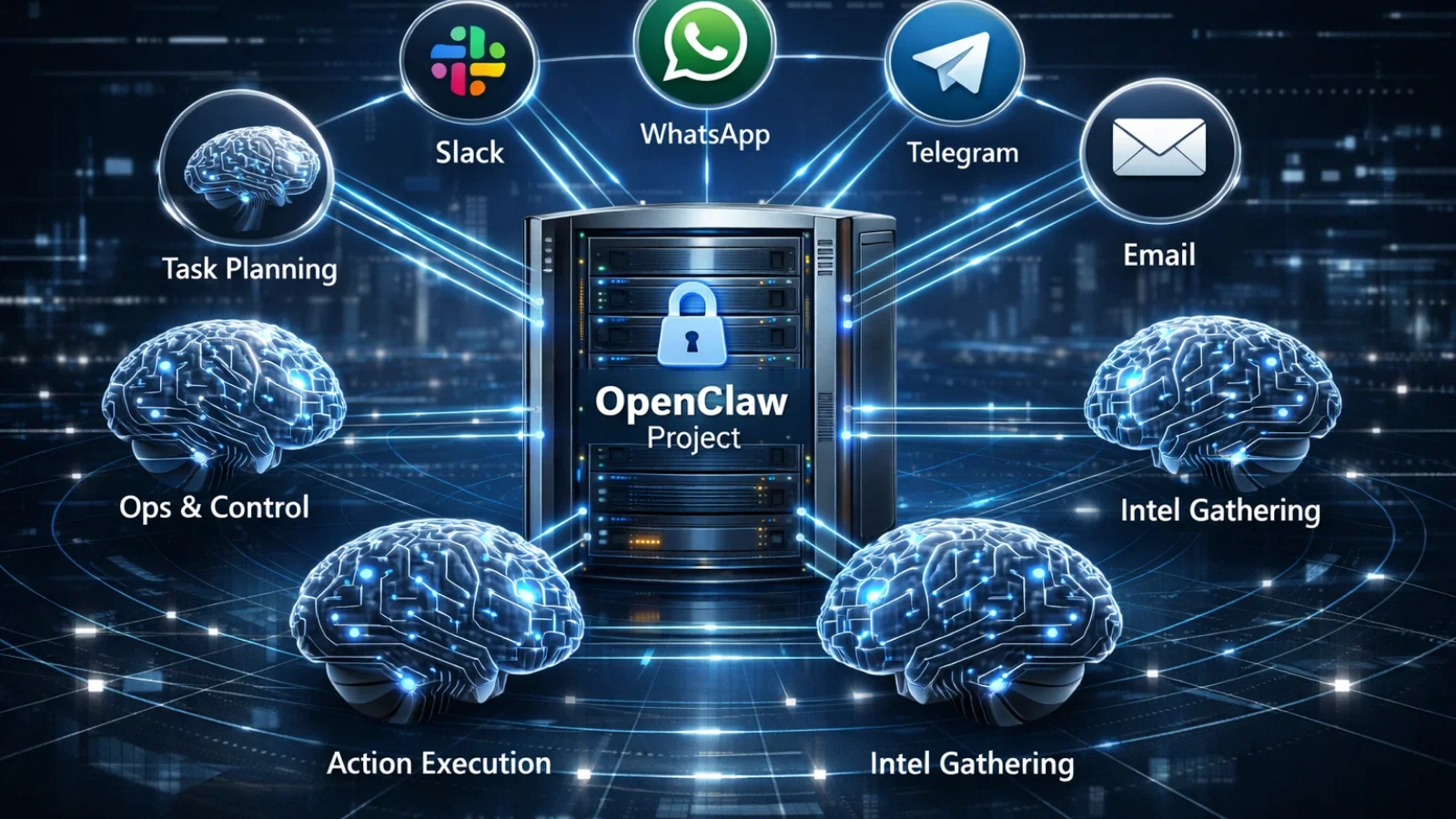
The OpenCLAW project represents an open-source AI agent framework that connects messaging platforms, workflows, and language models into one controllable system. Unlike standard chatbot tools, this framework focuses on autonomous execution rather than simple conversation.
At its core, OpenClaw GitHub enables organizations to deploy AI agents on their own infrastructure. These agents interact across platforms, execute tasks, and coordinate workflows without constant human oversight.
The public visibility of the OpenClaw AI GitHub repository allows enterprises to review its architecture, contribution history, and development roadmap. Transparency builds confidence. When leaders assess risk, open-source clarity provides an advantage over black-box systems.
The OpenClaw project on GitHub also encourages customization. Companies can adapt agents to internal workflows instead of reshaping workflows around a vendor’s product limits.
Inside OpenClaw GitHub: What Makes It Different
Many repositories promise automation. Few deliver enterprise-grade architecture. OpenClaw GitHub stands apart because it supports structured agent orchestration rather than isolated scripts.
The GitHub OpenCLAW ecosystem emphasizes:
- Self-hosted deployment
- Multi-model compatibility
- Channel integrations
- Modular architecture
The OpenClaw AI GitHub framework gives companies direct access to system logic. Teams can audit, extend, and secure the codebase.
This transparency reduces operational uncertainty. Instead of depending on API limits or pricing changes, businesses retain infrastructure control. That distinction explains why OpenClaw GitHub attracts both startups and large enterprises.
OpenClaw AI GitHub: A Turning Point For Enterprise Automation
The Power of OpenClaw AI GitHub for Workflow Orchestration
Automation once meant rule-based triggers. Now, orchestration involves intelligent decision layers. OpenClaw GitHub enables agents to analyze context, delegate tasks, and manage multi-step processes.
Through the OpenClaw AI GitHub framework, companies design structured workflows that operate across departments. Sales, support, HR, and finance can coordinate through autonomous systems rather than manual follow-ups.
This orchestration capability transforms how enterprises structure operations.
Multi-Channel Integrations (Slack, WhatsApp, Telegram, etc.)
Modern organizations rely on platforms such as:
- Slack
- Telegram
OpenClaw GitHub integrates directly with these environments. Teams do not need to adopt new interfaces. Agents operate within existing communication channels.
That integration reduces friction and increases adoption across departments.
Supporting Multiple LLMs (GPT, Claude, Gemini, Llama)
Enterprises avoid dependency on a single model provider. The OpenClaw AI GitHub architecture supports leading large language models, such as:
- GPT-4
- Claude
- Gemini
- Llama
This flexibility ensures adaptability. If pricing or performance shifts, companies can switch models without rebuilding the system.
How This Shifts Enterprise AI Strategy
Strategic leaders now evaluate AI as infrastructure rather than experimentation. It supports this shift by enabling scalable, controlled deployment.
Instead of purchasing isolated AI tools, organizations construct unified AI ecosystems.
OpenClaw AI Agent GitHub Repository: Beyond A Simple Bot
Enterprise leaders no longer look for chat tools that answer basic questions. They look for systems that execute, decide, and deliver measurable results. The OpenClaw AI Agent GitHub Repository stands apart because it enables structured, goal-driven agents rather than scripted chat responses.
Unlike a standard bot, this repository supports intelligent agents that operate within defined roles. Each agent functions as part of a larger architecture. Together, they form a coordinated system that drives operational outcomes. This shift transforms automation from simple task support into true operational intelligence.
The strength of OpenClaw GitHub lies in this architectural depth. It allows organizations to move from reactive communication tools to proactive execution engines.
Why The OpenClaw AI Agent GitHub Repository Is More Than Automation?
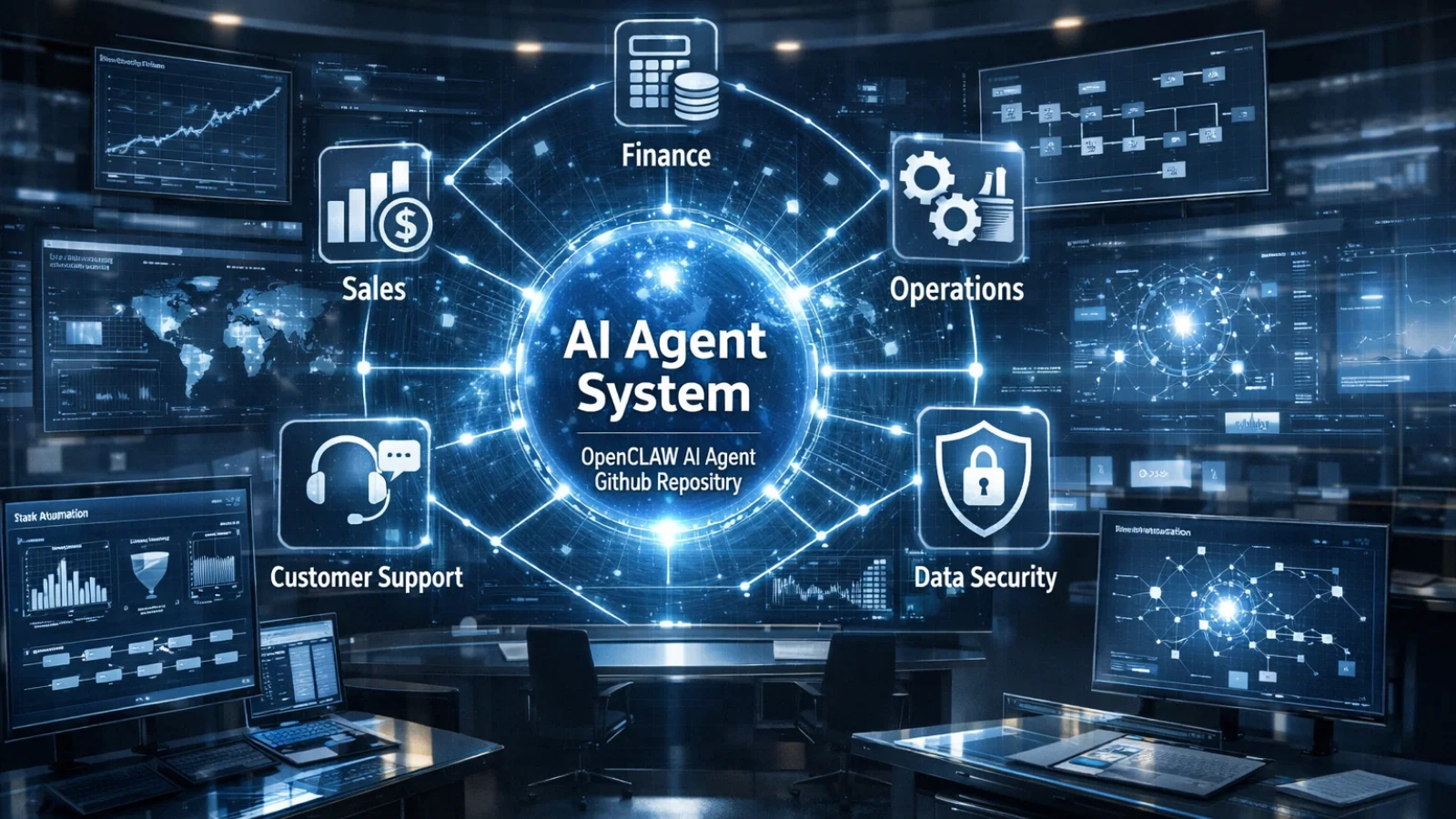
Most automation tools follow predefined rules. They trigger actions when specific conditions match. That approach works for basic processes but fails in dynamic environments.
The OpenClaw AI Agent GitHub Repository introduces contextual reasoning. Agents interpret data, assess intent, and determine next steps based on objectives. Instead of waiting for commands, they operate within assigned authority.
This design supports:
- Defined agent roles
- Structured delegation
- Cross-functional coordination
- Controlled escalation
Through this, enterprises build systems that resemble digital teams rather than static workflows.
Autonomous Agents vs Traditional Chatbots
Traditional chatbots respond to user prompts. They provide answers but rarely execute decisions.
Autonomous agents act with purpose.
Through OpenClaw GitHub, agents can:
- Retrieve data from internal systems
- Trigger workflows across departments
- Coordinate tasks between teams
- Generate structured performance reports
- Escalate exceptions when thresholds exceed limits
This difference matters to CEOs and founders. A chatbot improves communication efficiency. An autonomous agent improves operational efficiency.
For example, instead of simply answering a sales inquiry, an agent can:
- Pull client data
- Assess purchase history
- Draft a personalized response
- Notify the sales manager
- Update the CRM
That sequence delivers measurable productivity gains.
Multi-Agent Collaboration Frameworks
The real power of the OpenCLAW AI Agent GitHub Repository emerges when multiple agents collaborate.
One agent can gather market data.
Another can analyze the financial impact.
A third can generate a strategic summary for executives.
This collaboration mirrors organizational hierarchies. Each agent holds responsibility within its domain. Leadership retains oversight while automation handles execution.
Through OpenClaw GitHub, companies create digital ecosystems where agents:
- Communicate internally
- Share structured outputs
- Operate within defined permissions
- Maintain audit visibility
Such coordination increases scalability. As operations grow, organizations can deploy additional agents without restructuring core systems.
Resilience also improves. If one agent encounters an error, others continue operating within their domains. This distributed structure reduces single-point failure risks.
Real Operational Use Cases For CEOs
Executives seek outcomes, not experiments. The applications of OpenClaw GitHub directly support strategic priorities.
1. Automated Executive Reporting
Agents collect performance metrics, summarize KPIs, and deliver structured briefings. Leaders receive insights without manual data consolidation.
2. Customer Response Systems
AI agents manage inbound inquiries, route complex issues, and escalate critical concerns. Service quality improves while response time decreases.
3. Internal Knowledge Retrieval
Employees access policies, documentation, and historical records through structured agent queries. Productivity rises as information retrieval time drops.
4. Workflow Approvals
Agents monitor pending approvals, notify decision-makers, and record authorization trails. This approach reduces bottlenecks.
5. Sales Pipeline Updates
Agents track deal progression, flag stalled opportunities, and generate forecast summaries for leadership review.
Each of these use cases delivers tangible ROI. They reduce manual workload, improve response accuracy, and strengthen operational visibility.
The OpenClaw AI Agent GitHub Repository does not replace teams. It augments them. It does not compete with leadership. It supports it.
For CEOs, the value lies in the transformation from reactive tools to proactive systems. Through OpenClaw GitHub, organizations shift from answering questions to executing strategy.
Why 175K Stars Matter To Business Leaders?
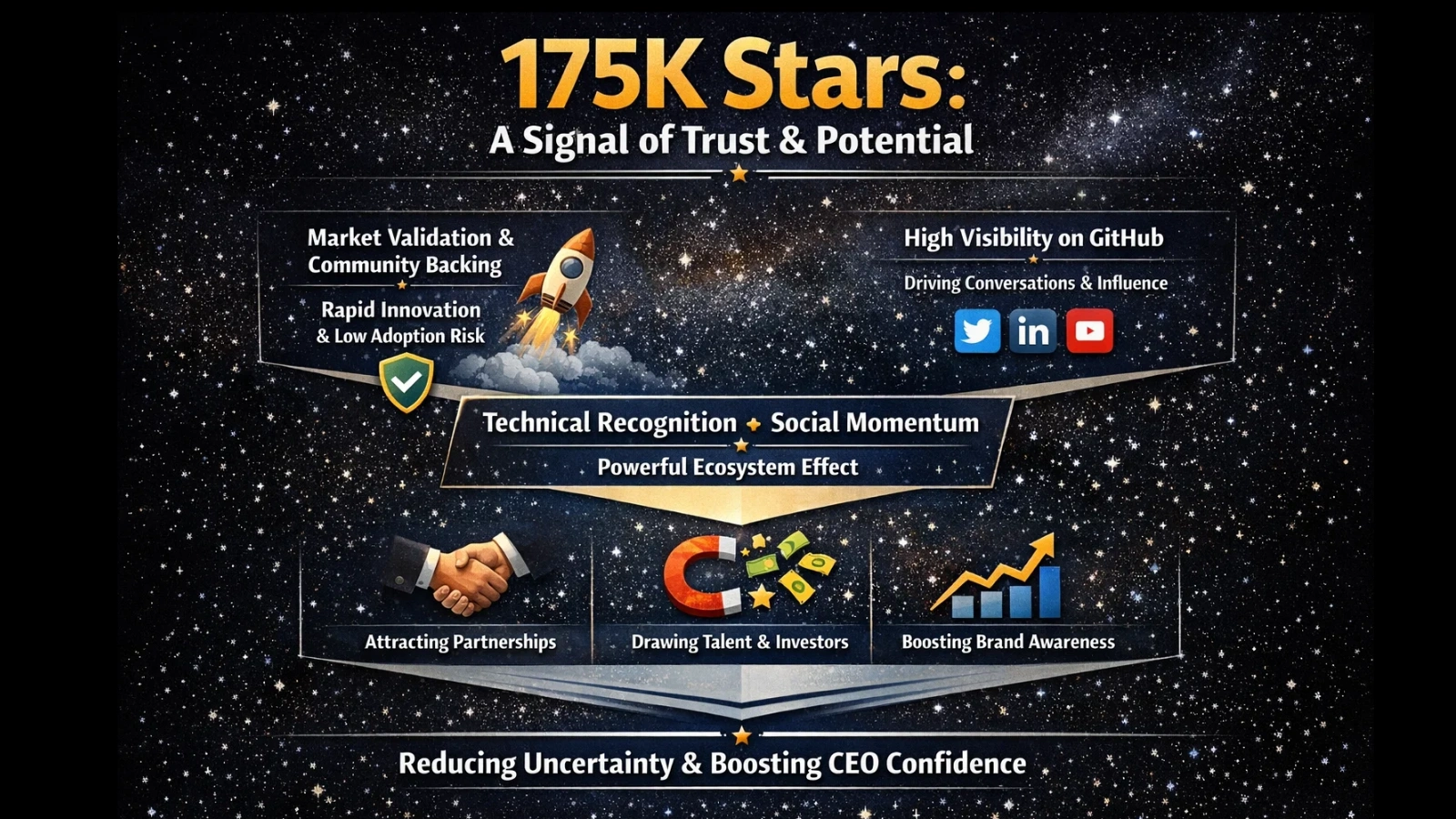
Market signals often reveal more than analyst reports, and 175,000 GitHub stars in two weeks send a clear message to business leaders about momentum, trust, and strategic relevance.
Market Validation and Network Effects
When OpenClaw GitHub gained 175K stars, it demonstrated market validation. Large communities contribute improvements, security reviews, and integrations.
Network effects accelerate development cycles.
Open-Source Credibility and Transparency
The visibility of the OpenClaw AI GitHub repository enhances credibility. Enterprises review commit histories and community contributions before adoption.
Transparency reduces uncertainty.
Reduced Vendor Lock-In Risks
Closed SaaS vendors may alter pricing or restrict features. OpenClaw GitHub minimizes that risk. Companies host and control the system.
Talent Attraction Advantages
Top engineers prefer open ecosystems. Organizations that implement OpenClaw GitHub signal innovation leadership. That reputation attracts technical talent.
The Business Case: Cost Control, Data Ownership, And AI Sovereignty
Owning Your AI Stack vs Renting It
Subscription tools create recurring costs. Infrastructure ownership through OpenClaw GitHub delivers long-term cost predictability.
Infrastructure Efficiency
Companies optimize hosting environments based on internal requirements. They allocate resources efficiently instead of paying for unused SaaS tiers.
Regulatory Compliance and Internal Governance
Data residency laws require strict oversight. Self-hosted AI through OpenClaw GitHub ensures internal governance control.
Long-Term Competitive Advantage
Organizations that build proprietary AI systems create barriers to entry. Competitors cannot replicate internal agent architecture easily.
Also Read:
How OpenClaw AI Integration Helps Businesses Earn $10K+ in 7 Hours?
Github openclaw: Everything You Need to Know About the OpenCLAW AI Project
How Enterprises Are Operationalizing OpenClaw?
Enterprises adopt OpenClaw GitHub to drive measurable operational efficiency across departments. Instead of relying on manual coordination, organizations deploy AI agents to manage structured workflows and improve execution speed.
In real-world scenarios, companies automate cross-functional processes such as sales-to-finance reporting, ticket escalation, HR approvals, and operational alerts. This reduces delays and strengthens accountability.
Internal AI assistants built on OpenClaw GitHub help employees retrieve documents, answer policy questions, and access real-time data. Teams spend less time searching for information and more time delivering results.
Executives also use AI agents for dashboard automation. Agents compile KPIs, highlight revenue trends, and flag performance risks in structured summaries.
At the department level, marketing, finance, and operations teams coordinate tasks through intelligent agents. This orchestration improves visibility, reduces friction, and supports faster decision-making across the organization.
Bridging The Gap Between Open Source And Enterprise Execution
Open-source innovation creates opportunity, but enterprise success demands structure, security, and strategic execution. Many organizations recognize the potential of powerful repositories, yet few translate that potential into scalable, production-ready systems. Bridging the gap between open source and enterprise execution requires more than installation—it requires architecture, governance, and operational discipline.
The Role of Globussoft.AI
Open-source innovation moves fast. Enterprise execution requires structure, security, and accountability. Many companies explore OpenClaw GitHub, recognize its potential, but struggle to convert a repository into a production-ready AI infrastructure. The gap between installation and enterprise deployment often creates delays, misconfigurations, and security exposure.
This is where Globussoft AI plays a strategic role.
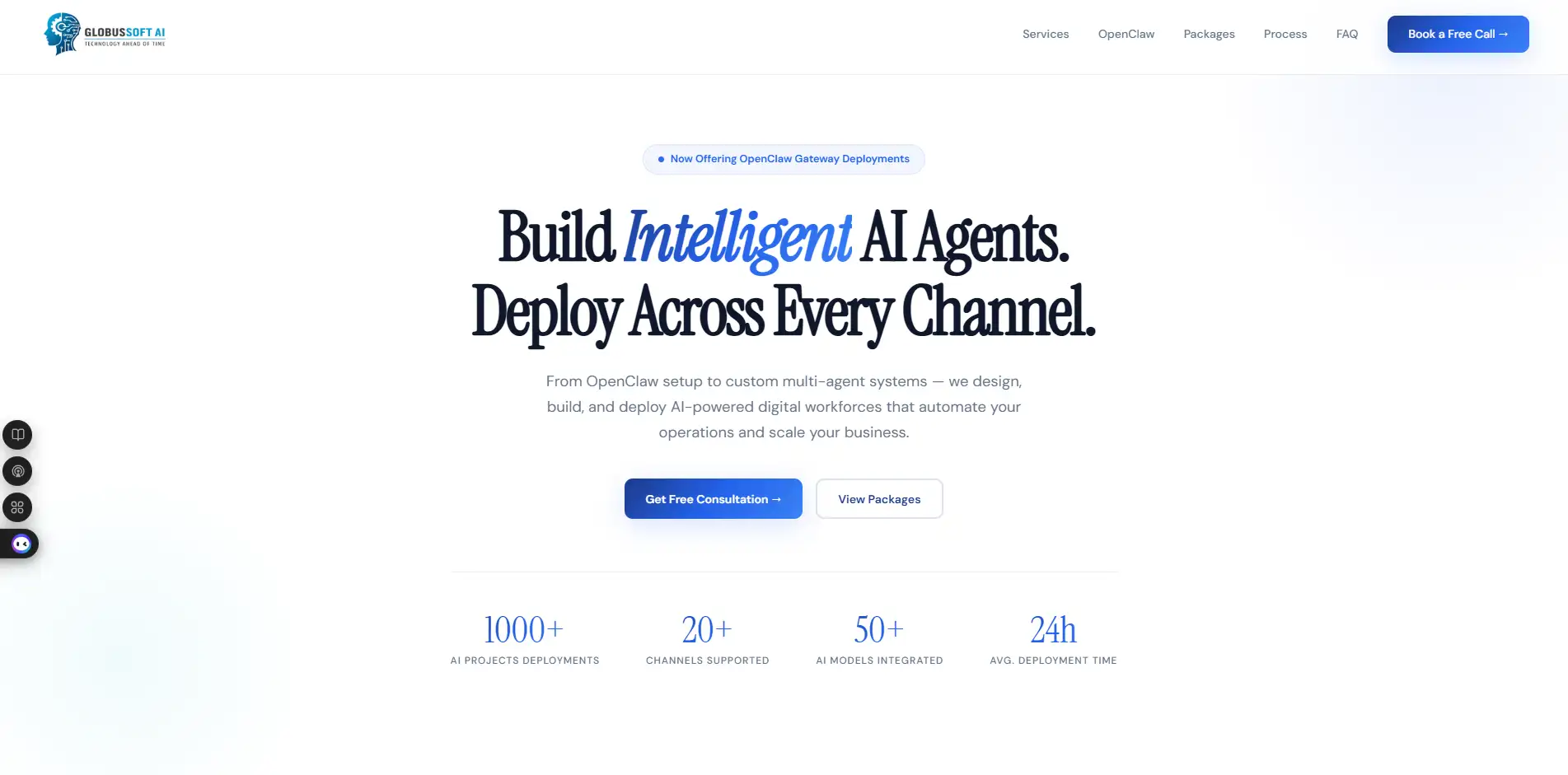
Through its dedicated OpenClaw Expert Services page (globussoft.ai/openclaw-expert-services), the company positions itself as an implementation partner for businesses that want reliability and speed. The website clearly outlines a structured approach that moves beyond basic setup.
Their services include:
- Strategic AI Consulting
They assess business goals, identify automation opportunities, and design a roadmap aligned with measurable outcomes. - Production Deployment
They configure and deploy OpenClaw in secure, scalable environments rather than test servers or temporary setups. - Multi-Agent System Design
The architect coordinated agent ecosystems tailored to business workflows, departments, and reporting structures. - Secure Gateway Configuration
They implement channel integrations with proper authentication, encryption, and governance controls. - Voice AI Integration
They extend automation into voice-based systems for broader operational coverage.
Instead of experimenting with isolated installs from OpenClaw GitHub, organizations partner with specialists who understand infrastructure, compliance, and enterprise scalability. This structured approach reduces operational risk, accelerates deployment timelines, and strengthens return on investment.
For decision-makers, the website communicates one clear message: open-source potential becomes enterprise advantage only when executed with discipline and expertise.
Is OpenClaw GitHub Enough For Your Organization?
The right choice depends on your internal capability and strategic priorities. Teams with strong DevOps maturity and AI engineering experience can deploy OpenClaw GitHub on their own infrastructure and manage updates, integrations, and performance tuning internally.
However, complexity increases when compliance rules, uptime guarantees, and multi-agent orchestration enter the equation. Large enterprises often require structured governance, advanced security controls, and predictable scalability. In such cases, expert deployment becomes critical to avoid operational risk.
CTOs and CEOs should assess four core factors: internal technical depth, security requirements, budget allocation, and time-to-market expectations. If internal teams can support long-term maintenance and architecture design, independent deployment may work. If speed, reliability, and risk control matter more, expert guidance may deliver stronger strategic value.
Final Thoughts
A surge to 175K stars reflects more than curiosity. It signals trust, demand, and strategic relevance. OpenClaw GitHub represents a new category of enterprise AI infrastructure built on transparency, flexibility, and ownership.
Business leaders who treat this development as a trend may fall behind. Those who evaluate and implement wisely may secure long-term operational advantage.
The conversation has shifted. AI no longer belongs solely to SaaS vendors. With this, enterprises gain the power to build, control, and scale intelligent systems on their own terms.
FAQs
- What makes OpenClaw GitHub different from traditional chatbot platforms?
It supports autonomous AI agents that execute tasks, coordinate workflows, and integrate across multiple systems. Traditional chatbots mainly respond to queries, while OpenClaw enables structured, goal-driven automation. - Can enterprises deploy OpenClaw GitHub without external support?
Organizations with experienced DevOps and AI teams can manage deployment internally. However, enterprises that require compliance controls, high availability, and multi-agent orchestration often benefit from expert implementation support. - Is OpenClaw GitHub secure for enterprise use?
Yes, when configured properly. Since it supports self-hosted deployment, companies maintain full control over infrastructure, data access, and security policies. Proper setup, monitoring, and governance ensure enterprise-grade protection.