Artificial intelligence is no longer just working quietly in the background; it’s now talking, responding, and interacting with us in real time. From chatbots on websites to voice assistants on our phones, AI conversation has become a core part of how businesses and users communicate.
But what exactly powers these interactions? And why is AI-powered conversations becoming such a critical tool in 2026?
This guide breaks it all down – how it works, where it’s used, and how you can start using it effectively.
Listen To The Podcast Now!
What Is AI Conversation?

At its core, AI-powered conversations refers to the ability of machines to interact with humans through natural, two-way communication, either via text or voice.
Instead of clicking buttons or filling out forms, users can simply ask for what they need. The AI understands the request, processes it, and responds intelligently, often completing tasks along the way.
This is what makes AI conversation so powerful. It removes friction from interactions and makes communication feel more human.
You’ve likely already experienced it:
- AI Chatbots answering support queries
- Voice assistants responding to commands
- AI tools helping draft messages or emails
These are all examples of AI voice conversation and text-based conversational systems working in real time.
How AI Conversation Works (Behind the Scenes)
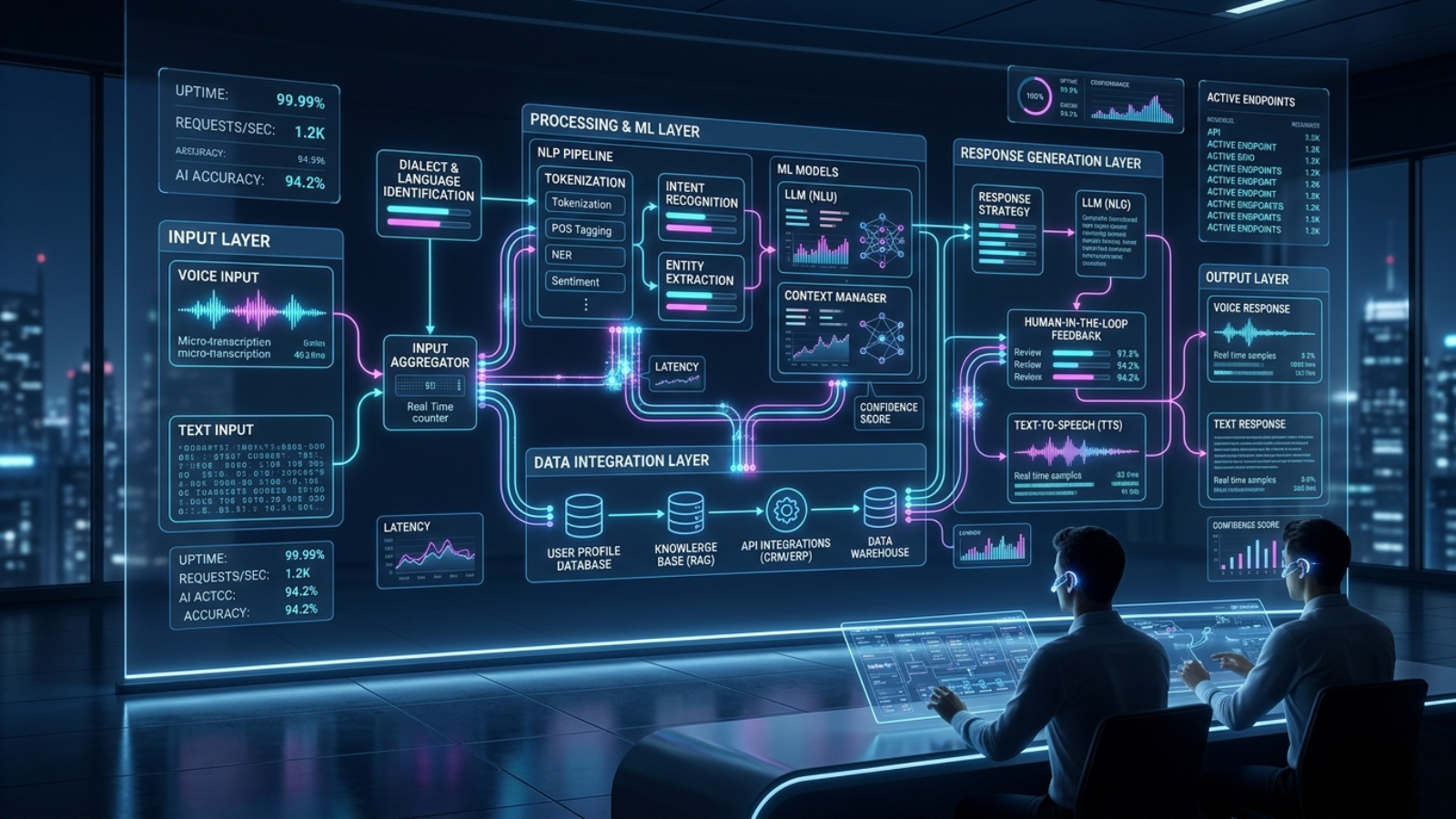
Even though it feels simple on the surface, conversation AI relies on multiple advanced technologies working together seamlessly.
1. Natural Language Processing (NLP)
NLP allows AI to understand human language. It breaks down sentences, identifies intent, and extracts meaning.
For example:
- “Where’s my order?”
- “Track my delivery”
Both mean the same thing and NLP helps AI recognize that.
2. Machine Learning (ML)
Machine learning helps the system improve over time. The more interactions it handles, the better it becomes at:
- Understanding intent
- Predicting responses
- Handling complex queries
This is why modern conversation generator tools feel smarter with usage.
3. Speech Recognition (for Voice AI)
In AI voice conversation, speech recognition converts spoken words into text.
It must handle:
- Accents
- Background noise
- Different speaking styles
Accuracy here is crucial, one misheard word can change the entire meaning.
4. Natural Language Generation (NLG)
Once the AI understands the query, it needs to respond naturally. NLG helps generate human-like replies instead of robotic answers.
5. Integrations & Data Access
AI doesn’t just talk, it acts.
It connects with systems like:
- CRM tools
- Databases
- Payment systems
This allows it to:
- Check order status
- Update account details
- Book appointments
The Simple Flow
Here’s how AI-powered conversations typically works:
- User inputs text or voice
- AI analyzes intent
- Relevant data is fetched
- Response is generated
- System learns from interaction
This entire process happens in seconds.
AI Conversation vs Chatbots: What’s the Difference?
A common misconception is that chatbots and AI-powered conversations are the same.
They’re not.
Traditional Chatbots
- Rule-based
- Follow scripts
- Limited understanding
Conversation Systems
- Understand natural language
- Maintain context
- Provide dynamic responses
In short, chatbots follow instructions.
AI-powered conversations understands intent.
Conversation AI – vs Generative AI
Another important distinction:
- Generative AI creates content (text, images, etc.)
- Conversation AI focuses on real-time dialogue
While generative AI powers many conversational systems, not all generative tools are built for interaction.
Key Benefits of AI – Conversation
1. Faster Customer Support
AI can handle multiple queries instantly, reducing wait times significantly.
2. 24/7 Availability
Unlike human teams, AI never sleeps. It provides round-the-clock assistance.
3. Cost Efficiency
Businesses reduce dependency on large support teams while maintaining service quality.
4. Consistent Responses
AI ensures uniform communication, eliminating human errors or inconsistencies.
5. Personalized Interactions
By analyzing user data, AI can tailor responses based on preferences and history.
Practical Examples of AI Conversation
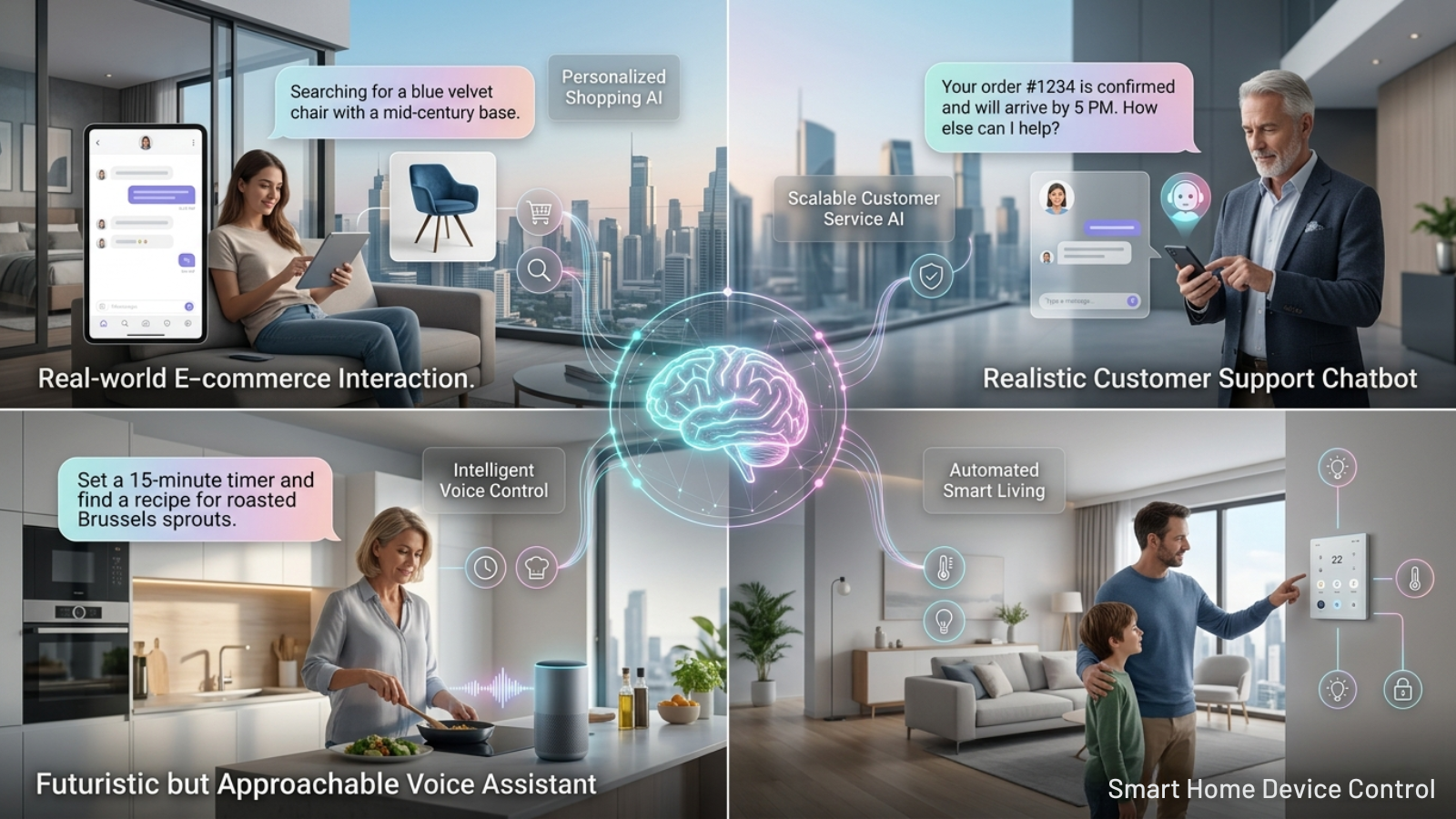
Let’s explore where Conversation AI is making the biggest impact:
1. Customer Support Automation
One of the most common uses of AI-powered conversations is in customer service.
AI can:
- Answer FAQs
- Track orders
- Resolve basic issues
This reduces workload for human agents and speeds up resolutions.
2. AI Voice Conversation in Call Centers
Instead of navigating IVR menus, users can simply speak.
Example:
“Change my flight booking.”
The AI understands and processes the request instantly.
3. E-commerce Assistance
AI helps users:
- Find products
- Get recommendations
- Complete purchases
This improves both experience and conversions.
4. Internal Business Operations
Companies use conversation generator tools to:
- Automate HR queries
- Handle IT support tickets
- Assist employees with workflows
5. Healthcare Support
AI assists with:
- Appointment scheduling
- Symptom checking
- Patient communication
6. Smart Devices & IoT
Devices like:
- Smart speakers
- Wearables
- Home automation systems
All rely on AI voice conversation to function.
Read More:
How To Leverage An AI Powered Chatbot For Customer Support?
How To Use Generative AI For Business Growth In 2026?
How to Start Conversation With AI Assistant
If you’re new to this space, you might wonder:
how to start conversation with AI assistant?
It’s simpler than you think.
1. Be Clear and Direct
Instead of vague inputs, use clear commands:
- “Set a reminder for 5 PM”
- “Show me marketing ideas”
2. Use Natural Language
You don’t need special commands. Speak naturally:
- “Can you help me write an email?”
- “What’s the weather today?”
3. Ask Follow-Up Questions
Modern AI understands context, so you can continue:
- “Make it shorter”
- “Add more examples”
4. Experiment with Tasks
Try different use cases:
- Writing
- Research
- Planning
- Problem-solving
The more you use it, the better it adapts.
How Businesses Can Build AI Conversation Systems
If you’re planning to implement them in your business, here’s a simplified approach:
Step 1: Identify Use Cases
Start with high-volume, repetitive queries like:
- Order tracking
- Password resets
- FAQs
Step 2: Define Intents
Understand what users are asking for:
- “Login issue”
- “Payment failure”
- “Delivery update”
Step 3: Train the AI
Provide variations of queries so the system learns different ways users ask the same thing.
Step 4: Add Context & Data
Integrate systems so AI can take real actions, not just respond.
Step 5: Test & Improve
Monitor performance and continuously refine responses.
Challenges of Conversation AI
Despite its advantages, it isn’t perfect.
1. Language Complexity
Slang, tone, and sarcasm can still confuse AI.
2. Voice Recognition Issues
Accents and background noise affect accuracy in AI voice conversation.
3. Privacy Concerns
AI relies on data, which raises security and trust issues.
4. Limited Understanding
AI may struggle with highly complex or emotional queries.
As businesses move from experimentation to real implementation, choosing the right AI partner becomes critical. Platforms like Globussoft AI are helping companies go beyond basic automation by building intelligent AI agents that can handle real-world workflows, combining AI-powered conversations, automation, and machine learning into scalable business solutions.
Globussoft AI: Building Smarter AI Conversations for Modern Businesses
As it continues to evolve, businesses need more than just basic chatbots—they need intelligent systems that can automate workflows, personalize interactions, and scale with growth.
This is where Globussoft AI stands out.
With a strong focus on generative AI and machine learning, Globussoft AI helps businesses design and deploy advanced AI agents that go beyond simple conversations and deliver real business outcomes.
Key Features of Globussoft AI
- AI Agent Development
Build intelligent AI agents that handle customer queries, automate repetitive tasks, and streamline internal operations—improving efficiency while reducing manual effort. - LLM-Powered Chatbots
Leverage advanced large language models to create highly responsive and context-aware chatbots that deliver human-like AI-powered conversations experiences. - Workflow Automation
Automate repetitive processes across departments—from customer support to HR—ensuring faster execution and fewer errors. - Personalized Interactions at Scale
Deliver tailored responses based on user behavior, preferences, and history—making every interaction more relevant and engaging. - Seamless AI/ML Integration
Integrate AI capabilities into your existing systems, tools, and workflows without disrupting your operations. - End-to-End AI Support
From strategy and development to deployment and optimization, Globussoft AI provides complete support throughout your AI journey.
AI – conversation is only as powerful as the system behind it.
If you’re looking to move beyond basic tools and build truly intelligent, scalable AI solutions, Globussoft AI can help you get there.
👉 Explore how AI agents can transform your business workflows and give you a competitive edge
Best Practices for Using AI – Conversation
To get the most out of conversation AI, follow these:
-
Focus on High-Impact Areas
Start with tasks that offer clear ROI.
-
Keep Human Backup
Always allow escalation to human agents.
-
Train Continuously
Update AI with new data and interactions.
-
Monitor Performance
Track metrics like:
- Response accuracy
- Resolution rate
- User satisfaction
The Future of Conversation by AI (2026 and Beyond)
The future of Conversation AI is evolving rapidly.
Here’s what to expect:
-
More Human-Like Interactions
AI will better understand emotions, tone, and context.
-
Advanced AI Voice Conversation
Voice assistants will sound more natural and responsive.
-
Deeper Personalization
AI will tailor interactions based on behavior and preferences.
-
Seamless Omnichannel Experience
Users will switch between chat, voice, and apps without losing context.
-
AI as a Digital Assistant Everywhere
From workplaces to homes, AI will become a constant companion.
Final Thoughts
AI-powered conversations is no longer a futuristic concept, it’s a present-day necessity.
From improving customer experience to automating operations, conversation ai is reshaping how we interact with technology.
Whether you’re a business looking to scale or an individual exploring smarter tools, understanding how conversation AI works gives you a clear advantage.
And as tools like conversation generator continue to evolve, one thing is certain:
The way we communicate with machines will soon feel just like talking to another human.
Frequently Asked Questions (FAQs)
1. What is AI – conversation?
It refers to the ability of machines to communicate with humans using natural language, either through text or voice. It enables real-time, two-way interactions where AI understands intent and responds intelligently.
2. How does conversation AI work?
Conversation AI works using technologies like natural language processing (NLP), machine learning (ML), and speech recognition. It analyzes user input, understands intent, fetches relevant data, and generates a response instantly.
3. What is the difference between chatbots and AI conversation?
Traditional chatbots follow predefined rules and scripts, while conversation AI systems understand natural language, maintain context, and provide dynamic, human-like responses.
4. What are some examples of AI – conversation?
Common examples include:
- Customer support chatbots
- Voice assistants like Siri or Alexa
- AI tools for writing and communication
- Smart devices using voice commands