
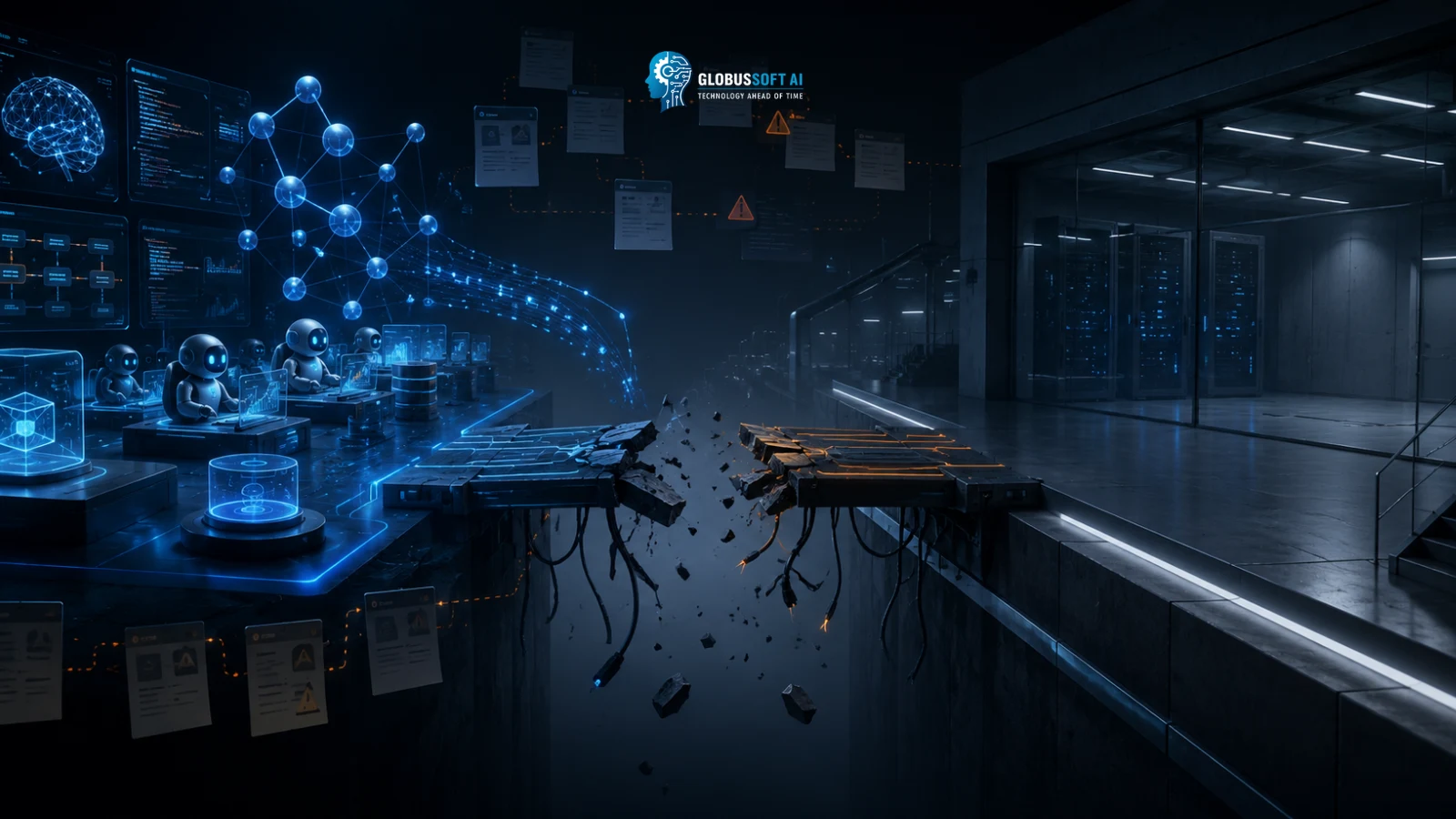
Eighty-eight percent. That is the share of AI agent projects that never reach production, according to a cross-industry deployment analysis that draws on RAND Corporation and
Gartner research. Gartner predicts that by 2027, over 40% of AI projects will be cancelled due to unclear costs and ROI, and Deloitte’s 2025 tech trends report confirms the pilot purgatory phenomenon is accelerating, not improving. Those two facts live in the same paragraph for a reason. The hype is real. So is the graveyard.
I’ve watched enough of these projects stall to have a theory about why. It is not a model problem. It is not a data problem. It is a handoff problem.
Listen To The Podcast Now!
The Handoff Problem Nobody Talks About:
Here is the typical trajectory. A founding team or a mid-market VP of Engineering gets excited about agents. They hire a consultancy to scope it, another team to build a prototype, and a third team, or the original team, months later, to productionize it. Each transition loses context.
The engineer who understood why the prompt was written that way has moved on. The model choice that worked in staging doesn’t behave the same way in production with real user data. The business logic embedded in the agent reflects a product spec that’s now three months stale.
This is not a failure of ambition. It is a structural failure baked into how most organizations buy AI development services.
Globussoftai was built specifically to attack this structure. The embedded pod model puts engineers directly into your Slack and codebase, from initial scoping through production, with no offshore handoffs in between. That single constraint eliminates the context loss that kills most pilots.
What “30 Days to First Agent” Actually Requires:
The goal of shipping a first agent within 30 days, deployed to real users, sounds like a marketing promise. It is actually a discipline constraint. To hit that window, you cannot scope a 12-tool agent. You pick one workflow, instrument it properly, and get signal from actual usage before adding complexity.
The principle is straightforward: validate one working workflow before expanding scope. Teams that ship a dozen tools before confirming impact almost universally discover they built the wrong dozen. A canary deployment at 5% of real traffic tells you more than six months of staging tests. Staged test data masks edge cases; live data doesn’t.
The agents that reach production share a common trait: they were constrained early and expanded deliberately. The inbox intelligence agent, for instance, starts with one job, rescuing misclassified messages. That agent alone recovers 100+ legitimate messages per day that spam filters incorrectly suppress. That is a measurable outcome from a narrow scope. It is not an accident.
The Model Choice Problem Is Worse Than You Think:
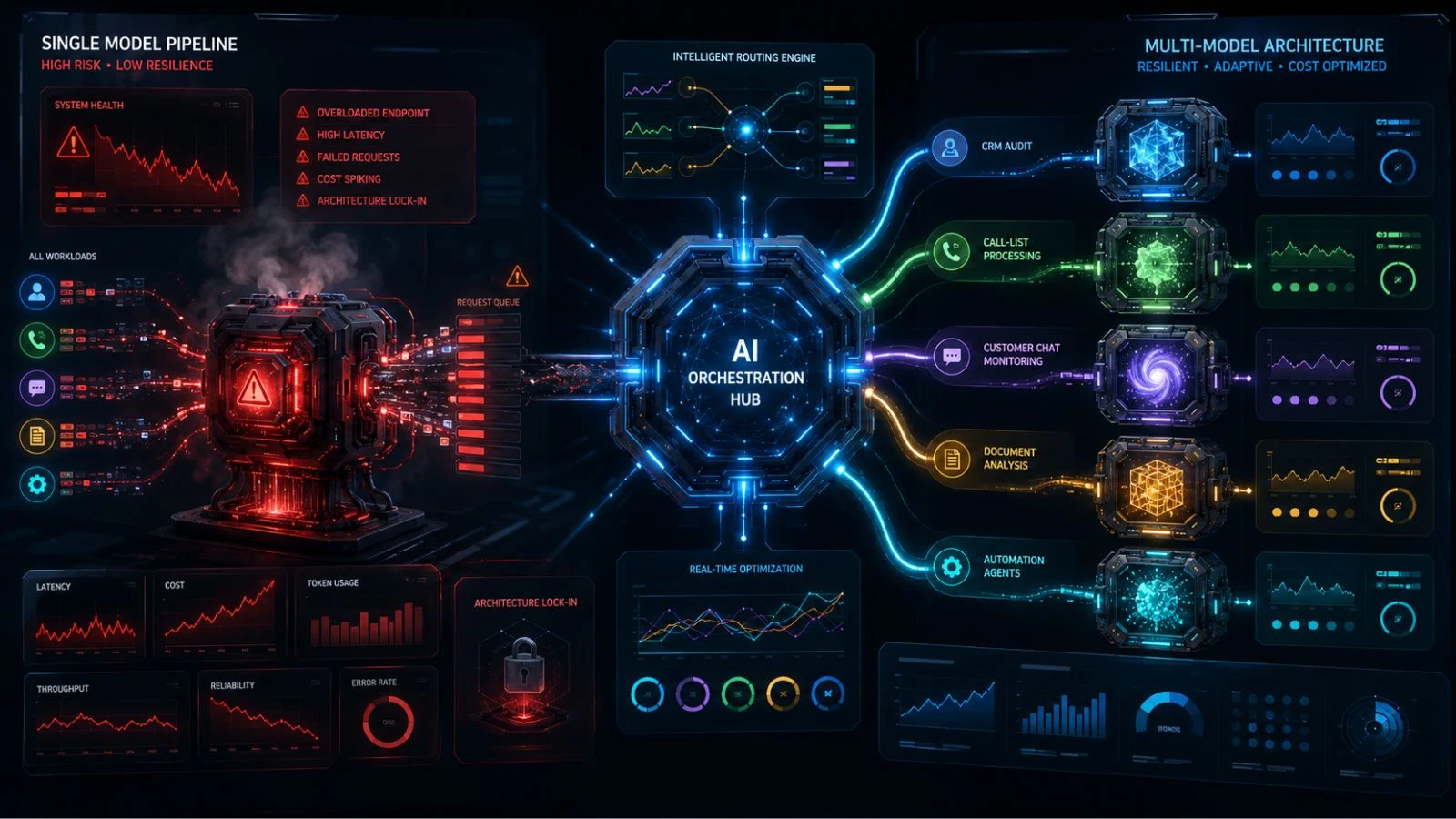
A team evaluates GPT-4o in a sandbox, and it works well. They don’t evaluate latency under load, cost per thousand calls at production volume, or what happens when that model’s behavior changes in a silent update. By the time these issues surface, the architecture is locked.
Multi-model flexibility is not a nice-to-have. It is a production requirement. An embedded pod that supports Claude, GPT, Gemini, and Qwen in the same deployment isn’t hedging; it’s giving the team the ability to route different tasks to different models based on cost, latency, and capability profiles. The CRM audit and call list agent has a different tolerance for latency than the customer chat monitor agent. Treating them identically is an early sign a project won’t survive its first quarter in production.
The Cost Structure Nobody Audits:
Frontier-lab FDE programs, Microsoft Frontier, Google Cloud FDEs, and Anthropic Solutions run $500k–$2M per year per embedded engineer, with contract minimums starting at $250k. That price point is inaccessible for the founders and mid-market teams who have the most to gain from AI agents and the least margin for a failed pilot. And the 60–70% of actual AI agent build costs that appear in neither vendor quotes nor hiring budgets make the real exposure even larger.
An embedded pod priced at approximately one-tenth that cost changes the risk calculus entirely. A team that can’t afford an 18-month commitment at frontier-lab rates can afford a 30-day sprint to a deployed agent, followed by weekly metric reviews and model-choice optimization on retainer.
See how the embedded model stacks up in practice → AI agent solutions for business automation.
That weekly review cadence matters more than it sounds. AI agents are not static software. Prompts drift. Model updates change output distributions. Usage patterns expose edge cases you didn’t anticipate. The teams that treat agent deployment as a launch event, rather than an ongoing optimization loop, are the same teams whose agents quietly degrade until someone notices the metrics are wrong.
Why Enterprise Scale Doesn’t Mean Enterprise Complexity?
The ML pipeline built for AI classification of workforce activity at enterprise scale was built by people who stayed in the codebase long enough to understand the real constraints. Same story for the multi-model ad classification system for an ad-intelligence SaaS. Not the constraints in the spec document, the ones that only appear when the model sees real data from real users in real conditions.
The Chingari social platform reaching 100M+ users over six years on a Globussoft-built AI stack is a product of that same continuity. Forty-plus products shipped, 100M+ users reached, 300+ engineers– those numbers don’t come from handoff-heavy engagement models. They come from embedded teams who own outcomes, not deliverables.
The Three Failure Modes You Can Actually Prevent:
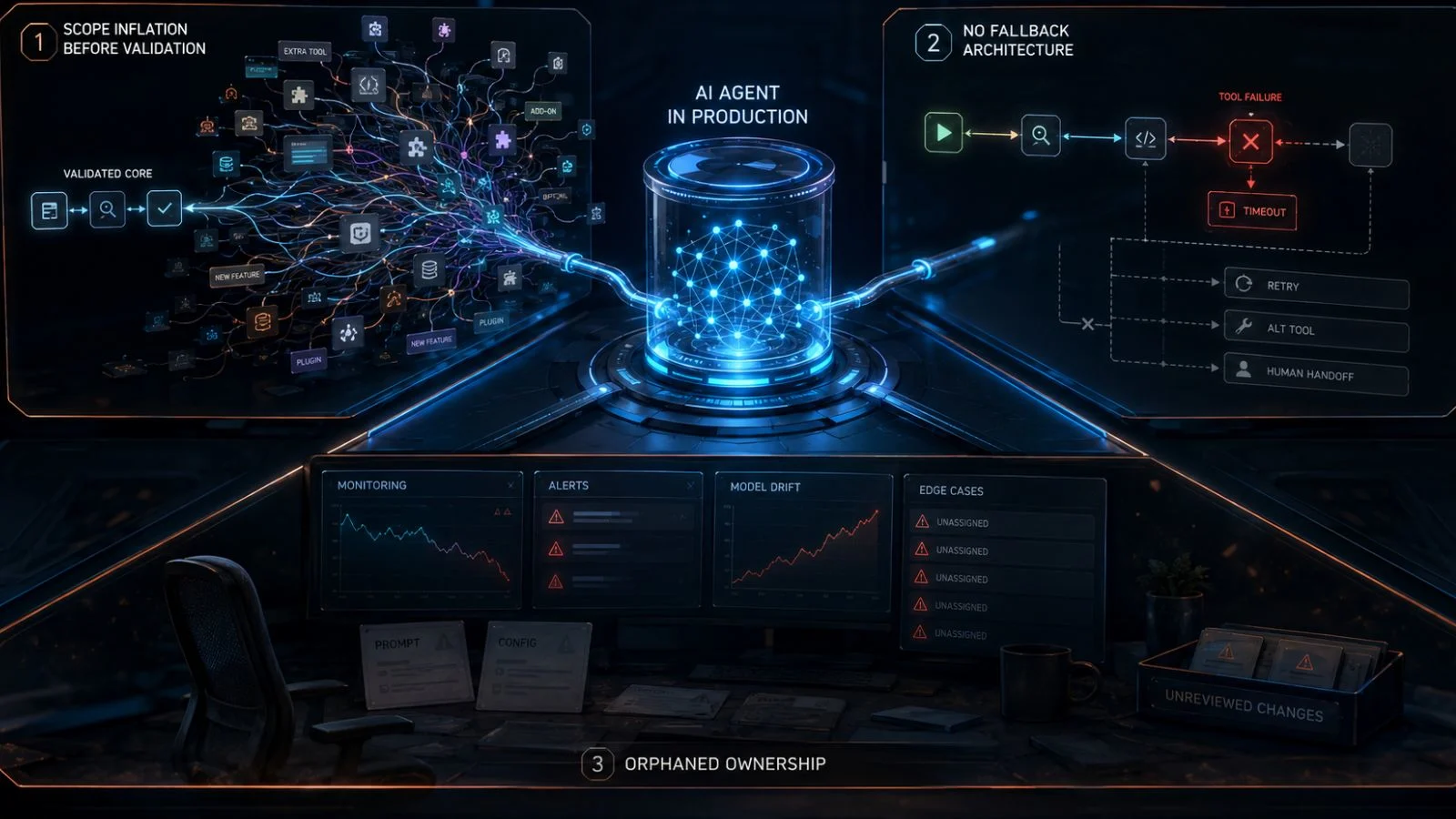
Most AI agent post-mortems describe the same three failure modes in different language.
Failure Mode 1: Scope Inflation Before Validation:
Teams add tools and capabilities before they have evidence the core workflow works. The fix is not discipline; it is a structural commitment to deploy narrow before you expand. As our enterprise AI agents guide for 2026 documents, the teams that ship a working workflow and iterate on it are the ones that compound value. Teams that ship a full feature set before confirming impact get rebuilt from scratch. Custom agent development done right front-loads validation, not features.
Failure Mode 2: No Fallback Architecture:
When an agent tool fails, and it will, the system needs timeouts, retries, and a human handoff path. Agents without fallbacks don’t fail gracefully; they fail silently. Users stop trusting them before anyone on the engineering side notices. This is a known failure mode: teams deploy enterprise AI agents expecting chatbot-like behavior, underestimating the need for structured task design, integration architecture, and fallback handling, causing projects to stall mid-flight.
Failure Mode 3: Orphaned Ownership:
The agent ships. The project team disbands. Before long, nobody knows who to call when output quality drops. That is not a theory; it is the mechanism behind most production degradations. No one tracks prompts. No one catches model drift. No one responds when edge cases accumulate into a pattern. A retainer model with weekly metric, prompt, and model reviews isn’t overhead. It is the maintenance contract that keeps the 12% of agents that do reach production from quietly joining the 88%.
What a Working Engagement Actually Looks Like?
An embedded pod drops into your Slack and codebase. Scoping happens in the same environment as production. The first agent ships within 30 days to real users. From there: weekly reviews of metrics, prompts, and model choices. A fractional CTO available for board and investor updates. Monthly executive reviews with founder Sumit Ghosh for teams on retainer.
That structure produces concrete results. In IT automation alone, resolution time for tasks like resetting access credentials and diagnosing network issues has dropped from hours to minutes. That is not a theoretical projection. It is a documented outcome from deployed agents running in real enterprise environments, the kind of signal a 30-day sprint can surface that a six-month consulting engagement, handed off twice, rarely reaches.
If your pilot has been running for more than 90 days without a production deployment, something structural is wrong. Work with Globussoftai’s embedded pod to ship your first agent in 30 days, and actually keep it running.