
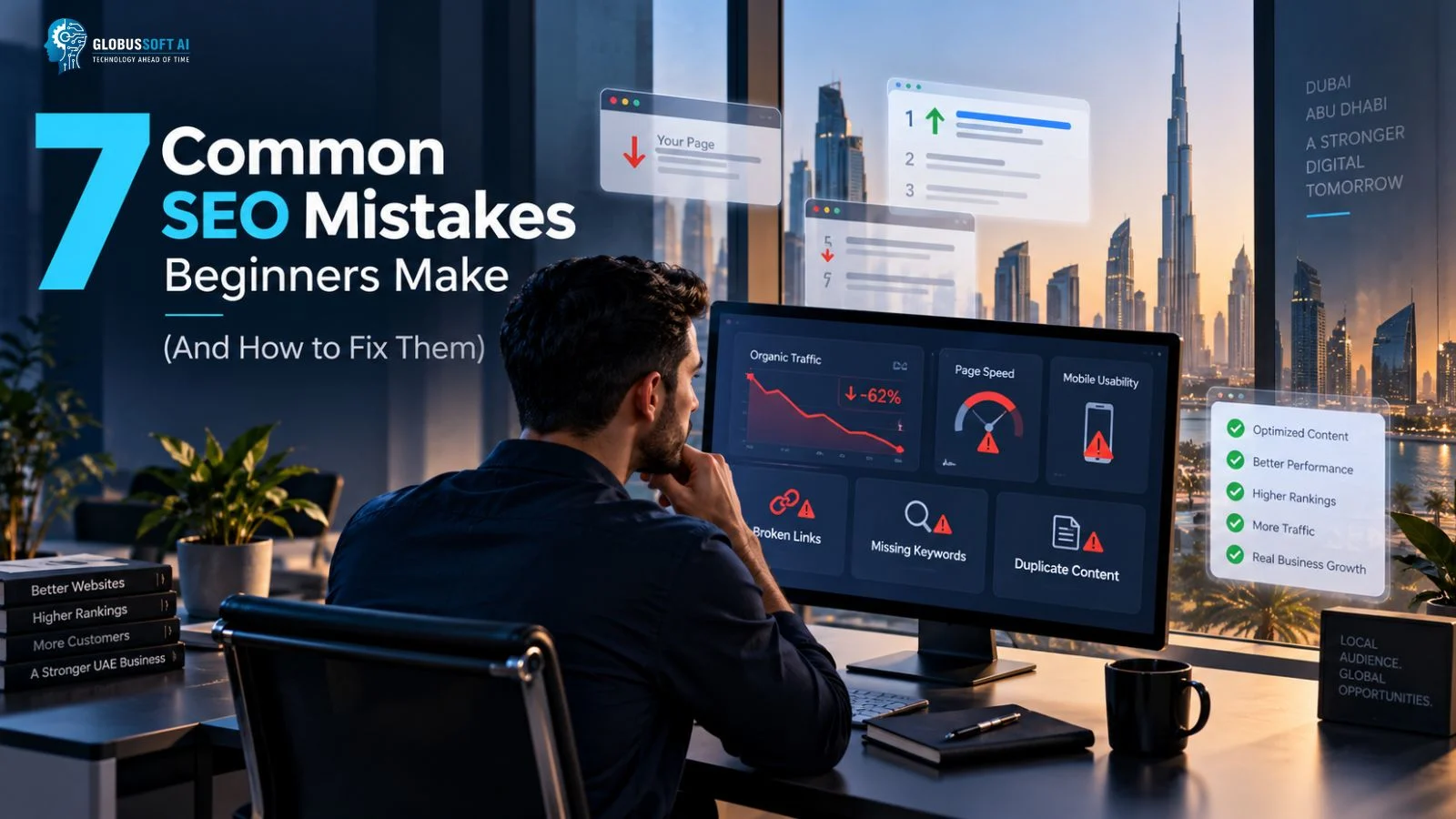
Launching a website in Dubai or Abu Dhabi feels exciting, until the traffic never arrives. More often than not, the culprit isn’t bad luck. It’s a handful of avoidable SEO mistakes that quietly push your pages down the search results. Beginners are especially prone to them, because the basics look simple while the small details decide who ranks.
In the UAE, the stakes are even higher. Your audience switches between Arabic and English, searches mostly on mobile, and compares dozens of local competitors in seconds. One misstep can turn into a costly SEO failure in MENA before you even notice. This guide walks through seven common SEO mistakes, explains why they happen, and shows you how to fix each one with practical, beginner-friendly steps.
Listen To The Podcast Now!
Mistake 1: Skipping Keyword Research and Search Intent:
Many beginners choose keywords by gut feeling, then wonder why nobody finds their pages. Keyword research reveals what people actually type, while search intent reveals what they want once they land on your site. A page selling office furniture won’t rank if searchers are looking for a buying guide. This also explains why SEO fails in the Middle East for so many brands: they translate English keywords word for word and ignore how UAE residents really search, whether in Arabic, English, or a mix of both.
How to fix it: Use Google Keyword Planner and Search Console to find real queries. Group them by intent, then assign one main keyword to each page. Before writing, check what already ranks in the UAE for that term and aim to be more useful. Doing this early prevents many later SEO mistakes.
Mistake 2: Neglecting On-Page Basics:
Title tags, meta descriptions, headings, and image alt text are the first things search engines read. Beginners often leave them blank, duplicate them across pages, or stuff them with keywords until they read like spam. Both extremes hurt rankings and click-through rates, and they are among the easiest SEO mistakes to spot in an audit.
How to fix it: Write a unique title of about 60 characters and a meta description of about 155 characters for every page. Use a single H1, logical subheadings, and descriptive alt text. Write for people first, then make sure your main keyword appears naturally. A clear title also gives searchers a reason to click your result instead of a competitor’s.
Mistake 3: Ignoring Mobile Speed and User Experience:
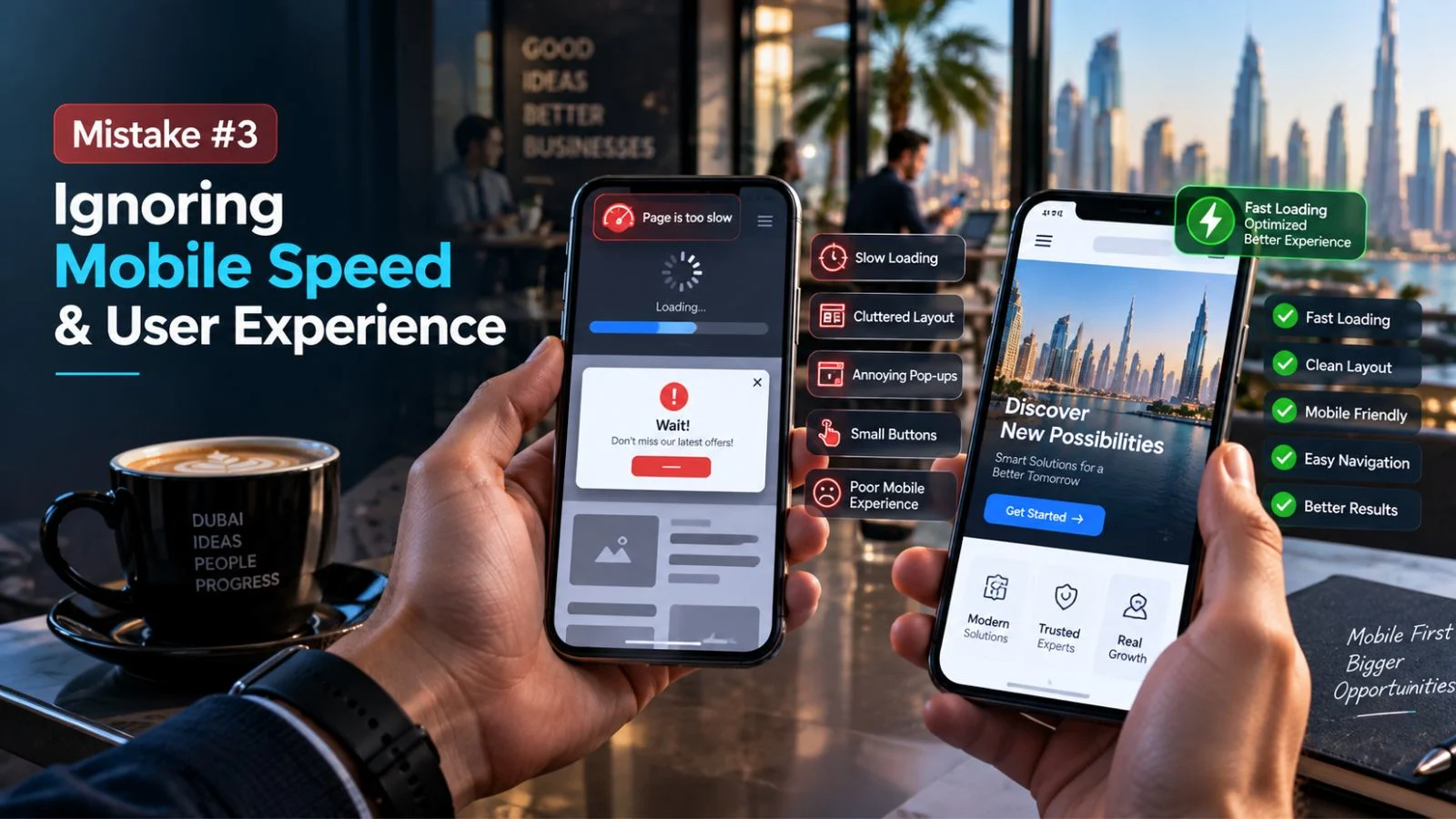
Most people in the UAE search from their phones. If your page takes more than a few seconds to load, or the layout breaks on a small screen, visitors leave, and search engines take note. A slow page can lose a customer before your headline is even read, whether they’re in a Dubai café or stuck in traffic. Oversized images, cluttered pop-ups, and tiny buttons are common causes, and they top the list of SEO mistakes on new websites.
How to fix it: Test your pages with Google PageSpeed Insights, compress images, choose reliable hosting, and use a responsive design. Design for the phone screen first, then scale up to desktop.
Mistake 4: Publishing Thin or Copied Content
Short, generic, or copied pages are classic SEO mistakes because they give search engines no reason to rank you. Duplicate content can also dilute your visibility. Beginners often rewrite a competitor’s article with a few words swapped, which adds nothing new for readers.
How to fix it: Answer the question better than anyone else, using original examples, local insights, and a clear structure. Add UAE-specific details such as prices in AED, city examples, or local regulations. Run every draft through a plagiarism checker before you publish. Fresh, useful pages earn shares and backlinks naturally, which strengthens your authority over time.
Mistake 5: Overlooking Local SEO and Regional Differences:
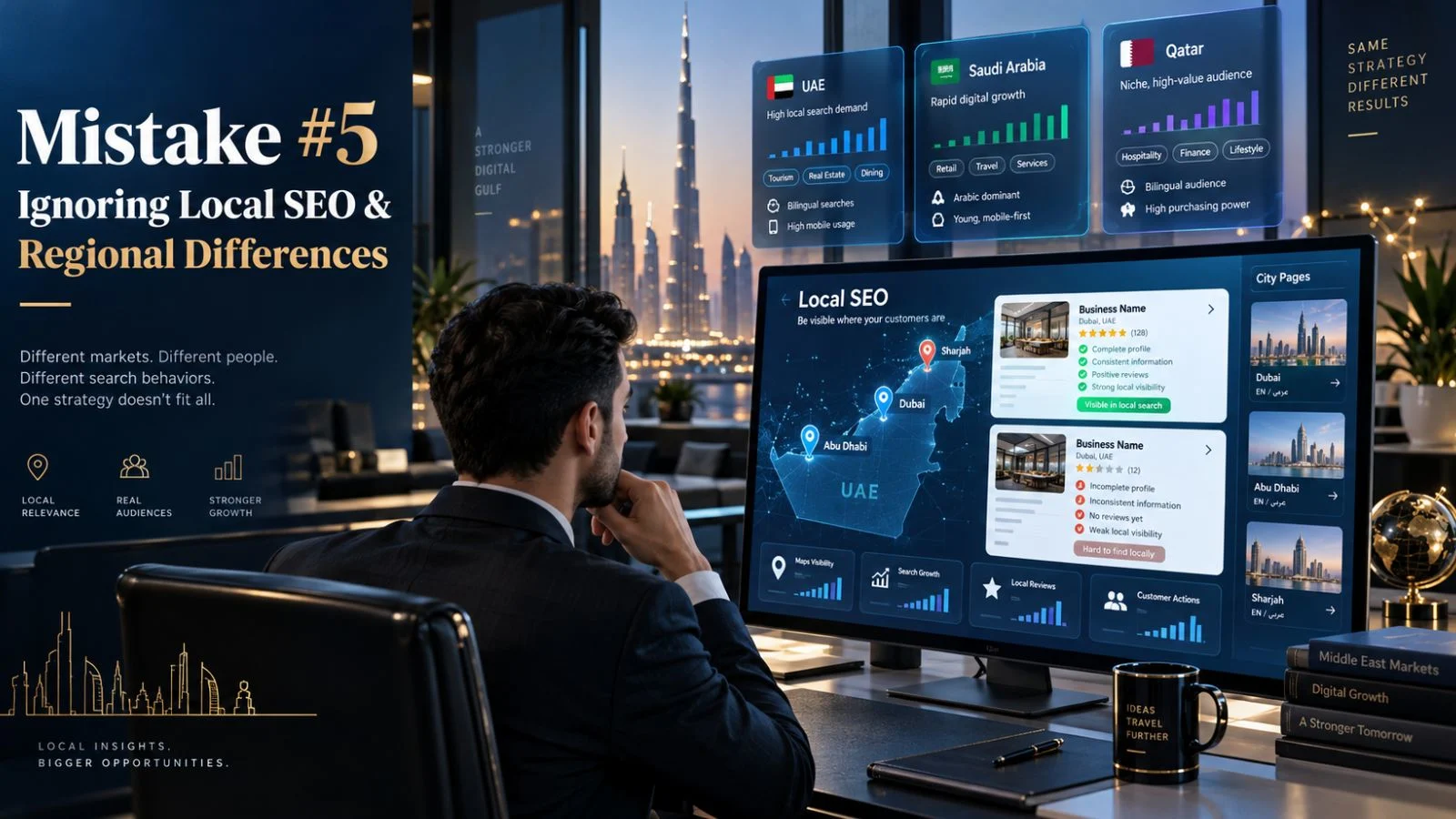
If you serve customers in Dubai, Sharjah, or Abu Dhabi, showing up in local results matters as much as ranking nationally. Beginners skip their Google Business Profile, use inconsistent business details, and ignore reviews. Others copy one playbook across every Gulf market- one of the GCC SEO strategies to avoid, because search habits, competitors, and regulations differ between the UAE, Saudi Arabia, and Qatar.
How to fix it: Claim and complete your Google Business Profile, keep your name, address, and phone number consistent everywhere, and request genuine reviews. Create separate pages for each city or country you serve, written around that market’s needs. Tailoring your approach this way avoids the regional SEO mistakes that generic campaigns make.
Mistake 6: Mishandling Arabic and English Versions:
Many UAE businesses publish in both languages, but few do it well. Common bilingual SEO pitfalls include relying on unreviewed machine translation, mixing Arabic and English on one page, and skipping hreflang tags, which tell Google which version suits which audience. Right-to-left layout glitches frustrate readers too. Together, these are the multilingual SEO mistakes MENA brands repeat most often.
How to fix it: Give each language its own URL, add hreflang tags, and hire native Arabic writers rather than relying on automatic translation. Test the right-to-left design on mobile. Treat Arabic pages as original content, not an afterthought. A clear language switcher also helps visitors reach the version they prefer.
Mistake 7: Not Tracking Your Results:
SEO is a long game, yet beginners either expect overnight results or never measure anything. Without data, you can’t tell which pages work, which keywords drive enquiries, or where broken links and crawl errors are hiding. Skipping analytics may be the costliest of all SEO mistakes, because it hides every other problem. Tracking also shows which UAE cities and languages bring the most visitors, so you can invest where it pays off.
How to fix it: Set up Google Analytics 4 and Google Search Console from day one. Review clicks, impressions, and rankings monthly, fix errors quickly, and give major changes three to six months before judging them. Regular audits catch SEO mistakes before they grow.
How Globussoft AI Can Support Your SEO Workflow:

Many SEO mistakes come from manual, inconsistent monitoring: nobody checks competitors, content stalls, or customer feedback goes unread. Globussoft AI isn’t an SEO tool, but it builds custom AI agents that handle this repetitive work, so your marketers can focus on strategy. Its embedded engineers can ship a first agent within 30 days. Key features include:
- Web research reader: pulls live data from Twitter, Reddit, YouTube, GitHub, and the web for competitor and trend research.
- Content pipeline watcher: tracks published, scheduled, and stalled content and nudges owners on late items.
- Customer chat monitor: watches WhatsApp, Telegram, and in-app chats to flag unhappy customers early.
- Flexibility and ownership: works with Claude, GPT, Gemini, and self-hosted Qwen, with full source code and IP transfer.
The 4-week fixed-scope Sprint tier is an easy starting point for building agents that catch SEO mistakes early.
Conclusion and FAQs:
Every one of these SEO mistakes is fixable without a huge budget. What you need is consistency, local awareness, and regular measurement. Pick one fix each week, and your UAE rankings will improve steadily. Start today, and turn these fixes into quick wins.
Q1: How long does SEO take to show results?
Usually three to six months, depending on competition, content quality, and how consistently you apply fixes.
Q2: Should UAE websites publish in Arabic and English?
Yes, if your audience uses both, provided each version is professionally translated and correctly tagged.
Q3: Which of these SEO mistakes is the most damaging?
Skipping keyword research, because every other decision, from content to page structure, depends on it.
Q4: How often should I check for SEO mistakes?
Review your data monthly and run a full audit every quarter.
Q5: Can I fix these myself?
Most on-page fixes are beginner-friendly, but hreflang setup and speed optimisation may need a developer’s help.