
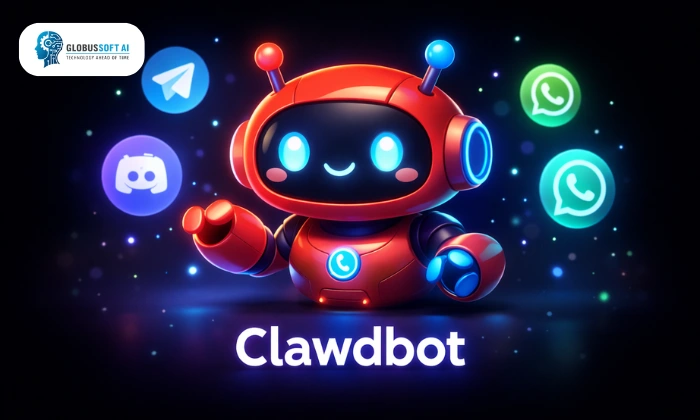
Imagine a world where your business runs smoother, faster, and more efficiently without relying on human intervention for every repetitive task. Where decision-making, workflow automation, and data management are all handled seamlessly by an AI agent that learns and adapts to your unique business needs. Sounds too good to be true?
Clawdbot, the AI agent that’s revolutionizing the way businesses operate. With over 185,000 stars on GitHub and 100,000+ active installations, it’s clear that Clawdbot is making waves. But here’s the catch: while it’s making a splash in the developer community, deploying Clawdbot in an enterprise environment isn’t as simple as flipping a switch. Security, scalability, and compliance are crucial, and without the right strategy, your AI deployment could backfire.
In this blog, we’ll break down everything you need to know to successfully deploy Clawdbot at scale. From understanding its core features and the immense benefits it offers, to the critical steps you must take to ensure security and compliance, we’ll guide you through the process. Whether you’re looking to streamline operations, reduce costs, or simply explore the full potential of AI for your business, this article is your go-to resource.
Ready to harness the power of AI? Let’s dive in.
Clawdbot (now OpenClaw) is an open-source AI agent that doesn’t just respond to prompts; it acts on them. For businesses, this means workflow automation, decision-making support, and operational efficiency at scale. However, unlocking this potential without introducing security or compliance risks requires a professional setup and ongoing management.
Listen To The Podcast Now!
What is Clawdbot (OpenClaw)?
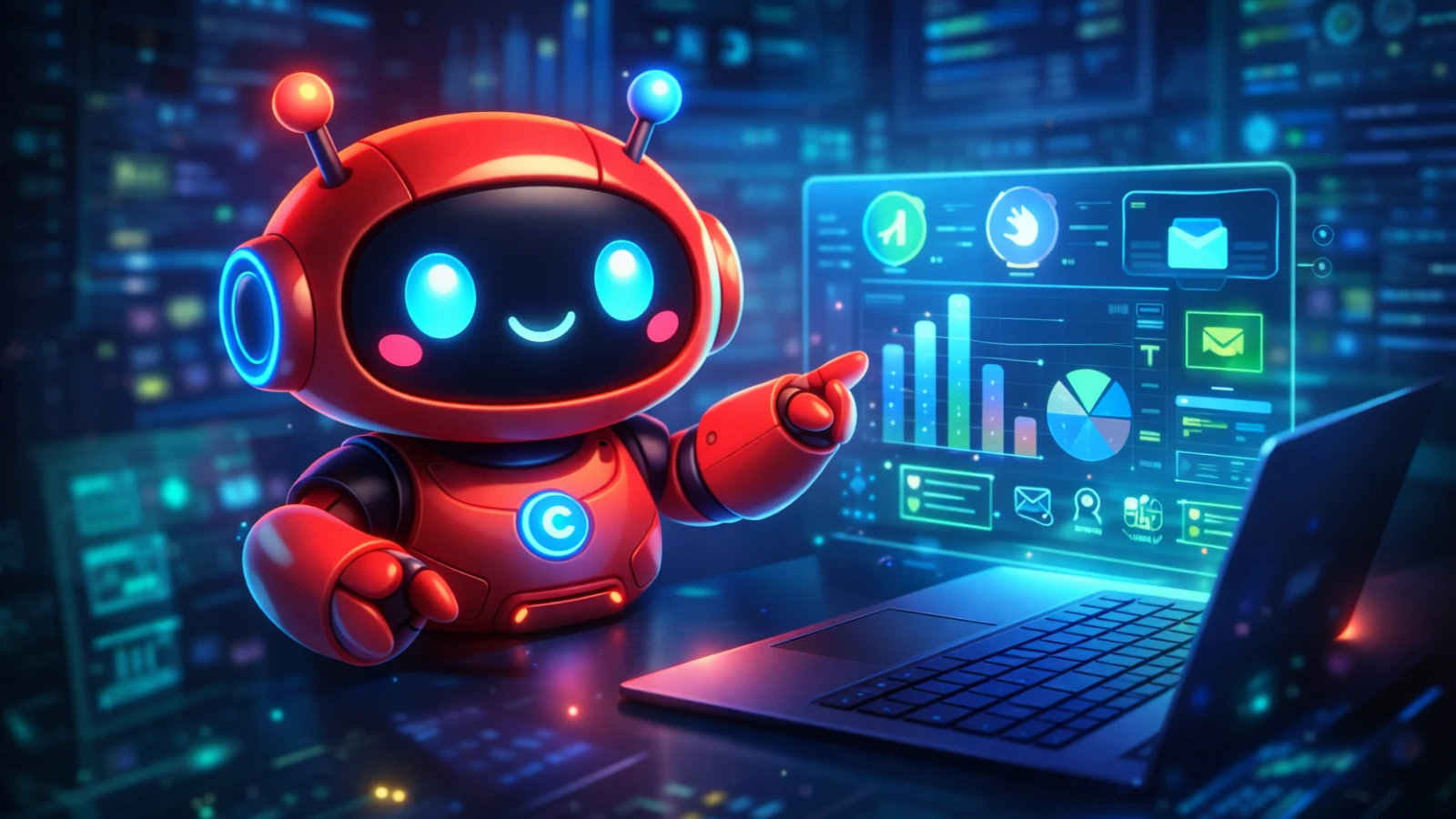
Clawdbot started as a personal project by a developer. The goal was simple: create an AI agent that didn’t just respond to instructions but actually carried them out, sending emails, running scripts, managing files, scheduling tasks, and more. Essentially, the things you’d normally delegate to a human assistant or a patchwork of automation tools.
While its name evolved, from Clawdbot to Moltbot, and finally to OpenClaw, the core concept remained the same: give an LLM (Large Language Model) the right tools and a persistent memory system, and it stops being a chatbot and starts being a full-fledged agent.
What sets Clawdbot apart from many other “AI-powered” tools is its architecture. Most AI assistants operate statelessly; each interaction is independent. But Clawdbot maintains context across sessions, storing data in structured Markdown files that the agent can read, update, and reason from. Over time, it builds a model of your environment, preferences, and workflows.
For enterprises, this matters because the real value of Clawdbot isn’t just what it can do right away; it’s how much smarter it becomes over time as it learns and adapts to your specific needs.
Moreover, Clawdbot is modular. It can run on Claude, GPT-4, or even a locally-hosted open-source model, giving businesses the flexibility to choose based on cost, data residency, and potential vendor lock-in. This flexibility is invaluable when designing an AI architecture that needs to adapt to changing policies or budgets. If you want more details on how it operates, the Clawdbot GitHub repository offers a comprehensive set of instructions and resources.
Key Features of Clawdbot for Enterprise AI Solutions

Persistent Memory That Learns Your Business
The persistent memory feature is often underestimated by enterprise buyers at first, but proves to be the most valuable later on. The agent stores its context in Markdown files, effectively creating a living knowledge base that tracks past actions, decisions, preferences, and workflows.
For a business, this means that Clawdbot will handle tasks more efficiently over time. For example, an agent handling procurement queries in week one will become significantly more efficient by week twelve, as it accumulates context about your company’s needs and preferences. This is a significant upgrade over tools that reset after every session.
That said, the memory system requires thoughtful management. Without proper controls, it could accumulate irrelevant data, potentially leading to privacy concerns. However, when designed and scoped properly, it becomes a powerful productivity tool.
Enterprise-Grade Security, When Configured Correctly
Out of the box, Clawdbot is not built for enterprise-level security. It’s designed to be extensible and functional rather than hardened for high-security environments.
For businesses, this means security needs to be implemented during deployment. Key considerations include:
- Prompt Injection Mitigation: Clawdbot processes external content like emails, web pages, and documents, which opens up the possibility of malicious instructions. Input sandboxing and content validation are essential.
- Access Control: By default, Clawdbot doesn’t enforce role-based permissions. For enterprise use, you need clear restrictions on what each agent instance can access and modify.
- Encryption: Data handled by Clawdbot, especially persistent memory files, must be encrypted both at rest and in transit, particularly in regulated industries.
- Audit Logging: Tracking actions taken by the agent is crucial, not just for compliance but also to identify any issues or misbehavior early on.
While these security measures are not difficult to implement, they do require deliberate attention. Skipping this step could lead to unpleasant surprises down the road.
Scalability Through Multi-Agent Coordination
One of Clawdbot’s most powerful features is its ability to spawn sub-agents, which work in parallel to complete different parts of a task. This ability to orchestrate multiple agents is especially useful for businesses.
At a small scale, it enhances productivity, but at department scale, imagine a 50-person team where each agent handles different workflow categories; it represents a fundamental shift in how work is structured. As the system grows, so do the infrastructure requirements.
Regulatory Compliance and Data Governance
When deploying Clawdbot in industries with strict data requirements, like healthcare or financial services, you can’t afford to ignore compliance. Open-source deployments, in particular, demand careful governance, as the defaults are often permissive.
A well-configured enterprise deployment of Clawdbot should clearly define where data is stored, who can access it, and how long it’s retained. It must also outline the processes for data deletion requests and accidental data handling.
How to Deploy Clawdbot (OpenClaw) for Enterprise Use
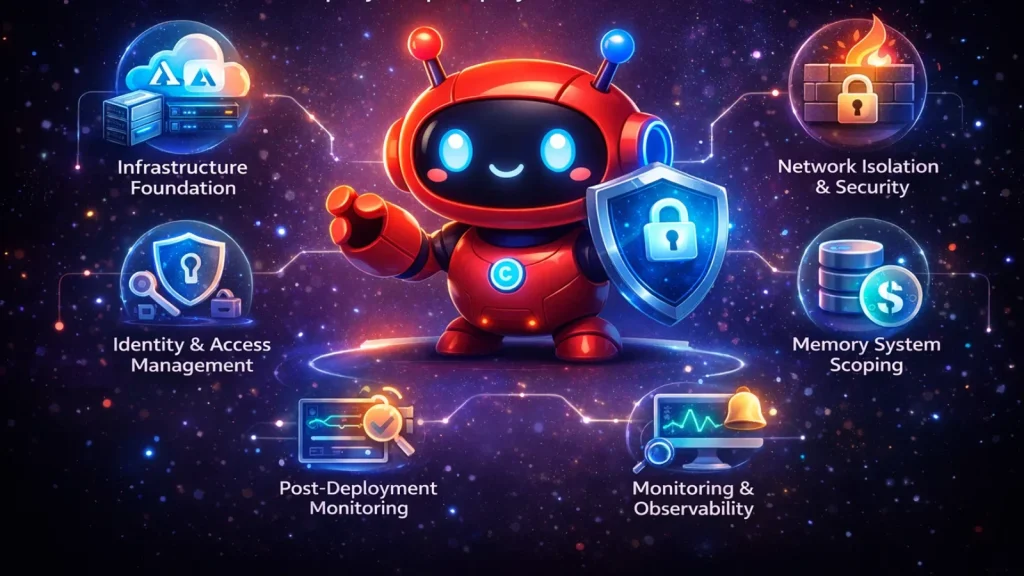
Step-by-Step Deployment Overview
Deploying Clawdbot in an enterprise environment requires careful planning. The following steps outline the key infrastructure layers and considerations:
Step 1, Infrastructure Foundation
Choose between cloud (AWS, GCP, Azure) or on-premise deployment based on data residency needs. Containerize the agent with Docker for consistent environments across staging and production. Resource allocation should be defined based on expected usage, and multi-agent workflows can rapidly scale infrastructure demands.
Step 2, Identity and Access Management
Integrate SSO (Single Sign-On) with your identity provider to simplify authentication. Role-based access control is necessary to define who has permission to interact with which agent instances.
Step 3: Network Isolation and Security Hardening
Deploy Clawdbot within a private VPC. Use a web application firewall to restrict access to necessary services, ensuring that unused capabilities are disabled to minimize attack surfaces.
Step 4, Memory System Scoping
Define the boundaries of the agent’s memory. What data sources can it access? What should it store, and for how long? For multi-tenant environments, ensure memory isolation between user contexts.
Step 5: Monitoring and Observability
Integrate with monitoring tools like Datadog or CloudWatch to track agent performance. Set up alerts for any unusual behavior, such as unexpected API calls or large data outputs.
Post-Deployment Monitoring
After deployment, ongoing monitoring is essential. Regular reviews, weekly in the first month, monthly thereafter, should assess whether the agent is performing as expected and whether security settings need adjustments.
Clawdbot vs Other AI Tools: What Makes It Stand Out for Enterprises?
Clawdbot vs ChatGPT
The comparison between Clawdbot and ChatGPT often arises, but it’s important to understand that they serve different purposes. While ChatGPT is a conversational assistant, Clawdbot is an autonomous agent capable of taking action. The real difference lies in Clawdbot’s ability to handle complex tasks over time with persistent memory, unlike ChatGPT’s stateless, one-time interactions.
For enterprises that require an AI agent to perform sustained, multi-step operations, Clawdbot is a better fit, though it requires more deployment effort and ongoing management. ChatGPT, on the other hand, is ideal for businesses that need a straightforward conversational AI.
Platform Integrations for Business Workflows
Clawdbot integrates natively with popular platforms like Slack, Telegram, Discord, and WhatsApp, making it easy to embed within existing communication systems. It also connects to CRMs, project management tools, internal knowledge bases, and more via APIs.
How to Mitigate Security Risks When Using Clawdbot in Enterprise Environments
The Three Risks That Actually Matter
Security concerns around Clawdbot are often exaggerated. Let’s break down the real risks and practical solutions:
- Prompt Injection: Malicious actors can inject harmful instructions into Clawdbot’s inputs. Mitigate this risk by sandboxing external content.
- Data Exposure: Sensitive data could be exposed if permissions aren’t properly scoped. The solution is to apply strict permission controls to ensure agents only access what’s necessary.
- Unintended Autonomous Actions: Misinterpretation of instructions can lead to unexpected actions. Mitigate this with human-in-the-loop checkpoints and anomaly detection.
What a Secure Enterprise Deployment Looks Like
A secure deployment includes encryption, audit logging, regular penetration testing, and employee training on AI agent security protocols.
The True Cost of Deploying Clawdbot in Your Enterprise
While Clawdbot itself is free, deployment is not. Initial infrastructure and setup costs can range from $200–500/month for small teams, but as the scale grows, so do the costs, potentially reaching $5,000–15,000/month for large teams.
Cost vs. ROI: The Real Question
The value of Clawdbot isn’t just in the cost, it’s in the time it saves. By automating tasks like data aggregation and report generation, Clawdbot can recover hours of human time per week, paying for itself in no time. Imagine a world where your business runs smoother, faster, and more efficiently without relying on human intervention for every repetitive task. Where decision-making, workflow automation, and data management are all handled seamlessly by an AI agent that learns and adapts to your unique business needs. Sounds too good to be true? Think again.
Enter Clawdbot, the AI agent that’s revolutionizing the way businesses operate. But here’s the catch: while it’s making a splash in the developer community, deploying Clawdbot in an enterprise environment isn’t as simple as flipping a switch. Security, scalability, and compliance are crucial, and without the right strategy, your AI deployment could backfire.
Also Read:
Openclaw Vs Chatgpt: I Used Both For 90 Days. Here’s The Winner
OpenClaw Browser: A Game Changer for Internet Users
Why Choose Globussoft AI for Clawdbot Deployment
At Globussoft AI, we specialize in deploying secure, scalable AI solutions that drive efficiency and business growth. With over 16 years of experience and more than 30,000 AI-driven solutions delivered globally, we help businesses like yours integrate AI seamlessly into operations.
Custom AI Agent Development
We design AI agents tailored to your needs, automating workflows, improving customer support, and boosting productivity. Our expertise with LLMs and chatbots ensures a smooth integration with tools like Clawdbot to optimize business processes.
Enterprise-Grade Security
We prioritize security with data encryption, role-based access controls, and audit logging, ensuring your Clawdbot deployment is safe, compliant, and scalable.
Proven Results Across Industries
From healthcare to retail and logistics, we’ve delivered impactful AI solutions that streamline operations like document processing, inventory management, and customer support.
Ongoing Support and Optimization
We provide continuous monitoring, training, and optimization to ensure your AI systems evolve as your business grows, maximizing ROI and efficiency.
Why Professional Deployment Makes the Difference?
The value you get from Clawdbot depends largely on the deployment. With a thoughtful, secure, and scalable setup, Clawdbot can transform your business operations. If you’re ready to deploy Clawdbot, GlobusSoft is here to ensure everything runs smoothly, securely, compliantly, and at scale.
Ready to explore what a professional Clawdbot deployment could look like for your organization? Get in touch with the GlobusSoft AI team.
Conclusion
By now, you understand what Clawdbot (OpenClaw) can do and what it actually takes to deploy it securely and at scale. From architecture and memory to security and compliance, you now have a clear path to move from idea to implementation.
The next step is deciding how you want to use it start with a focused use case or build a structured, enterprise-ready setup from the beginning.
If you want to move faster and avoid costly mistakes, working with an experienced team like Globussoft AI can help you deploy Clawdbot the right way and unlock its full potential from day one.
Frequently Asked Questions
What is Clawdbot, and why should my business consider it?
Clawdbot is an autonomous AI agent designed to perform tasks like scheduling, data processing, and report generation. It’s ideal for businesses looking to automate workflows that traditionally require human attention.
How secure is Clawdbot in an enterprise environment?
Clawdbot’s open-source nature means it’s not secure by default, but with the right setup, including encryption, access control, and logging, it can meet enterprise security standards.
Can Clawdbot integrate with our existing business software?
Yes, Clawdbot integrates with platforms like Slack, WhatsApp, and CRM systems via APIs, making it easy to add to your existing workflow.
What does deploying Clawdbot actually cost for a business?
Costs vary based on user scale, infrastructure needs, and whether you use cloud APIs or self-hosted models. Small deployments can run on $200–500/month, while larger ones may cost $1,500–5,000/month.
Can GlobusSoft handle the deployment end-to-end?
Yes, we offer full deployment services, from setup to monitoring, ensuring Clawdbot is securely and efficiently integrated into your business.