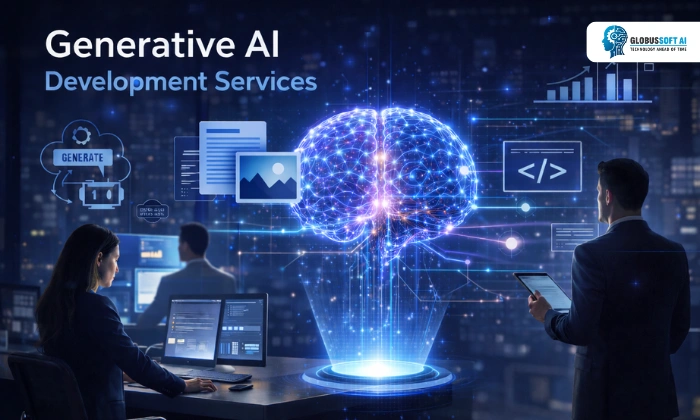
Generative AI development services are driving a new wave of business transformation, but most companies still get them wrong. Nearly 80% of AI projects fail, not because the technology lacks potential, but because execution falls apart early.
The pattern is familiar. Teams rush in, pick a vendor too quickly, or start building without a clear outcome in mind. Costs rise, timelines stretch, and the project quietly loses momentum.
At the same time, the upside is hard to ignore. When done right, generative AI can reshape how businesses create content, automate workflows, and scale operations.
This guide breaks down what these services entail, how the process works in practice, and how to avoid common mistakes that derail projects. By the end, you’ll know what to expect and how to make a confident decision.
Read Aloud!
What Are Generative AI Development Services?
The Simple Definition (No Jargon)
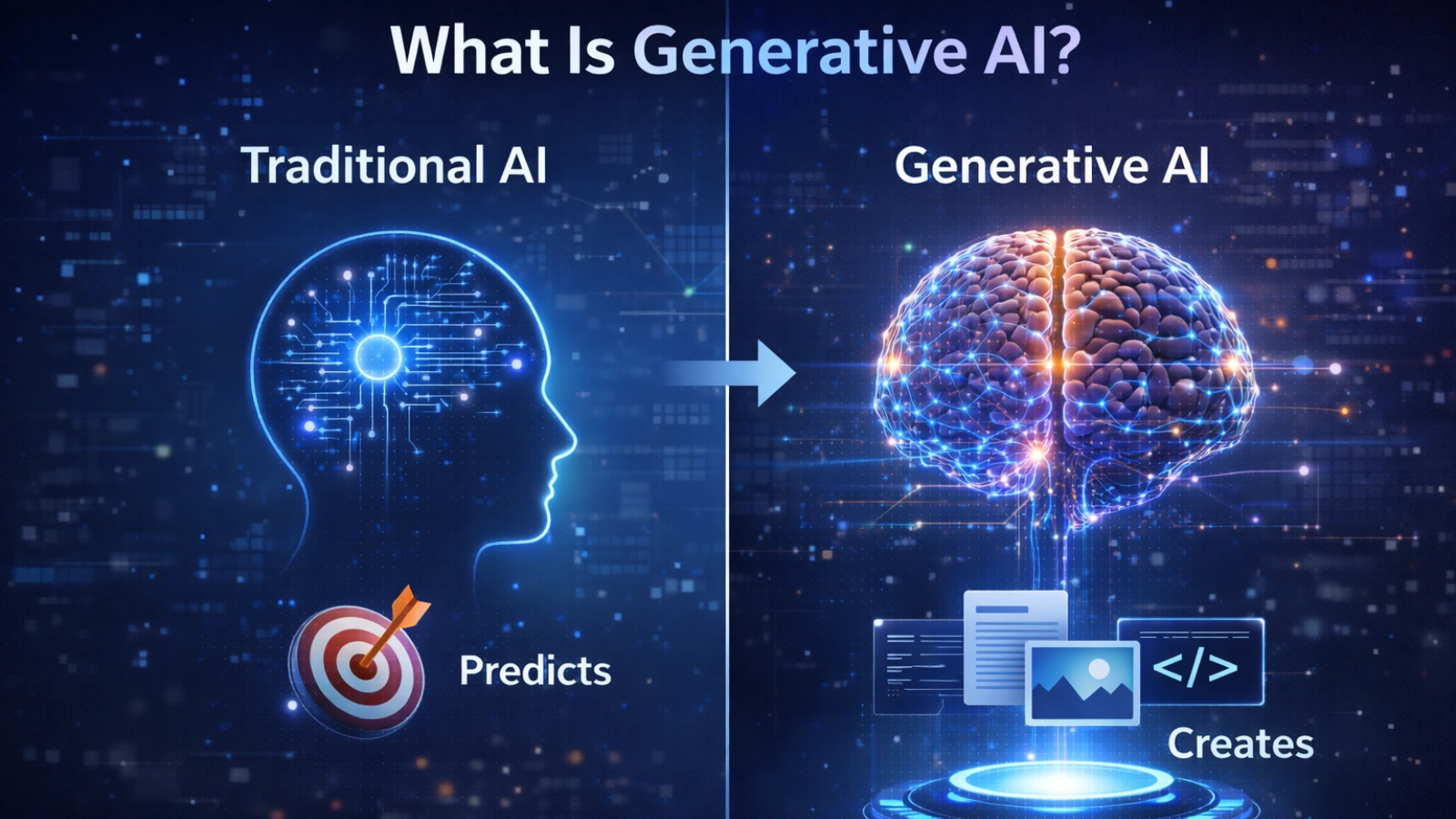
At its core, generative AI is designed to create new outputs, whether that’s text, images, code, or structured data, based on patterns it has learned from existing information.
Traditional AI typically analyzes data to predict outcomes or identify trends. Generative AI goes a step further by actually producing something new, often in real time, making it far more dynamic and creative in its applications.
This is where confusion often arises. Using tools like ChatGPT may feel like you’re leveraging generative AI, but that experience is very different from implementing generative AI development services within a business. Consumer tools are built to be broad and general-purpose. In contrast, businesses require systems that are trained on their own data, integrated into their workflows, and aligned with specific objectives.
Generative AI development services bridge this gap. They focus on building customized systems that can create content, automate decision-making, and generate meaningful outputs tailored to a company’s unique needs. These are not off-the-shelf tools, but purpose-built solutions developed and deployed by experts to address real operational challenges.
Who Actually Needs These Services?

Not every business needs generative AI development services right away. Still, for some teams, the value shows up quickly.
You might benefit if your team spends hours on repetitive tasks that require knowledge or context. Growth can also create pressure, especially when hiring cannot keep up with demand.
On the other hand, some companies are not ready yet. If your processes are unclear or your data is scattered, adding AI will only create friction.
Clarity makes the difference. When the problem is well defined, AI development services can deliver strong results. Without that clarity, even good technology struggles.
Why It Matters Right Now
Adoption is moving faster than many expected. Businesses are no longer experimenting. They are integrating generative AI into daily operations.
The potential gains are real. Teams can move faster, reduce manual work, and improve output quality.
Still, timing matters. Waiting too long can put you behind competitors. Moving too early without a plan often leads to wasted effort.
The smarter approach is measured adoption. Generative AI development services work best when guided by clear goals and realistic expectations.
The Main Types of Generative AI Development Services
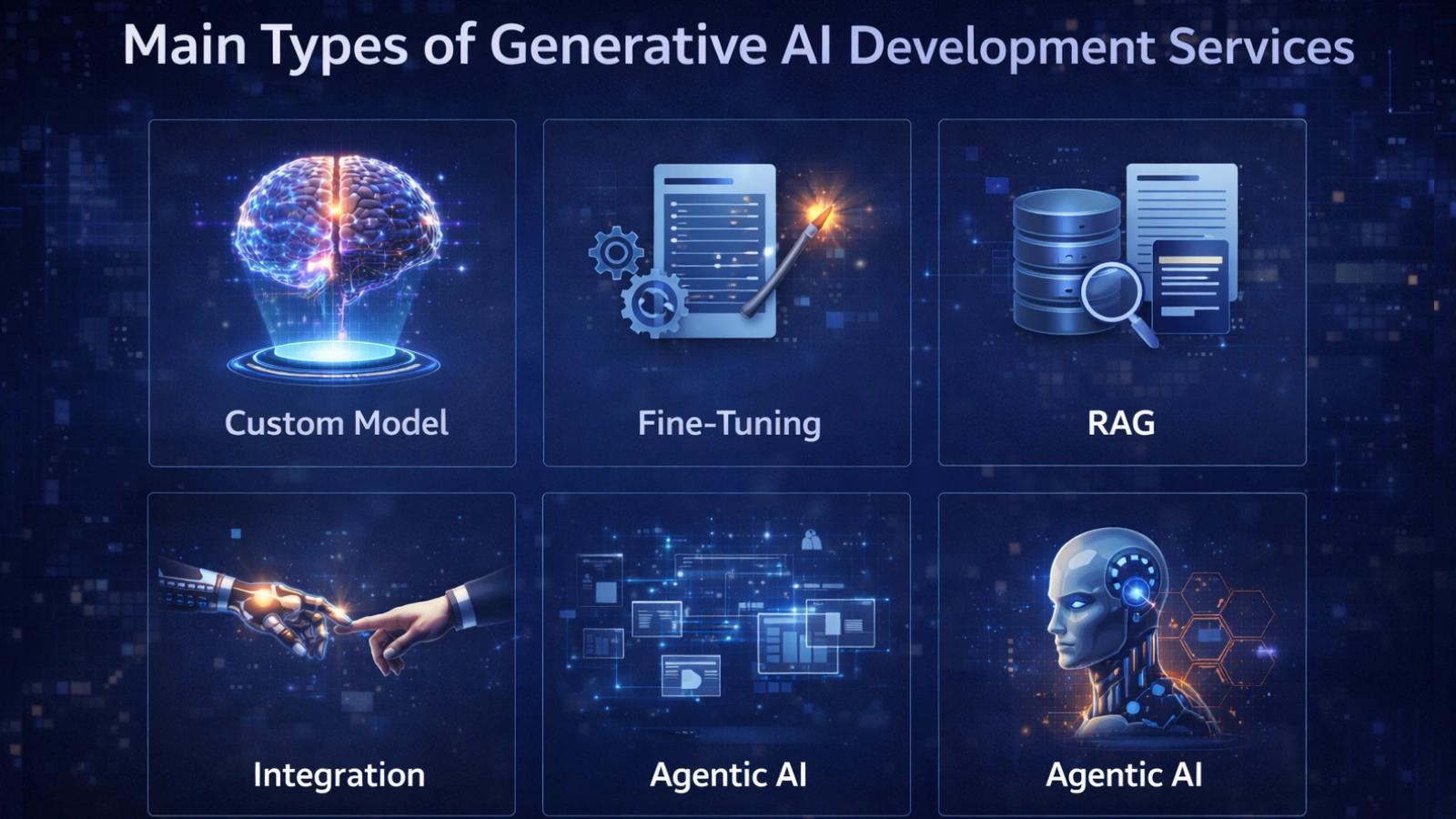
Not all generative AI services solve the same problem. The right choice depends on what you are trying to fix.
Custom Generative AI Model Development
This approach focuses on building models tailored to your data and domain.
It is most useful when precision matters. Industries with strict regulations or specialized workflows often fall into this category.
For example, a legal firm may need an AI system trained only on its internal case data. A general model would not meet that level of accuracy.
Many assume this means starting from scratch. In reality, most generative AI development services build on existing models and adapt them. This keeps the process more practical.
LLM Fine-Tuning and Model Optimization
Fine-tuning improves an existing model by training it on your data.
Instead of building everything new, you refine a proven system to match your needs. This improves accuracy, tone, and relevance.
Take an e-commerce brand as an example. It might fine-tune a model to write product descriptions that match its voice consistently.
Among generative AI development services, this option often provides a strong balance between performance and cost.
RAG (Retrieval-Augmented Generation) Pipeline Development
RAG connects AI models to real data sources.
Before generating a response, the system retrieves relevant information from your documents or databases. This makes outputs more accurate and grounded.
AI systems can sometimes generate incorrect information. RAG reduces that risk by anchoring responses in real data.
An internal HR chatbot is a simple example. It answers questions by pulling from company policies instead of guessing.
Many organizations start with this type of generative AI development service because it delivers quick, practical value.
AI Integration Services
Integration focuses on adding AI capabilities to tools you already use.
You do not need to replace your existing systems. Instead, you enhance them with AI features.
For instance, a marketing team might integrate an AI assistant into its content platform. The workflow remains familiar, but execution becomes faster.
There is a common belief that adopting generative AI development services requires a complete rebuild. In most cases, integration allows gradual adoption without disruption.
For teams looking to speed up implementation, platforms like OpenClaw help simplify how generative AI is integrated into existing systems. Instead of building everything from scratch, businesses can use such frameworks to connect models, workflows, and data more efficiently.
Agentic AI Development
Agentic AI goes beyond content generation.
These systems can plan, reason, and execute tasks across multiple steps with minimal human input.
Imagine an AI system that monitors inventory, identifies shortages, creates purchase requests, and routes approvals automatically. That level of automation is becoming possible.
This area is still evolving. Not every business is ready for it yet, but it represents the future direction of generative AI development services.
What the Generative AI Development Process Actually Looks Like
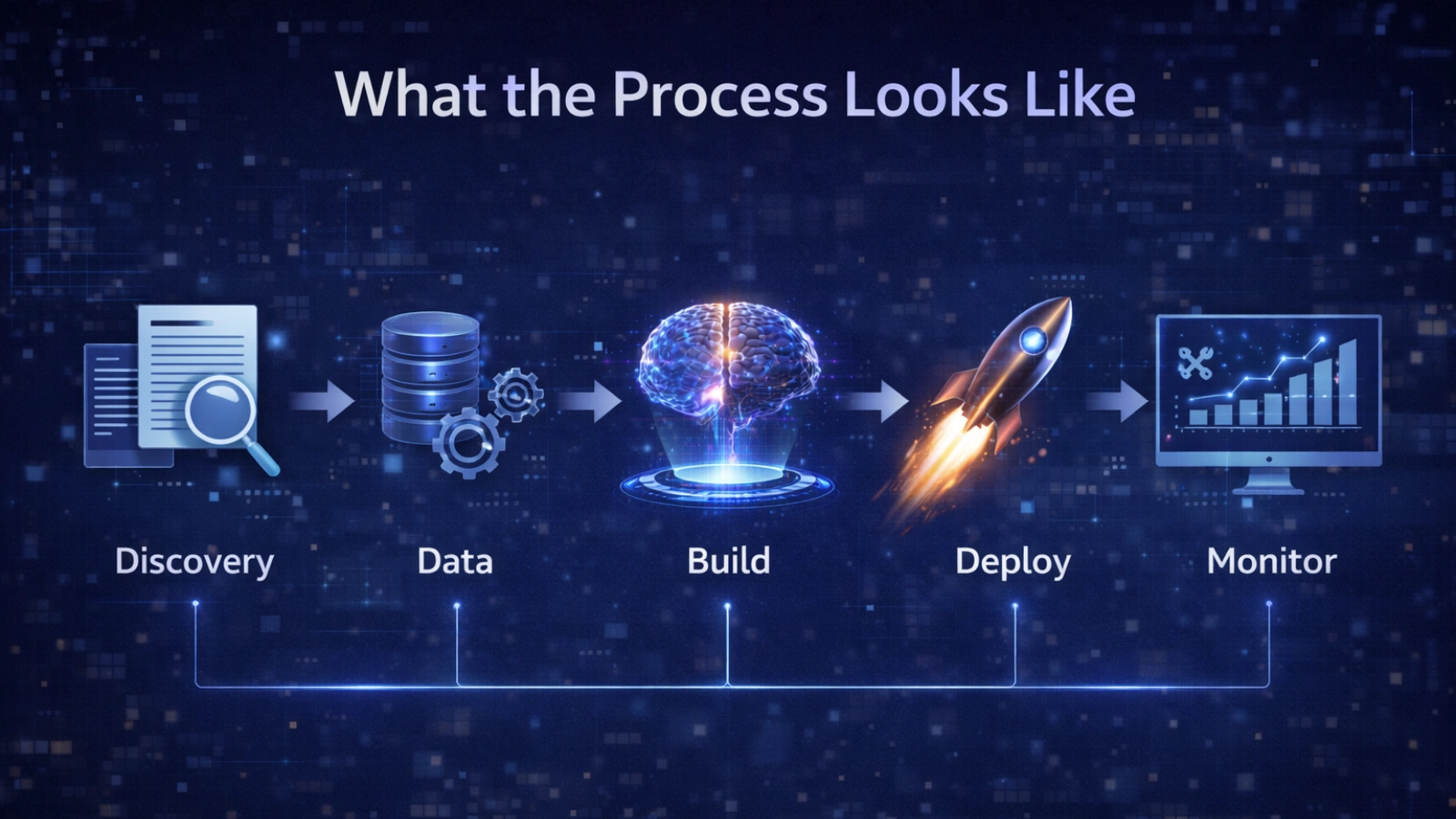
Understanding the process helps avoid confusion later. Many issues arise from unclear expectations rather than technical limits.
Phase 1: Discovery and Goal Alignment
Every project starts with defining the problem.
Teams focus on outcomes, not tools. They also assess data availability and set clear success metrics.
Without this step, generative AI development services often lead to vague or inconsistent results.
Phase 2: Data Preparation and Model Strategy
Data quality becomes the priority here.
Most datasets need cleaning and structuring before they are useful. At the same time, teams decide which model approach fits best.
Bigger models are not always better. The right choice depends on the use case.
Phase 3: Development, Testing, and Iteration
Projects usually begin with a smaller version.
An MVP allows teams to test assumptions before scaling. This phase often takes a few weeks.
Testing goes beyond functionality. It includes accuracy, safety, and consistency. Iteration is part of the process.
Phase 4: Deployment, Integration, and Monitoring
Deployment is not the finish line.
Systems need ongoing monitoring because performance can change over time. Regular updates and retraining keep results stable.
Adoption also plays a key role. If teams do not use the system, generative AI development services cannot deliver value.
How to Choose a Generative AI Development Company
Many businesses struggle at this stage. Excitement about AI can lead to rushed decisions.
The Pre-Evaluation Checklist
Before reaching out to vendors, take a step back.
Do you clearly understand the problem you want to solve? Is your data accessible and usable? Have you set a realistic budget and timeline?
Alignment within your team matters too. Without it, even strong generative AI development services may fall short.
What to Look for in a Vendor
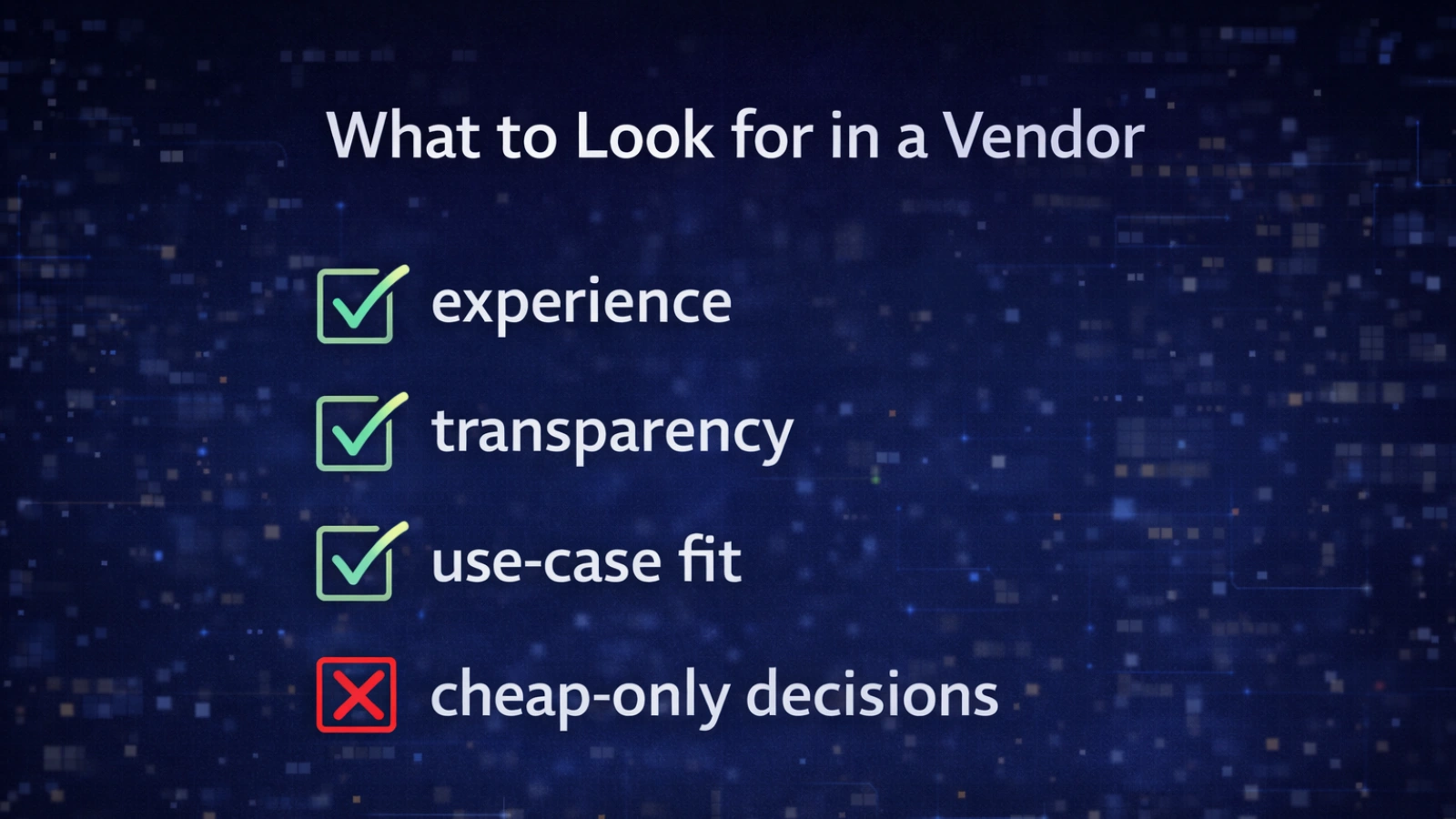
A good vendor goes beyond surface-level expertise.
They explain different approaches clearly and discuss trade-offs openly. Their experience should align with your use case.
Be cautious of overly simple promises. Generative AI development services involve complexity, and honest vendors acknowledge that.
Transparency builds trust. It is just as important as technical capability.
Questions to Ask Before Signing Anything
Direct questions can reveal how a vendor really operates.
Ask how they handle hallucination risk and what their testing process looks like. Clarify what happens after deployment and how they approach data security.
You should also request measurable results from past projects.
Clear answers signal reliability. Unclear responses often indicate gaps.
GlobusoftAI: A Platform Built for Generative AI Development
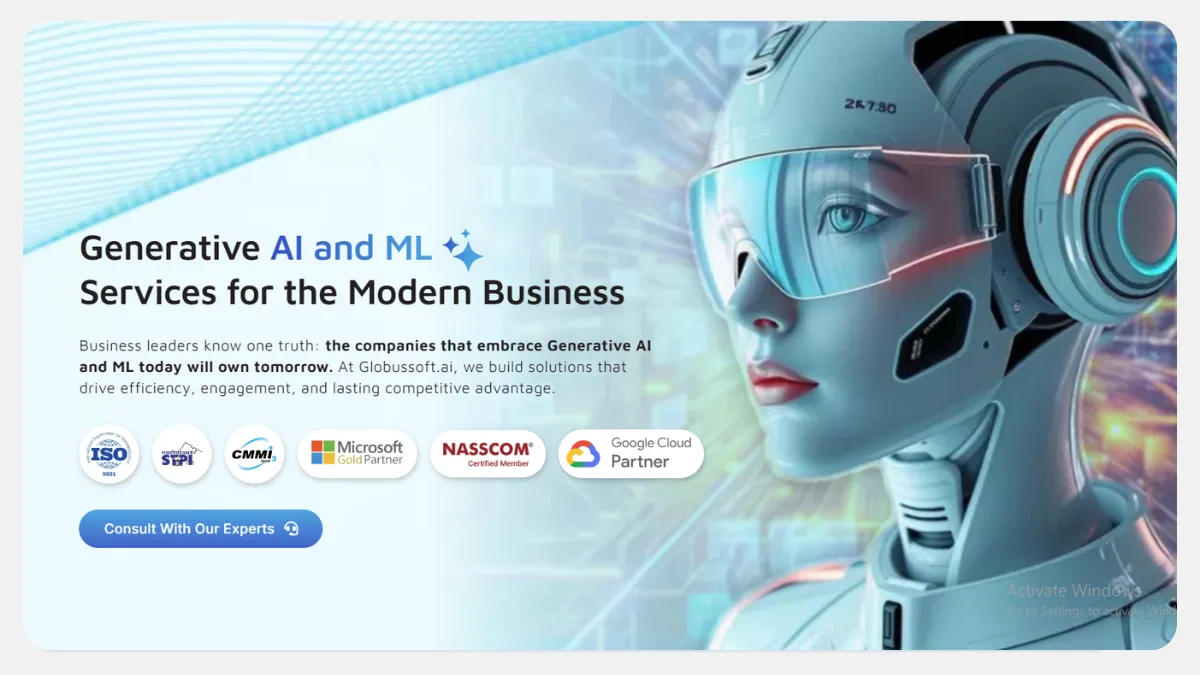
For businesses looking for a structured and scalable approach, GlobusoftAI brings together strategy, development, and deployment in one place. Here’s what it offers:
- End-to-End AI Development
Covers the full lifecycle, from strategy and planning to deployment and ongoing support. - Custom AI Model & Agent Development
Builds tailored AI solutions designed around your data, workflows, and business goals. - RAG Pipeline Integration
Connects AI systems to internal data sources for more accurate, reliable, and context-aware outputs. - AI Integration with Existing Systems
Seamlessly integrates AI into current tools like CRMs, ERPs, and internal platforms without disruption. - Multi-Agent & Advanced Automation
Enables intelligent systems that can handle multi-step workflows and complex business processes. - Data Privacy & Governance
Ensures secure, self-hosted, and compliant AI systems with full control over business data. - Ongoing Monitoring & Optimization
Provides continuous performance tracking, updates, and improvements after deployment.
This approach helps businesses move from experimentation to fully functional AI systems with clarity and control.
The Mistakes That Cause Generative AI Projects to Fail
Most failures follow similar patterns.
Starting with technology instead of a clear problem leads to confusion. Poor data quality limits performance early on.
Choosing vendors based only on cost often results in weaker outcomes. Skipping the MVP stage increases risk.
Another issue is treating deployment as the end. Without monitoring, systems lose effectiveness over time.
Finally, adoption matters. Even strong generative AI development services fail if teams do not use them.
Read More!
How To Use Generative AI For Business Growth In 2026?
What Is Generative AI & How To Use It?
What’s Next in Generative AI Development
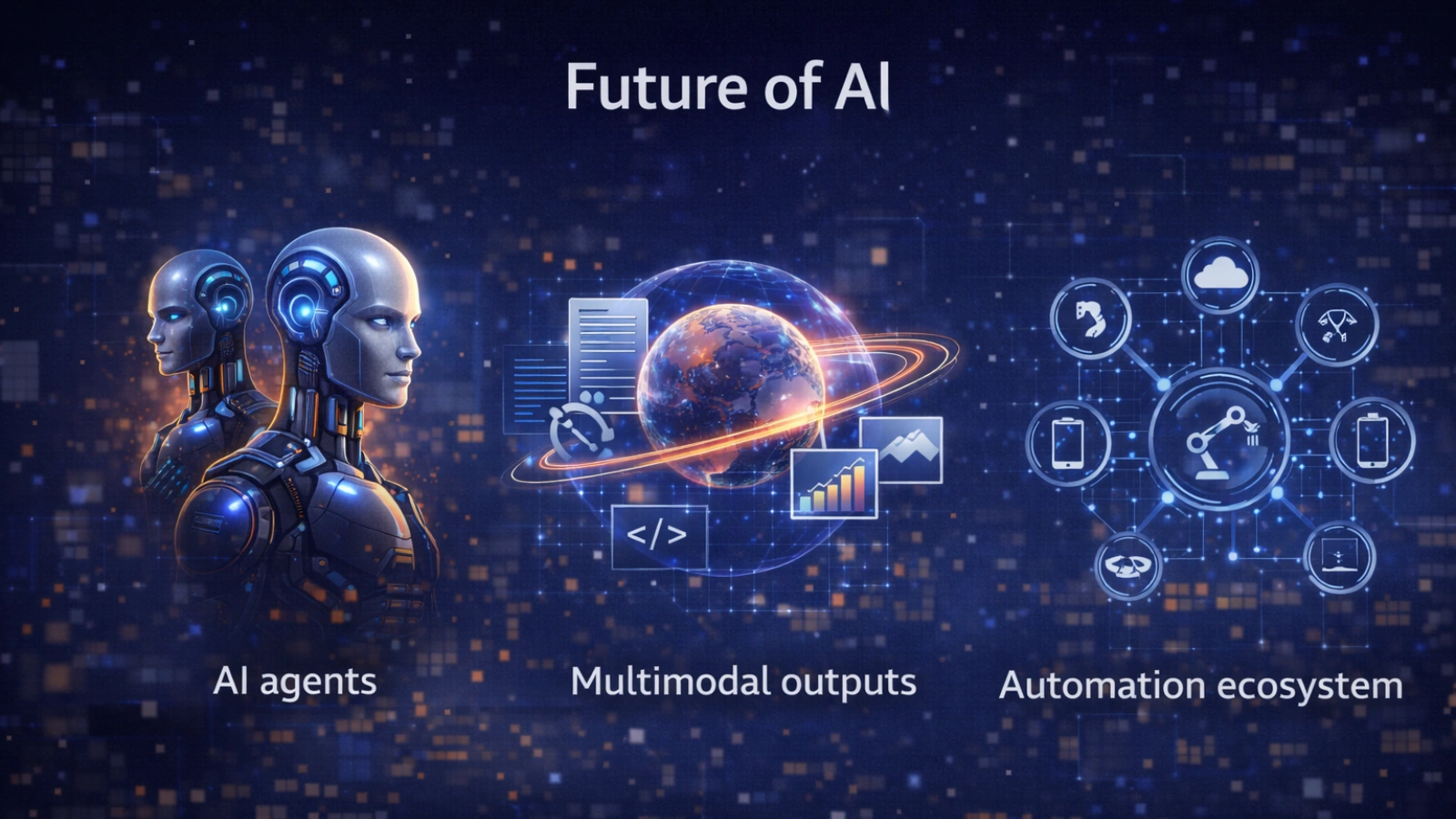
Agentic AI Is Moving from Concept to Deployment
AI is shifting toward handling full workflows.
Instead of assisting with single tasks, systems are beginning to manage multi-step processes independently. This reduces manual coordination.
Multimodal AI Is Expanding Capabilities
AI is no longer limited to text.
It can now process and generate images, audio, and video within one system. This opens new possibilities for content and interaction.
Responsible AI Is Becoming Essential
Expectations around AI are changing.
Businesses now need systems that are transparent, fair, and auditable. Building these elements early is far easier than fixing them later.
Model-Agnostic Architecture Is a Smart Bet
Relying on a single model provider can create long-term risk.
Flexible systems allow businesses to switch models as technology evolves. This approach protects investments in generative AI development services.
Making Generative AI Development Work for Your Business
Generative AI services cover everything from fine-tuned models to fully automated systems. The key is choosing the right approach for your problem.
Technology matters, but the partner you choose has a larger impact. The right team brings clarity, structure, and realistic expectations.
Before moving forward, define your goals, assess your data, and set clear success criteria.
That preparation often determines whether AI development services create real value or become another stalled initiative.
Frequently Asked Questions
What are generative AI development services used for?
They are used to build AI-powered systems that create content, automate workflows, and generate insights using business-specific data.
What is the difference between custom generative AI development services and pre-built tools?
Custom solutions are tailored to your data and workflows, while pre-built tools are generic and may not fully meet specific business requirements.
How to choose a generative AI development company?
Look for proven experience, transparent communication, strong data security practices, and the ability to deliver scalable, customized solutions.
Can AI solutions be integrated with existing business systems?
Yes, AI can be integrated with tools like CRMs, ERPs, and internal platforms to improve workflows without replacing current systems.
What makes GlobusoftAI a reliable platform for AI development?
GlobusoftAI provides end-to-end support, including custom model development, data integration, and scalable solutions designed for real business use cases.