
In early 2026, OpenClaw, an open-source autonomous AI agent originally developed by Austrian engineer Peter Steinberger, became one of the most rapidly adopted AI tools in developer and enterprise communities. Within weeks of going viral, its GitHub repository crossed 150,000 stars, and its deployment spread across startups, Silicon Valley firms, and enterprise teams worldwide. The appeal is obvious: OpenClaw gives AI actual hands. It can execute terminal commands, read and send emails, manage calendars, browse the web, connect to APIs, and orchestrate multi-step workflows autonomously, all controlled through familiar messaging interfaces like Telegram, WhatsApp, or Slack.
But deploying OpenClaw in an enterprise environment is a fundamentally different challenge than running it as a personal productivity tool. When an autonomous agent operates inside corporate infrastructure, touching sensitive data, executing code, and connecting to production systems, the stakes for misconfiguration are significant. This is precisely why organizations require a structured, professionally managed implementation approach.
This guide covers what enterprise-grade OpenClaw implementation actually entails: the architecture, the installation process, the security hardening required, and why ongoing professional support is essential for sustainable deployment.
In a hurry? Listen to the blog instead:
What Is OpenClaw And Why Does Enterprise Deployment Demand Expertise?
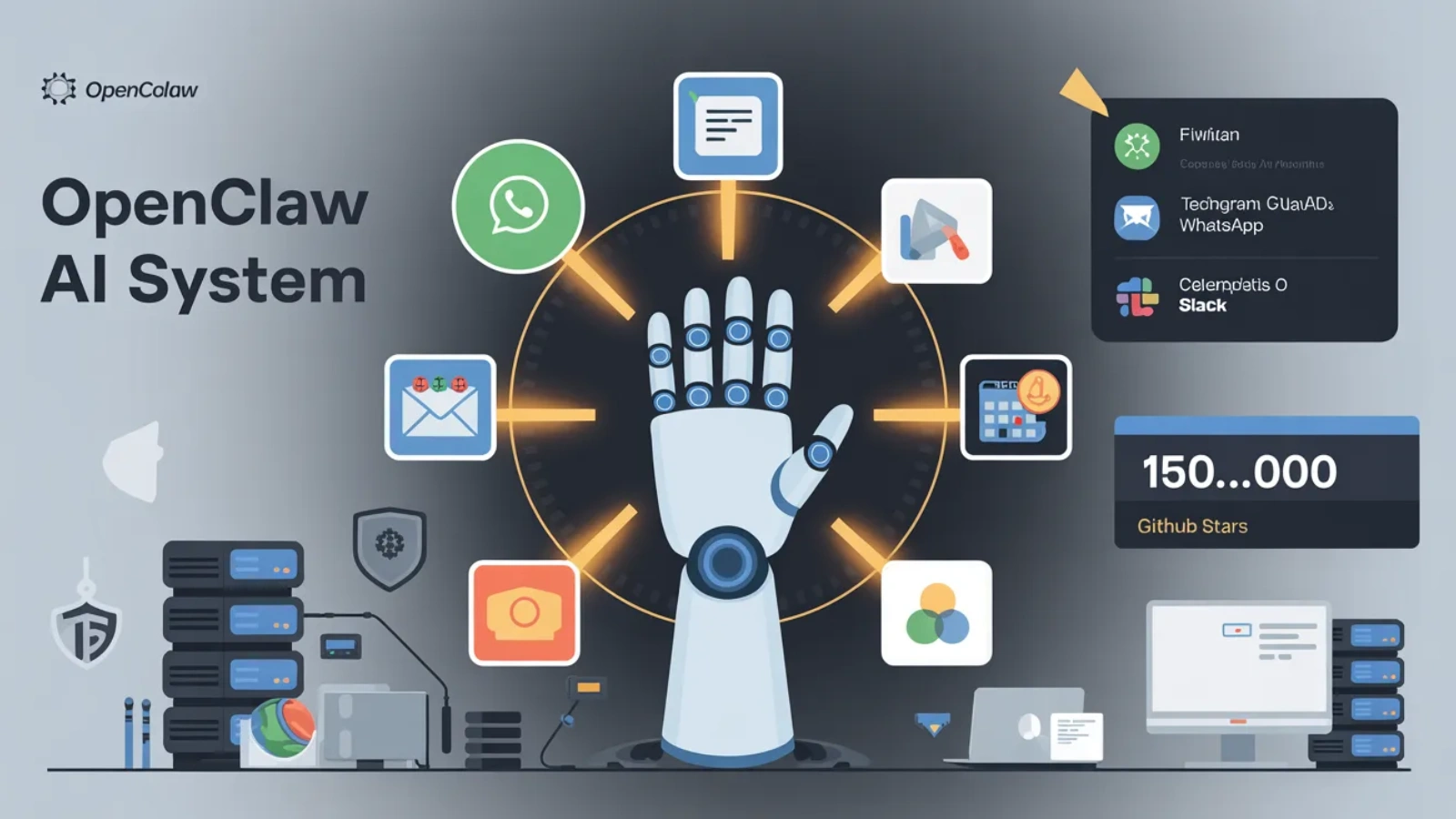
OpenClaw is a local-first agentic runtime built on Node.js. Its four-tier architecture defines how it functions in practice:
- Channel Layer: The messaging interface (Telegram, WhatsApp, Slack, Discord) through which users issue commands.
- Gateway (Node.js): The central execution hub running locally on the host machine, managing session state and orchestration.
- LLM Brain: The language model layer, Claude, GPT-4, DeepSeek, or a locally hosted model via Ollama, that interprets intent and generates decisions.
- Skills/Toolbox: Modular capabilities (shell execution, file access, browser automation, API calls) sourced from the community-built ClawHub repository.
Unlike cloud-based AI assistants that operate within sandboxed provider environments, OpenClaw runs directly on your infrastructure. This gives it 10x the capability of a cloud agent, and 10x the attack surface if improperly configured. In enterprise settings, where the agent may have access to HR systems, CRM platforms, internal APIs, and proprietary codebases, this distinction is operationally critical.
Microsoft has explicitly cautioned against running OpenClaw on standard enterprise workstations, noting that its ability to modify persistent state and cache credentials breaks conventional endpoint security assumptions. CrowdStrike has similarly flagged misconfigured OpenClaw deployments as a high-risk vector for adversarial exploitation. These are not hypothetical risks; they are documented, active attack surfaces.
Phase 1: Strategic Discovery and Environment Assessment
A professional OpenClaw implementation begins before a single line of configuration is written. The discovery phase defines the deployment scope and maps the risk profile of the target environment.
Key activities in this phase include:
- Use-case mapping: Identifying which workflows will be delegated to the agent (email triage, calendar management, report generation, system monitoring, etc.).
- Data sensitivity classification: Determining what data the agent will access and establishing appropriate permission boundaries.
- Infrastructure audit: Assessing whether deployment targets will be cloud-hosted (AWS, Azure, GCP), on-premises servers, or isolated virtual machines.
- LLM selection: Choosing between API-based models (Claude, GPT-4) or locally hosted models (Ollama) based on data residency requirements and latency tolerances.
This phase prevents the most common and most costly mistake in OpenClaw deployments: granting the agent broader access than the operational use case requires.
Read More!
Can OpenClaw Be Enterprise-Grade? We Tested It for 6 Months
OpenClaw Setup Services: Professional Deployment For Teams
Phase 2: Secure OpenClaw Installation Architecture
Enterprise OpenClaw installation differs from the personal setup documented in community guides. Three architectural patterns are appropriate for production environments:
Containerized Deployment (Recommended)
Running OpenClaw inside a Docker container provides critical isolation between the agent and the host system. The Gateway process operates within the container, with only explicitly defined volume mounts exposed to it. Read-only mounts should be used for any sensitive document directories. API keys and credentials must be passed through environment variables or a secrets manager (HashiCorp Vault, AWS Secrets Manager), never hardcoded in config.json.
Virtual Machine Isolation
For organizations with strict compliance requirements, deploying OpenClaw within a dedicated VM provides hardware-level isolation. The agent runs under a dedicated OS user with no access to the primary user’s home directory or enterprise file systems. This approach aligns with zero-trust network architectures and supports the principle of least privilege.
Multi-Agent Orchestration Setup
Larger deployments may require multiple OpenClaw agents operating in parallel, each scoped to a specific department or workflow (sales, operations, DevOps). In these configurations, each agent instance requires its own isolated environment, dedicated API credentials, and independent logging. A centralized orchestration layer manages agent routing and prevents credential sharing across instances.
Phase 3: OpenClaw Security Hardening
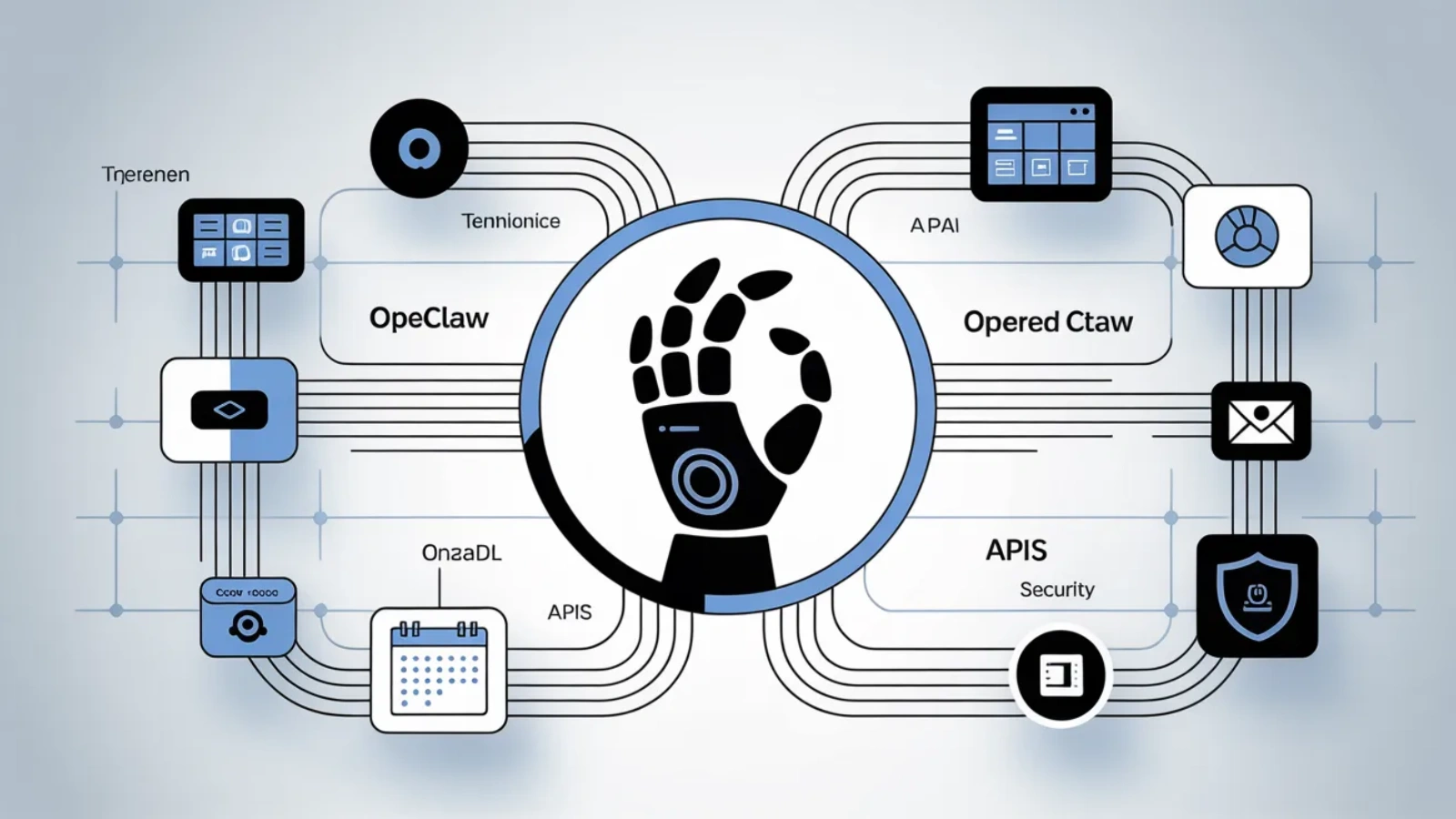
Security is the most technically demanding aspect of enterprise OpenClaw implementation. The threat vectors are well-documented and must be addressed systematically.
Prompt Injection Mitigation
Prompt injection is the highest-severity vulnerability in any agentic deployment. In OpenClaw, the agent processes content from emails, documents, and web pages as part of its normal operation. Malicious actors can embed instructions within this content, essentially hijacking the agent’s LLM to execute unauthorized commands. Enterprise deployments must implement input sanitization pipelines and establish strict boundaries between trusted user instructions and external data sources processed by the agent.
Skills Vetting and Allowlisting
The ClawHub community skills repository, while expansive, is not uniformly vetted for security. Cisco’s AI security team has demonstrated that third-party OpenClaw skills can perform data exfiltration and prompt injection without user awareness. Enterprise deployments should maintain an internal allowlist of approved skills, review the permissions object in each skill’s metadata, and treat any skill requesting a shell. Execute or fs.read_root access as a high-risk component, requiring explicit security review.
Credential and API Key Management
Plaintext API keys in configuration files represent one of OpenClaw’s most commonly cited security weaknesses. Enterprise implementations must use a dedicated API key for the agent with scoped permissions, enforce a daily spending limit to limit blast radius in credential exposure scenarios, implement token rotation policies, and integrate with enterprise secrets management tools.
Human-in-the-Loop (HITL) Controls
For any irreversible action, such as ending emails, deleting files, or making API calls that modify production data, enterprise deployments should enforce HITL approval workflows. The agent flags the intended action, presents it to a human operator for confirmation, and only proceeds upon explicit approval. This eliminates the risk of misinterpreted commands causing unintended outcomes at scale.
Phase 4: Enterprise System Integration
A standalone OpenClaw installation delivers limited enterprise value. The strategic ROI comes from deep integration with existing business systems.
Typical enterprise integrations include:
- CRM Systems (Salesforce, HubSpot): The agent manages lead qualification, generates follow-up emails, and updates deal stages autonomously based on email and calendar activity.
- ERP Platforms (SAP, Oracle): Integration enables automated purchase order processing, inventory monitoring, and financial reporting triggers.
- DevOps Pipelines (GitHub, Jira, Jenkins): OpenClaw monitors pull requests, flags build failures, triages issues, and coordinates sprint updates.
- Internal Communication Platforms (Slack, Teams): The agent operates as a channel-native assistant, routing requests, generating summaries, and triggering workflows from conversation context.
- Document Management Systems (SharePoint, Confluence): The agent indexes knowledge bases, answers internal queries, and drafts documentation from structured data sources.
Each integration requires custom API configuration, scope-limited authentication, and validation against the enterprise’s data governance policies before deployment.
Phase 5: Ongoing OpenClaw Support and Governance
Deployment is not the end of the implementation lifecycle; it is the beginning of the operational phase. Enterprise OpenClaw deployments require structured ongoing support across several dimensions.
- Version Management: OpenClaw’s development pace is rapid. Enterprise support teams must evaluate version updates, test compatibility with existing integrations, and execute controlled rollouts with rollback procedures.
- Incident Response: Agentic systems can produce unexpected behaviors, especially as connected systems change. A dedicated support function provides monitoring, rapid incident triage, and root cause analysis.
- Audit Logging and Compliance: Regulated industries (healthcare, finance, legal) require immutable audit trails of every agent action. Enterprise support includes log pipeline configuration, retention policies, and alignment with GDPR, SOC2, and HIPAA frameworks as applicable.
- Model Retraining and Prompt Optimization: As business workflows evolve, agent performance requires continuous calibration. Support teams monitor output quality, adjust prompt configurations, and fine-tune the LLM layer for domain-specific accuracy.
DIY vs. Professional Enterprise OpenClaw Implementation
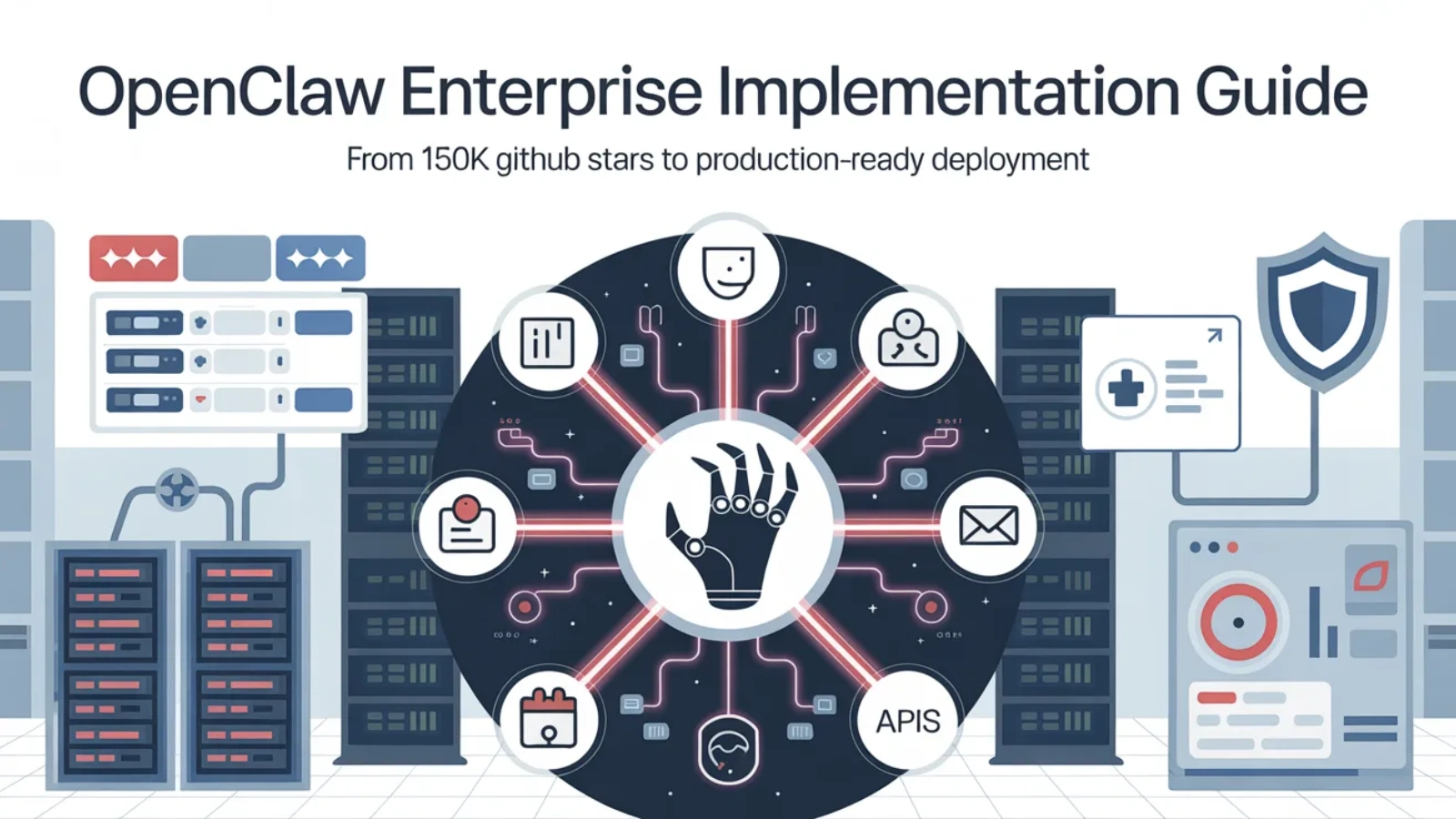
The OpenClaw community documentation is well-developed, and technically capable teams can self-deploy. However, the gap between a functional personal installation and a production-grade enterprise deployment is substantial.
DIY deployments frequently under-invest in sandboxing, run with overly broad filesystem permissions, use unvetted community skills, and lack the monitoring infrastructure to detect anomalous agent behavior. In enterprise contexts, where the cost of a data breach or system compromise far exceeds the cost of professional implementation, this risk calculus is straightforward.
A structured professional implementation delivers a hardened, governed, fully integrated OpenClaw deployment with defined SLAs, documented rollback procedures, and ongoing technical support, the operational baseline that enterprise environments require.
Conclusion
OpenClaw represents a genuine inflection point in enterprise automation. Its ability to act autonomously across systems, executing tasks that previously required dedicated human operators, makes it a compelling platform for organizations looking to scale operations without proportionally scaling headcount.
But the same architectural properties that make it powerful make it dangerous if deployed carelessly. Enterprise OpenClaw implementation requires disciplined planning, security-first engineering, deep system integration, and structured ongoing support.
Globussoft’s enterprise AI implementation practice covers the full OpenClaw deployment lifecycle, from initial discovery and architecture design through containerized installation, security hardening, system integration, and ongoing operational support. For organizations ready to move from experimentation to production-grade agentic AI, a professionally managed implementation is the lowest-risk path to sustainable deployment.
Ready To Deploy OpenClaw In Your Enterprise Environment?
Contact Globussoft to schedule a discovery call and assess your organization’s readiness for a secure, governed OpenClaw implementation.