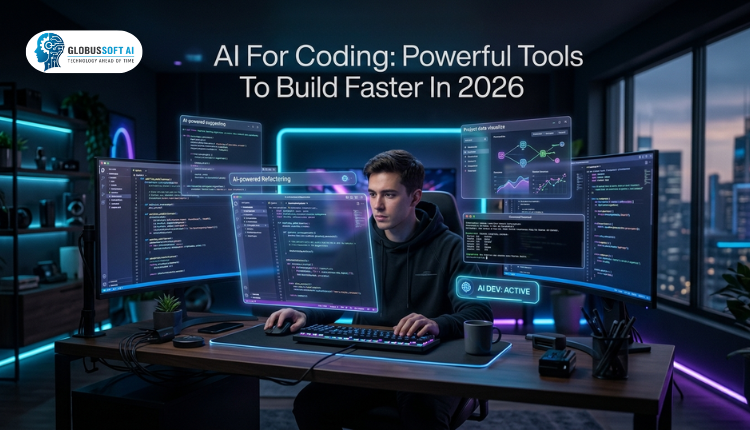
Software development has changed dramatically in the last two years.
What once took entire teams weeks to build can now be prototyped in hours with the help of AI for coding tools. From generating boilerplate code and debugging errors to creating full-stack applications, AI is no longer just assisting developers, it’s actively reshaping how products are built.
And this shift is happening fast.
According to recent developer surveys, the majority of developers already use AI-powered coding assistants in their daily workflow. Whether it’s startups trying to launch MVPs faster or enterprise teams improving engineering efficiency, AI coding tools have become a competitive advantage.
But here’s the challenge:
Every month, a new AI tool for coding appears claiming to be “the future of development.”
Some genuinely improve productivity.
Others create messy, unreliable code that becomes a nightmare later.
So, which platforms are actually worth using in 2026?
In this guide, we’ll explore the best AI for coding tools, their strengths, limitations, ideal use cases, and how developers are using them to build faster without compromising quality.
Listen To The Podcast Now!
What Is AI For Coding?
AI for coding refers to artificial intelligence tools that help developers write, edit, debug, optimize, and understand code using natural language prompts and contextual suggestions.
Instead of manually writing every line of code, developers can now:
- Generate functions instantly
- Build UI components faster
- Refactor legacy systems
- Detect bugs automatically
- Create documentation
- Convert designs into production-ready code
- Explain complex code blocks
Think of it as having an intelligent pair programmer available 24/7.
Some tools focus on autocomplete and productivity, while others act like autonomous coding agents capable of handling complete development workflows.
The result?
Faster shipping, reduced repetitive work, and more time spent solving real problems instead of writing boilerplate logic.
Why AI Coding Tools Are Exploding In 2026

The demand for AI for coding platforms is growing because modern software development has become incredibly complex.
Teams are expected to:
- Ship products faster
- Handle multiple platforms
- Maintain clean architecture
- Reduce engineering costs
- Improve user experience
- Scale applications quickly
Traditional development workflows struggle to keep up with these expectations.
That’s where AI enters the picture.
Modern AI coding assistants can:
- Understand project context
- Suggest production-ready code
- Improve developer productivity
- Reduce repetitive development tasks
- Speed up debugging
- Accelerate frontend and backend development
For startups, this means faster MVP launches.
For enterprises, it means reduced development bottlenecks.
For solo developers, it means building products that once required entire teams.
Best AI For Coding Tools In 2026

Not every AI coding assistant solves the same problem.
Some are built for rapid UI generation, while others excel at backend engineering, autonomous development, or debugging.
Here are the platforms dominating the AI development space in 2026.
| Tool | Best For | Biggest Strength | Main Limitation |
| Cursor | Full-stack development | Smart contextual coding | Requires technical oversight |
| GitHub Copilot | Daily coding productivity | Reliable code suggestions | Limited advanced reasoning |
| Claude Code | Agentic workflows | Complex task execution | Needs detailed prompting |
| Devin | Autonomous development | End-to-end automation | Expensive and evolving |
| V0 | Design-to-code workflows | Fast React UI generation | Limited flexibility |
| Replit | Browser-based development | Instant deployment | UI customization limitations |
| Bolt.new | Rapid prototyping | Minimal setup | Not ideal for production apps |
| Lovable.dev | MVP validation | Beautiful frontend demos | Backend restrictions |
1. Cursor
Cursor has quickly become one of the best AI for coding platforms for serious developers.
Built on top of VS Code, Cursor integrates AI deeply into the development experience instead of simply acting as an autocomplete plugin.
It can:
- Generate scalable backend APIs
- Refactor large codebases
- Explain complex logic
- Improve existing architecture
- Assist with debugging
- Build mobile applications faster
What makes Cursor powerful is its context awareness.
Instead of suggesting random snippets, it understands the surrounding project structure and generates more relevant code.
Why Developers Love Cursor
- Excellent for large projects
- Strong support for React and backend systems
- Great for refactoring
- Works well with enterprise workflows
- Speeds up repetitive development
Limitations
Cursor still requires experienced developers.
AI-generated code can occasionally introduce security risks or architectural problems if reviewed carelessly.
2. GitHub Copilot
When discussing the best AI for coding, GitHub Copilot is impossible to ignore.
It remains one of the most widely adopted AI coding assistants in the world.
Copilot works directly inside editors like VS Code and helps developers by suggesting:
- Functions
- Logic blocks
- API integrations
- Unit tests
- Repetitive code structures
Its biggest strength is reliability.
Rather than trying to automate everything, Copilot focuses on improving daily development productivity.
Best Use Cases
- Writing boilerplate code
- Speeding up repetitive tasks
- Supporting junior developers
- Improving coding efficiency
- Assisting during debugging
Drawback
While Copilot is excellent for suggestions, it lacks the advanced reasoning abilities newer agentic tools offer.
3. Claude Code
Claude Code represents the next generation of AI tool for coding platforms.
Instead of only suggesting snippets, it behaves more like an engineering assistant capable of handling multi-step development tasks.
It can:
- Understand product requirements
- Plan implementation steps
- Generate backend logic
- Assist with testing
- Refactor applications
- Handle long-context reasoning
Claude Code is particularly strong in large-scale engineering environments where thoughtful architecture matters.
Where It Excels
- Complex application logic
- API development
- Long development workflows
- Enterprise-grade reasoning
- Large codebase refactoring
Potential Issue
It may occasionally overcomplicate solutions if prompts aren’t carefully structured.
Human review is still critical.
4. Devin
If you’ve been wondering which is the best AI tool for coding when it comes to automation, Devin is one of the most ambitious answers.
Devin positions itself as an autonomous AI engineer capable of executing entire development tasks with minimal supervision.
This includes:
- Fixing bugs
- Writing features
- Running tests
- Handling implementation cycles
- Managing workflows
It’s a glimpse into what future software engineering may look like.
Why Devin Stands Out
- Highly autonomous
- Can handle multi-step workflows
- Reduces repetitive engineering effort
- Useful for iterative improvements
Current Challenges
Devin is still evolving.
It’s expensive, resource-heavy, and not fully reliable for mission-critical production systems yet.
5. V0 By Vercel
Frontend developers love V0 because it dramatically speeds up UI creation.
This AI for coding platform converts prompts and designs into React components almost instantly.
It’s especially popular among teams building:
- Marketing pages
- Dashboards
- Internal tools
- MVP interfaces
- Landing pages
Why V0 Is Popular
- Fast UI generation
- Clean React components
- Excellent developer experience
- Great for frontend sprints
Limitation
Once projects become deeply customized, flexibility becomes limited.
It also works best within the Vercel ecosystem.
6. Replit
Replit continues to dominate browser-based AI development.
Unlike traditional IDEs, Replit allows developers to build, test, collaborate, and deploy applications directly from the browser.
Its AI capabilities make it especially attractive for:
- Beginners
- Educators
- Startup teams
- Rapid prototyping
- Small production apps
Strongest Features
- Instant deployment
- Easy collaboration
- Beginner-friendly
- AI-guided explanations
- No complex setup
Weakness
UI quality and scalability may not match enterprise-level platforms.
Heavy AI usage can also become expensive over time.
7. Bolt.new
Bolt.new focuses on one thing:
Speed.
It’s built for developers who want quick experimentation without dealing with complicated setup processes.
This makes it excellent for:
- API testing
- Internal tools
- Quick experiments
- Lightweight workflows
- Fast prototypes
Why Developers Use It
- Extremely fast setup
- Browser-based simplicity
- Great for testing ideas quickly
Drawback
The generated code usually needs cleanup before production deployment.
8. Lovable.dev
Lovable.dev takes a slightly different approach to AI for coding.
Instead of focusing heavily on backend systems, it prioritizes beautiful user experiences and frontend prototyping.
It’s ideal for:
- Stakeholder demos
- MVP validation
- User flow testing
- Design-focused products
Biggest Advantage
It creates polished interfaces incredibly quickly.
Main Limitation
The backend ecosystem is restrictive, especially for teams needing advanced infrastructure flexibility.
Which Is The Best AI Tool For Coding?
There isn’t a single universal winner.
The best AI for coding platform depends entirely on your workflow and goals.
Here’s a simple breakdown:
-
Choose Cursor if:
You’re building scalable applications and need strong engineering support.
-
Choose GitHub Copilot if:
You want reliable day-to-day coding assistance inside your editor.
-
Choose Claude Code if:
You need advanced reasoning and multi-step development support.
-
Choose Devin if:
You want maximum automation and experimental autonomous workflows.
-
Choose V0 if:
Frontend speed and UI generation are your priority.
-
Choose Replit if:
You want browser-based development with easy deployment.
-
Choose Bolt.new if:
You care about rapid experimentation and lightweight prototyping.
-
Choose Lovable.dev if:
You need fast, polished demos and MVP validation.
While choosing the right AI for coding platform is important, businesses are now looking beyond simple code generation tools toward complete AI-powered systems that automate workflows, operations, and customer interactions.
This is where platforms like Globussoft AI stand out.
Beyond AI-assisted coding, Globussoft AI helps businesses build scalable AI solutions including AI agents, workflow automation systems, LLM-powered chatbots, voice AI solutions, and enterprise-grade AI infrastructure designed for real-world business operations.
How Globussoft AI Is Helping Businesses Scale With AI
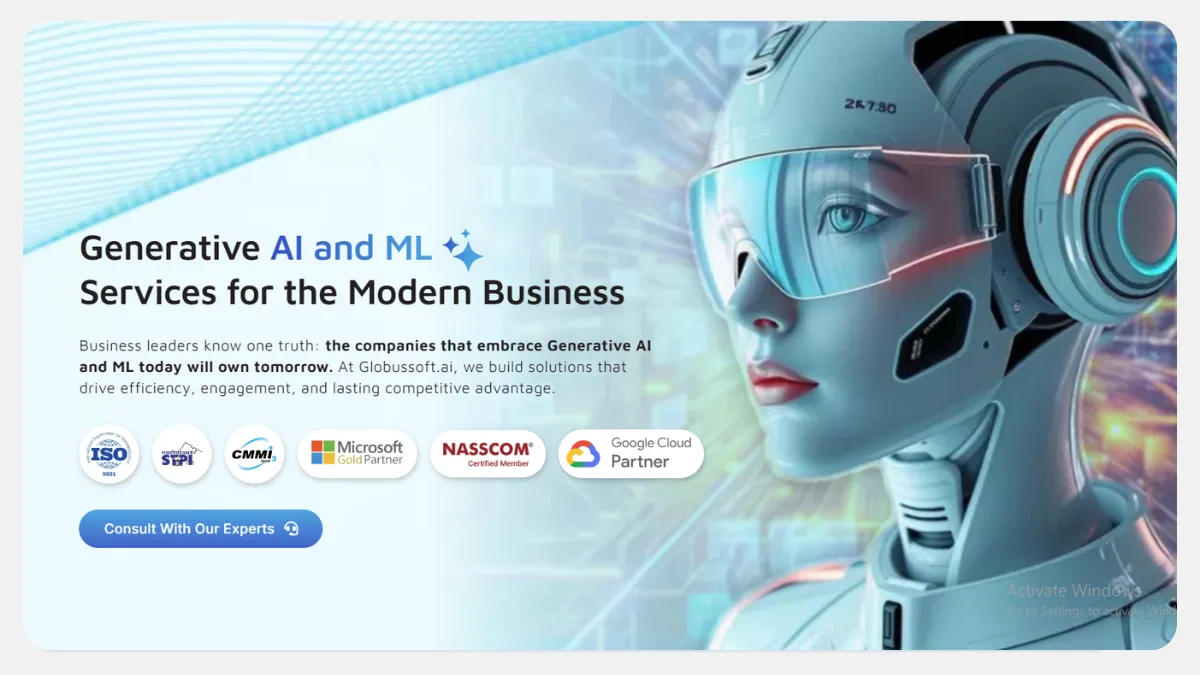
While many AI coding tools mainly improve developer productivity, Globussoft AI focuses on helping businesses build practical AI systems that automate operations and improve efficiency at scale.
Their ecosystem combines AI automation, large language models, AI agents, workflow orchestration, and enterprise AI integration to reduce repetitive work and accelerate business processes.
From AI-powered CRM systems and workflow automation to multilingual voice AI agents and operational AI infrastructure, their solutions are designed to support businesses moving toward AI-first operations.
Key Features Of Globussoft AI
-
AI Agent Development
Build intelligent AI agents that automate customer support, internal operations, repetitive workflows, and business interactions.
-
LLM-Powered Chatbots
Create conversational AI systems powered by advanced large language models for smarter and more personalized communication.
-
AI Workflow Automation
Automate repetitive business operations including onboarding, scheduling, reporting, document processing, and support workflows.
-
Voice AI Solutions
Deploy AI voice agents capable of handling customer calls, lead qualification, multilingual conversations, and support interactions.
-
Multi-Agent AI Systems
Develop connected AI ecosystems where multiple AI agents collaborate across different workflows and departments.
-
Enterprise AI Integration
Integrate AI capabilities into existing business infrastructure with scalable deployment and operational optimization.
-
OpenClaw-Powered AI Infrastructure
Build self-hosted AI assistant systems that integrate with platforms like WhatsApp,
Slack, Telegram, Discord, Gmail, and multiple AI models including GPT-4, Claude,
Gemini, and Llama for centralized AI operations and workflow automation.
AI for coding is no longer limited to autocomplete and code suggestions. Businesses are now using AI to automate workflows, improve operations, and build smarter systems at scale.
Platforms like Globussoft AI are helping businesses turn AI into real operational advantage through AI agents, automation, and enterprise AI solutions.
Ready To Scale With AI?
Explore Globussoft AI to build AI-powered workflows, intelligent automation systems, and scalable business solutions designed for modern enterprises.
How AI Coding Tools Are Changing Software Development

AI coding assistants are doing more than just saving time.
They’re changing the role of developers entirely.
Instead of spending hours writing repetitive code, developers now focus more on:
- Architecture decisions
- Product thinking
- User experience
- Problem-solving
- Optimization
- System design
AI handles much of the repetitive execution.
But that doesn’t mean developers are becoming obsolete.
In fact, skilled engineers are becoming even more valuable because AI-generated code still requires:
- Human review
- Security validation
- Performance optimization
- Architectural decisions
- Business logic understanding
The future belongs to developers who know how to combine AI speed with human judgment.
Read More:
How AI Development Services Are Transforming The Digital Age
How To Understand Types Of Agent In AI? Complete Guide
Important Risks Of Using AI For Coding
While AI coding tools are incredibly powerful, blindly trusting them can create major problems.
Common risks include:
- Security vulnerabilities
- Poor architecture decisions
- Inefficient code generation
- Scalability issues
- Dependency problems
- Hallucinated functions or APIs
That’s why experienced oversight remains essential.
The smartest teams treat AI as an accelerator not a replacement for engineering expertise.
Final Thoughts
AI for coding is no longer a futuristic trend.
It’s becoming the standard way modern software gets built.
From GitHub Copilot and Cursor to Claude Code and Devin, these tools are dramatically accelerating development workflows across startups, agencies, and enterprise engineering teams.
But the key isn’t simply choosing the most popular platform.
It’s choosing the right AI tool for coding based on your product stage, technical complexity, and development workflow.
The best developers in 2026 won’t be the ones who ignore AI.
They’ll be the ones who know exactly how to use it strategically.
Because in the end, AI doesn’t replace great developers.
It amplifies them.
FAQs: –
1. Which is the best AI tool for coding in 2026?
Cursor, GitHub Copilot, Claude Code, and Devin are among the best AI coding tools in 2026, depending on your development needs and workflow.
2. Can AI tools replace software developers?
No. AI coding tools can speed up development, but human developers are still essential for architecture, security, problem-solving, and decision-making.
3. What is AI for coding used for?
AI for coding helps developers generate code, debug errors, automate repetitive tasks, refactor applications, and build software faster.
4. Are AI coding assistants safe to use?
Yes, but AI-generated code should always be reviewed carefully for security issues, scalability problems, and incorrect logic.
5. Which AI coding tool is best for beginners?
GitHub Copilot and Replit are considered beginner-friendly because they simplify coding workflows and provide easy-to-understand suggestions.