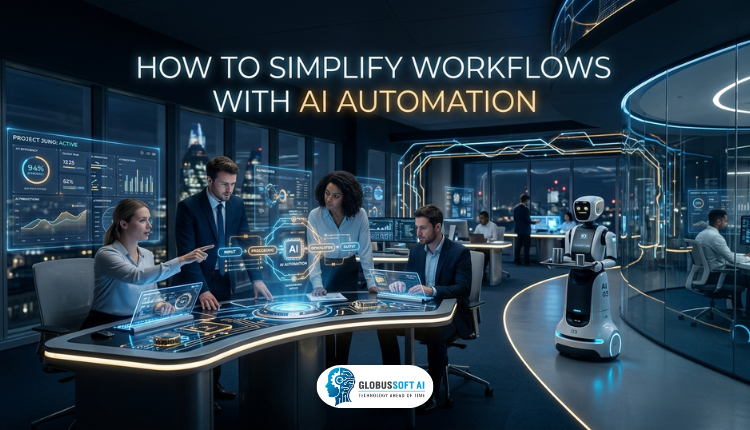
Businesses today are moving faster than ever. Teams juggle emails, approvals, reports, customer requests, invoices, meetings, follow-ups, and endless repetitive tasks every single day. While technology has made work easier in many ways, it has also created a new challenge — managing overwhelming workflows without slowing productivity.
This is exactly where AI automation is changing the game.
Instead of spending hours on repetitive manual work, businesses are now using intelligent systems that can analyze information, make decisions, and complete tasks automatically. From customer support and marketing to HR and finance, AI-powered workflows are helping organizations save time, reduce errors, and improve efficiency at scale.
And the best part? AI automation is no longer limited to large enterprises with huge budgets. Today, businesses of all sizes can use smart automation tools to streamline operations and focus more on growth.
In this blog, we’ll explore how AI automation works, why it matters, where it can be used, and how you can simplify workflows using modern AI-powered solutions.
In a hurry? Listen to the blog instead!
What Is AI Automation?
At its core, it combines artificial intelligence with automation technology to perform tasks without constant human intervention.
Traditional automation follows fixed rules. For example:
- If a customer fills a form → send confirmation email.
- If an invoice is uploaded → forward it to finance.
AI automation goes a step further.
It can:
- Understand human language
- Analyze large amounts of data
- Recognize patterns
- Predict outcomes
- Make intelligent decisions
- Continuously improve over time
This allows businesses to automate complex workflows instead of only repetitive actions.
For example, an AI-powered customer support system can:
- Understand customer intent
- Detect urgency
- Generate relevant replies
- Route tickets automatically
- Learn from previous conversations
That’s far more advanced than traditional rule-based systems.
Traditional Automation Vs AI Automation

| Feature | Traditional Automation | AI Automation |
| Works on predefined rules | Yes | Yes |
| Learns from data | No | Yes |
| Handles unstructured data | Limited | Excellent |
| Decision-making ability | Basic | Advanced |
| Adapts over time | No | Yes |
| Human-like understanding | No | Yes |
This shift is why businesses are rapidly adopting AI workflow automation across industries.
Why Businesses Are Investing In AI Automation
Modern workflows are more complicated than ever.
Teams work across multiple apps, cloud platforms, CRMs, spreadsheets, communication tools, and databases. Managing all of these manually creates delays, confusion, and operational inefficiencies.
It helps businesses:
- Reduce repetitive work
- Improve speed and accuracy
- Eliminate manual errors
- Increase productivity
- Improve customer experience
- Scale operations faster
- Reduce operational costs
Instead of employees spending hours on repetitive administrative work, they can focus on creative thinking, AI strategy, and decision-making.
That’s one of the biggest reasons AI automation is becoming a key part of digital transformation.
How AI Automation Simplifies Workflows
1. Automates Repetitive Tasks
Many daily business activities are repetitive:
- Data entry
- Invoice processing
- Email sorting
- Appointment scheduling
- Lead management
- File organization
These tasks consume valuable time.
AI systems can automate these workflows instantly while maintaining consistency and accuracy.
For example:
An AI system can automatically read invoices, extract important information, update accounting software, and notify the finance team — all without manual input.
2. Improves Team Productivity
One major advantage of workflow automation is improved productivity.
When repetitive work is removed:
- Teams complete tasks faster
- Employees experience less burnout
- Collaboration becomes smoother
- Response times improve
AI tools also work 24/7, which helps businesses maintain operations even outside working hours.
For customer support teams, this means instant replies and faster issue resolution.
For HR teams, it means quicker onboarding and automated document verification.
3. Reduces Human Errors
Manual workflows often lead to mistakes.
A single typo in financial records or customer information can create serious problems.
AI-powered systems reduce these risks by:
- Validating data automatically
- Detecting inconsistencies
- Flagging suspicious activity
- Following predefined business logic
This improves operational accuracy across departments.
4. Handles Large Volumes Of Data
Modern businesses generate huge amounts of information every day.
AI systems can process:
- Emails
- PDFs
- Customer chats
- Reports
- Contracts
- Images
- Audio files
Unlike traditional automation, AI can understand unstructured data and use it to make intelligent decisions.
This is one reason AI workflow automation is becoming essential in industries like healthcare, finance, retail, and manufacturing.
5. Enhances Customer Experience
Customers expect fast and personalized experiences.
AI automation helps businesses:
- Respond instantly
- Personalize interactions
- Resolve issues faster
- Recommend products intelligently
- Offer 24/7 support
For example:
AI chatbots can answer common customer questions while forwarding complex cases to human agents.
This creates a smoother customer experience while reducing support workload.
Core Technologies Behind AI Automation

Several advanced technologies power modern AI automation systems.
| Technology | Purpose |
| Machine Learning (ML) | Learns from data and improves predictions |
| Natural Language Processing (NLP) | Understands human language |
| Computer Vision | Reads images and documents |
| Generative AI | Creates text, summaries, and responses |
| Robotic Process Automation (RPA) | Handles repetitive rule-based tasks |
| Intelligent Document Processing (IDP) | Extracts information from documents |
Together, these technologies create smarter automation systems capable of handling complex workflows.
Automation Technology Definitions
Understanding the core technologies behind AI automation makes it easier to see how modern businesses simplify complex workflows and improve operational efficiency.
| Automation Technology | Quick Definition |
| RPA | Robotic Process Automation uses software bots to automate repetitive, rule-based tasks across applications and systems. |
| AI | Artificial Intelligence enables systems to mimic human intelligence for learning, reasoning, and decision-making. |
| BPM | Business Process Management improves and organizes workflows for better operational efficiency. |
| IA | Intelligent Automation combines AI, RPA, and BPM to automate end-to-end business workflows intelligently. |
| Enterprise AI | Enterprise AI helps businesses automate operations using machine learning, predictive analytics, and data-driven insights. |
| Neural Networks | Neural networks help AI systems recognize patterns and process large amounts of complex data. |
| AI Agents | AI agents are intelligent software systems that can perform tasks, make decisions, and interact autonomously. |
| Machine Learning | Machine learning allows AI systems to learn from data and improve performance over time. |
| NLP | Natural Language Processing enables systems to understand, interpret, and generate human language. |
| GenAI | Generative AI creates content like text, images, summaries, and responses automatically. |
| IDP | Intelligent Document Processing extracts and organizes information from invoices, PDFs, forms, and other documents. |
Real-World Examples Of AI Workflow Automation
See how businesses are using AI applications to automate repetitive workflows, improve efficiency, and reduce manual effort across daily operations.
Customer Support
AI-powered systems can:
- Analyze customer queries
- Generate replies
- Prioritize urgent tickets
- Route requests automatically
This reduces response times significantly.
Finance And Accounting
AI automation helps finance teams with:
- Invoice processing
- Fraud detection
- Expense management
- Financial reporting
- Tax documentation
It also improves compliance and reduces manual calculations.
HR And Recruitment
HR teams use AI automation for:
- Resume screening
- Employee onboarding
- Attendance management
- Payroll processing
- Interview scheduling
This speeds up recruitment and improves employee experiences.
Healthcare
Healthcare organizations use AI automation to:
- Manage patient records
- Schedule appointments
- Analyze medical documents
- Process insurance claims
- Assist in diagnosis support
This helps healthcare professionals save time and focus more on patient care.
Also Read
Test Automation Explained: Everything You Need To Know
Marketing And Sales
AI automation can:
- Score leads
- Personalize campaigns
- Automate email sequences
- Track customer behavior
- Generate insights
Sales teams can focus more on conversions instead of administrative tasks.
What Are The Best AI Workflow Automation Tools?
Businesses today have access to a wide range of AI automation tools depending on their goals and workflow requirements.
Some tools focus on:
- Customer service
- Marketing automation
- Workflow management
- Process automation
- Data analysis
- Project management
Here’s a quick comparison table:
| Tool Type | Main Purpose |
| CRM Automation Tools | Automate customer interactions |
| Marketing Automation Platforms | Manage campaigns and lead nurturing |
| RPA Tools | Automate repetitive workflows |
| AI Chatbot Platforms | Handle customer communication |
| Workflow Automation Software | Connect apps and streamline operations |
| Document Processing Tools | Extract and organize data automatically |
When choosing tools, businesses should evaluate:
- Ease of integration
- Scalability
- AI capabilities
- Security features
- Customization options
- Workflow flexibility
If you’re wondering what are the best AI workflow automation tools, the answer depends on your business goals, industry, and operational challenges.
Why Businesses Are Choosing Globussoft AI For AI Workflow Automation
As businesses continue adopting AI-powered workflows, many struggle with one major challenge — finding solutions that are practical, scalable, and tailored to real operational problems.
This is where Globussoft AI stands out.
Instead of offering generic automation setups, Globussoft AI focuses on building enterprise-grade AI solutions that help businesses automate repetitive workflows, improve operational efficiency, and scale faster with intelligent AI systems.
From AI agents and workflow orchestration to generative AI integrations and custom automation pipelines, the platform helps organizations simplify complex business operations across industries.
Whether it’s customer support, healthcare, logistics, recruitment, finance, marketing, or e-commerce, Globussoft AI develops tailored AI systems designed around actual workflow bottlenecks.
Key Features Of Globussoft AI
AI Agent Development
Build intelligent AI agents that automate repetitive tasks, customer interactions, ticket handling, lead qualification, and internal workflows.
Workflow Automation
Simplify multi-step business processes with AI-powered workflow orchestration that reduces manual effort and improves operational speed.
LLM-Powered Chatbots
Deploy advanced chatbots powered by large language models for smarter customer conversations, support automation, and personalized responses.
AI/ML Integration
Integrate machine learning models and AI systems directly into existing business operations without disrupting workflows.
Industry-Specific AI Solutions
Globussoft AI develops customized solutions for industries like:
- Healthcare
- Recruitment
- Logistics
- Retail
- Hospitality
- Real estate
- Marketing agencies
- Finance
This allows businesses to automate workflows based on their exact operational needs.
Multi-Agent AI Systems
Create intelligent AI ecosystems where multiple AI agents collaborate across departments to manage complex workflows more efficiently.
Voice & Conversational AI
Deploy AI-powered voice assistants and conversational systems for customer support, outbound calling, appointment handling, and engagement automation.
Enterprise-Grade AI Deployment
From strategic consulting and architecture planning to deployment and continuous optimization, Globussoft AI provides end-to-end AI implementation support.
AI automation is helping businesses work faster, reduce manual effort, and improve workflow efficiency at scale.
Platforms like Globussoft AI make it easier to build intelligent AI-powered systems tailored to real business operations.
Whether you want to automate customer support, streamline internal processes, or deploy AI agents, the right AI strategy can completely transform how your business works.
Ready To Simplify Your Workflows With AI?
Explore how Globussoft AI can help you build smarter and more scalable AI-powered workflows.
Key Benefits Of AI Automation
Faster Operations
AI systems process information in seconds, reducing delays and improving turnaround time.
Better Decision-Making
AI analyzes patterns and provides actionable insights that help businesses make smarter decisions.
Cost Savings
By reducing manual labor and errors, businesses save both time and operational costs.
Scalability
AI systems can handle growing workloads without requiring proportional increases in manpower.
Improved Accuracy
Automation minimizes human mistakes and improves consistency.
Enhanced Employee Experience
Employees spend less time on repetitive work and more time on meaningful tasks.
Read More:
AI Applications: Real-World Use Cases, Industries, and Examples (2026 Guide)
From Automation To Innovation: Crafting A Powerful AI Strategy
Challenges Businesses May Face
While AI automation offers major advantages, implementation still comes with challenges.
Data Quality Issues
AI systems depend heavily on clean and organized data.
Poor-quality data can affect performance and accuracy.
Integration Problems
Older systems may not integrate smoothly with modern AI platforms.
Businesses often need proper planning before deployment.
Security And Compliance
Organizations handling sensitive information must ensure:
- Data privacy
- Secure workflows
- Regulatory compliance
This is especially important in healthcare and finance industries.
Employee Resistance
Some employees fear automation may replace jobs.
In reality, AI automation is mostly designed to support teams by removing repetitive work, not replacing human creativity and strategic thinking.
How To Successfully Implement AI Automation

Businesses should approach automation strategically instead of trying to automate everything at once.
Step 1: Identify Repetitive Workflows
Start by finding tasks that:
- Consume excessive time
- Require manual repetition
- Create bottlenecks
Step 2: Set Clear Goals
Define what you want to achieve:
- Faster operations
- Better customer service
- Reduced costs
- Improved productivity
Step 3: Choose The Right Tools
Select AI solutions based on:
- Workflow complexity
- Integration needs
- Business size
- Budget
Step 4: Start Small
Run pilot projects before scaling automation across the organization.
This helps teams adapt gradually.
Step 5: Monitor And Improve
AI systems improve over time.
Track performance regularly and optimize workflows continuously.
The Future Of AI Workflow Automation
The future of AI workflow automation looks incredibly promising.
Businesses are moving toward:
- Autonomous AI agents
- Predictive automation
- Intelligent decision-making systems
- Hyperautomation
- AI-powered orchestration
Future AI systems will not only automate tasks but also:
- Predict problems
- Recommend solutions
- Coordinate workflows independently
- Improve processes automatically
As generative AI continues evolving, businesses will gain even more opportunities to streamline operations and enhance productivity.
Final Thoughts
The way businesses operate is changing rapidly, and AI automation is becoming one of the biggest drivers of that transformation.
From reducing repetitive work to improving customer experiences and accelerating decision-making, AI-powered systems are helping organizations simplify workflows like never before.
The biggest advantage is not replacing people — it’s allowing teams to focus on higher-value work while automation handles the repetitive processes behind the scenes.
Businesses that adopt automation early will gain:
- Better efficiency
- Faster scalability
- Stronger customer experiences
- Improved operational control
As AI technology continues to evolve, smarter workflows will become the standard rather than the exception.
Now is the perfect time to explore how AI automation can simplify your business operations and prepare your organization for the future.
FAQs:
1. How does AI automation improve business workflows?
It reduces repetitive manual tasks, improves operational speed, minimizes errors, and helps teams work more efficiently across departments.
2. What are the best AI workflow automation tools for businesses?
The best AI workflow automation tools depend on your business goals, but popular solutions include AI chatbots, RPA tools, workflow automation platforms, and AI agents.
3. Can small businesses use AI automation?
Yes, modern tools are scalable and affordable, making them suitable for startups, small businesses, and large enterprises alike.
4. What industries benefit the most from AI workflow automation?
Industries like healthcare, finance, recruitment, e-commerce, logistics, marketing, and customer support benefit significantly from AI-powered workflow automation.
5. What is the difference between traditional automation and AI automation?
Traditional automation follows fixed rules, while AI automation can learn from data, understand context, make decisions, and improve workflows over time.