Your alarm wakes you up. A smart assistant reads your schedule. You open your phone and get personalized news. You commute, and navigation apps predict traffic in real time. By 9 AM, you’ve already interacted with AI technology dozens of times, most of it invisible.
AI is no longer a futuristic concept. It’s woven into the fabric of everyday life, powering the tools businesses rely on, the systems that keep hospitals running, and the platforms that connect billions of people. It is quickly becoming one of the most critical global systems ever built.
In this guide, you’ll learn what AI technology actually is, how it works, where it’s being used today, and most importantly, both the incredible benefits and the real risks it brings to the table.
Listen Podcast Now:
What is AI Technology?
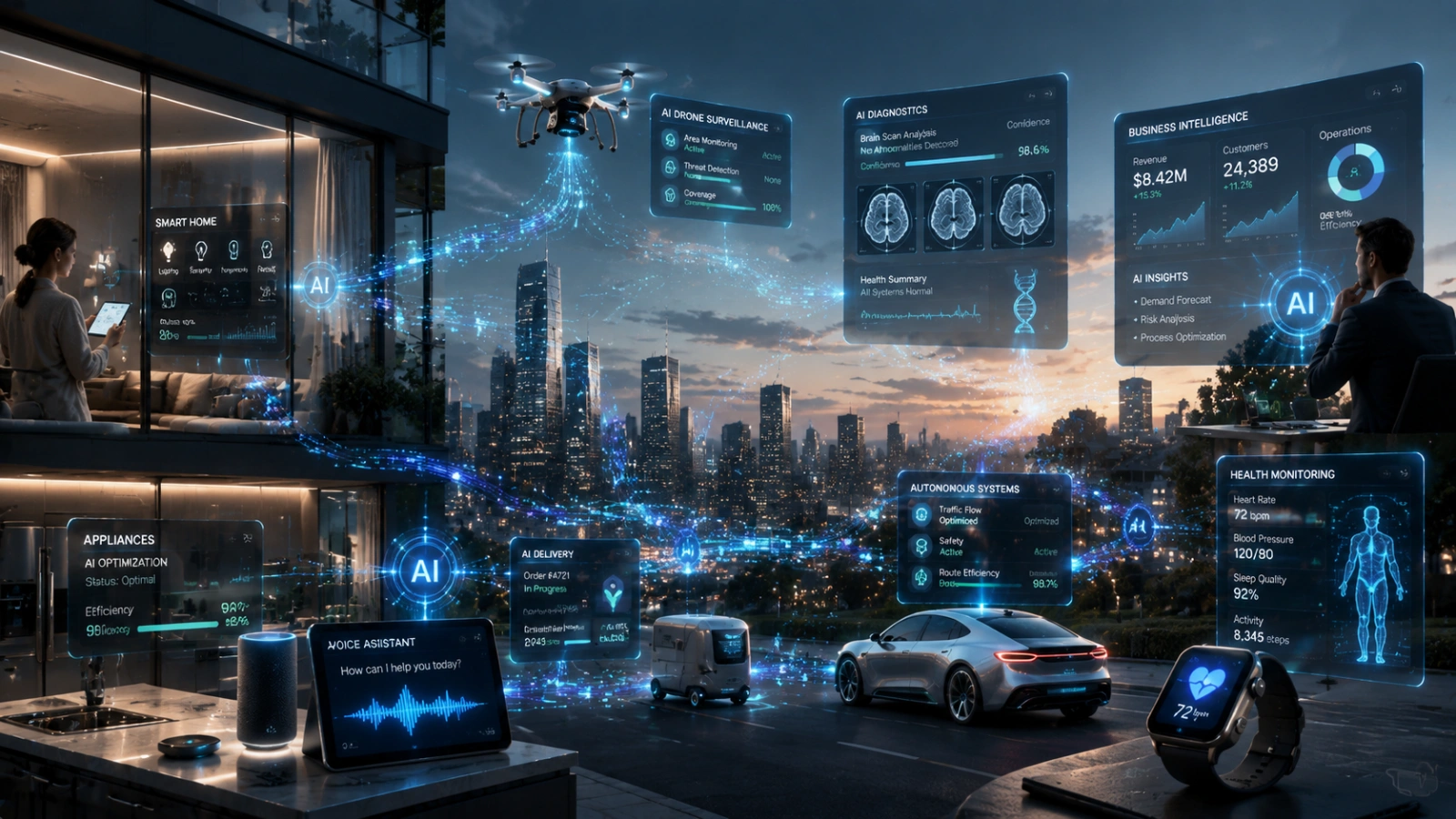
AI technology refers to computer systems designed to perform tasks that usually require human intelligence, such as understanding language, recognizing images, making predictions, and learning from data. Rather than being programmed with fixed rules for every situation, AI systems improve their performance by identifying patterns in data.
How AI Technology Works
At a high level, AI follows a learning loop:
Data goes in → a model is trained → the model makes predictions → outputs are generated → feedback is used to improve performance.
Two major approaches power this process:
- Machine Learning helps systems learn patterns from data without being explicitly programmed for every task.
- Neural Networks are computational systems inspired loosely by the brain. When these networks have many layers, they are often referred to as deep learning models.
More data can help improve performance, but only if the data is high-quality, relevant, and representative. Poor or biased data can lead to poor results, even at large scale.
Types of AI Technology
There are three broad categories of AI:
- Narrow AI is the type used today. It is built for specific tasks, such as image recognition, search ranking, or recommendation systems.
- General AI is a hypothetical future system that could perform a wide range of intellectual tasks at a human level. It does not exist yet.
- Super AI is also hypothetical and refers to AI that would surpass human intelligence across most or all domains. This remains speculative.
Key Components Behind AI Technology
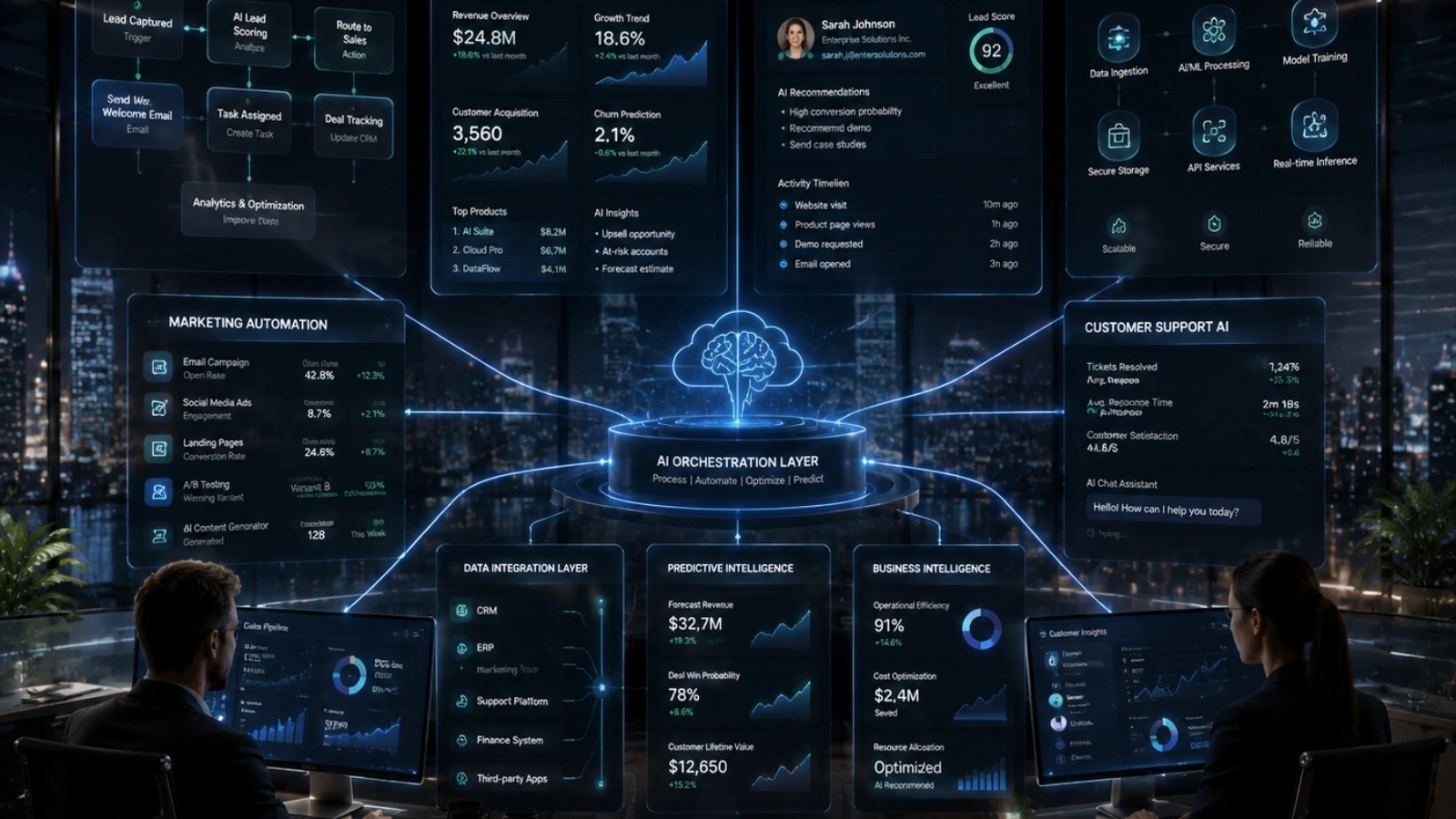
AI depends on three core elements: data, algorithms, and training. Together, they determine how well a system learns, predicts, and adapts.
Data as the Foundation
AI runs on data. Without large, high-quality datasets, even the most sophisticated algorithm produces poor results. The type of data matters too it needs to be representative, accurate, and diverse to produce reliable outcomes.
Algorithms and Models
Algorithms are the instructions that teach a system how to learn. Models are the result of that training, a snapshot of what the AI has learned, ready to make predictions. The quality of the algorithm determines how efficiently the model learns patterns from data.
Training and Optimization
Training is an ongoing process. AI models improve through feedback loops when they make errors; the system adjusts its internal parameters to reduce those errors over time. Techniques like reinforcement learning allow AI to optimize through trial and error, making it sharper with each cycle.
Benefits of AI Technology
AI brings major advantages such as faster automation, better decision-making, and improved efficiency. It also makes everyday digital experiences more personalized and convenient.
Productivity and Automation
One of the most immediate benefits of AI technology is speed. Tasks that once took hours, such as data entry, document processing, and customer service triage, can now be handled in seconds. Businesses run faster workflows, employees shift their focus to higher-value work, and output scales without proportional increases in cost.
Accuracy and Decision Making
AI doesn’t get tired. It doesn’t have off days. In fields where precision matters diagnostics, financial modeling, quality control AI-driven systems consistently outperform manual processes. Data-driven insights allow organizations to make smarter, evidence-based decisions rather than relying on intuition.
Business and Economic Growth
AI technology solutions are creating measurable economic value. Businesses use AI to reduce operational costs, identify new revenue opportunities, and scale services globally with minimal marginal expense. Small companies can now access tools once reserved for enterprises, leveling the competitive playing field.
Everyday Life Improvements
The benefits aren’t just corporate. Search engines understand context and intent. Streaming platforms know what you want to watch before you do. Smart assistants manage your calendar, answer questions, and control your home. These everyday conveniences are all powered by AI running quietly in the background.
AI-Powered Business Solutions by GlobussoftAI
GlobussoftAI offers practical AI technology solutions that help businesses automate routine work, improve decision-making, and build smarter digital experiences. By combining AI-powered analytics, workflow automation, and enterprise integration, it supports organizations that want to adopt AI without disrupting their existing systems.
What makes GlobussoftAI valuable is its focus on turning AI into usable business outcomes. Instead of treating AI as a buzzword, it helps teams apply it to real challenges such as customer support, operational efficiency, personalization, and data-driven insights.
-
Helps businesses automate repetitive tasks and reduce manual workload.
-
Supports faster and more accurate decision-making with AI-driven insights.
-
Improves customer experiences through personalization and smarter workflows.
-
Integrates with existing business systems to make AI adoption smoother.
-
Enables teams to scale operations efficiently without adding unnecessary complexity.
You can place this section under AI Technology Solutions in Modern Systems or AI Tools That Are Transforming the World.
Risks of AI Technology
Along with its benefits, AI also creates serious concerns around bias, privacy, job displacement, and overdependence. These risks make responsible design and oversight essential.
Job Displacement and Workforce Shift
Automation is efficient, but it displaces workers. Roles that involve repetitive, rule-based tasks are most at risk. Entire industries, from logistics to customer service, are being restructured. The concern isn’t just job loss; it’s the pace of change and whether workers can reskill fast enough to keep up.
Bias and Fairness Issues
AI systems learn from historical data, and history is full of bias. When biased data is used to train models, the AI replicates and sometimes amplifies those patterns. Algorithmic bias has already surfaced in hiring tools, credit scoring systems, and criminal justice risk assessments. Left unchecked, it becomes a technological reinforcement of inequality.
Privacy and Data Security Risks
AI requires data and a lot of it. The collection, storage, and use of personal data raise serious concerns. From facial recognition surveillance in public spaces to ad-targeting systems that profile users with unnerving precision, the line between personalization and intrusion is increasingly thin. Data breaches in AI-powered systems can expose far more sensitive information than traditional databases.
Overdependence on AI Systems
As AI takes over more decisions, medical diagnoses, financial approvals, and content moderation, the risk of over-reliance grows. When humans stop questioning AI outputs, errors go undetected, and accountability becomes murky. Critical decisions need human oversight, not just algorithmic verdicts.
Also Read:
How OpenClaw AI Integration Helps Businesses Earn $10K+ in 7 Hours?
GlobussoftAI OpenClaw Services: Professional Installation & Custom Development
Real-World Applications of AI Technology
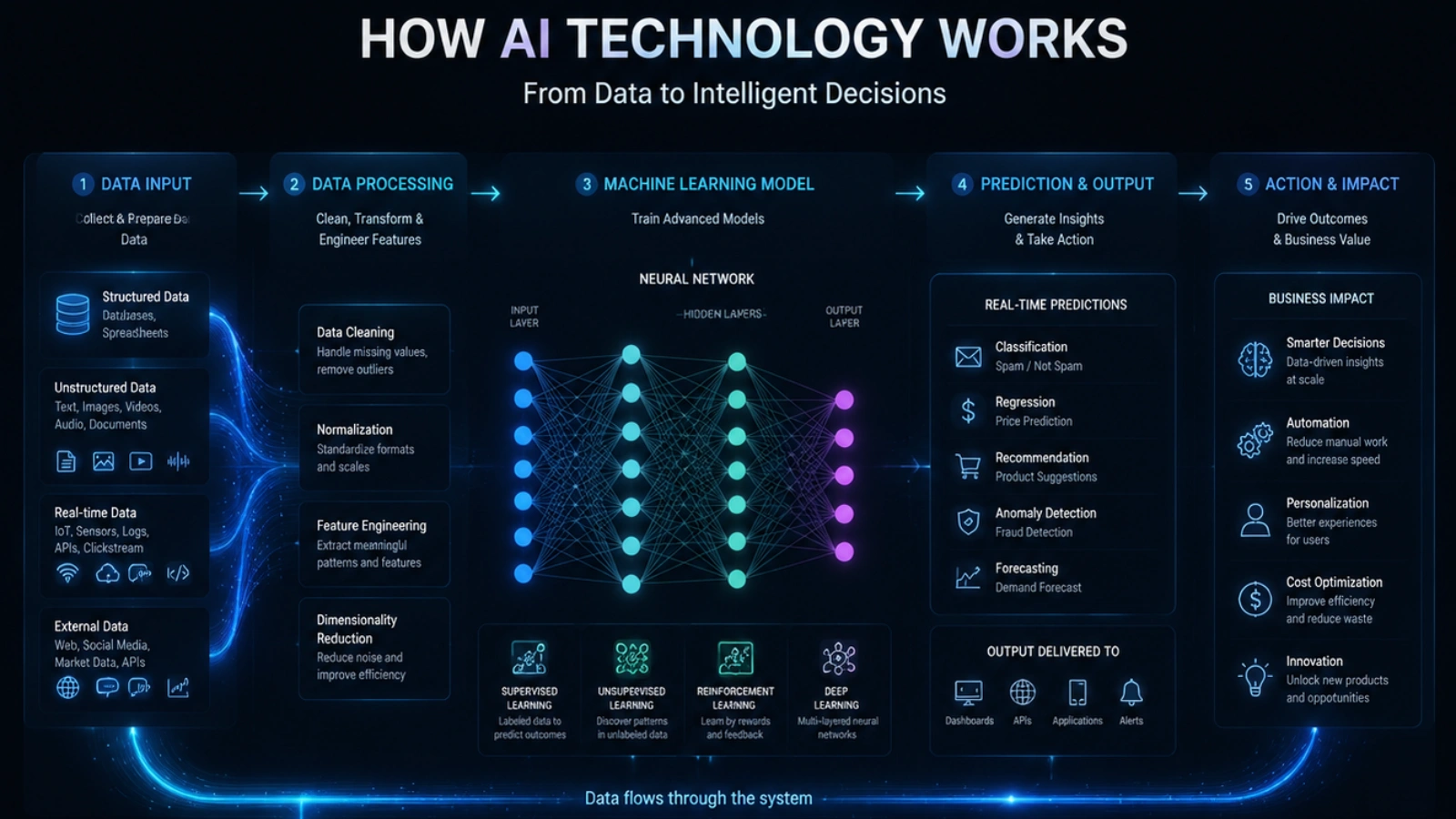
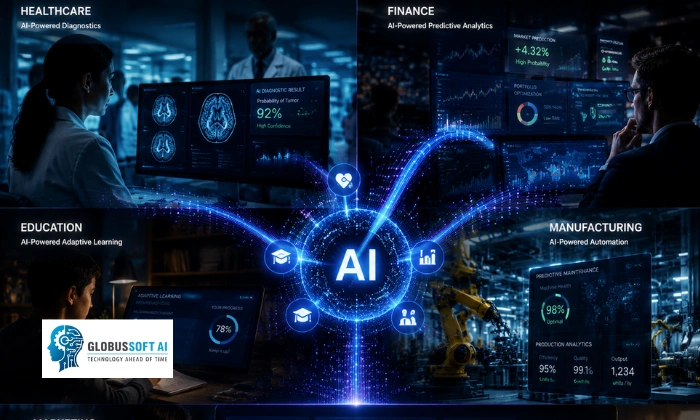
AI is already being used across healthcare, finance, education, marketing, and manufacturing. In each area, it helps organizations work faster, make smarter decisions, and serve people more effectively.
Healthcare
AI is transforming medicine. Diagnostic tools now detect cancers in imaging scans with accuracy rivaling that of specialist physicians. Predictive systems flag patients at risk of deterioration before symptoms escalate. Drug discovery timelines are compressing from decades to years.
Finance
Banks and trading firms use AI to detect fraudulent transactions in milliseconds, far faster than any human analyst. Algorithmic trading models scan global markets continuously, executing strategies based on real-time signals. Credit risk models assess borrower profiles with greater nuance and speed than traditional scoring systems.
Marketing and Business
Personalization is AI’s marketing superpower. AI systems analyze user behavior, segment audiences, and deliver hyper-targeted content at scale. From email campaigns to e-commerce recommendations, businesses use AI to connect with customers at exactly the right moment.
Education
Adaptive learning platforms adjust in real time to each student’s pace and comprehension level. AI tutors provide instant feedback, identify knowledge gaps, and suggest personalized content paths. Education is becoming less one-size-fits-all and more tailored to how each person actually learns.
Automation and Industry
Smart manufacturing uses AI-powered robotics to handle assembly, inspection, and logistics with precision. Predictive maintenance systems monitor machinery health and flag failures before they occur, reducing downtime and saving high costs.
AI Technology Solutions in Modern Systems
Enterprises across sectors are embedding AI technology solutions into their core operations. From workflow automation platforms that eliminate manual handoffs to AI-powered analytics dashboards that surface insights in real time, the integration is happening at every level of the organization.
Cloud providers now offer AI infrastructure as a service, meaning companies don’t need massive internal teams to deploy sophisticated models. AI is increasingly built into the software systems businesses already use: CRMs, ERPs, HR platforms, and project management tools.
The shift isn’t about replacing existing systems wholesale; it’s about making them smarter, faster, and more responsive to the data they already handle.
AI Tools That Are Transforming the World
The landscape of AI tools has exploded. A few categories stand out:
Generative AI tools like Claude, ChatGPT, and Gemini can write, summarize, reason, and create content at scale, changing how teams produce and communicate.
Productivity tools automate scheduling, meeting summaries, task management, and email triage, freeing up hours that used to disappear into administrative work.
Creative tools now assist designers, marketers, and developers with image generation, code completion, and ideation, compressing the gap between concept and execution.
Business automation tools connect disparate systems, trigger workflows based on real-time data, and manage customer journeys end to end with minimal human intervention.
These AI tools aren’t novelties. They’re becoming standard infrastructure for competitive businesses.
Future of AI Technology
Rise of AI Agents
The next phase isn’t just AI that answers questions; it’s AI that takes action. Autonomous agents can browse the web, write code, manage files, and complete multi-step tasks with minimal supervision. They represent a shift from AI as a tool to AI as a collaborator.
Human + AI Collaboration
The most effective outcomes aren’t AI replacing humans; they’re humans and AI working in hybrid systems. Doctors using AI diagnostic support. Lawyers using AI research assistants. Designers are using AI to iterate faster. Human judgment provides context and accountability; AI provides speed and scale.
Industry Transformation
Work, education, and healthcare are all in the middle of a fundamental restructuring. The jobs that survive won’t just be the ones that can’t be automated; they’ll be the ones that pair human creativity and empathy with AI’s analytical power.
AI Technology vs Traditional Technology
| Factor | Traditional Technology | AI Technology |
| Speed | Fast but fixed | Adaptive and scalable |
| Learning | Static logic | Improves with data over time |
| Adaptability | Requires manual updates | Self-adjusting through training |
| Efficiency | Reliable within parameters | Optimizes continuously across variables |
The core difference: traditional technology does exactly what it’s told. AI technology figures out what to do from patterns in data.
Conclusion
AI technology is neither a silver bullet nor a threat to fear outright. It is a powerful system that amplifies human capability for better or worse, depending on how it’s built, governed, and used.
The benefits are real: faster workflows, smarter decisions, democratized access to expertise, and solutions to problems that once seemed intractable. The risks are equally real: job displacement, embedded bias, privacy erosion, and the danger of removing human judgment from decisions that demand it.
Responsible AI use means embracing the benefits without ignoring the trade-offs. It means building systems that are transparent, auditable, and genuinely fair. The organizations and societies that get this balance right won’t just survive the AI era; they’ll define it.
FAQ
What is AI technology in simple words?
AI technology refers to computer systems that can perform tasks requiring human-like intelligence, such as understanding language, recognizing patterns, and making decisions — by learning from data rather than following fixed rules.
What are the main benefits of AI technology?
The main benefits include faster automation of repetitive tasks, more accurate data-driven decision-making, reduced business costs, improved scalability, and everyday conveniences like smart search, recommendations, and voice assistants.
What are the risks of AI technology?
Key risks include job displacement due to automation, algorithmic bias in decision systems, privacy concerns from large-scale data collection, and over-reliance on AI in areas that require human judgment and accountability.
How is AI technology used in daily life?
AI powers search engines, social media feeds, navigation apps, streaming recommendations, voice assistants, fraud detection on your bank account, and even the spam filter on your email, all running in the background of everyday life.
What are AI technology solutions?
AI technology solutions are software systems and platforms that apply artificial intelligence to solve business problems including workflow automation, predictive analytics, customer personalization, intelligent search, and AI-integrated enterprise software.