The Quiet Shift Happening in Every Industry
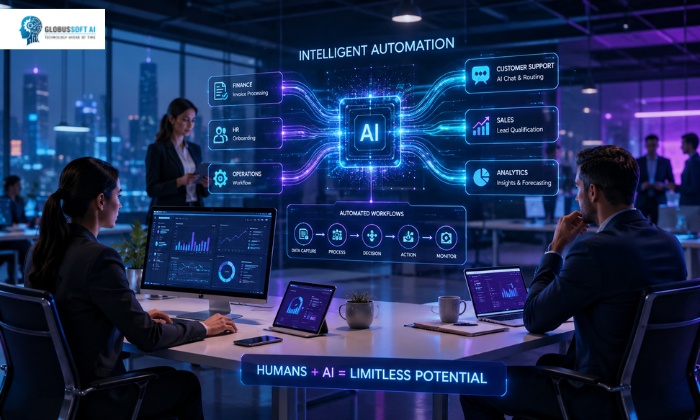
A few years ago, a mid-sized operations team might spend entire afternoons sorting invoices, checking compliance documents, and updating spreadsheets manually. Now, much of that work happens quietly in the background through intelligent automation.
The shift feels subtle at first. Fewer repetitive tasks. Faster approvals. Shorter response times. Then suddenly, entire workflows operate with minimal human intervention.
That’s why this technology matters right now. It is no longer limited to factory robots or enterprise IT departments. Businesses across healthcare, finance, retail, logistics, and customer support are using systems that can learn, adapt, and improve decisions over time.
Still, confusion remains. Some people see it as a threat to jobs. Others treat it like another overhyped tech trend. Neither view tells the full story.
By the end of this article, readers will understand what intelligent automation actually is, where companies are using it today, and how businesses can adopt it without creating internal chaos.
Read Aloud!
What Is Intelligent Automation? (The 60-Second Answer)
Intelligent automation is the combination of AI, machine learning, and robotic process automation (RPA) to automate complex business processes, including tasks that involve decisions, pattern recognition, or unstructured data.
Traditional automation follows fixed rules. More advanced systems can adapt based on new information and past outcomes.
Its core components usually include:
- Robotic Process Automation for repetitive workflows
- AI and machine learning for decision-making and predictions
- Business Process Management to coordinate workflows across teams
This matters because organizations are no longer automating only simple tasks. They are streamlining processes that once required judgment and human review.
From Rule-Following Bots to Thinking Systems – How We Got Here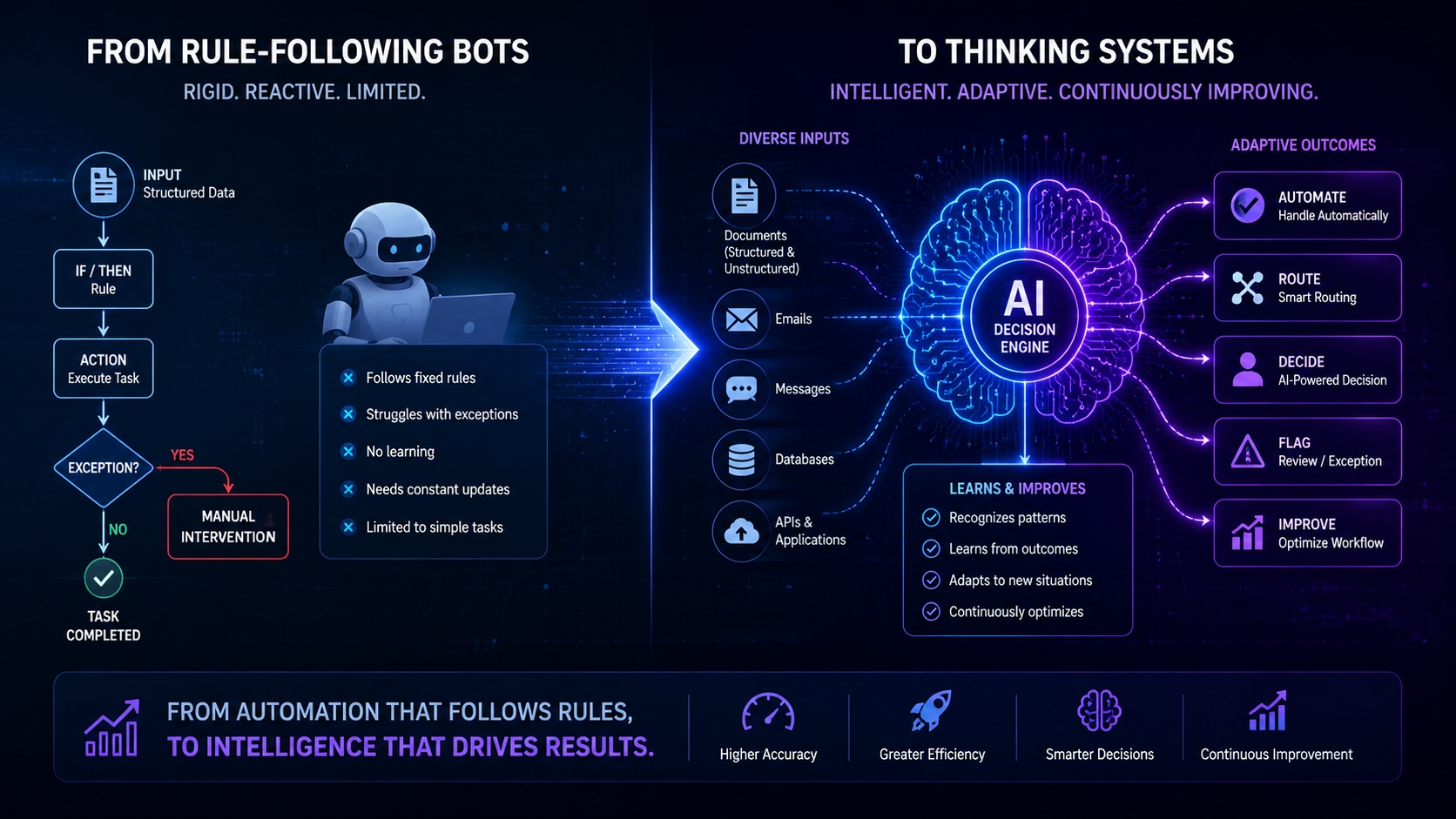
Early automation tools were rigid. They worked well only when every step followed the same predictable pattern.
A macro could copy spreadsheet data. An RPA bot could move information between systems. But the moment an exception appeared, the process stopped.
That limitation pushed businesses toward intelligent process automation.
Now, systems can recognize patterns, interpret documents, and learn from previous decisions. A claims-processing workflow, for example, no longer fails when a customer uploads an unusual document format. The system identifies the context, routes exceptions intelligently, and improves over time.
That’s the real leap. The value is not just speed anymore. It is adaptability.
Businesses using intelligent automation solutions are not simply reducing manual work. They are building workflows that become smarter as more data moves through them.
What Automation Systems Are Actually Being Used For Today
In Operations and Back-Office Work
Many companies first adopt automated workflows in operational environments because the inefficiencies are obvious.
Invoice processing is a common example. Instead of employees manually extracting numbers from PDFs, software captures the data, validates it, flags anomalies, and pushes it into accounting platforms automatically.
HR teams use similar workflows for onboarding. Documents are verified, accounts are created, and training steps are assigned without endless email chains.
These systems are already widespread. They are not experimental anymore.
In Customer-Facing Functions
Customer support has changed dramatically over the last few years.
AI-assisted routing systems now identify intent before a human agent joins the conversation. Follow-up emails are personalized automatically. Support tickets get prioritized based on urgency and customer history.
That does not mean support teams disappear.
The smarter approach removes repetitive friction so human agents can focus on difficult conversations that actually require empathy and judgment.
In practice, automation often improves human work rather than replacing it entirely.
In Data-Heavy Industries
Finance, healthcare, and legal operations are adopting AI-driven workflows faster than many other sectors because their processes involve enormous amounts of structured and unstructured data.
Banks use automated systems to detect suspicious transactions in real time. Healthcare providers process patient records faster while reducing administrative overload. Legal teams analyze contracts without manually reviewing every page.
These industries care deeply about speed and accuracy. Advanced workflow systems help with both.
The Human Side of Workplace Automation – What No One Talks About Enough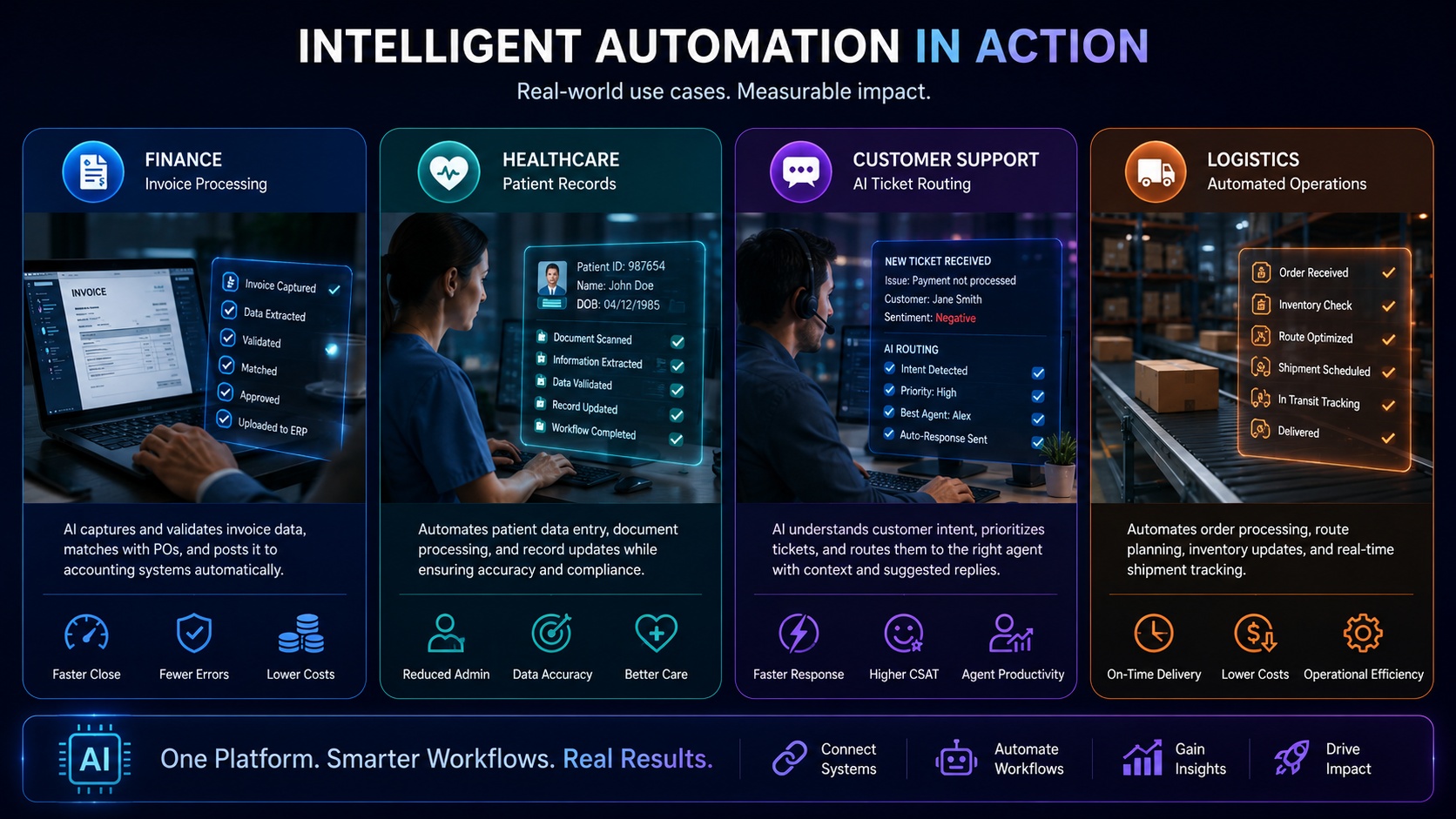
People often ask the same question quietly: “Will this replace my job?”
The honest answer is more nuanced than most headlines suggest.
In many cases, automation removes tasks rather than entire roles. Repetitive reporting, data entry, document sorting, and routine approvals are increasingly handled by software. That changes how teams spend their time.
The bigger challenge is transition management.
Companies that introduce new systems without helping employees adapt usually create resistance internally. Teams feel excluded from decisions that affect their daily work.
Businesses handling this well invest in upskilling early. Employees learn workflow management, analytics, automation oversight, or AI-assisted operations instead of remaining stuck in repetitive manual processes.
That shift matters because technology works best when humans and systems complement each other.
Mistakes Businesses Make When Adopting Intelligent Automation
Automating Broken Processes First
Automation amplifies existing systems.
If a workflow is disorganized, filled with exceptions, or dependent on unclear approvals, software simply makes the dysfunction faster.
Strong processes should come before automation.
Treating It as a One-Time Implementation
Many leaders assume the work is “finished” once the software launches.
That rarely works.
Systems need monitoring, retraining, optimization, and periodic adjustments. Customer behavior changes. Internal workflows evolve. Regulations shift.
Effective deployment requires ongoing iteration.
Ignoring Change Management
Technology failures are often people failures in disguise.
Employees resist systems they do not understand. Managers struggle when communication is poor. Teams become frustrated when expectations remain unclear.
The technical rollout matters. Internal alignment matters just as much.
Starting Too Big
Some organizations try to automate everything at once.
The result is usually expensive confusion.
A better approach is to begin with one clearly defined, high-impact process. Prove value early. Expand gradually from there.
How to Know If Your Business Is Ready for Intelligent Automation
Not every company needs a massive transformation strategy immediately.
Still, a few questions can reveal whether the timing makes sense.
Do your teams handle repetitive workflows every day?
Are employees manually transferring data between systems?
Can your processes be mapped clearly with defined inputs and outputs?
Do operations or IT leaders already support modernization efforts?
Most importantly, have you identified a real operational pain point rather than chasing trends because competitors are doing it?
Businesses that answer “yes” to several of these questions often benefit from intelligent automation solutions quickly.
If the answer is “not yet,” the next step is usually process clarity. Standardize workflows first. Improve documentation. Clean up fragmented systems.
That groundwork makes future implementation dramatically easier.
Why GlobusoftAI Is Built for the Way Businesses Actually Automate
Once businesses realize they are ready for operational automation, another problem appears immediately.
Implementation complexity.
Many platforms feel designed exclusively for large enterprises with huge consulting budgets and long deployment cycles. That creates friction for mid-sized businesses trying to move quickly.
GlobusoftAI approaches workflow automation differently.
Its platform focuses on practical deployment instead of unnecessary complexity.
Key capabilities include:
- Pre-built workflows that adapt to existing business data
- AI-powered process discovery to identify automation opportunities
- Human-in-the-loop systems for high-stakes approvals
- Integration support across common business tools
- Scalable rollout from individual teams to company-wide operations
That matters because businesses should not need a year-long transformation project just to automate one operational bottleneck.
Read More!
GlobusSoft OpenClaw Consulting: Expert AI Agent Solutions
AI Integration: How to Bring AI Into Your Workflows
The Deeper Trend: Intelligent Automation Is Changing How Businesses Think
The biggest shift is not operational. It is cultural.
Businesses adopting intelligent automation successfully begin making decisions differently. Processes become more measurable. Teams rely less on instinct alone and more on real operational data.
That creates a compounding effect.
Every automated workflow generates insights about delays, customer behavior, bottlenecks, and performance patterns. Those insights improve future decisions.
Over time, companies stop viewing automation purely as cost reduction. They start treating it as infrastructure for faster decision-making.
This trend is accelerating alongside agentic AI and autonomous workflow systems. Businesses are gradually moving toward environments where humans guide strategy while software handles execution at scale.
The organizations building those capabilities now are not just improving efficiency. They are creating long-term operational advantages that become difficult for competitors to replicate.
The Future of Work Isn’t Coming – You’re Already in It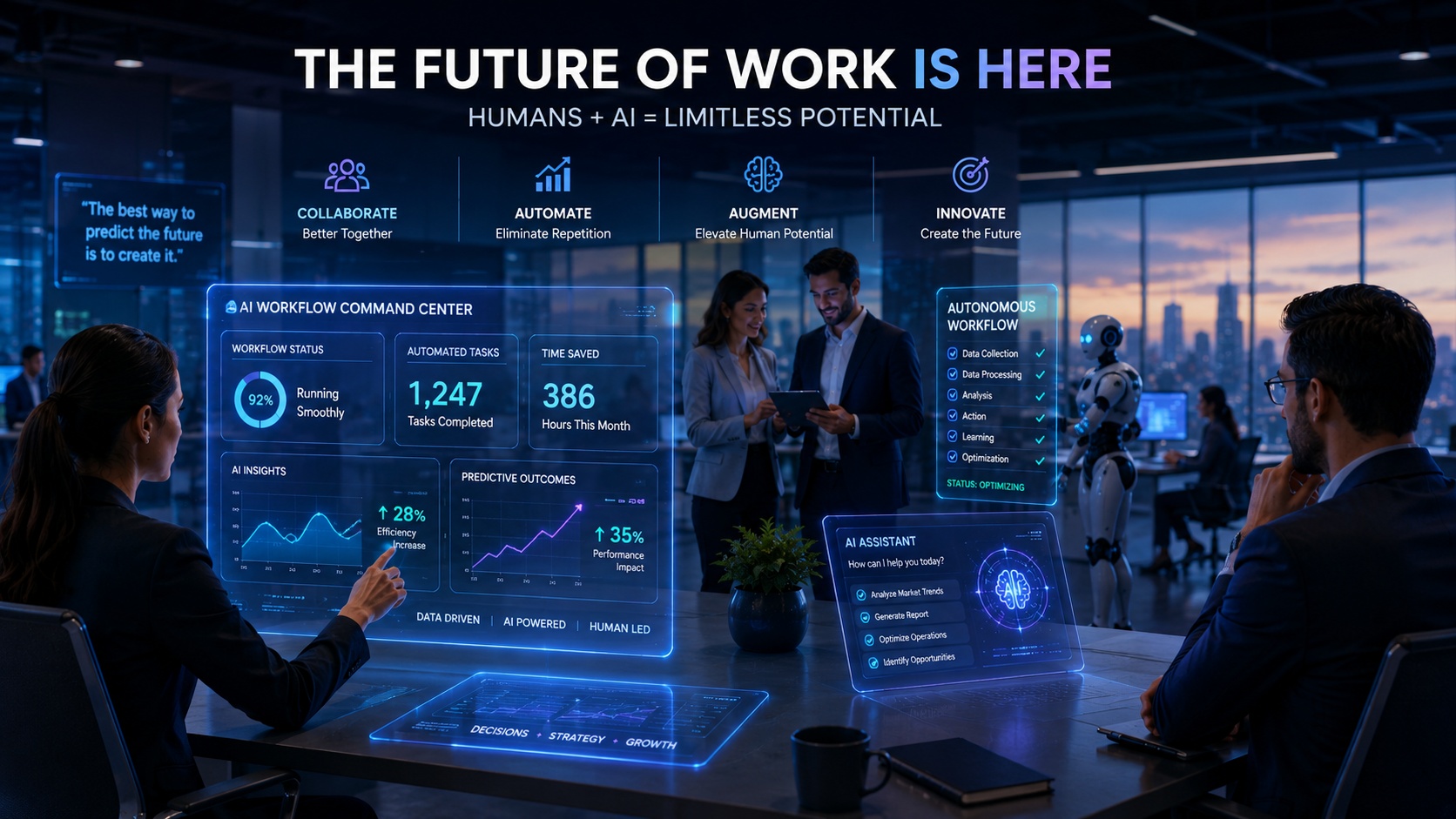
The conversation around intelligent automation often sounds futuristic.
But the reality is simpler than that. The transition is already happening quietly inside everyday business operations.
The companies adapting successfully are not blindly chasing trends. They are identifying repetitive friction, improving workflows deliberately, and helping employees evolve alongside new systems.
That is where meaningful change starts.
Pick one process. Map it clearly. Ask whether parts of it can run smarter.
For many businesses, that single question becomes the beginning of a much larger transformation.
FAQ – What People Are Actually Asking About Intelligent Automation
What’s the difference between intelligent automation and RPA?
RPA handles repetitive rule-based tasks. More advanced systems add AI and machine learning so workflows can process exceptions, interpret data, and improve decisions over time.
Is this only for large enterprises?
No. Adoption is growing rapidly among mid-sized businesses because modern platforms reduce implementation complexity significantly.
How long does implementation take?
A focused deployment can launch within weeks. Larger transformations may take months, depending on process complexity.
What jobs are most affected?
Roles involving repetitive operational tasks in finance, HR, and administration experience the biggest workflow changes.
What’s the ROI?
Most organizations see improvements in cost reduction, accuracy, and processing speed within the first year.