

Up to a 40% drop in operating costs and a 30% boost in productivity are on the table with the right AI rollout. This guide stacks GlobussoftAI OpenClaw against Kommunicate to help you pick a custom ai chatbot builder for 2026 healthcare needs without guesswork.
You care about HIPAA, EHR links, data security, and clinical-grade accuracy. You also need to ship fast, scale without surprise bills, and keep PHI safe. OpenClaw is an open-source, self-hosted agent framework backed by professional deployment services.
Kommunicate is a SaaS platform with healthcare templates and managed operations. Both can work in healthcare. They just win in different places.
 vs Kommunicate (SaaS), with icons for HIPAA, EHR, encryption, multi-agent orchestration, WhatsApp/Telegram/email channels, and a hospital backdrop)
What Healthcare Organizations Need From a Custom AI Chatbot Builder
Healthcare teams need more than a chat bubble. You need guardrails for PHI, sound audit logs, and controls that line up with the HIPAA Security Rule. For a custom ai chatbot builder, the non-negotiables start with end-to-end encryption, role-based access, and a clear data path. If your bot triages a symptom, books a slot, or routes labs, every hop must be safe.
However, privacy alone is not the whole story. Clinical terms must parse cleanly on first pass. Tasks like dosage checks, referral logic, and patient education need strong NLP tuned on medical text. In addition, your team will judge any tool by how it talks to existing systems. EHR/EMR links, patient portals, and analytics matter because care lives there, not in a silo.
Moreover, your channels should match patient habits. Web chat helps, but voice lines, WhatsApp, Telegram, and email workflows still drive large volumes for outpatient and home health. As a result, multi-channel coverage is a real factor, not a nice-to-have. At scale, you will also want load tolerance, queuing, and high availability. Cost is the last gate: you must see a clear path from pilot to system-wide use without price shocks.
For compliance context, review HIPAA guidance from the U. S. Department of Health & Human Services at hhs. gov/hipaa. Then map needed safeguards to vendor features.
Core Criteria For Your Builder
- Security: end-to-end encryption and role-based access controls
- Accuracy: NLP that handles medical terms and abbreviations
- Integration: pathways into EHR/EMR, portals, CRMs, and analytics
- Channels: web, voice, WhatsApp, Telegram, and email
- Scale: high-volume loads and safe failure handling
- Cost: clear TCO from pilot to enterprise
For deeper context on patient-facing flows, this walkthrough on ai powered chatbot shows practical patterns you can adapt to care settings.
GlobussoftAI OpenClaw Overview: Strengths and Weaknesses for Healthcare
OpenClaw is an open-source AI agent framework backed by GlobussoftAI’s professional deployment and support. It runs on your own server, so you hold the keys. That data sovereignty is the draw for many health systems. You get a security-focused setup with access control and encrypted communication, plus end-to-end encryption and role-based access controls called out in its service scope. The framework can run autonomous workflows, not just chat, which helps with intake, reminders, and admin tasks.
In addition, OpenClaw supports model training and fine-tuning on domain data. This is valuable when you need to improve how the bot handles clinical shorthand or local order sets. For channels, OpenClaw can execute instructions through WhatsApp, Telegram, and email, and it includes Voice & Conversational AI features. If you want multi-agent orchestration, for example, one agent to triage symptoms and another to handle scheduling, the service supports custom multi-agent designing and deployment.
On the other hand, you will do more setup work up front. You will also need to align your security team on policies and audits. There is no out-of-the-box HIPAA certification, so you must configure controls and processes to your compliance plan. If you lack DevOps support, you may prefer a managed SaaS. Still, infrastructure costs are light: the core is free, typical VPS runs about $5/month, and total costs are usually under $10/month with AI model usage.
Open-source and self-hosted means you decide where data rests, who can see it, and when to upgrade.
Proof Points And Support For A Custom AI Chatbot Builder
- Interest is real: OpenClaw “reached 100,000 GitHub stars in under eight weeks.” That shows wide developer traction.
- Engineering depth: “Over 1,000 hours of testing data was used to explore OpenClaw’s capabilities.
- Service wrap: Professional deployment, system integration, security-hardening, and performance tuning are part of GlobussoftAI’s services, including “Scalability planning for long-term growth.
If your roadmap includes orchestration across agents and back-end systems, partnering on custom ai agent development speeds that work while keeping control on your side.
As a custom ai chatbot builder, OpenClaw fits organizations that demand data control, want to tune models on clinical text, and plan for enterprise scale.
Also Read!
Kommunicate Overview: Strengths and Weaknesses for Healthcare
Kommunicate is a SaaS chatbot platform that aims for speed. You get healthcare templates, a visual builder, and pre-built integrations for common tools. That lowers the barrier for a pilot.
Your team can mock intake scripts or symptom FAQs fast and ship in days, not weeks. Managed operations also reduce effort. Updates, hosting, and uptime sit with the vendor, not your staff.
Moreover, if your compliance team prefers a vendor-managed posture, SaaS can help consolidate documentation and reduce the surface you must run. For small clinics and lean IT teams, this is a strong fit. In fact, templates can drive consistent tone across sites and cut errors in manual triage scripts. If your goal is to validate a use case this quarter, Kommunicate helps you hit that date.
However, vendor hosting means your data lives off-prem by default. Depth of customization can also cap out. You can shape flows and use APIs, but deep, low-level changes are limited by the platform’s guardrails.
Recurring fees track users, agents, or features. Over time, that can grow with volume. If you need multi-agent orchestration or fine-tuned models on niche clinical data, you may find constraints.
Where Kommunicate Fits Best
- You need a working pilot this month and a small feature set
- Your team prefers vendor-managed updates and hosting
- You want standard flows using templates and common integrations
For teams that want speed and a managed stance, Kommunicate makes sense. For teams that want full data control and deep customization, it’s wise to compare it head-to-head with a custom ai chatbot builder like OpenClaw before you lock in.
Feature-by-Feature Comparison: OpenClaw vs Kommunicate for Healthcare Chatbots
Healthcare choices hinge on details. Below, we compare both options across six dimensions and call a clear winner for each.
1) Data Security And Compliance For AI Chatbots
OpenClaw: You run the stack on your own server with a security-focused setup, end-to-end encryption, role-based access controls, and encrypted communication. That gives you data sovereignty. You can align storage, logging, and key management to your HIPAA policy.
Kommunicate: As a SaaS, it offers managed operations and a compliance-forward stance. That helps small teams adopt controls fast, though data hosting is with the vendor.
- Winner: OpenClaw, for self-hosting, encryption, and control of data paths. Kommunicate remains strong for speed and managed posture.
2) NLP And Medical Terminology Accuracy
OpenClaw: Supports model training and fine-tuning on domain-specific data. That helps with acronyms, shorthand, and local protocols. You can improve precision with your own corpora.
Kommunicate: Templates and general models speed setup. For highly specialized terms, you may rely on vendor features and available tuning knobs.
- Winner: OpenClaw, for tune-on-your-data workflows that drive clinical accuracy.
3) EHR/EMR And Systems Integration
OpenClaw: Integration services include “System integration with CRMs and analytics tools.” With professional services, you can design connectors and workflows to fit existing systems and data governance.
Kommunicate: Pre-built integrations help for common tools. For clinical systems, scope will depend on exposed APIs and vendor support.
- Winner: OpenClaw, for custom integration depth and architectural freedom.
4) Multi-Channel And Voice Coverage
OpenClaw: Executes instructions through WhatsApp, Telegram, and email, and supports Voice & Conversational AI. That lets you build beyond web chat, including proactive reminders and back-office automations.
Kommunicate: SaaS messaging coverage and web chat are core strengths. Automated cross-channel instruction execution may be outside its main model.
- Winner: OpenClaw, for broad programmable channels and voice support.
5) Customization Depth And Governance
OpenClaw: As an open-source framework with professional deployment, you control agents, prompts, routing, and failure handling. Multi-Agent Orchestration allows you to split tasks across specialized agents.
Kommunicate: Visual builders and templates are fast but trade depth for ease. Platform guardrails limit how far you can go into low-level behavior.
- Winner: OpenClaw, for deep customization and governance options aligned to enterprise needs.
6) Multi-Agent Orchestration For Complex Care Paths
OpenClaw: Offers “OpenClaw custom multi-agent designing and deployment” and first-class Multi-Agent Orchestration. You can route triage to one agent, benefits checks to another, and scheduling to a third.
Kommunicate: The core product focuses on single-bot flows. Complex multi-agent handoffs are not the standard approach.
- Winner: OpenClaw, for native multi-agent orchestration.
As a custom ai chatbot builder, OpenClaw lines up with data control, orchestration, and advanced integration. Kommunicate lines up with speed, templates, and a managed stance.
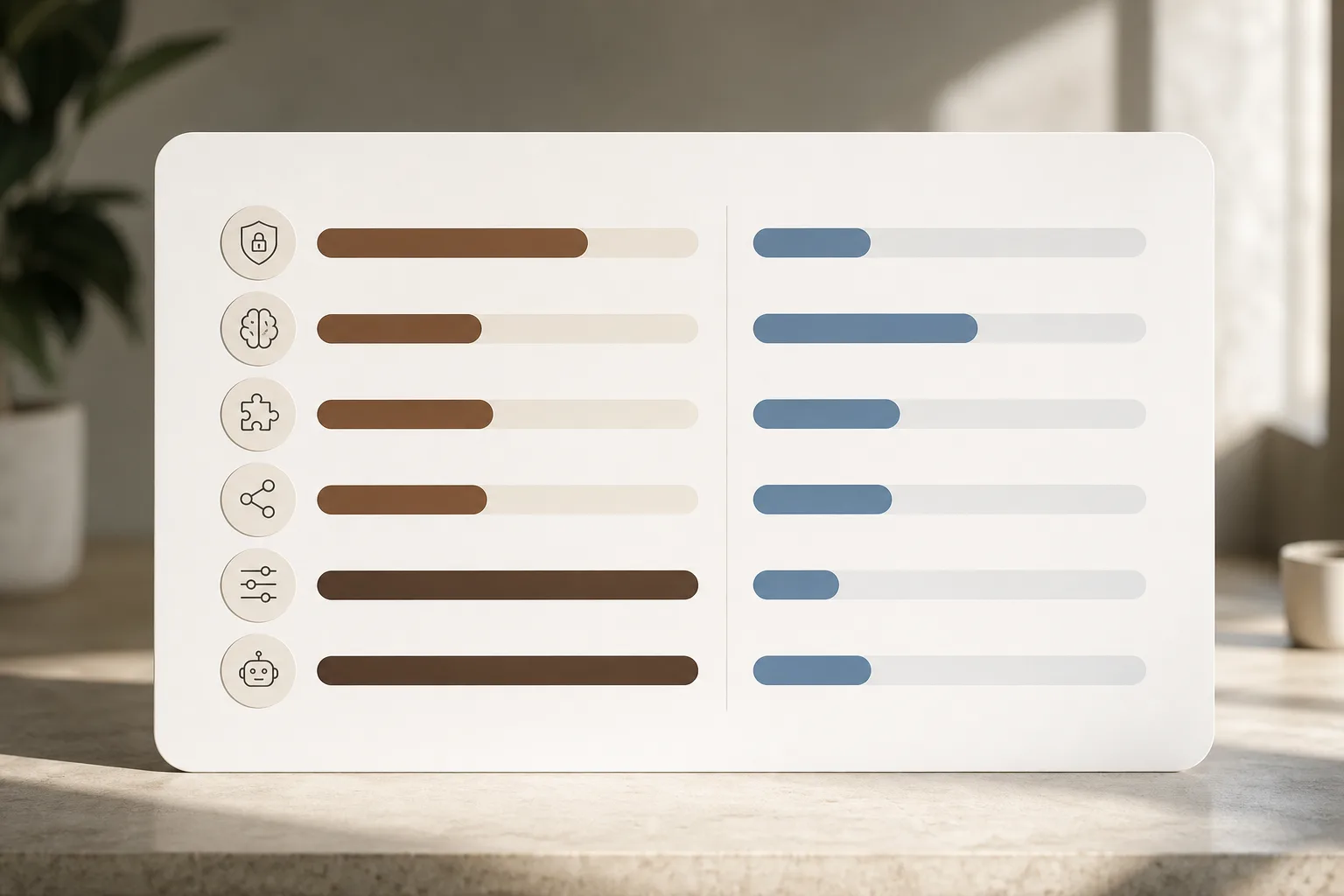
If you plan to design specialized agents for care teams, consider partnering on custom ai agent development to shorten build time while keeping control in-house.
Also Read!
Pricing Comparison: Total Cost of Ownership for Healthcare Deployments
OpenClaw’s cost profile is simple to read. The core framework is free. A typical VPS costs around $5/month, and total costs are usually under $10/month with AI model usage.
You can add nodes as you grow. Because it is self-hosted, you avoid per-agent SaaS premiums. Your spend tracks infrastructure and model calls you can forecast.
Kommunicate uses per-agent or tiered SaaS pricing. You pay a recurring fee that grows with seats, usage, or added features. This aligns to quick pilots but can expand with volume. You also factor in vendor data hosting in your risk model. If your legal team needs extra terms or data residency, add that to the TCO view as well.
For a small clinic, OpenClaw can run for under $10/month in infra plus model usage, which helps you test without budget friction. For a mid-size hospital, self-hosting reduces per-agent creep and keeps data governance tight. For a large health system, scaling nodes and agents in your own stack helps you plan multi-year budgets with fewer surprises.
| Deployment Scale | OpenClaw Cost Signals | SaaS Cost Signals |
|---|---|---|
| Small clinic | Free core; ~$5/month VPS; under $10/month with model usage | Recurring per-agent or tiered plan |
| Mid-size hospital | Add nodes as volume grows; predictable infra | Higher recurring fees as agents and volume expand |
| Large health system | Enterprise governance; infra + model spend under your control | Vendor hosting and scale pricing over time |
Moreover, “Businesses implementing AI services report up to a 40% reduction in operational costs and 30% increase in productivity.” If your goal is long-term savings, an owned stack can lock in more of that gain.
Lessons from adjacent verticals, like this guide on ai chatbot for e-commerce, also apply to triage and education flows in care. The cost math is similar: infra and model usage scale with real work, not seat counts.

As a custom ai chatbot builder, OpenClaw tends to win TCO at scale, while Kommunicate can speed early proof-of-value in 2026.
Verdict: Which Healthcare AI Chatbot Builder Should You Choose?
Both paths can work. OpenClaw wins on deep customization, data control, and cost at scale. Kommunicate wins on speed-to-deploy and managed compliance stance. Your choice hinges on risk posture, team skills, and time-to-value.
If you want to fine-tune on clinical corpora, orchestrate multiple agents, and keep PHI on your own servers, OpenClaw fits. You get professional deployment, security-focused setup, and “Scalability planning for long-term growth.” If you want to validate a single intake or FAQ flow fast, with vendor-managed updates, Kommunicate fits that sprint.
Furthermore, GlobussoftAI supports “Custom development for workflow automation and AI-driven reporting” and “Managed AI Operations.” That lets you start with a guided setup and grow into more advanced builds without losing control. Either way, set clear integration, security, and audit goals now. That will keep your 2026 roadmap on track.
- Choose OpenClaw if you need deep customization, self-hosted data control, and multi-agent orchestration with predictable costs.
- Choose Kommunicate if you need a fast pilot, healthcare templates, and a managed compliance posture with vendor hosting.
- Consider a hybrid approach if you need a quick SaaS proof now and plan to migrate core workflows to a self-hosted stack as you scale.