
Businesses implementing AI services report up to a 40% reduction in operational costs and 30% increase in productivity (GlobussoftAI client data). For ecommerce, self-hosted ai agent deployment is often the fastest way to get those results in 2026 while keeping full control of cost and data.
You want AI that answers customers in seconds, checks stock, edits orders, and sends emails from one thread. You want that without handing your catalog, tickets, or PII to yet another SaaS middle layer. And you want costs you can predict, not a surprise bill tied to a spike in chats.
This guide shows exactly how a self-hosted setup works for ecommerce. It explains the buying criteria that matter, why teams get stuck, and how GlobussoftAI OpenClaw Services deploy a production-grade stack. You’ll see how multi-agent orchestration splits work across support, orders, and inventory. You’ll also see how WhatsApp, Telegram, and email fit in, and how to keep total run cost under $10/month.
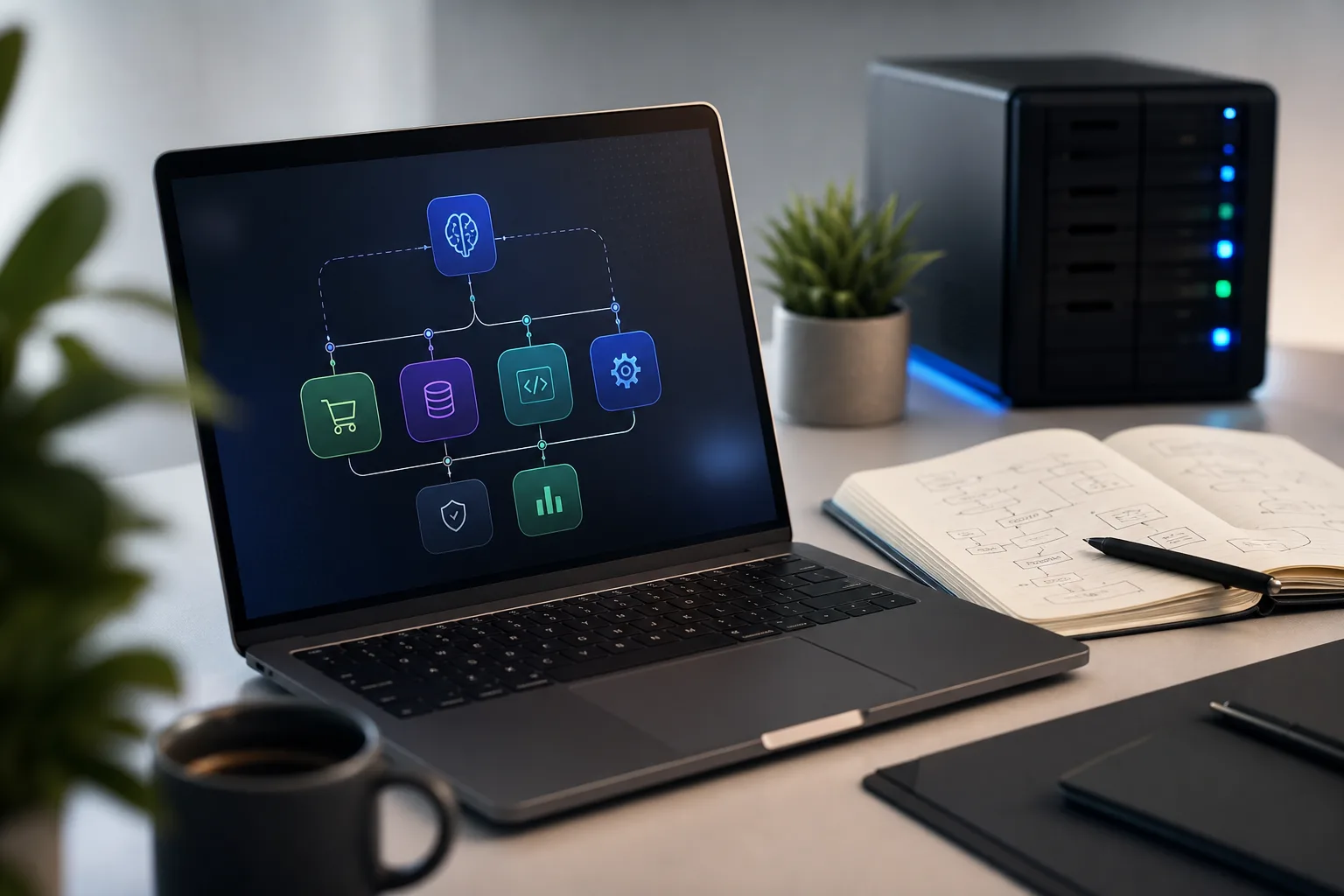
 , integrations to Shopify/WooCommerce CRM, messaging channels (WhatsApp, Telegram, email), security layer with encryption and RBAC; professional technical style, legible labels, brand-neutral colors)
Why Ecommerce Teams Struggle with AI Agent Deployment
API pricing looks fine at small volume but explodes during peak season. Per-conversation or per-seat SaaS plans lock you into someone else’s unit economics. As a result, you cut features, delay launches, or add human triage to cap spend. None of that scales.
Privacy and control are the next blockers. Third-party tools see your product, order, and customer data. For many teams, that is a non-starter. You need fine-grained access, audit trails, and clear data paths. If you sell across regions, you also need to set your own compliance terms and retention windows.
Customization is the hidden pain.
Out-of-the-box chatbots treat your catalog like generic text. They struggle with variants, bundles, backorders, or partial returns. They also ignore your internal rules: who can approve a refund, when to split a shipment, or how to route VIPs. You end up with extra glue code and a brittle setup.
Vendor lock-in makes all of this worse. You build flows in a SaaS editor, but you can’t version them or test at scale. You can’t ship agents that act across channels, trigger timed actions, or share memory. You pause launches because one feature is behind a paywall. And if you leave, you lose your flows and history.
How self-hosted fixes the common blockers
- You own the runtime, so you set the API and model mix to hit your budget target.
- You keep data on your server with encryption and role-based access.
- You build custom workflows around your catalog, not a generic schema.
- You avoid lock-in and can ship faster with code, tests, and clear versioning.
With self-hosted ai agent deployment, you choose what to run and how to run it. You can bring your own models, add business rules, and keep your stack stable under heavy load. That’s how you move from “pilot” to “daily operations” without cost spikes or data risk.
What to Look for in a Self-Hosted AI Agent for Ecommerce
The right stack should meet you where you work today and extend what you already trust. It must speak on the channels your buyers use, plug into your store and CRM, and run actions without human babysitting. It also needs strong security and clear scaling paths.
Channels and workflow reach
First, insist on WhatsApp, Telegram, and email out of the box. Your team should be able to send an order status email from a WhatsApp thread, or trigger an inventory check via Telegram. This keeps effort low and response times fast.
Security and access
Second, demand end-to-end encryption and role-based access controls. Your support agent should not be able to bulk export PII. Your inventory agent should not read billing notes. For a primer on how encrypted messaging works, see this overview of end-to-end encryption. With a self-managed stack, you define keys, scopes, and audit trails that match your policies.
Integration depth and autonomy
Third, look for direct connections to your ecommerce platform and CRM. The system should fetch product specs, read ticket history, and then take actions: issue a partial refund, create a return label, or split an order. True autonomy means the agent acts, logs, and confirms back to the user, without handing off to a human by default.
Cost control and scale
Finally, check hard numbers. Hosting should run about $5/month on a VPS, with total cost usually under $10/month even with model usage. Under load, the system must handle concurrent sessions and survive failure injection without dropping state. The framework should include tools for stress tests and run comparisons so you can prove performance before peak season.
Moreover, you should be able to rehearse Black Friday in a test environment that mirrors prod. Environmental parity and predictable autoscaling protect your CSAT and AOV. If a tool can’t simulate a queue of 2,000 chats and retain context, it won’t hold up when you need it most.
For a deeper explainer on practical use cases and patterns, this guide to AI agent solutions maps common workflows to real outcomes. Compared to alternatives, a good self-hosted ai agent deployment offers lower risk and higher control at every layer.
Also Read!
Best Predictive Analytics AI Tool for Small Businesses in 2026
How GlobussoftAI OpenClaw Services Solve Ecommerce AI Deployment
OpenClaw pairs an open-source agent framework with professional deployment, integration, and ongoing AI ops. The goal is simple: ship production agents fast, keep data on your server, and hold monthly costs to a number you can plan for.
OpenClaw’s core is free to install. A small VPS costs about $5/month, and total monthly cost usually stays under $10 including model usage. This matters for ecommerce, where message spikes map to sales peaks. You avoid the per-seat drama and keep gross margin clean.
Multi-agent orchestration designed for stores
In a real shop, one agent cannot do it all. OpenClaw ships a practical pattern: a Support Agent for tickets, an Orders Agent for status and edits, and an Inventory Agent for stock and substitutions. Agents share context with guardrails, so Support can confirm an exchange only after Orders logs the change. This reduces back-and-forth and shortens time to resolution.
Channels and CRM, wired in
OpenClaw connects WhatsApp, Telegram, and email. Your staff can send, tag, and close loops from the channel the buyer prefers. The system reads from your CRM to pull past chats, notes, and NPS. It then writes updates back so no detail gets lost. For a closer look at orchestration basics, see the overview of the autonomous AI agent system.
Managed AI ops and testing culture
GlobussoftAI brings professional deployment that matches enterprise standards: security-focused setup, access control, and encrypted communication. The team also provides environmental parity for testing and includes run-comparison tooling to create and track your own benchmarks. Over 1,000 hours of testing data were used to explore OpenClaw’s behavior across edge cases, which means fewer surprises when you go live.
Real outcomes and community proof
According to GlobussoftAI client reports, businesses implementing AI services report up to a 40% reduction in operational costs and 30% increase in productivity. On community traction, OpenClaw reached 100,000 GitHub stars in under eight weeks, a strong signal that developers value the design and pace. If you want a pragmatic tour of benefits, start with this breakdown of OpenClaw on GitHub.
Unlike general-purpose agent projects that stop at “chat,” OpenClaw focuses on end-to-end execution in real shops. It runs autonomous workflows on your own server, then logs every step for review. That mix of speed, control, and evidence is what self-hosted ai agent deployment should deliver.
OpenClaw vs. Other Self-Hosted AI Agent Frameworks for Ecommerce
You might compare OpenClaw to n8n and AutoGPT. That is fair. n8n excels at visual workflows and is loved for its node library. But it is not agent-native and was not built around ecommerce channels and CRMs. AutoGPT is great for general exploration, but it lacks built-in store and CRM hooks and has fewer guardrails for business workflows.
Defaults that matter
Where OpenClaw differs is in the defaults. It assumes your buyer talks on WhatsApp or Telegram, your team relies on email for final notices, and your CRM is the system of record. It also assumes agents must act: create a return, send a label, or schedule a follow-up. Those actions require tight integration and a clear audit log.
Security is another split.
OpenClaw prioritizes end-to-end encryption and role-based access. In contrast, generic tools leave this for you to bolt on. Cost is the last big gap. Because the core framework is free and the runtime is a $5 VPS, your total is usually under $10/month, not a per-seat license.
Quick comparison for ecommerce needs
| Criterion | OpenClaw | n8n | AutoGPT |
|---|---|---|---|
| Messaging channels (WhatsApp, Telegram, email) | Native support | Possible via nodes but not agent-native | Requires add-ons or custom code |
| Ecommerce CRM integration | Designed for system integration with CRMs and analytics tools | Possible with nodes, manual mapping | Limited, general-purpose focus |
| Autonomy and multi-agent orchestration | Built-in orchestration for orders/support/inventory | Workflow-first, agents via custom logic | Experimental, not tuned for stores |
| Security features | End-to-end encryption + RBAC | Depends on self-hosted config | Varies, not focused on enterprise |
| Cost to run | Free core; VPS ~$5/month; total usually < $10/month | Free core; cost varies by stack | Compute/model costs, more DIY |
| Professional support | Offered via GlobussoftAI | Community/partners | Community-driven |
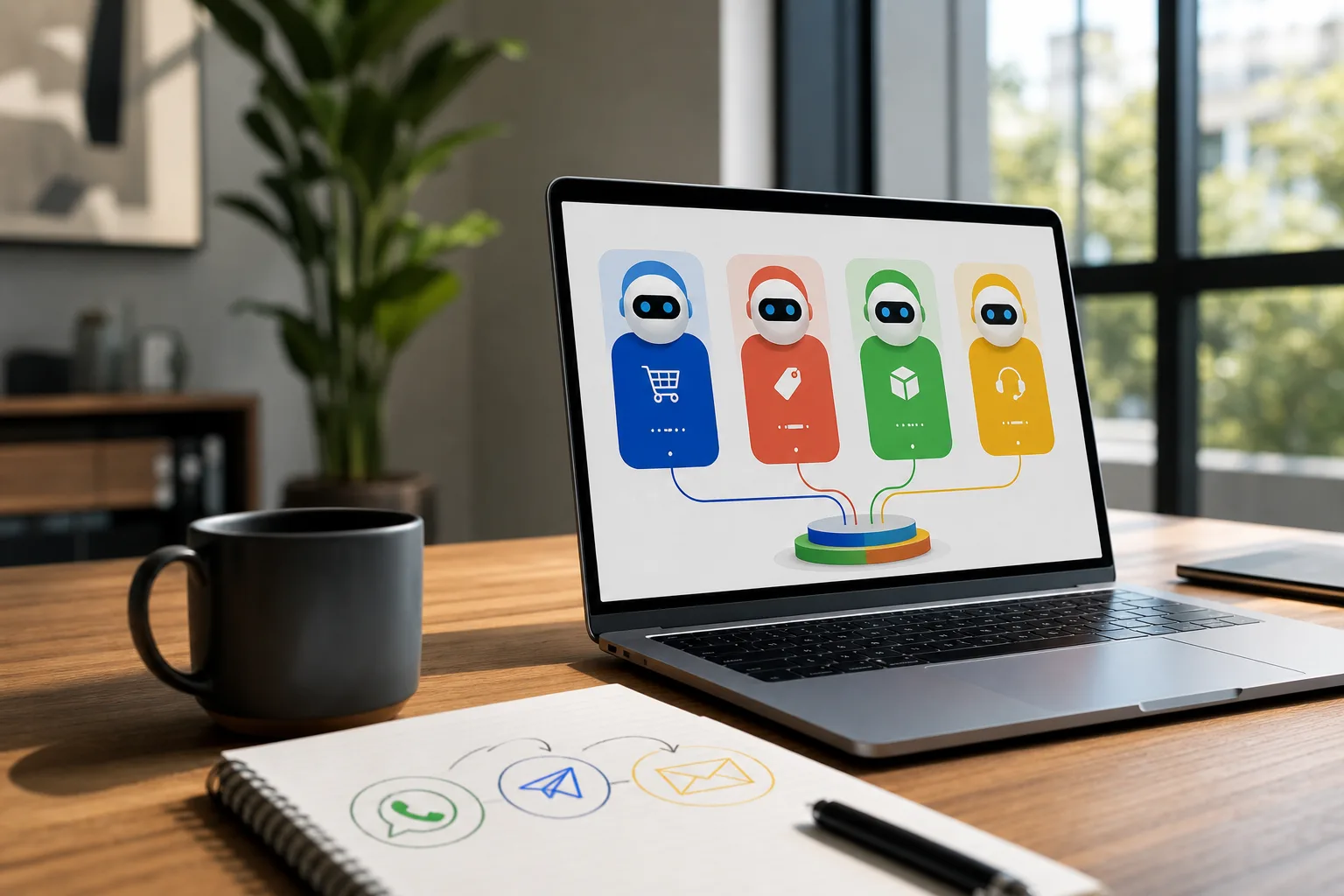
Compared to alternatives, a self-hosted ai agent deployment with OpenClaw gives you agents that can read from your systems and execute through WhatsApp, Telegram, and email with guardrails. If you like n8n for ETL or scheduled jobs, you can still keep it. Use OpenClaw for the agent layer and let n8n handle background syncs.
Trust, Security, and Proven Reliability
Trust starts with ownership. With OpenClaw, your data never leaves your server. You set scopes with role-based access controls, and all communication runs through encrypted channels. This security-focused setup includes access control and encrypted communication from day one.
Reliability and evidence
Reliability comes from planning and evidence. GlobussoftAI provides scalability planning for long-term growth and environmental parity so test results match production. The framework includes run-comparison tooling for benchmark creation, so your team can prove changes with numbers, not hunches. Over 1,000 hours of testing data back the framework’s behavior across high-volume and failure scenarios.
Social proof matters too. OpenClaw reached 100,000 GitHub stars in under eight weeks. That pace reflects strong community validation and code you can inspect. And per GlobussoftAI client reports, businesses implementing AI services report up to a 40% reduction in operational costs and 30% increase in productivity. In 2026, that mix of security, scale, and results is rare.
“Data stays on our server, actions are logged, and costs stay under $10/month. That’s the model we can run at scale.” — Operations Lead, mid-market ecommerce
A self-hosted ai agent deployment that meets these bars gives you both control and confidence. You can show your CFO the forecast, your CISO the controls, and your CX lead the faster replies.
Also Read!
Best Self-Hosted AI Agent Setup for Small Businesses in 2026
OpenClaw vs n8n for Ecommerce: Which Is Better for Self-Hosted AI Agent Setup?
Getting Started: Deploying Your Ecommerce AI Agent in 5 Steps
You do not need a full ML team to go live. You need a small VPS, a clear map of your flows, and a framework built for agents. Here is a repeatable way to ship your first production setup and keep it stable.
The five-step path
- Provision a VPS (~$5/month) with Docker and a dedicated user.
- Install the OpenClaw framework and bootstrap the agent runtime.
- Connect your ecommerce platform and CRM via secure keys and scopes.
- Configure agents for support, orders, and inventory with plain-English rules.
- Wire WhatsApp, Telegram, and email; test with staged data; then go live.
Before launch, set up plain English cron jobs for follow-ups, daily stock checks, and refund audits. This keeps the loop tight without new dashboards. If your team wants help, GlobussoftAI offers professional deployment and installation, so you can move from plan to production fast.
For teams with custom flows, like build-to-order SKUs or B2B credit checks, start with custom AI agent development. You will align the agent’s actions with your rules on approvals, returns, and handoffs. That way, the system acts like your best-trained rep, not a generic bot.
As you scale, prove performance with run comparisons and failure injection. Then tune the model and prompt mix to keep total cost under $10/month. With a self-hosted ai agent deployment, you can change models and rules without asking a vendor to ship a feature.
Frequently Asked Questions
Costs and scale
How much does a self-hosted AI agent setup for ecommerce actually cost?
OpenClaw's core framework is free and open-source. VPS hosting runs about $5/month, and with AI model API usage the total typically stays under $10/month, far less than SaaS tools that charge per conversation or per seat. This keeps budget planning simple.
You can scale without surprise bills.
Can a self-hosted AI agent handle ecommerce customer support at scale? Yes. OpenClaw is built to handle high-volume loads and concurrent sessions.
The framework supports multi-agent orchestration so separate agents can handle support, orders, and inventory at the same time. This removes bottlenecks. As a result, teams keep reply times low during peak demand.
Security and compliance
Is my customer data safe with a self-hosted AI agent? Self-hosting means your data never leaves your server. OpenClaw adds end-to-end encryption and role-based access controls.
You own your infrastructure and set your compliance standards, which is key for ecommerce PII and payment-related data.
You also get audit logs to track access.
How does OpenClaw compare to n8n or AutoGPT for ecommerce? n8n excels at workflow automation but isn't agent-native. AutoGPT is general-purpose and lacks built-in ecommerce integrations.
OpenClaw combines autonomous agent workflows with native WhatsApp/Telegram/email channels and CRM integrations designed for business use cases. That mix matters for real orders, refunds, and tickets.
Deployment and setup
Do I need DevOps experience to deploy a self-hosted AI agent? The framework supports plain-English cron job setup and straightforward installation. If you’d rather not manage infra, GlobussoftAI offers professional deployment and installation services.
That team handles the full setup end-to-end. You get a production agent without the DevOps lift.
Platforms and connectors
Can the AI agent connect to my Shopify, WooCommerce, or other ecommerce platform?
OpenClaw's integration services are designed to fit into existing systems including CRMs, analytics tools, and ecommerce platforms. Custom development is available for specific platform connectors and workflow automation needs. This keeps your data fresh and your actions reliable. It also reduces manual effort.
Channels and messaging
What channels can the AI agent communicate through? OpenClaw supports WhatsApp, Telegram, and email natively. You can manage email automation from a single WhatsApp message, get GitHub status reports via Telegram, and set up proactive context-based reminders across all channels.
This unifies your ops. It also shortens time-to-resolution.
Ongoing support
Is there ongoing support after deployment?
GlobussoftAI provides managed AI operations including performance tuning, scalability planning for long-term growth, and custom development for new needs. Over 1,000 hours of testing data back the framework's reliability. This gives you a clear path from first launch to steady scale. You can grow with confidence.
Wrap-Up: What to Remember
- Self-hosted ai agent deployment puts cost, privacy, and customization in your hands. You can keep total spend under $10/month and still handle high-volume chats.
- OpenClaw pairs a free framework with expert install, encryption, RBAC, and proven load handling. It reached 100,000 GitHub stars in under eight weeks and was tested across 1,000+ hours.
- For ecommerce in 2026, multi-agent orchestration and channel-native actions are the difference between “chat that answers” and “agents that resolve.
If you want help mapping your store’s flows to agents, GlobussoftAI can set up your stack and hand you the keys.
Schedule a free setup review →
For use-case inspiration, explore how an autonomous AI agent system coordinates complex tasks across channels without losing context.