Something shifted in the last few years. AI moved from being a background technology powering Netflix recommendations and spam filters to a front-and-centre business priority. Executives are restructuring workflows around it. Startups are being built on top of it. And professionals across every industry are quietly wondering whether they’re keeping up.
So what exactly is AI development, and why is everyone suddenly investing in it?
AI development has crossed the line from experimental to essential. Businesses using it are moving faster, serving customers better, and making smarter decisions with their data. Understanding what it actually involves and what it doesn’t is the first step toward using it well.
Read Aloud!
What Is AI Development?

AI development is the process of designing, training, and deploying systems that can simulate or augment human intelligence. That covers a wide range: machine learning models that detect fraud, natural language systems that power chatbots, recommendation engines that surface the right product at the right moment, and AI agents that handle multi-step tasks autonomously.
It’s not one technology. It’s a family of approaches each suited to different problems, different data types, and different business goals.
Why AI Development Matters More Than Ever
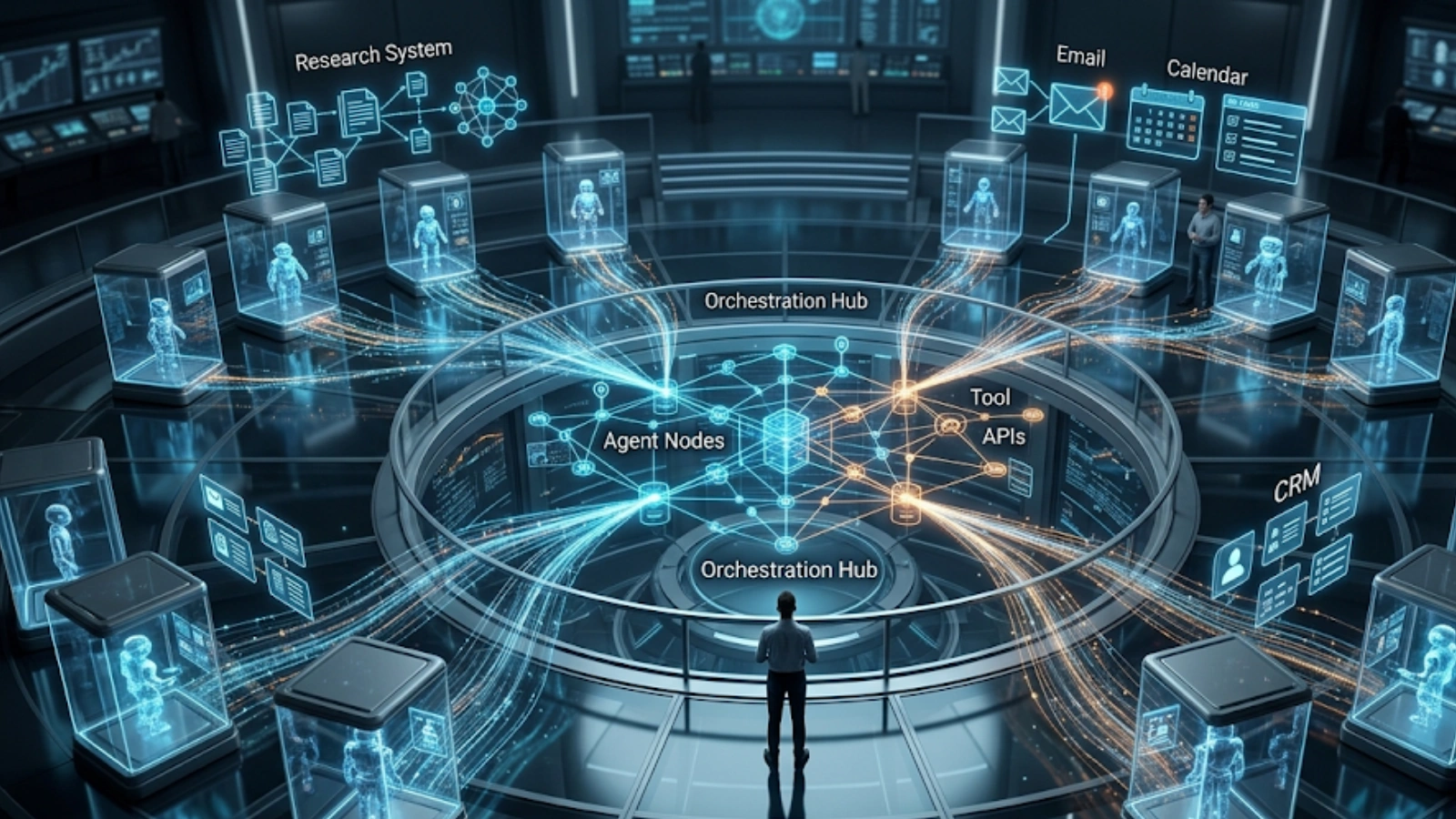
Artificial Intelligence is rapidly transforming industries, lifestyles, and decision-making, making AI development one of the most critical drivers of innovation and future growth.
Businesses Are Competing on Speed and Automation
The companies winning in most sectors right now share a common trait: they’ve reduced the friction between data and decision. Customer support queries get resolved in seconds. Inventory gets reordered before stockouts happen. Reports that once took a team days to compile are generated automatically.
AI development is the infrastructure behind all of it. Operational efficiency used to mean hiring well; now it increasingly means building smart systems that work around the clock without fatigue.
AI Is Changing Customer Expectations
Customers who interact with a personalized, responsive AI-powered experience don’t lower their standards when they visit your brand. They bring those expectations with them. Instant answers, relevant recommendations, and seamless support have shifted from differentiators to baseline requirements in many industries.
Businesses not meeting that bar aren’t just losing ground they’re often not aware they’re losing it.
AI Is Becoming a Competitive Advantage
Early AI adoption creates compounding advantages. Companies that build data pipelines today have better training data tomorrow. Better models produce better outcomes, which generate more useful data, which improves the models further. That cycle is hard to enter late.
AI adoption isn’t a guarantee of success poor implementation produces poor results regardless of the technology. But the gap between AI-enabled organizations and those operating on purely manual processes is widening.
What Does AI Development Actually Include?
AI development includes designing, training, and deploying intelligent systems using technologies like machine learning, natural language processing, computer vision, automation, and data analytics to solve real-world problems efficiently.
Machine Learning Development
Machine learning is the engine underneath most modern AI applications. Instead of being explicitly programmed with rules, these systems learn patterns from data. Feed a model enough examples of fraudulent transactions, and it learns to flag new ones. Show it millions of medical scans, and it starts recognizing anomalies a human might miss.
The practical outputs range from recommendation engines to predictive maintenance systems to dynamic pricing tools.
AI App Development
AI app development refers to building consumer or enterprise applications with AI capabilities embedded directly into the experience. Smart assistants, apps that generate content on demand, tools that analyze documents automatically — these are all products of AI-integrated development pipelines. The line between “software” and “AI-powered software” is blurring quickly.
AI Agent Development
This is where things get genuinely interesting. AI agents are systems capable of completing multi-step tasks autonomously — not just answering a question, but taking action based on the answer. An AI agent might research a topic, draft a summary, update a CRM record, and schedule a follow-up, all without human input at each step. AI agent development is moving from novelty to core business infrastructure faster than most people anticipated.
Natural Language Processing (NLP)
NLP is the technology behind chatbots, AI writing tools, voice assistants, and smart email filtering. It allows machines to understand and generate human language — which opens up an enormous range of applications, from customer service automation to contract analysis.
Computer Vision and Image Recognition
Systems that can interpret images and video identifying objects, reading text, detecting anomalies are actively used in medical diagnostics, retail inventory management, security systems, and quality control in manufacturing. Computer vision is one of the most practically applied areas of AI development today.
Real-World Examples of AI Development You Already Use Every Day
Most people are already AI users. They just don’t always realize it.
Netflix deciding what to surface next. Google completing your search query before you finish typing. Your bank flagging an unusual charge at 2am. Spam not reaching your inbox. These aren’t coincidences they’re machine learning models working in the background, making millions of small decisions continuously.
The email you almost deleted that turned out to matter? Your filter caught the others. The product recommendation that felt oddly specific? That was behavioral data, not luck. AI development built the systems behind all of it.
How AI Development Is Transforming Different Industries
Healthcare: AI is accelerating diagnostics analyzing imaging data, flagging patterns in patient records, and assisting with early detection of conditions that are difficult to spot manually.
Finance: Fraud detection, credit risk modeling, and real-time trading analysis all run on AI systems. Predictive analytics helps institutions anticipate market shifts before they fully materialize.
Retail and eCommerce: Personalized recommendations, dynamic pricing, and demand forecasting reduce waste and increase conversion. Inventory decisions that once required significant analyst time are increasingly automated.
Education: Adaptive learning platforms adjust content difficulty in real time based on student performance. AI tutoring tools offer personalized support at scale.
Marketing: AI development enables predictive customer behavior modeling, automated campaign optimization, and content personalization at a scale no human team could replicate manually.
AI Development vs Traditional Software Development
Traditional software follows explicit rules. A developer writes logic if this, then that and the system executes it. Reliable, predictable, but limited to what was anticipated during development.
AI systems learn instead of follow instructions. A well-trained model can handle inputs it’s never seen before because it has internalized patterns rather than memorized rules. That flexibility is what makes AI development powerful and also what makes it more complex to build and maintain.
AI projects require different thinking from the start: clean, representative data; training and evaluation cycles; ongoing monitoring after deployment. The work doesn’t end at launch. Models drift as real-world conditions change, which means AI development is closer to an ongoing discipline than a one-time project.
How Businesses Can Start Using AI Without Overcomplicating It

Start With a Real Business Problem
The worst AI implementations start with “we should be using AI.” The best ones start with “we have this specific, painful inefficiency, and AI might solve it.” The technology should follow the problem not the other way around.
Identify Repetitive, High-Volume Tasks
Automation delivers the clearest early wins. Customer support queues, data entry, document processing, routine reporting these are areas where AI tools can reduce manual load immediately, without requiring custom model development.
Choose Between AI Tools and Custom Development
Off-the-shelf AI tools solve common problems well and get teams moving fast. Custom AI development makes sense when your use case is specific enough that generic solutions don’t fit. Most businesses are better served starting with existing tools and building custom capabilities only once they understand their actual data needs.
Build Small Before Scaling
A focused pilot — one workflow, one team, one measurable goal — reveals real implementation challenges before they become expensive. Successful pilots also build internal confidence, which makes scaling easier.
How GlobussoftAI Supports AI Development
As AI development becomes essential for modern businesses, platforms like GlobussoftAI help simplify how companies build and deploy intelligent solutions without starting from scratch.
It supports practical use cases like AI app development, AI tools for web development, and AI agent development, making it easier to turn ideas into working products quickly.
Key Benefits:
- Speeds up AI integration into apps and websites
- Supports AI agent development for workflow automation
- Reduces complexity in building AI-powered systems
- Helps teams move faster from idea to deployment
In simple terms, GlobussoftAI helps businesses adopt AI development faster, with less technical overhead and more focus on real-world results.
Common Misconceptions About AI Development
“AI will replace all jobs.” AI is replacing specific tasks, not entire roles. The shift is toward augmentation AI handling the repetitive parts so humans can focus on judgment-heavy work.
“AI development is only for large companies.” Cloud-based AI services have reduced the barrier significantly. Small businesses can access powerful AI capabilities without building anything from scratch.
“AI works perfectly without human input.” AI systems require high-quality training data, careful evaluation, and ongoing maintenance. Garbage data produces garbage models.
“Every business needs custom AI.” Most don’t, at least not initially. Pre-built AI tools handle the majority of common business use cases effectively.
“AI instantly fixes inefficiency.” Poorly designed AI implementations can create new inefficiencies. The technology amplifies existing processes — good or bad.
The Rise of AI Agents Why This Trend Is Bigger Than Most People Realize
AI agent development represents the next meaningful shift in how businesses interact with AI. Rather than using AI as a tool you query, agents are systems you assign work to. They plan, execute, and iterate often across multiple platforms and data sources — without requiring supervision at each step.
Businesses are already using agents to handle customer onboarding, conduct competitive research, manage scheduling, and process complex documents. The practical implications for productivity are significant. AI agent development services are becoming one of the fastest-growing areas in the field, and for good reason: the jump from “AI answering questions” to “AI completing workflows” is transformative.
Read More!
How To Use Generative AI For Business Growth In 2026?
What Is Generative AI & How To Use It?
Challenges Businesses Should Understand Before Investing in AI Development
Data quality is the most underestimated barrier. AI systems are only as good as the data they’re trained on incomplete, biased, or poorly structured data produces unreliable outputs.
Privacy and compliance concerns deserve serious attention, especially in regulated industries. Implementation costs can surprise organizations that underestimate the infrastructure, talent, and time required. Unrealistic expectations lead to abandoned projects; AI typically delivers incremental improvements, not overnight transformation. Integration with existing systems is frequently more complicated than anticipated. And AI bias systems reflecting the biases present in training data requires active monitoring and ethical consideration.
None of these challenges make AI development not worth pursuing. They make it worth approaching carefully.
Final Thoughts: AI Development Is Becoming a Business Necessity, Not Just a Trend
The businesses that will lead the next decade aren’t necessarily the ones with the most technology. They’re the ones using intelligent technology with clear intent — solving real problems, building thoughtful systems, and improving continuously.
AI development isn’t about keeping up with a trend. It’s about understanding which problems in your organization are genuinely solvable with smarter systems — and building toward that with both ambition and realism. The future belongs to organizations that use AI strategically, not just enthusiastically.
That starts with understanding what it actually is.
FAQs
What is AI development in simple terms?
It’s the process of building systems that can learn, reason, and act handling tasks that previously required human intelligence.
How long does it take to build an AI application?
Simple integrations using existing APIs can be deployed in weeks. Custom models with significant training requirements take months.
What is the difference between AI and machine learning?
Machine learning is a subset of AI one approach to achieving intelligent behavior through pattern recognition and data training.
What are AI agents?
Autonomous systems that complete multi-step tasks with minimal human supervision, often across multiple tools and data sources.
Can small businesses benefit from AI development?
Yes often through off-the-shelf tools rather than custom development, particularly for customer support, marketing, and data analysis.
What are the best AI tools for web development?
Some popular AI tools for web development include AI website builders, code assistants, UI/UX design generators, SEO optimization tools, chatbot automation tools, and platforms like GlobussoftAI that provide AI-powered solutions for building and scaling web applications efficiently.