
Technology solutions are no longer limited to IT departments or large corporations. They shape how businesses communicate, protect data, serve customers, scale operations, and build workflow with AI automation across teams. When systems are disconnected or outdated, teams waste time fixing avoidable problems instead of growing the business.
This guide explains what these systems actually are, the major categories businesses use today, how to choose the right setup, and the mistakes that often lead to expensive failures.
Read More!
So, What Exactly Are Technology Solutions? (Quick Answer)
Technology solutions are integrated systems, tools, and services designed to solve specific operational or business problems. Unlike standalone software, they combine implementation, strategy, support, and technology to improve how an organization works.
These systems can support communication, automation, cybersecurity, analytics, customer management, and much more across businesses of every size.
The Major Types of Modern Business Systems (And What They Actually Do)
Different businesses face different operational problems. Some struggle with collaboration. Others deal with security risks, outdated workflows, or disconnected customer data. That is why modern digital systems come in many forms.
Cloud Technology Solutions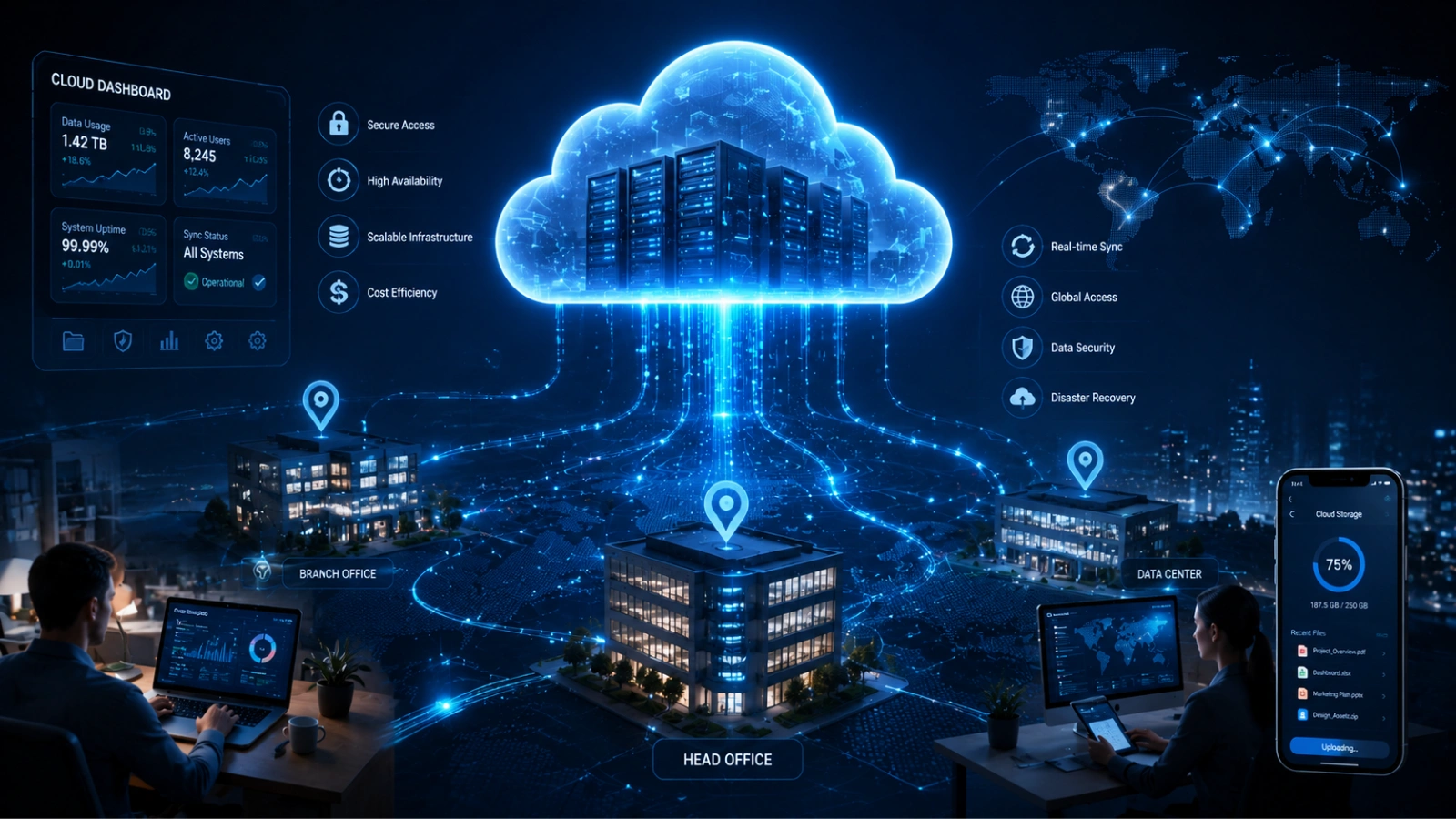
Businesses no longer want to rely entirely on physical infrastructure sitting inside one office. Cloud technology solutions allow teams to access files, systems, and applications through remote servers from almost anywhere.
A retail company with dozens of stores, for example, can track inventory across all locations in real time without maintaining expensive on-site servers. Teams also benefit from easier collaboration, lower maintenance costs, and better flexibility during periods of growth.
Remote access is often the biggest advantage. Employees can work securely from different locations without disrupting operations.
AI Technology Solutions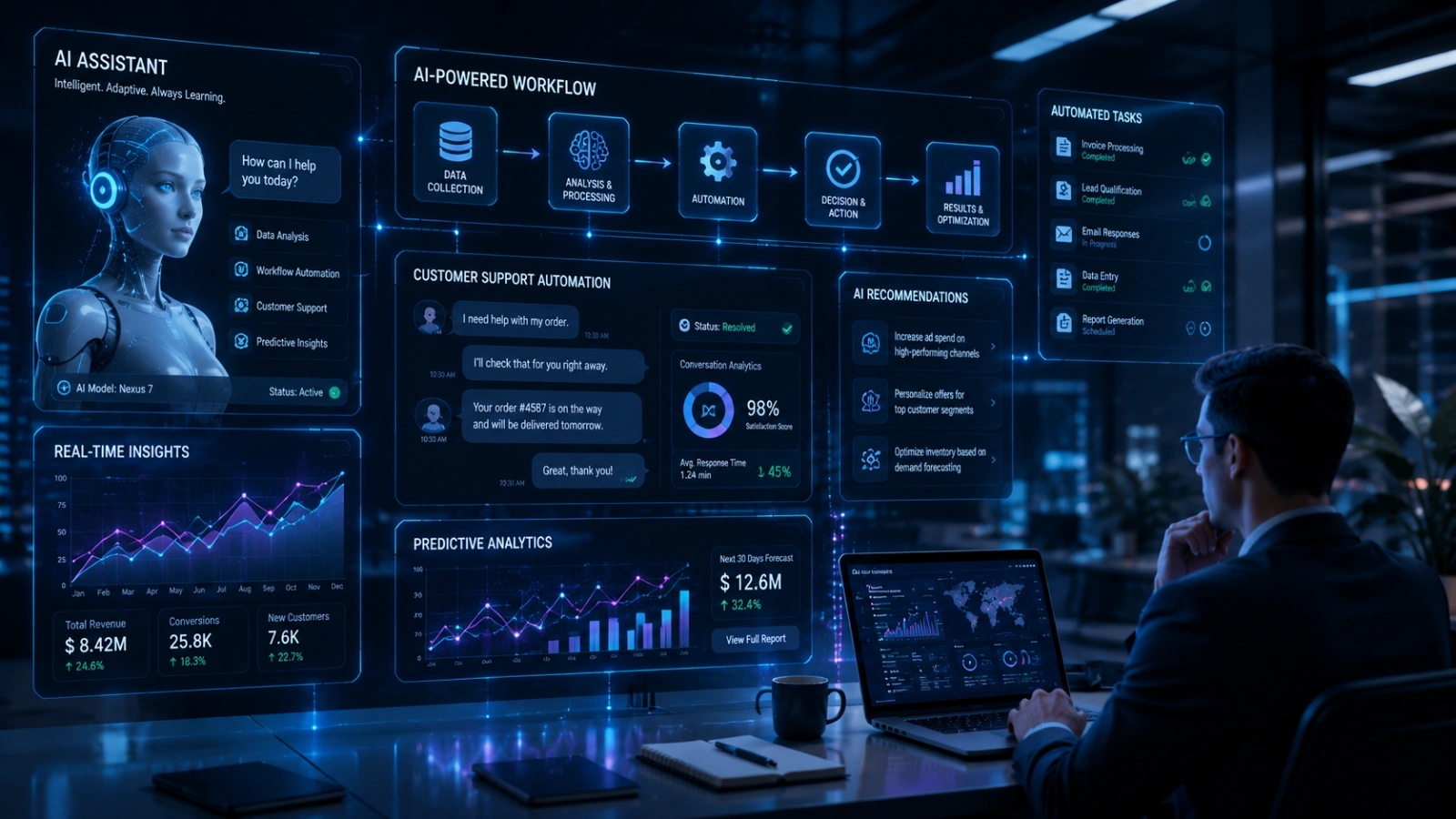
Automation has moved far beyond simple chatbots. AI technology solutions now help businesses analyze patterns, predict outcomes, personalize customer experiences, and reduce repetitive work.
Imagine a customer support team handling thousands of tickets each week. AI systems can automatically categorize requests, answer common questions, and escalate only the complex cases to human agents. That reduces response times while improving consistency.
These systems are especially useful when businesses need faster decision-making backed by large amounts of data.
Cybersecurity & Security Solutions Technology
Security failures are expensive. A single phishing attack or ransomware breach can damage customer trust for years.
Security solutions technology focuses on protecting systems, networks, customer information, and internal operations from cyber threats. That includes endpoint protection, encryption, identity management, monitoring systems, and compliance frameworks.
A fintech startup, for instance, may implement multi-factor authentication and encrypted communication after detecting suspicious login attempts. Prevention matters more than recovery in modern cybersecurity.
Enterprise & Business Management Platforms
As companies grow, disconnected tools create chaos. Sales teams use one platform, finance uses another, and operations rely on spreadsheets nobody fully trusts.
Enterprise systems connect departments through centralized platforms like ERP and CRM software. Instead of duplicating information across teams, everyone works from the same source of truth.
That visibility improves forecasting, project tracking, customer management, and internal communication.
Communication & Collaboration Platforms
Remote and hybrid work changed business expectations permanently. Communication systems are no longer optional infrastructure.
Modern workplace platforms in this category include video conferencing tools, unified messaging systems, collaborative workspaces, and workflow management software. The goal is simple: reduce friction between people and teams.
Without reliable collaboration systems, even highly skilled employees lose productivity through delays and confusion.
Data & Analytics Platforms
Most businesses already collect large amounts of data. The challenge is turning that information into decisions.
Analytics-focused systems organize raw information into dashboards, reports, and performance insights. Leaders can identify trends faster, track customer behavior, and spot operational inefficiencies before they become larger problems.
A marketing team, for example, may use analytics platforms to understand which campaigns generate actual revenue instead of just clicks or impressions.
Why Businesses Can No Longer Ignore Digital Infrastructure
Businesses once treated digital transformation as a future goal. That mindset has changed quickly.
Today, technology solutions directly affect efficiency, customer experience, security, and long-term competitiveness. Companies still relying on outdated workflows often struggle to keep pace with faster, more adaptable competitors.
The operational impact becomes obvious almost immediately. Automated systems reduce repetitive work. Integrated platforms eliminate duplicate tasks. Teams spend less time fixing errors and more time focusing on meaningful outcomes.
Cost reduction also plays a major role. While implementation requires investment, the long-term savings from automation, reduced downtime, and improved accuracy are often significant.
Scalability matters too. Businesses can expand operations without increasing headcount at the same rate. That flexibility becomes especially valuable during periods of rapid growth.
There is also the security factor. Cyber threats continue evolving, and businesses without strong protective systems expose themselves to financial and reputational risks.
Still, benefits only appear when companies choose tools that actually match their operational needs.
How to Choose the Right System for Your Business
Many businesses choose tools before clearly defining the problem. That usually leads to frustration later.
The smarter approach starts with identifying operational friction first. Are employees losing time on repetitive tasks? Are systems disconnected? Is customer data difficult to manage? The clearer the problem, the easier it becomes to evaluate potential options.
Next, review your current infrastructure carefully. Some platforms integrate smoothly with existing systems, while others create additional complexity. Overlapping tools often increase inefficiency instead of solving it.
Scalability deserves serious attention as well. A platform that works for ten employees may fail once the company grows to one hundred. Short-term thinking creates expensive migrations later.
Implementation support is another overlooked factor. Even strong technology solutions fail when onboarding, training, or post-launch support is weak.
Before choosing any vendor, ask practical questions:
- How easily does the system integrate with current tools?
- What ongoing support is included?
- How frequently are updates released?
- What security standards are built into the platform?
- Can the solution adapt as the business grows?
Those answers often reveal more than marketing materials.
Common Mistakes Businesses Make When Adopting New Systems
Most failed implementations follow similar patterns.
One common mistake is buying software because competitors use it. A tool that works perfectly for another company may solve completely different problems than yours.
Employee adoption is another major issue. Teams resist systems that feel confusing, unnecessary, or poorly introduced. Businesses sometimes invest heavily in platforms that employees barely use six months later.
Cost-focused decisions also create problems. The cheapest option often lacks integration support, scalability, or long-term reliability. Initial savings disappear quickly once operational issues begin.
Integration complexity catches many organizations off guard, too. Even excellent platforms can create disruptions if they do not connect properly with existing systems.
Another misconception is treating implementation as a one-time event. Systems require monitoring, optimization, updates, and occasional restructuring as business needs evolve.
How GlobussoftAI Delivers Business Systems That Actually Work
Finding the right partner can be harder than choosing the technology itself. Many vendors focus only on selling platforms instead of solving operational problems.
GlobussoftAI approaches business infrastructure from a practical perspective, helping organizations align systems with real operational goals rather than trends.
Their approach includes:
- Custom-built workflows designed around actual business processes
- AI-powered automation that reduces repetitive manual tasks
- Secure cloud infrastructure planning with compliance built in early
- End-to-end implementation support, from strategy to optimization
- Scalable systems that adapt as businesses grow over time
Whether a company is modernizing legacy systems or planning entirely new infrastructure, the focus stays on clarity, usability, and measurable outcomes.
The Next Frontier – Where Digital Systems Are Headed
The next generation of business infrastructure will look very different from the disconnected systems companies used a decade ago.
AI is becoming part of the core architecture rather than an optional feature layered on afterward. Businesses increasingly expect systems to predict issues, automate decisions, and personalize experiences automatically.
Modular technology stacks are also gaining traction. Instead of relying on one massive platform, companies are combining specialized tools that integrate more flexibly.
Security is shifting earlier in the process, too. Businesses no longer treat cybersecurity as an add-on after deployment. Protection, compliance, and identity management are becoming foundational requirements from day one.
At the same time, human decision-making still matters. Smarter systems do not automatically create smarter businesses. The organizations that succeed will be the ones using technology intentionally rather than chasing trends blindly.
Read More!
AI Applications: Real-World Use Cases, Industries, and Examples (2026 Guide)
From Automation To Innovation: Crafting A Powerful AI Strategy
The Bottom Line – Business Infrastructure Is Only as Good as the Strategy Behind It
Technology alone does not guarantee better outcomes. Plenty of businesses invest heavily in tools yet still struggle with inefficiency, poor adoption, or disconnected systems.
The real value comes from choosing technology solutions that align with clear operational goals and implementing them thoughtfully over time.
Businesses that thrive over the next decade will not necessarily have the most advanced systems. They will have the right systems, used intentionally, supported properly, and adapted as their needs evolve.
If your organization is evaluating new systems or rethinking existing infrastructure, GlobussoftAI can help turn uncertainty into a practical, scalable strategy.
Frequently Asked Questions About Technology Solutions
What is the difference between a technology solution and software?
Software is usually a standalone tool or application. Technology solutions combine software, implementation, integration, support, and strategy to solve a larger operational problem.
What are examples of technology solutions used in small businesses?
Small businesses commonly use cloud storage platforms, CRM systems, accounting software, advanced POS systems, cybersecurity tools, project management platforms, and customer support systems.
How much do technology solutions typically cost?
Costs vary widely depending on customization, implementation complexity, company size, and support requirements. Subscription-based SaaS tools may cost hundreds monthly, while enterprise deployments can require much larger investments.
What is an AI technology solution?
AI-driven systems use machine learning and automation to improve decision-making, reduce repetitive tasks, analyze patterns, and personalize customer experiences across different business functions.
How do cloud technology solutions benefit remote teams?
Cloud-based systems allow employees to securely access files, applications, and communication tools from different locations. That improves collaboration, uptime, and operational flexibility.