

Up to 40% lower operating costs and a 30% bump in output are real, but they come from hard choices and careful builds, not hype. In fintech 2026, predictive analytics and computer vision can close risk gaps and cut fraud loss, yet they also add compliance and ops debt if you pick the wrong stack.
You need proof, not promises. Open-source traction matters. GlobussoftAI’s OpenClaw hit 100,000 GitHub stars in under eight weeks and drew on over 1,000 hours of testing data to stress its agents and pipelines. That kind of social proof and test depth does not replace audits, but it does signal a living codebase that ships, fixes, and scales.
However, security and governance come first. End-to-end encryption, role-based access control, and self-hosted options decide whether your board says yes. Costs matter too. A free core framework with infrastructure costs under $10/month changes the build-vs-buy math, especially for pilots you want to run this quarter.
As you weigh tools, think beyond dashboards. Think data lineage across card rails, loan books, and support queues. Think model drift during a promo week or a rate hike cycle. And think about how your team will test, tune, and ship changes without breaking your risk posture in 2026.
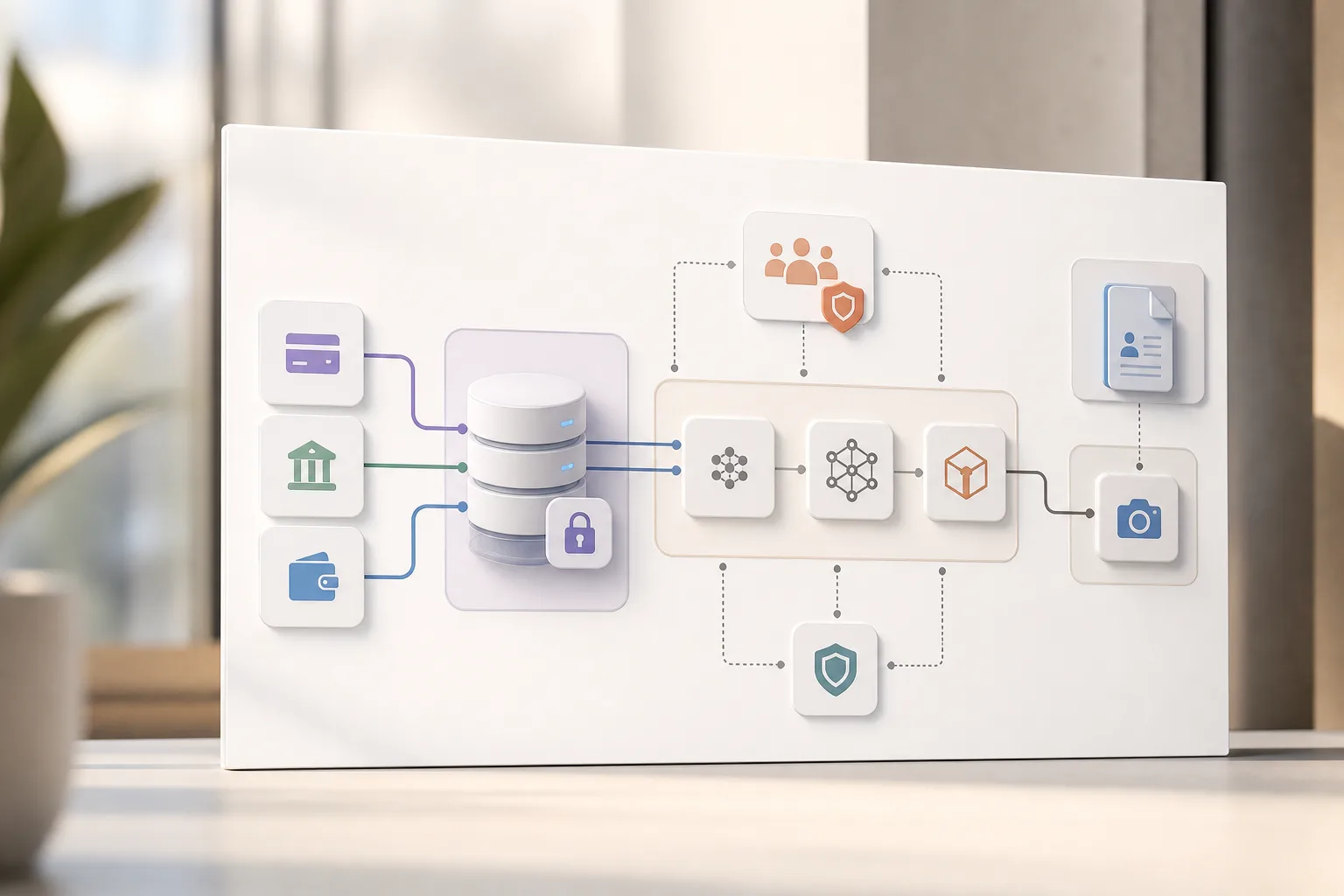
Why Fintech Teams Struggle With Predictive Analytics Deployment
Regulation turns small gaps into large risks. You must align with System and Organization Controls (SOC 2) and the Payment Card Industry Data Security Standard to win audits and partner trust. That touches keys, logs, vendor access, and how models handle personal data. It also dictates where data lives, and who can touch it.
Data is split by design. Card processors, ACH gateways, loan origination, servicing, and KYC live in different apps and clouds. That makes training and serving harder than a classic data warehouse job. Real-time scoring needs low-latency joins and features that refresh in seconds, not hours. Batch jobs can miss fraud bursts or a fast-moving chargeback wave.
Models move as the market moves. A credit policy tweak, a new promo, or a novel fraud ring can push models off course. Without drift monitors, backtests, and fast rollback, you risk false positives that lock out good users or false negatives that leak fraud. Predictive analytics and computer vision both face this drift, since user behavior and document styles change over time.
Build-vs-buy is not a simple chart. A pure build gives you control and data sovereignty. Yet you pay in talent and time. A pure buy cuts setup time, but can box you into vendor data flows and shared clouds that your CISO will not approve. In 2026, hybrid wins: self-hosted control with expert services that wire the stack together and stand behind it.
Regulatory and Data Risks
- Encryption must hold from source to sink.
- RBAC must fit your org chart and least-privilege rules.
- Drift tests must run as part of deploys, not after an incident.
Build vs. Buy, With Controls
Compared to a SaaS black box, a self-hosted core with paid services keeps keys in your hands. It adds accountability. It also makes audits cleaner because the data does not leave your VPC.
What to Look for in a Predictive Analytics AI Tool for Fintech
Buying criteria should map to risk first, features second. You can add models later. You cannot add trust after a breach. The right tool should support predictive analytics and computer vision without forcing you to move data outside your control.
End-to-End Encryption + RBAC
You need encryption in transit and at rest across every service, broker, and store. In addition, role-based access control should tie into your identity provider and support fine-grained permissions down to dataset, feature, and model level. This helps you pass audits and block lateral movement.
Model Training on Domain-Specific Data
Generic models miss edge cases in payments, lending, and KYC. Therefore, look for training and fine-tuning on your own labeled data, with a clean method to sandbox, compare runs, and roll back. Run-comparison tooling and an expressive assertion engine reduce bad pushes and help your team learn fast.
Scalable ML Pipelines
Pipelines must scale for both peak and long-tail events. For example, they should handle high-volume loads, hot features, and concurrent sessions without data loss. A strong pipeline includes a feature store, model registry, A/B routing, and can run failure injection to prove it will hold up under stress.
System Integration With Your Fintech Stack
Your tool should fit with event buses, CRMs, and analytics tools you already use. Moreover, it should support integration services that do the heavy lift to wire into processors, core banking, and support tools. Less glue code means faster time to value and fewer ops tickets.
For background on visual checks that support KYC and fraud teams, you can share this internal guide to computer vision with your stakeholders.
Self-Hosted Options for Data Sovereignty
Keep data inside your VPC to meet data residency and partner rules. Self-hosting plus encryption and access control design means logs, samples, and features never leave your boundary. As a result, you gain a path to SOC 2 and PCI-DSS alignment with fewer vendor exceptions.
Cost Efficiency and Transparent Pricing
Budgets get tight. A free core framework with a VPS around $5/month and total costs under $10/month for model usage lets you pilot without a capital request. Compared to enterprise tools that start at five figures per month, that is a low-risk way to prove value.
Start a self-hosted pilot today →
Also Read!
GlobussoftAI OpenClaw vs Kommunicate for Healthcare: Which Is Better for Custom AI Chatbot Building?
How GlobussoftAI OpenClaw Solves Predictive Analytics for Fintech
OpenClaw is an open-source AI agent framework backed by professional services from GlobussoftAI. It ships machine learning models, predictive analytics platforms, computer vision applications, and natural language processing systems as building blocks. More importantly, it runs autonomous workflows on a self-hosted server, so your data stays on your network.
Fraud Detection With ML Models
Fraud is a moving target. OpenClaw’s agents can score transactions with supervised models and route high-risk events to a review queue. Furthermore, you can run drift checks and compare model runs before go-live using built-in tooling. Teams that adopt AI services like this have reported up to a 40% reduction in operational costs and a 30% increase in productivity, which gives fraud teams more cycles to hunt new patterns.
Credit Risk Scoring on Predictive Analytics Platforms
Scoring needs transparency and fast change control. OpenClaw supports feature engineering pipelines, a model registry, and traffic splits. As a result, risk can test a new scorecard on 10% of flow, measure loss and approval impact, then scale up. With self-hosted deploys, you can meet audit asks for traceability and keep PII off third-party clouds.
Customer Churn Prediction via NLP
Support tickets, chats, and emails hold churn signals. OpenClaw’s natural language processing systems read those signals to predict churn risk and trigger saves, like fee waivers or outreach. Because everything runs inside your VPC with encrypted communication and access control, you keep transcripts private while still acting on insights.
Document Verification With Computer Vision
KYC and KYB checks depend on image quality and spoof resistance. OpenClaw’s computer vision applications can detect tampering, match faces across frames, and read IDs. For a non-technical brief your risk peers can share, point them to this explainer on what is computer vision and how it works. In practice, you can pair these checks with predictive analytics and computer vision signals from behavior data to raise confidence and cut manual reviews.
“Self-hosted agents with encrypted comms let our risk team test fast without legal pushback.” — Director of Data Platforms, mid-market lender
OpenClaw’s security-focused setup includes access control and encrypted communication from day one. And because it is open-source, your team can inspect, extend, and contribute. That community energy is visible: it reached 100,000 GitHub stars in under eight weeks and drew on over 1,000 hours of testing data to probe edge cases.
 fraud scoring pipeline with model registry and A/B router, (2) NLP-based churn prediction from support tickets, (3) KYC document verification with computer vision; annotated with self-hosted server and encryption icons)
GlobussoftAI OpenClaw vs. DataRobot and H2O. ai for Fintech Use Cases
DataRobot and H2O. ai bring strong AutoML. If your goal is fast baseline models with rich GUIs, they are proven options. However, compared to alternatives that require managed cloud paths or higher platform fees, OpenClaw’s open-source core plus self-hosted deploy gives you data control and costs usually under $10/month for infrastructure and model use.
Where other tools fall short is vendor lock and data movement. OpenClaw runs agents and pipelines inside your own environment, with encryption and RBAC applied across services. That design makes audit reviews simpler and reduces time spent on data transfer approvals. It also means you can add custom steps, like bank-specific rules or in-house features, without waiting on a vendor roadmap.
Pricing is a clear split. OpenClaw’s core framework is free. A small VPS (~$5/month) and model usage keep pilots cheap, so you can test fraud, risk, and KYC flows the same quarter you budget them. Enterprise platforms can deliver scale and support, but the entry price bands push experiments out by months.
Summary Comparison (Security, Hosting, Cost, Fit)
| Dimension | OpenClaw (GlobussoftAI) | DataRobot | H2O. ai |
|---|---|---|---|
| Hosting | Self-hosted by default | Managed cloud options | Self-managed and cloud |
| Security | End-to-end encryption, RBAC | Strong controls by plan | Strong controls by plan |
| Cost to Pilot | Under $10/month infra + models | Enterprise tier | Enterprise tier |
| Customization Depth | Open-source, code-level changes | High via platform features | High via platform features |
| Integration | Integration services into existing systems | Connectors available | Connectors available |
| Workflow Automation | Multi-agent orchestration, AI-driven reporting | Orchestration features | Orchestration features |
Moreover, OpenClaw includes custom development for workflow automation and AI-driven reporting when you need expert help. That matters if your roadmap spans fraud queues, credit policy, and ops dashboards across different teams.

Trust, Security, and Credentials for Financial Services
Security is not a feature. It is the base. OpenClaw ships with end-to-end encryption and role-based access controls for enterprise security. Self-hosted deployment gives you complete data sovereignty, which supports SOC 2 and PCI-DSS alignment because sensitive data and logs never leave your network.
Scale is proven with stress. The stack can handle high-volume loads, concurrent sessions, and failure injection scenarios. Furthermore, scalability planning for long-term growth is part of GlobussoftAI’s services, so your team is not left with a brittle proof-of-concept. Over 1,000 hours of testing data was used to explore OpenClaw’s behavior, which helps catch regressions early.
Social proof matters to boards and auditors. Reaching 100,000 GitHub stars in under eight weeks shows active interest and a fast-feedback community. As a result, security fixes and feature updates move faster than closed platforms can allow.
Security Architecture Highlights
- Encryption for data at rest and in transit across services
- RBAC with least-privilege defaults and audit-friendly logs
- Self-hosted deploy path for full control and data residency
In addition, managed AI Operations can cover patching, scale checks, and performance tuning. That helps reduce on-call noise and gives your team a known response plan.
Also Read!
Getting Started: Deploying Predictive Analytics in Your Fintech Stack
A clear path beats a long one. Here is a four-step plan that gets you from idea to value while keeping data in your control. Along the way, you can pair predictive analytics and computer vision use cases in one track to cut vendor sprawl and change risk.
Step 1: AI/ML Consulting to Build the Roadmap
First, align on goals, data sources, and model KPIs. GlobussoftAI provides AI/ML consulting to build roadmaps and implement solutions. You will define success for fraud, credit, or churn, list features, and plan the A/B rollout. This step reduces scope creep and sets a test plan your risk team will back.
Step 2: Professional Deployment and Installation
Second, set up a self-hosted environment with encryption and access control. Professional deployment and installation include hardening, secrets, and SSO. As a result, you get a base that your security team can bless and your data team can use on day one.
Book a secure deployment review →
Step 3: System Integration With CRMs and Analytics Tools
Third, connect data paths. System integration with CRMs and analytics tools wires the agents into your events, support tickets, and BI. You can add multi-agent orchestration for complex workflows, like linking a high-risk score to a manual review playbook and a case in your CRM.
Step 4: Managed AI Operations and Performance Tuning
Fourth, move from pilot to run-state. Managed AI Operations covers monitoring, run-comparison tooling, and performance optimization to ensure process efficiency. Therefore, you can push new models with confidence, track drift, and keep SLAs intact without growing the team by five more headcount.

Frequently Asked Questions

How much does a predictive analytics AI tool for fintech actually cost?
OpenClaw's core framework is free and open-source. In most cases, total deployment costs land under $10/month for a small VPS and AI model usage. That makes pilots and early rollouts easy to greenlight. By contrast, some enterprise tools charge $10K+ per month, which pushes value tests into next quarter. Professional services are priced separately based on scope.
Can OpenClaw handle the security and compliance requirements fintech demands?
Yes. OpenClaw includes end-to-end encryption, RBAC, and self-hosted deployment for full data sovereignty. This design supports SOC 2 and PCI-DSS alignment because data and logs stay inside your infrastructure. Your security team can review code paths and keys rather than accept a vendor’s shared environment. That reduces risk and audit friction.
How accurate are predictive models for fraud detection and credit scoring?
Accuracy comes from your data and tests. OpenClaw supports fine-tuning on domain-specific financial data and includes run-comparison tooling for benchmark creation. Over 1,000 hours of testing data validated core behavior and helped shape the test harness. With clear KPIs and A/B routing, you can measure lift and manage tradeoffs like false positives.
How does OpenClaw compare to DataRobot or H2O. ai for fintech?
DataRobot and H2O. ai offer strong AutoML and mature model catalogs. OpenClaw stands out with open-source flexibility, self-hosted data control that is critical for fintech, and costs under $10/month. In addition, multi-agent orchestration helps with complex financial workflows across fraud, risk, and support. If you need baseline models fast with a GUI, the AutoML suites are solid picks.
Can OpenClaw integrate with our existing fintech infrastructure?
Yes. GlobussoftAI provides integration services for CRMs, analytics tools, and your current systems. Custom development is available for workflow automation and AI-driven reporting tailored to your stack. That means less glue code and a faster route to live traffic. Your team keeps control while experts handle the wiring.
How long does it take to deploy predictive analytics with OpenClaw?
The plan follows four phases: consulting and roadmap, professional setup, system integration, and optimization. The timeline depends on data access and number of workflows, but the managed AI operations model speeds up time-to-value. Because the core is open-source and self-hosted, your infosec review moves faster. You can ship a pilot while the next use case is scoping.
Is OpenClaw suitable for real-time transaction monitoring?
Yes. It is designed to handle high-volume loads, concurrent sessions, and failure injection scenarios. Autonomous workflows run on self-hosted servers, and performance optimization keeps queues moving. With drift checks and A/B routing, you can change models without stopping the line. That keeps risk and ops on the same page.
What if we need computer vision alongside predictive analytics?
OpenClaw supports computer vision apps natively, which fits KYC identity checks, document verification, and check processing. By pairing these with predictive scoring in one platform, you reduce vendor sprawl and integration gaps. For a primer your team can share, see this internal computer vision overview. One stack also simplifies audit and incident response.
Three Takeaways for 2026
- Secure by design wins. End-to-end encryption, RBAC, and self-hosted deploys support SOC 2 and PCI-DSS alignment without slow vendor reviews.
- Open-source plus services speeds results. With costs under $10/month to pilot and 1,000+ hours of test insight, you can prove value fast and cut risk.
- One platform, many workflows. Predictive analytics and computer vision in the same framework reduce data hops and make audits easier.
As you plan for 2026, favor tools that earn trust first, then scale. If you keep data in your control and test with care, the gains follow.