

You choose the right AI tool by nailing one high‑value use case, checking data quality and privacy, and running a monitored pilot before you scale. That’s the shortest path to real results and to winning clinician trust in 2026. The exact phrase your board asks about, predictive analytics and computer vision, matters less than whether the model fits your workflows and data.
For many teams, the blocker is not model accuracy. It’s missing data governance, poor EHR fit, and unclear handoffs in care. These gaps cause rework, safety concerns, and skepticism from clinicians who have seen “AI pilots” stall before.
Here’s the good news. Businesses that set up AI services well report up to a 40% reduction in operational costs and a 30% increase in productivity (Source: internal deployment data). With the right guardrails, you can move fast and stay compliant. You’ll see where AI can help, readmission risk, sepsis alerts, imaging triage, without adding clicks or alarms that no one wants.
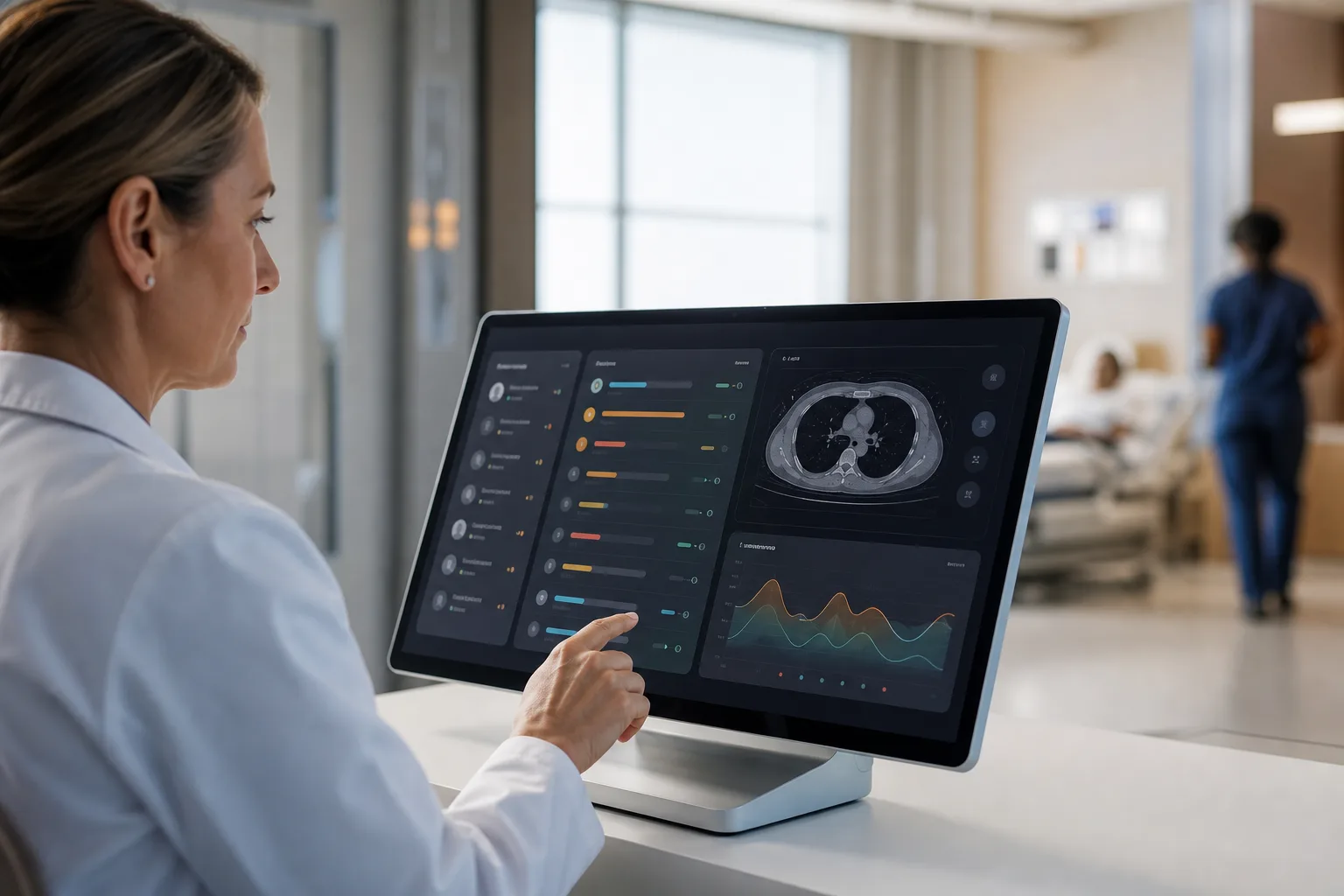
What Predictive Analytics AI Actually Solves in Healthcare
Predictive analytics uses past and current data to estimate what may happen next. In healthcare, that means surfacing likely readmissions, tracking disease spread in a ward, or pointing out scans that need a fast read. Models are only useful if they reduce time to action and help staff make safer choices.
For patient readmission, risk models can flag who is likely to bounce back within 30 days. The value shows up when alerts tie to clear steps: a meds review, a call within 48 hours, or a home visit slot. Without that link to action, scores become noise.
For disease progression, time‑to‑event models can spot who is at risk of fast decline. When these feed care plans, earlier labs, tighter vitals checks, palliative consults, you get better timing and fewer surprises. The aim is to guide choices, not to replace clinical judgment.
Imaging triage is where computer vision helps first. It can move suspected bleeds, pneumothorax, or PE cases to the top of the queue so radiologists see the urgent scans first. That alone can cut door‑to‑read time. If you want a short explainer, this primer on computer vision is a plain‑English overview you can share with your imaging team.
For resource allocation, forecast models can show bed demand, staff needs, and OR block use. As a result, nurse managers can adjust rosters a day ahead, not an hour late. Pharmacy can stock high‑use meds before a surge. Transport can plan for peaks, not react to them.
- Readmission risk: link risk to a discharge checklist and follow‑up slot.
- Disease progression: add earlier tests or consults based on risk bands.
- Imaging triage: route high‑risk scans to the top of the worklist.
- Resource planning: staff, beds, and supplies forecasted by shift.
- Population health: target outreach by predicted risk of gaps in care.
Moreover, you can borrow lessons from finance and retail to make models stick. For example, cross‑industry teams use clear feedback loops and outcome tracking. If you want a cross‑sector view, this practical guide for ecommerce teams shows how product groups tie models to action, many patterns apply in care settings, too.
How to Evaluate and Implement a Predictive Analytics Tool: A 7-Step Framework
Choosing AI for care is not a model bake‑off. It’s a service change. You’ll succeed if you plan for data, workflow, safety, and scale from day one. The steps below keep the work grounded and reduce surprises.
Step 1: Define the clinical or operational use case
Start small and specific. For example, “reduce 30‑day COPD readmissions by 10 cases per month at Hospital A.” Name the decision point, the user, and the action. State your outcome, guardrails, and who owns the change.
Step 2: Audit data readiness for predictive analytics
List fields, volume, quality, and refresh rate. Check missing values, label drift, and time stamps. Map sources: EHR, imaging, devices, SDOH. Note PHI flow and where data lands at rest. Flag gaps you must fix before any pilot.
Step 3: Check HIPAA and regulatory compliance
Document how you protect PHI. Confirm data use, BAAs, and retention rules. Review whether the tool works on‑prem or in a HIPAA‑eligible cloud. For grounding, see HIPAA rules for the key privacy and security standards.
Step 4: Evaluate model transparency and bias
Ask for feature importance, monitoring plans, and bias tests by age, sex, race, and payer. Require error analysis. If it’s a black box, insist on human‑readable summaries and a clear escalation path when people disagree with a prediction.
Step 5: Test EHR and workflow integration for predictive analytics and computer vision
Run it in your real flow. Can you embed in the EHR note, inbox, or imaging worklist? Does it write back results? Confirm single sign‑on and role‑based access. Moreover, check audit trails and alert routing for weekends and nights.
Step 6: Run a time‑boxed pilot
Pick one unit, one pathway, and one metric. Set 6–8 weeks with a freeze on new asks mid‑pilot. Track model lift and process changes. Hold two stand‑ups per week. As a result, you’ll learn fast without boiling the ocean.
Step 7: Scale predictive analytics with monitoring
Plan dashboards for drift, latency, and false alerts. Set retrain rules. Define who reviews incidents and who pauses the model. Include end‑to‑end encryption and role‑based access controls, and document AI/ML pipeline development for scalable deployment.
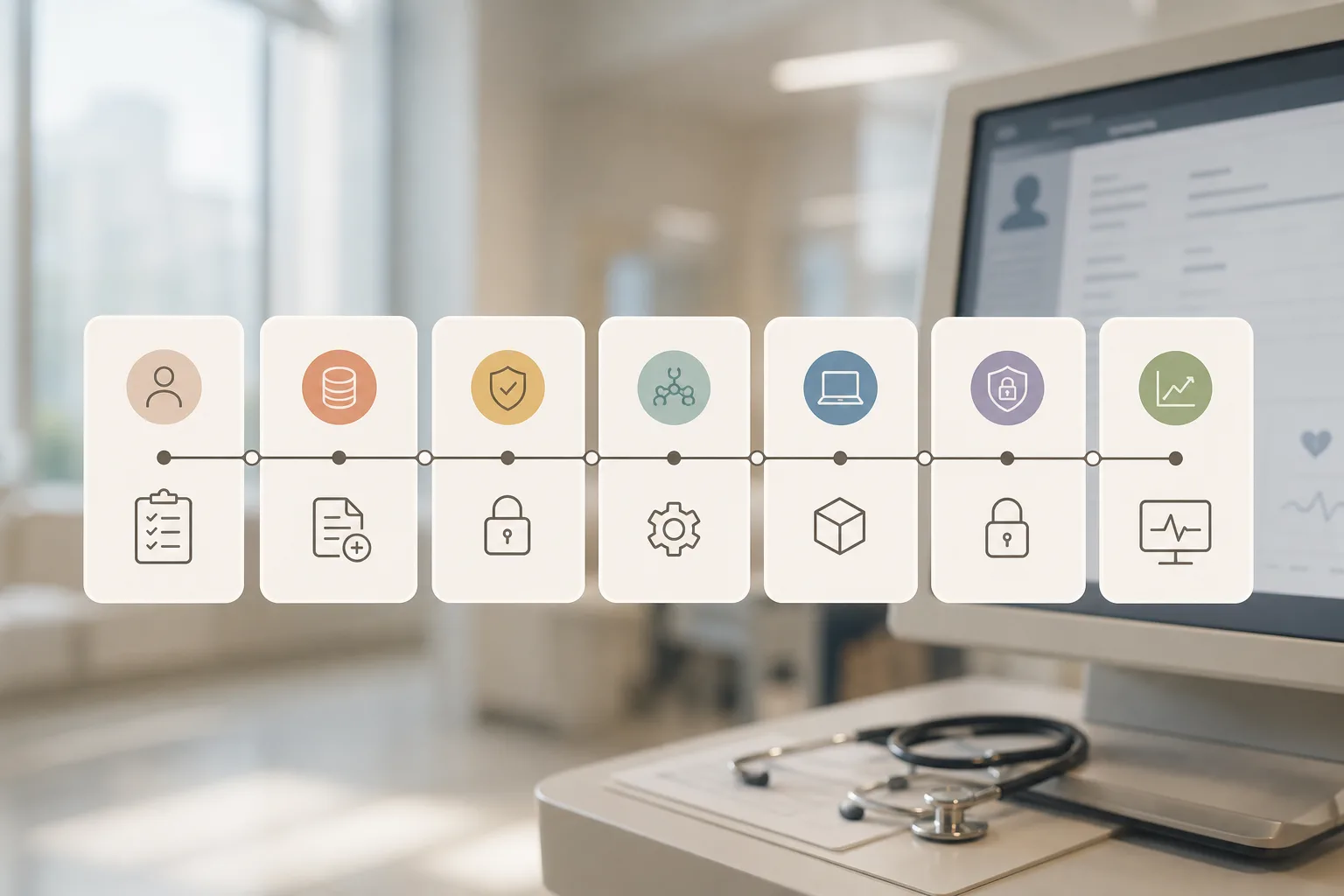
Therefore, think beyond accuracy. You need smooth integration services to fit AI into existing systems and scalability planning for long‑term growth. If these pieces are weak, even great models will stall.
Also Read!
5 Costly Mistakes Healthcare Organizations Make with Predictive AI
You do not need another vendor deck. You need a short list of traps to avoid. These five are the ones that stall projects, burn trust, and drain budgets.
Mistake 1: Skipping data governance
Without clear data owners, quality checks, and lineage, models drift fast. Build a data contract with fields, ranges, and refresh rates. Assign a named owner. In addition, log changes so clinicians know when inputs shift.
Mistake 2: Ignoring clinician workflow
An alert outside the EHR inbox or a score with no action plan adds work. Shadow clinicians for one week. Place the decision aid where they click now. Keep the alert rate low and the action one tap away.
Mistake 3: Choosing black‑box models you can’t explain
You will face “why did it flag this patient?” If you can’t answer in human terms, adoption drops. Demand clear model cards, feature impacts, and examples. Moreover, plan training and fine‑tuning on domain‑specific data to keep relevance high.
Mistake 4: Underestimating integration effort
File drops and manual exports do not scale. Budget time for APIs, identity, and write‑back. Bring your EHR team to vendor demos. Performance optimization matters too, slow reads kill trust in a busy clinic.
Mistake 5: No post‑deployment monitoring for predictive analytics
Without drift and bias checks, models decay. Set weekly checks for precision and false alerts. Route incidents to a small review group. Include a security‑focused setup with access control and encrypted communication so audits are easy and fast.
“If you design for the workflow first and keep the signal tight, clinicians will use it. Trust follows fast when tools save time.”
As a result, you cut risk and cost. Businesses that get AI services right report up to a 40% cost drop and a 30% productivity lift, because they couple models with process changes, not slides.
Tools and Platforms for Predictive Analytics and Computer Vision in 2026
You do not need to pick one tool for every job. Instead, map categories to needs and maturity. Start with a shortlist, then pilot with your data and workflows.
Dedicated health AI platforms: Consider vendors focused on healthcare, like Tempus or ClosedLoop. They bring prebuilt risk models, healthcare data models, and reporting that speaks the clinical language. However, check how they explain predictions and how they fit your EHR.
Cloud ML and health data services: AWS HealthLake and Google Cloud Healthcare API can help unify data and speed builds. They support HIPAA‑eligible services and strong security controls. Still, you’ll need in‑house or partner skills to design the pipeline and guardrails.
Deployment and integration services: You may already have models but need a safe path to production. Tools like GlobussoftAI OpenClaw Services can handle system integration with CRMs and analytics tools, AI/ML consulting to build roadmaps, and end‑to‑end encryption for PHI. Mentioned as one option, these services are useful when your goal is custom automation, AI‑driven reporting, or multi‑system orchestration without hiring a full internal platform team.
On the other hand, you can learn from other sectors. For a clear view of model‑to‑workflow fit, see these cross‑industry lessons from fintech. The patterns, tight metrics, fast pilots, clear ownership, transfer well to care teams.
| Category | Strengths | Watch-outs |
|---|---|---|
| Health AI platforms | Clinical models, reporting, speed to pilot | Transparency, EHR integration depth |
| Cloud health data | Scale, security, flexible build | Requires strong internal skills |
| Deployment services | Custom fit, integration, security | Scope creep without clear goals |

What to Do This Week: Your First Three Moves
You do not need a six‑month plan to begin. Start small, move fast, and bring clinicians in early.
Move 1 (Day 1–2): Pick one high‑impact, narrow use case
Choose a unit and problem you can measure, like “reduce 30‑day readmissions for heart failure on 4 West.” Name the decision point, the user, and the one action you want as a result of the prediction. Write the goal on one page and share it.
Move 2 (Day 2–3): Inventory data sources and access
List EHR tables, imaging, labs, vitals, and SDOH you can pull today. Note refresh rates and PHI paths. Confirm you can run in a HIPAA‑eligible setup with role‑based access. As needed, schedule one hour with IT to confirm end‑to‑end encryption and account roles.
Move 3 (Day 3–5): Schedule a cross‑functional meeting
Invite one clinician champion, an EHR analyst, a data lead, and a privacy lead. In one hour, agree on the pilot scope, metrics, and guardrails. Assign owners. Set a six‑week pilot window with a mid‑point check. Therefore, by Friday you have a plan people believe in.
Before you expand, review a short explainer to align the team’s language. This cross‑industry guide for ecommerce teams is a quick way to sync on terms like “precision,” “drift,” and “worklist.
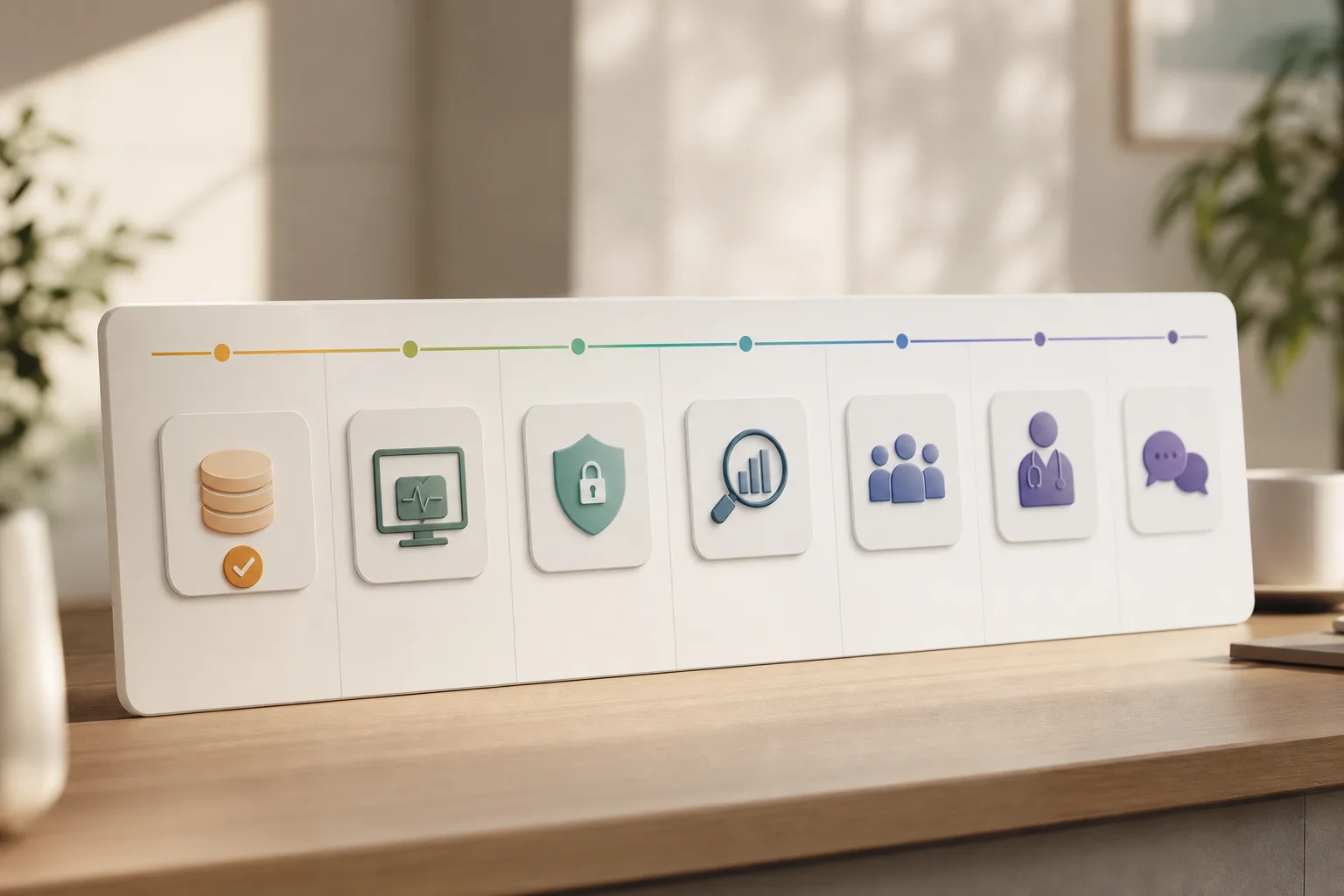
Key Takeaways for Predictive Analytics and Computer Vision
- Start with a narrow, high‑value use case tied to one decision and one action.
- Check data quality, privacy, and EHR fit before model tests to avoid rework.
- Insist on transparency, monitoring, and strong access control to keep trust.
- Pilot in 6–8 weeks with named owners, then scale with drift and bias checks.
- Treat predictive analytics and computer vision as service changes, not just models.
By staying practical, clear goals, ready data, strong security, and workflow fit, you will see real gains without burdening clinicians. And by 2026 standards, that’s what success looks like: safer care, faster paths to action, and teams who would rather not work without the tool.