

Your next customer just typed “best bakers near me” into Google — and if your business didn’t show up in the results, you lost them to a competitor who did.
Across the Gulf, the way people find local businesses has changed completely. Shoppers no longer flip through directories or ask around; they simply check Google Maps, read reviews, and click on whichever business Google trusts most.
Whether you run a restaurant in Dubai, a clinic in Riyadh, or a retail store in Doha, your visibility in these local search results directly determines how many customers walk through your door.
This blog breaks down what local SEO actually means for businesses operating in the Gulf and wider Middle East, why it looks different here than in Western markets, and how to build a strategy that gets you found by the people searching for you right now.
Read Aloud!
Why Local SEO Matters More in the Gulf Than Anywhere Else
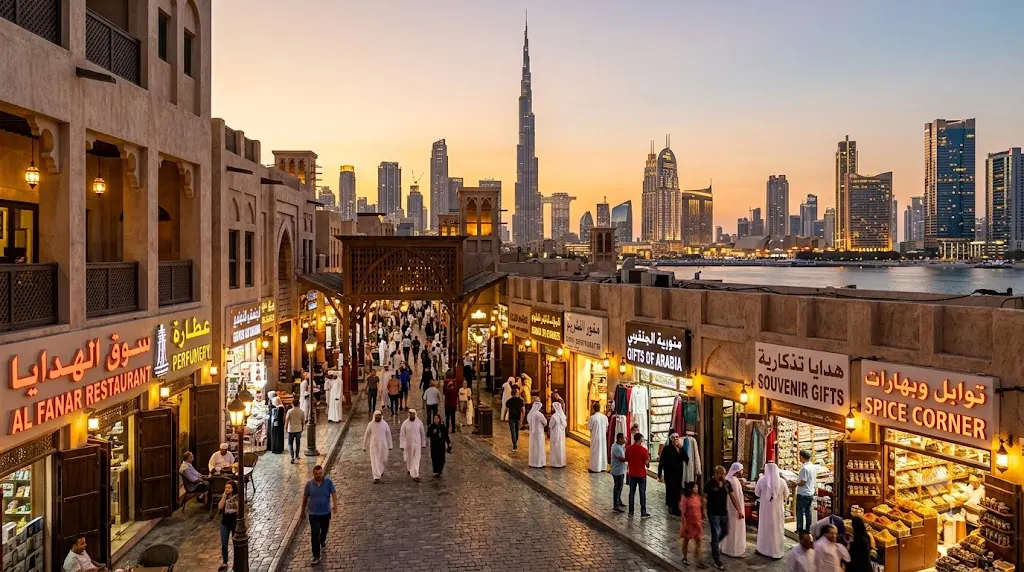
The Middle East’s digital economy has exploded over the past few years. From Riyadh to Dubai, Doha to Kuwait City, consumers are searching on their phones before they ever walk into a store, book a service, or choose a restaurant.
The GCC region has some of the highest smartphone penetration and mobile search rates in the world. Consumers in the UAE, Saudi Arabia, Qatar, Bahrain, Kuwait, and Oman rely heavily on “near me” searches, Google Maps, and voice search to find everything from clinics and salons to real estate agents and restaurants.
This means if your business isn’t showing up in those searches, you’re handing customers straight to competitors who’ve figured out local SEO.
Here are a few things that make local SEO for Gulf business owners uniquely important:
- Bilingual search behavior.
Many users search in both Arabic and English, sometimes switching mid-session. A business that only optimizes for one language is invisible to half its potential customers. - Hyper-local competition in dense business hubs.
Free zones, malls, and commercial towers in cities like Dubai and Abu Dhabi pack hundreds of similar businesses into a few square kilometers, making map-pack visibility a real competitive battleground. - High trust placed in Google reviews.
Expats and locals lean heavily on star ratings and reviews before choosing a service provider, especially for healthcare, home services, and hospitality. - Rapid urban growth and new developments.
New neighborhoods and business districts pop up constantly, meaning “near me” search data changes fast and needs regular updates.
What Makes Local SEO for Middle East Businesses Different
Applying a generic, one-size-fits-all SEO playbook rarely works here. SEO for Middle East businesses needs to account for regional nuances that most global agencies miss:
1. Right-to-Left (RTL) and Arabic Content Optimization
Arabic isn’t just a translation of your English content — search intent, keyword phrasing, and even the way people describe services can differ significantly.
2. Google Business Profile Localization
Your Google Business Profile needs accurate categories, bilingual descriptions, correct area names (which can vary between official and colloquial usage), and locally relevant photos. Many Gulf businesses lose visibility simply because their profile lists a free zone name that doesn’t match how customers actually search.
3. Address and Landmark-Based Navigation
Many parts of the Middle East, especially newer developments, don’t rely on traditional street addresses the way Western cities do. Landmark-based directions (“near Mall of the Emirates,” “opposite Union Metro Station”) matter for both user experience and structured data markup.
4. Cultural and Religious Considerations in Content
Business hours around prayer times, Ramadan-specific messaging, and culturally appropriate imagery all factor into how well your local pages resonate — and resonance affects engagement signals that Google tracks.
Choosing the Right Partner: What Sets the Best Local SEO Agency in the Gulf Apart
Not every agency that claims regional expertise actually has it. When you’re comparing options for the best local SEO agency in Gulf markets, look for these signals:
- Native or fluent Arabic-speaking strategists, not just translators bolted onto an English-first team.
- Proven case studies within GCC industries — healthcare, real estate, hospitality, retail, and professional services all have different local search dynamics.
- Familiarity with regional platforms and directories, not just global tools.
- Transparent reporting tied to actual local ranking positions and map-pack visibility, not vanity metrics.
- Compliance awareness — understanding of regional advertising and data regulations relevant to your industry.
A genuine team of Middle East SEO experts will ask about your specific city, neighborhood, and customer base before recommending a strategy — because what works in Riyadh may not translate directly to Muscat or Manama.
Working with a Gulf Regional SEO Company vs. a Global Agency
There’s a real trade-off between hiring a large international agency and a specialized Gulf regional SEO company. Global agencies often bring broader technical resources, but a regional specialist typically offers:
- Deeper understanding of local search behavior and dialectal Arabic variations across GCC countries
- Established relationships with regional media and directory sites for citation building
- Faster adaptation to local algorithm shifts and Google updates that affect map-pack rankings in Gulf cities
- On-the-ground cultural context that shapes content strategy, not just keyword lists
Many businesses find the strongest results come from a hybrid approach: a regional specialist handling local optimization and Arabic content, paired with strong technical SEO foundations.
Also read –
What Is Link Building and Why Does It Matter in SEO?
The 5-Minute Outbound Sales Window Your Stack Misses
How GlobussoftAI Can Support a Modern SEO Workflow
Regional SEO isn’t a one-time setup — it’s an ongoing operation. Reviews need responses, citations need monitoring, content needs to keep shipping, and competitors need watching, day after day.
Most Gulf businesses simply don’t have the in-house bandwidth to do all of this consistently, which is exactly where GlobussoftAI comes in.
Rather than selling you another SEO dashboard to check manually, GlobussoftAI embeds a senior AI engineering team directly into your workflow to build the automation that keeps your regional SEO running in the background. Their model is built around shipping working AI agents fast — often within weeks — and several of the systems they build translate directly into SEO wins:
- Customer chat and review monitoring — AI Agents that watch WhatsApp, Telegram, and in-app conversations for sentiment shifts and unhappy customers can be adapted to flag new reviews across platforms before they hurt your rating, so you can respond quickly and protect the trust signals Google rewards.
- Web research — The web research tooling can continuously scan competitor listings, pricing, and content moves, giving Gulf businesses real-time intelligence instead of quarterly guesswork.
- Content pipeline automation — For businesses trying to maintain bilingual (Arabic/English) content calendars across multiple locations, GlobussoftAI’s content pipeline systems help keep publishing consistent instead of stalling out after month one.
- Executive and team digests — Daily briefings that roll up what’s happening across channels mean local marketing teams spend less time hunting for data and more time acting on it.
Because GlobussoftAI works multi-model (Claude, GPT, Gemini) and ships with full source and IP transfer, Gulf businesses aren’t locked into a single vendor — they end up owning the automation that keeps their regional SEO efforts consistent long after the engagement ends.
Getting Started: A Practical Checklist
If you’re ready to improve your local visibility, start here:
- Audit your Google Business Profile for accuracy in both English and Arabic
- Identify your top 5–10 local search terms in both languages
- Build or update city-specific landing pages
- Set up a consistent review-generation process
- Check your NAP consistency across major directories
- Add LocalBusiness schema markup to your website
- Review your site’s mobile speed and usability
Final Thoughts
Regional SEO in the Gulf and broader Middle East isn’t just about translating your existing strategy into Arabic — it’s about understanding how people in this region actually search, decide, and choose businesses. Whether you handle it in-house or bring in specialized SEO services from Middle East experts, the businesses that invest in genuine local relevance are the ones winning the map pack, the clicks, and ultimately, the customers.
Here are 5 simple, high-quality FAQs that fit the topic and SEO intent:
FAQs
1. What is local SEO for Gulf businesses?
Local SEO helps businesses in Gulf countries improve their visibility in local search results and reach customers searching for nearby products or services.
2. Why is local SEO important for businesses in the Gulf?
Local SEO helps businesses appear in relevant local searches, attract nearby customers, build online visibility, and generate more calls, visits, and inquiries.
3. How can Gulf businesses improve their Google Business Profile?
Businesses should keep their business name, address, phone number, working hours, services, photos, and other information accurate and regularly updated.
4. Which Gulf countries can benefit from local SEO?
Local SEO can benefit businesses across the GCC, including the UAE, Saudi Arabia, Qatar, Kuwait, Bahrain, and Oman.
5. How long does it take to see results from local SEO?
Results vary depending on competition, location, website authority, and the quality of optimization. Consistent local SEO efforts can gradually improve search visibility and customer reach.