

Schedule a free security review →
40% lower ops costs and 30% higher productivity are real when AI is set up right. But picking a custom AI chatbot builder for finance is not about a shiny UI. It is about hard controls, data paths, and failure modes that pass audits and still move KPIs.
In 2026, you face a simple trade-off: ship fast on a generic chat widget, or ship right with a builder that respects PCI-DSS, SOC 2, and local data laws. The first path is quick. The second path is safe, and it scales.
The good news is you no longer need a seven-figure budget to do it right. With an open-source core and a self-hosted VPS that runs at about $5/month, the total stack can stay under $10/month, even with AI model usage. That cost profile makes the decision easier for CTOs who must show clear ROI.
This guide explains what to evaluate, where generic tools fall short, and how GlobussoftAI OpenClaw maps to finance-grade needs. You will see how to move from pilot to production with security baked in, not bolted on. You will also see proof points: end-to-end encryption, role-based access, over 1,000 hours of testing, and 100,000 GitHub stars in under eight weeks as social proof of traction. Let’s get precise.
Why Fintech Companies Struggle to Deploy AI Chatbots
Most generic chat tools were built for FAQs, not finance. You need audit trails, role scoping, data residency, and strict network rules. A custom AI chatbot builder that ignores those needs puts your license and brand at risk. As a result, teams stall in “pilot purgatory” for months, or ship a tool they later have to rip out.
Regulation is the first roadblock. Payment data falls under PCI-DSS, which demands tight controls on storage, transit, and access. For a refresher, see the Payment Card Industry Data Security Standard on Wikipedia.
Meanwhile, many boards ask for SOC 2 evidence on controls and monitoring. The SOC 2 overview on Wikipedia explains the trust service criteria. Then add KYC/AML checks and watch your integration surface grow.
Data residency is next. However, most out-of-the-box chat tools assume cloud-only storage. That clashes with rules that keep PII within a country or region. Therefore, you need self-hosted or at least VPC-hosted options to keep data close, with keys you manage. Without that, finance teams block the launch.
Finally, legacy core-banking systems make integration hard. Batch files, SOAP APIs, and rate limits force careful orchestration. In addition, domain logic like chargeback flows, KYC re-verification, and dispute SLAs mean you need multi-step workflows, not just one-shot answers. Where a generic tool can hand off to email, finance needs a builder that runs autonomous workflows, retries on transient faults, and logs each action for audit.
Regulatory Reality vs Feature Checklists
- Generic chat tools can answer questions. Finance chatbots must execute traceable actions.
- Cloud defaults can be fast. Finance-grade launches need self-hosting, encryption, and access control from day one.
- Simple integrations can pass demos. Core-banking links must survive failures and audits in production.
What to Look for in a Fintech AI Chatbot Builder
Your shortlist should start with security, model control, and scale. A custom AI chatbot builder for finance must protect data, prove access intent, and keep working under load. It should also make your team faster, not add toil.
Security in a Chatbot Builder
First, insist on end-to-end encryption and role-based access. Keys should be your own, not shared with a vendor’s multi-tenant pool. Moreover, you should be able to scope roles so agents only see the data they need. Audit logs must capture who did what, when, and why. This is non‑negotiable for PCI-DSS and SOC 2 aligned programs.
Model Control and Fine-Tuning
Second, demand model fine-tuning on domain data. For example, training on your product docs, fee tables, dispute codes, and compliance playbooks prevents vague replies. In addition, look for guardrails: prompt templates, policy checks, and redaction before model calls. If you want a primer on patterns that improve outcomes, this guide on an AI-powered chatbot offers practical steps you can adapt to finance.
Scale Under Stress
Third, plan for spikes. Your builder must handle high-volume loads, concurrent sessions, and failure injection drills. Therefore, look for run-comparison tooling and an expressive assertion engine, so you can benchmark prompts and workflows before go-live. Environmental parity helps you reproduce issues fast and keep MTTR low.
Integration and Observability
Fourth, check integrations. CRMs, analytics tools, and messaging channels should connect without brittle glue code. Furthermore, you want metrics that matter: containment rate, first-contact resolution, handoff lag, and cost per resolved task. With those, you will tune LLM calls and routing to hit your SLA targets.
Also Read!
How to Integrate AI with Your CRM as a Small Business
GlobussoftAI OpenClaw vs HubSpot AI for Small Businesses: Which Is Better for AI CRM Integration?
How GlobussoftAI OpenClaw Solves Chatbot Deployment for Fintech
GlobussoftAI OpenClaw brings an open-source AI agent framework with a security-focused setup. In practice, that means end-to-end encryption, role-based access controls, and self-hosted deployment. For a fintech team, this aligns with PCI-DSS and SOC 2 expectations. It also keeps data sovereignty intact.
Self-Hosted, Autonomous Workflows
OpenClaw runs autonomous workflows on your own server. You choose the VPS, network rules, and region. The core framework is free, and a small VPS runs at about $5/month. Even with AI model usage, total costs usually land under $10/month. Therefore, you get finance-grade control at a price point that fits a lean 2026 roadmap.
LLM-Powered Chatbots and Multi-Agent Orchestration
Chatbots powered by Large Language Models handle complex, multi-turn queries with human-like responses. Beyond a single bot, OpenClaw supports Multi-Agent Orchestration. You can stand up a KYC agent, a disputes agent, and an account-info agent, then coordinate them with clear roles and policies. If you need help with design, this service page on custom AI agent development shows how to structure domain agents that reduce routing errors.
Channels, CRM, and Analytics
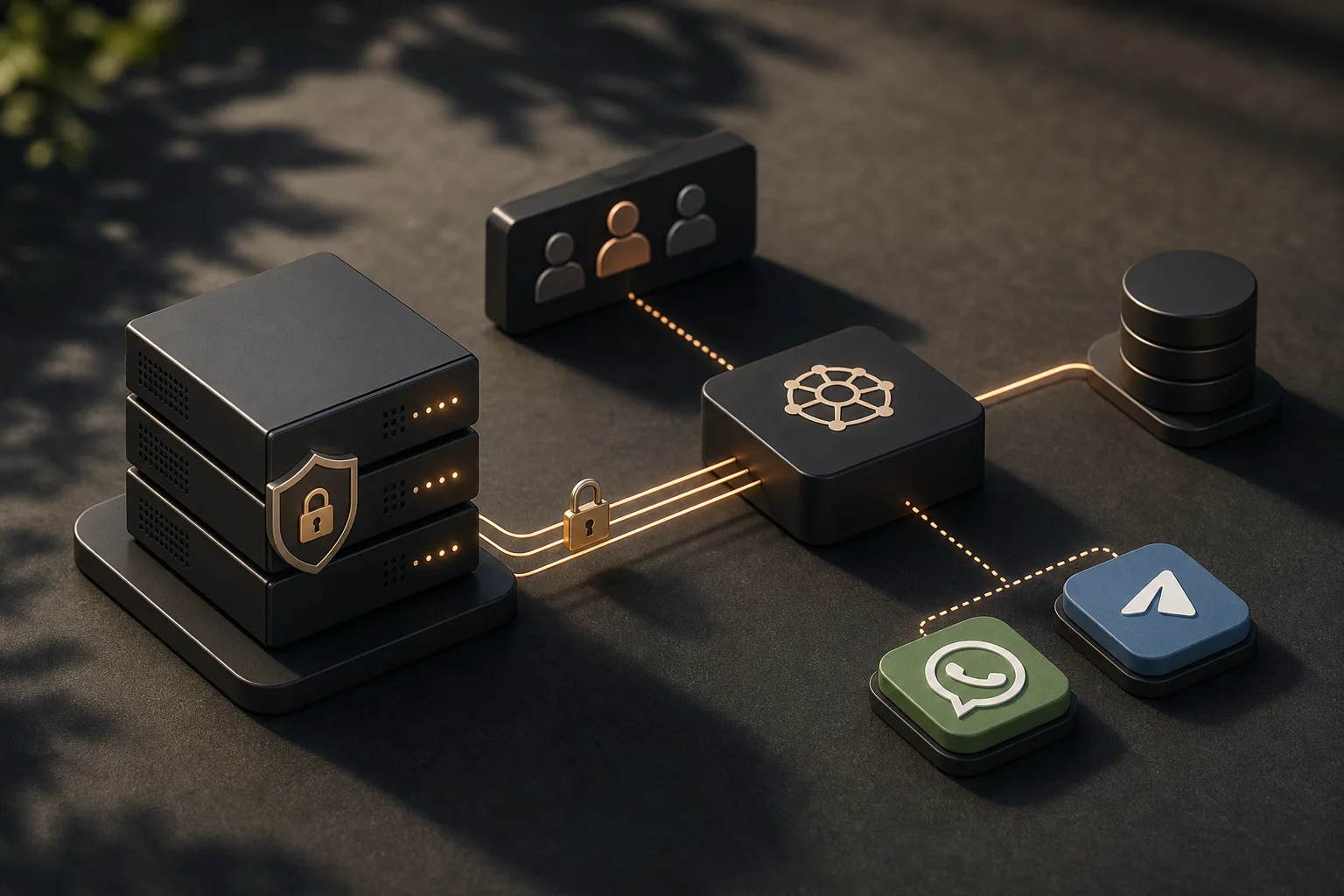
OpenClaw executes instructions through WhatsApp, Telegram, and email from one deployment. That unifies customer touchpoints without extra vendor fees. In addition, system integration with CRMs and analytics tools means agents can both act and learn. Predictive analytics help you spot drop-offs and tweak flows that drive higher containment.
Moreover, implementers who add AI services report up to a 40% reduction in operational costs and a 30% increase in productivity. With OpenClaw, those gains come without vendor lock-in. You stay in control of data, models, and spend.

Why This Builder Fits Finance
- Security-first defaults reduce review cycles and raise approval odds.
- Self-hosting gives you data sovereignty and simpler residency proofs.
- Multi-agent design maps cleanly to KYC, disputes, and account flows.
- Performance tooling supports high-volume and failure injection tests.
GlobussoftAI OpenClaw vs. Generic Chatbot Platforms for Finance
You asked for an honest view. Here it is. Compared to alternatives like Dialogflow and Botpress, OpenClaw is open-source, self-hosted, and transparent on costs. Those traits matter for regulated workloads. That said, competitors have clear strengths worth noting.
Dialogflow offers mature NLU and a polished console. Botpress shines for low-code flow building and a friendly UI. If you run a marketing FAQ, those can be a fast start. However, finance needs self-hosting, data sovereignty, and deep fine-tuning without premium gates. OpenClaw was built for that.
OpenClaw’s security-focused setup includes access control and encrypted communication. The core is free, and a typical VPS costs about $5/month, with total deployment costs usually under $10/month. Multi-Agent Orchestration comes natively, not as an add-on. In addition, the project reached 100,000 GitHub stars in under eight weeks, a strong social proof signal for 2026 buyers wary of dead repos.
Where a Finance-Grade Builder Wins
- Unlike cloud-first tools, self-hosting lets you keep keys, logs, and data in your own boundary.
- Unlike tiered feature gates, model fine-tuning and multi-agent flows are part of the open framework.
- Compared to opaque pricing, the open-source core with a small VPS puts costs in plain view.
| Criteria | OpenClaw (Self-Hosted) | Dialogflow (Cloud-First) | Botpress (Low-Code) |
|---|---|---|---|
| Data Sovereignty | Full, self-hosted | Vendor cloud | Varies by plan |
| Fine-Tuning Control | Native, domain data | Available, vendor-bound | Higher tiers |
| Multi-Agent Support | Built-in orchestration | Add-on/custom | Available |
| Pricing Transparency | Free core; <$10/month | Usage-based | Tiered |
| Fintech-Specific Security | Encryption + RBAC | Vendor-managed | Configurable |
For cross-industry context on compliance-first builds, see this healthcare-focused write-up: Best Custom AI Chatbot Builder for Healthcare in 2026. The security patterns carry over to finance with minor changes in policy sets.
"Open-source AI agent framework with encryption and role-based access gives our team the control we need without lock-in." — Engineering lead, fintech (paraphrased internal feedback)
Trust, Security Credentials, and Proven Scale
Trust starts with design. OpenClaw ships with end-to-end encryption and role-based access controls. Those two guardrails align with finance audits and slash the risk of drift. Enterprise-grade deployment standards cover keys, secrets, and network rules, so your team has a strong baseline.
Scale needs proof. Over 1,000 hours of testing data were used to explore OpenClaw’s features under load. That includes high-volume sessions, concurrency, and failure injection. In addition, the framework includes run-comparison tooling for benchmark creation. Therefore, you can measure and improve real outcomes, not just eyeball chats.
Social proof also matters in 2026. The project reached 100,000 GitHub stars in under eight weeks, showing broad community trust and fast momentum. Pair that with scalability planning for long-term growth, and you get a path from MVP to millions of chats without a re-platform.
Security and Scale, Not Just Speed
- Encryption and RBAC protect sensitive flows.
- Testing and benchmarks de-risk each release.
- Community traction lowers vendor risk for CTOs.
Also Read!
Best AI CRM Integration Service for Small Businesses in 2026
Getting Started: Deploying an AI Chatbot for Your Fintech Product
You can move from plan to production in a few clear steps. Keep compliance in the loop and test for failure from day one. A custom AI chatbot builder should make this path simple and repeatable.
Step-by-Step Builder Plan
First, assess compliance needs with your security team. Document PCI-DSS scope, SOC 2 control mapping, and data residency needs. List the systems in scope: core banking, CRM, analytics, and messaging channels.
Second, choose a self-hosted VPS in your target region. Keep costs tight (about $5/month for a small instance) and enforce network rules. Set up secrets management and identity.
Third, run the OpenClaw setup. Use the professional deployment and installation services if you need speed and certainty. Configure encryption, role-based access, and logging. Then connect your CRM and analytics tools for traceability.
Fourth, fine-tune on domain data. Train on product docs, compliance policies, and transaction categories. Create agents for KYC, disputes, and account info. If you need patterns for agent design, borrow ideas from AI chatbots for e-commerce and adapt them to finance flows.
Fifth, test with failure injection. Use environmental parity for consistent test results across dev, stage, and prod. Compare runs with the built-in tooling, then fix weak spots before go-live.
Sixth, go live on WhatsApp/Telegram/email. Monitor cost per resolved task and escalation rate for the first two weeks. Then tune prompts, routing, and agent roles.

Schedule a free security review →

Frequently Asked Questions
How much does it cost to build a custom AI chatbot for fintech with OpenClaw?
The core framework is free and open-source. A typical self-hosted VPS runs at about $5/month. Including AI model usage, total costs usually stay under $10/month. Professional deployment services are priced separately and help you hit deadlines without risk.
Can a self-hosted chatbot meet financial regulatory requirements like PCI-DSS?
Self-hosting gives you full data sovereignty and control over keys and logs. OpenClaw includes end-to-end encryption and role-based access controls. You configure the infrastructure to meet PCI-DSS, SOC 2, or local data residency rules. Your security team owns the environment, which eases audits.
How does OpenClaw compare to Dialogflow or Botpress for fintech use cases?
OpenClaw is open-source and self-hosted, so you keep full data control. It supports multi-agent orchestration and LLM fine-tuning natively. Dialogflow’s cloud-first model reduces ops work but limits data sovereignty. Botpress offers these features, though some come at higher tiers.
Does OpenClaw support multi-channel deployment like WhatsApp and Telegram?
Yes. OpenClaw executes instructions through WhatsApp, Telegram, and email from a single deployment. That lets you serve customers on their preferred channel without extra tools. Your team manages one codebase and one set of keys.
Can I fine-tune the chatbot on proprietary financial data?
OpenClaw supports model training and fine-tuning on domain-specific data. For fintech, that includes product documentation, compliance policies, and transaction categories. With fine-tuning, replies align with your terms and flows. That reduces handoffs and speeds up resolution.
How does multi-agent orchestration help in financial services?
Multi-agent orchestration lets you run specialized agents with clear roles. For example, one for KYC, another for transaction disputes, and another for account info. Coordinating them in one framework improves accuracy and reduces routing errors. It also keeps audits clean with per-agent logs.
What happens if the chatbot can't answer a complex financial question?
OpenClaw’s LLM-powered chatbots handle complex queries with human-like responses. For edge cases, you can set escalation workflows that route to a human agent. The full conversation context stays intact to avoid repeated questions. That improves customer trust and shortens handle time.
Is OpenClaw proven at scale for high-traffic fintech applications?
OpenClaw has been tested for high-volume loads and concurrent sessions with over 1,000 hours of testing data. It reached 100,000 GitHub stars in under eight weeks, showing strong community validation. Those signals point to production readiness for 2026 rollouts. You still control stress tests and benchmarks in your environment before go-live.
Final Takeaways
- Security-first design wins approvals. End-to-end encryption, role-based access, and self-hosting align with finance reviews.
- Open-source and self-hosted saves money. The free core and about $5/month VPS keep total costs under $10/month while you gain control.
- Scale is measurable. Over 1,000 testing hours and run-comparison tooling help you plan, benchmark, and improve in 2026.