
**Book a secure AI demo today →
Businesses implementing AI services report up to a 40% reduction in operational costs and 30% increase in productivity. That’s why ai-powered crm and business tool integration will be a top 2026 project for many health teams. For most organizations, OpenClaw fits cost-sensitive, self-hosted AI with strong customization, while Salesforce Health Cloud suits large enterprises that need compliance at scale and native EHR links.
However, picking one blindly creates risk. You have budgets, protected health data, and clinical workflows to protect. In this comparison, you’ll get a practical, numbers-first guide to choose an AI CRM path that fits your security posture, size, and care model in 2026.
What Healthcare Organizations Need from an AI CRM Integration Service
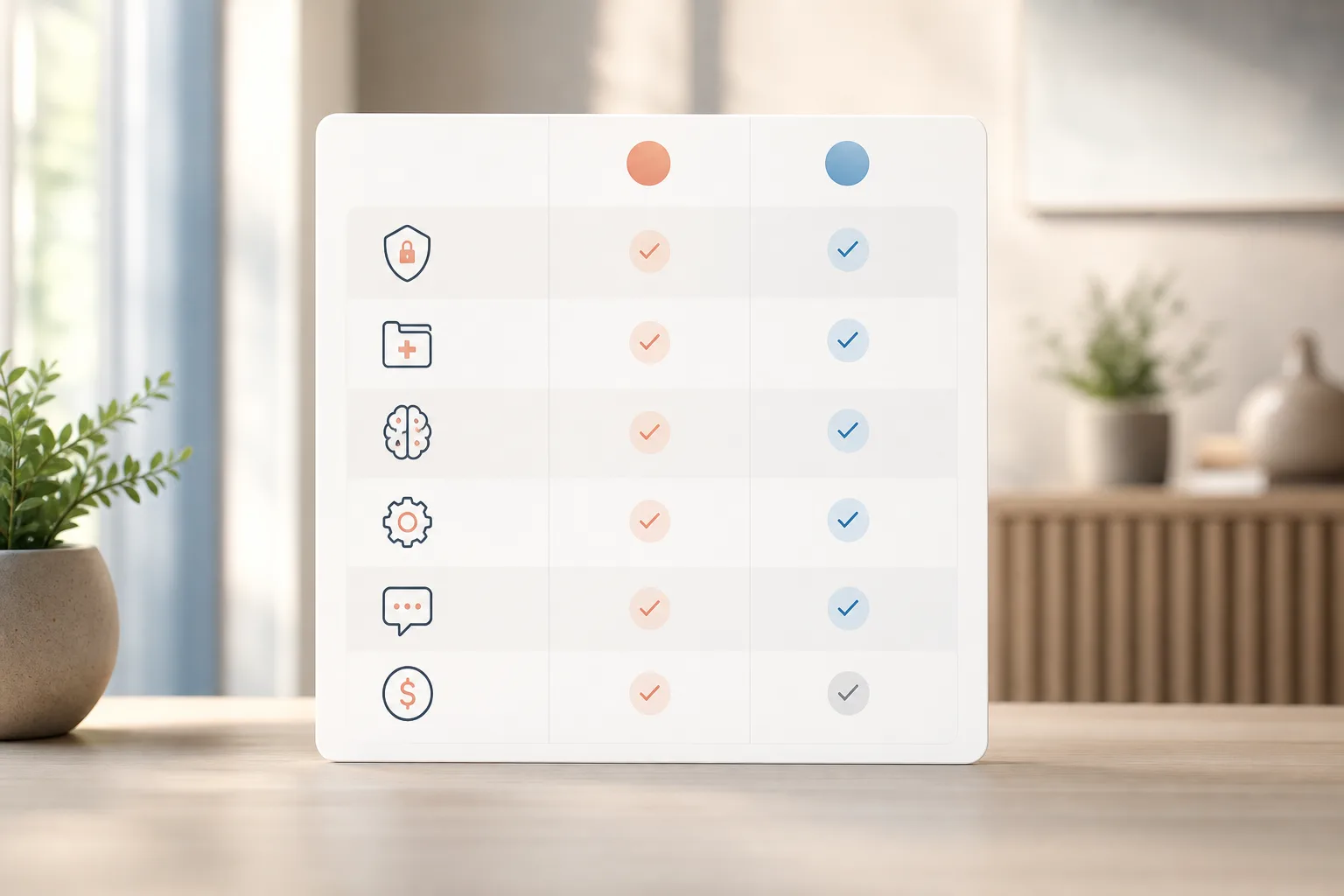
For care teams, the floor is higher than in other industries. You handle PHI, clinical notes, and care plans. Therefore, HIPAA-aligned security, EHR interoperability, data residency control, and audit trails are not “nice to have.” They are table stakes. For a baseline, review the U.S. HHS overview of the HIPAA Security Rule.
Moreover, you need AI that fits clinical workflows. That means accurate natural language processing for intake notes, prior auth summaries, and post-visit messages. It also means predictive analytics to flag outreach risks, missed follow-ups, and likely readmits. In addition, your team needs clear MLOps paths to retrain models on domain-specific data.
Scalability also matters. As a network grows from one clinic to sixteen locations, data volume grows by 10x–30x across messages, claims, and attachments. So the AI stack and CRM must scale without painful re-architecture. Role-based access, end-to-end encryption, and least-privilege policies should be standard.
Furthermore, you need tools that fit your systems. Some teams run Epic or Cerner with FHIR APIs and HL7 feeds. Others use mid-market EHRs with mixed interface engines. As a result, strong FHIR/HL7 options reduce project risk. If you plan to centralize orchestration, a service with clear AI integration playbooks will save months.
Clinical AI, Security, and Scale: A Short Checklist
- End-to-end encryption and role-based access controls, plus detailed logs.
- NLP that reads, summarizes, and drafts within clinical context.
- Predictive analytics for risk, churn, and care gaps.
- Scalability planning for 3–5 year growth and new care lines.
As you weigh options, keep the goal in sight: AI-powered CRM and business tool integration that respects PHI, speeds frontline work, and scales with fewer admin hours.
GlobussoftAI OpenClaw Overview: Strengths and Weaknesses for Healthcare
OpenClaw is an open-source AI agent framework with multi-agent orchestration and self-hosted deployment. In practice, that means you control your data plane and can run autonomous workflows on your own server. For most teams, the free core plus a VPS is about $5/month, with total costs usually under $10/month including model usage.
In addition, OpenClaw supports AI agent development for customer support and process automation, Large Language Model chatbots for complex queries, and model training and fine-tuning on domain-specific data. Security-focused setup includes access control and encrypted communication, which maps well to PHI-safe patterns when placed behind your existing controls.
Social proof matters too. OpenClaw reached 100,000 GitHub stars in under eight weeks, and over 1,000 hours of testing data were used to explore its features. Those signals suggest strong community interest and real-world vetting. If you want professional help, GlobussoftAI provides OpenClaw AI integration, custom workflow automation, and Managed AI Operations.
Where OpenClaw Fits in Care Delivery
OpenClaw shines where you need deep AI customization, data sovereignty, and low run costs. Use cases include autonomous inbox triage, insurance verification bots, and voice assistants for patient reminders. As a tradeoff, the brand is newer, there are no native EHR connectors out of the box, and you’ll need setup expertise to hit production grade.
If you aim for AI-powered CRM and business tool integration that you can tailor end-to-end, without vendor lock-in. OpenClaw deserves a close look.
Salesforce Health Cloud Overview: Strengths and Weaknesses for Healthcare
Salesforce Health Cloud is a mature ecosystem with long-running CRM roots and healthcare modules. The platform offers a large partner network, prebuilt data models, and built-in compliance tooling for enterprise-scale governance. For EHR links, Health Cloud workflows often rely on HL7v2 and FHIR patterns through partner middleware and AppExchange packages.
On the other hand, this maturity comes with enterprise pricing. Public tiers for Health Cloud are commonly $300+/user/month for advanced needs. For teams with 100 users, that is $30,000+ per month before integration or consulting. Customization is strong but may require expensive consultants or partner services, which can extend timelines.
Still, the value is real for big systems. If you need centralized security policy, consistent role-based access, and a strong audit trail at scale, the Health Cloud stack can fit. Moreover, the ecosystem includes many care management templates and partner accelerators. For FHIR background, see the U.S. ONC overview of FHIR interoperability.
Where Health Cloud Shines
Health Cloud excels when you want standard CRM patterns with healthcare overlays, broad AppExchange choices, and strong alignment with enterprise controls. If your priority is zero-lift EHR connectors and turnkey compliance tooling, it is hard to beat. If cost and lock-in are top concerns, weigh them carefully against your roadmap.
For hospitals that need AI-powered CRM and business tool integration anchored to established enterprise guardrails, Health Cloud offers a proven path.
Also Read!
How to Integrate AI with Your Healthcare CRM: A Step-by-Step Guide
Feature-by-Feature Comparison: OpenClaw vs Health Cloud for Healthcare CRM
You asked for specifics. Here’s how the two options stack up across six decision points you can defend in a 2026 budget meeting.
Data Security and Compliance (Winner: Health Cloud)
Health Cloud benefits from mature enterprise controls and built-in compliance tooling that large teams expect. It slots into org-wide SSO, auditing, and governance without special builds. OpenClaw supports end-to-end encryption and role-based access controls, but compliance posture depends on your self-hosted environment and policies.
AI Features and NLP for Clinical Workflows (Winner: OpenClaw)
OpenClaw offers open-source flexibility with AI agent development, LLM-powered chatbots for complex queries, and model training on domain data. In fact, it supports voice & conversational AI for hotline or post-discharge calls. Health Cloud supports AI add-ons, yet depth and fine-tuning usually require partner apps and extra fees. For raw AI customization, OpenClaw leads.
EHR Integration and Interoperability (Winner: Health Cloud)
Health Cloud’s ecosystem includes HL7/FHIR integration paths through partners and accelerators. That reduces project risk for Epic, Cerner, and mid-market EHRs. By contrast, OpenClaw has no native EHR connectors out of the box. You can build them, but it adds time and validation effort.
Workflow Automation and Orchestration (Winner: OpenClaw)
OpenClaw runs autonomous workflows on a self-hosted server and supports Multi-Agent Orchestration. Therefore, you can chain bots for intake, benefits checks, and follow-ups. Moreover, instructions can run across WhatsApp, Telegram, and email to reach patients and staff. Health Cloud automations are strong for CRM objects, yet advanced multi-agent flows require third-party tools and spend.
Messaging Channels and Outreach (Winner: OpenClaw)
OpenClaw includes built-in instruction execution through WhatsApp, Telegram, and email, plus proactive reminders. That reduces integration work for patient outreach and staff alerts. Health Cloud supports omni-channel via add-ons and partners, but costs and setup time scale with scope.
Customization Depth and Lock-In (Winner: OpenClaw)
Because OpenClaw is open-source, you can fork, extend, and self-host. You keep data in your stack and avoid license lock-in. Health Cloud customizations are powerful yet tied to Salesforce’s data model and pricing tiers. As your use cases grow, costs can climb.
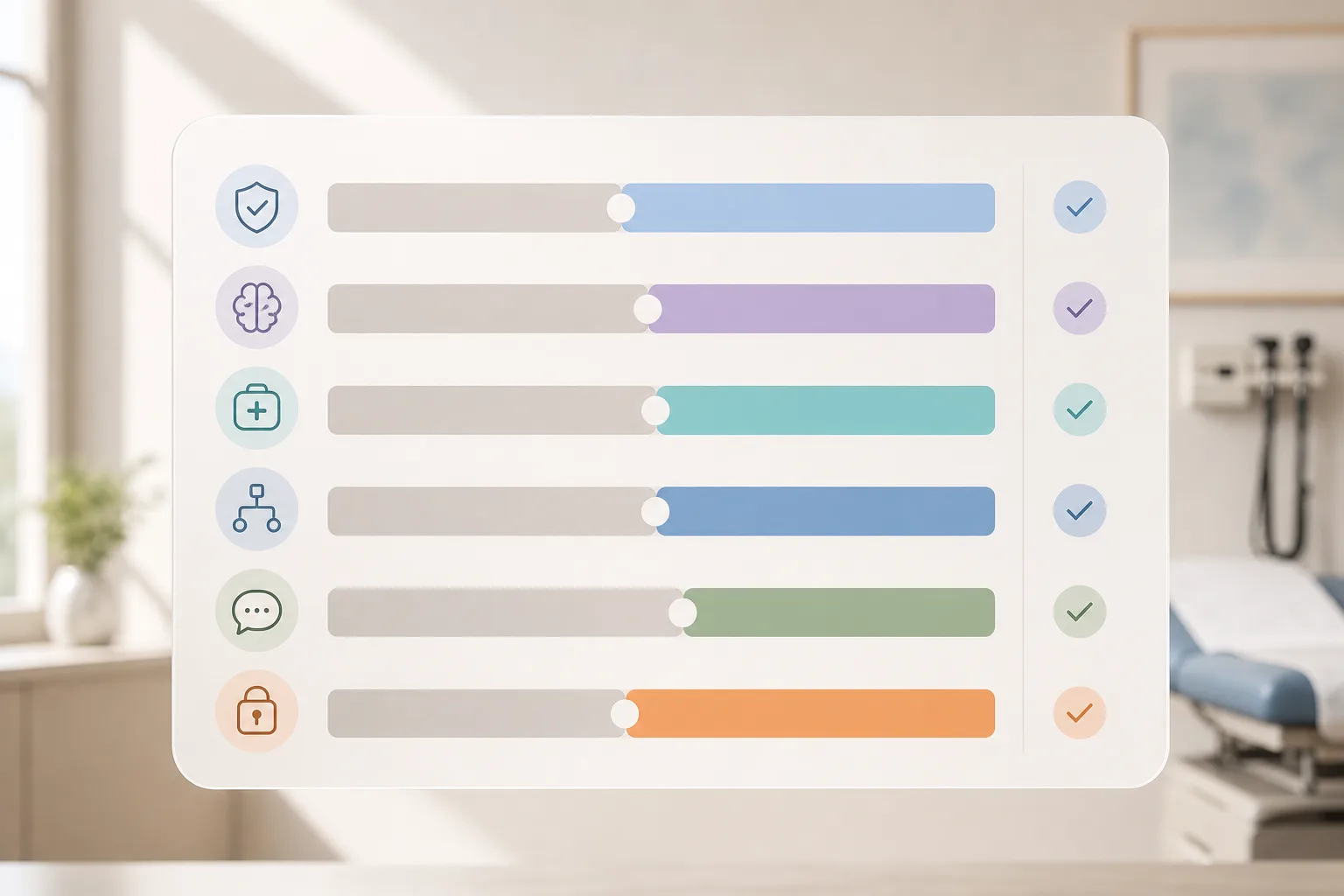
As you compare, tie each win back to your goals for AI-powered CRM and business tool integration: do you need maximum AI control, or turnkey EHR links under enterprise policy?
Pricing Comparison: Total Cost of Ownership for Healthcare Teams
OpenClaw’s free core with typical VPS hosting around $5/month keeps platform costs near zero. With model usage, total costs usually stay under $10/month. That low base lets you spend on build quality instead of seat licenses. It also cuts vendor risk, since your stack can move with you.
By contrast, Salesforce Health Cloud is $300+/user/month for enterprise tiers. For 50 users, that is at least $15,000 per month, or $180,000 per year, before services. At 250 users, you breach $900,000 per year in license spend alone. You will likely add partner apps and consulting. Those line items boost both cost and timeline.
Furthermore, consider gains. Businesses implementing AI services report up to a 40% reduction in operational costs and 30% increase in productivity. If you expect those gains, a faster, cheaper pilot may pay back in one quarter. For small teams, the Best AI CRM Integration Service for Small Businesses in 2026 can help frame that ROI.
| Cost Category | OpenClaw (Self-Hosted) | Salesforce Health Cloud |
|---|---|---|
| Platform | Free core | $300+/user/month |
| Hosting | ~$5/month VPS | Included in license |
| AI Usage | Usually under $10/month total | Add-ons and partners vary |
| EHR Connectors | Custom build | Ecosystem/partners |
| Services | Optional pro setup | Commonly required partners |
If your 2026 plan needs AI-powered CRM and business tool integration without six-figure licenses, OpenClaw’s TCO is hard to match.
Verdict: Which AI CRM Integration Is Better for Your Healthcare Organization?
OpenClaw wins on cost, data sovereignty, and AI customization. With managed AI operations, performance optimization, and smooth integration services available, you can tailor multi-agent workflows to your exact intake, triage, and outreach needs. You also keep your data under your own controls, with encryption and role-based access in your environment.
Salesforce Health Cloud wins on mature EHR connectors and enterprise compliance scaffolding. If you need scale, a large partner network, and built-in governance mapped to corporate policies, Health Cloud is a safe, well-known path. You will pay for that maturity through per-user pricing and partner fees, and you will accept vendor lock-in tradeoffs.
As you decide, match scope to budget and risk. If you have a small to mid-size team or a focused AI use case, start with a self-hosted pilot. If you run a multi-hospital system with strict governance needs, Health Cloud’s ecosystem may shorten time-to-compliance. Either way, insist on clear milestones, role-based access, and audited workflows in 2026.
- Choose OpenClaw if you need sub-$10/month platform spend, self-hosted data control, and deep AI customization for voice, chatbots, and autonomous workflows.
- Choose Health Cloud if you need native HL7/FHIR paths, enterprise governance out of the box, and a large partner network to standardize care coordination.
- Consider a hybrid if you need Health Cloud for CRM and PHI, while piloting OpenClaw agents for outreach and triage to reduce costs and prove value fast.
For teams that want a guided start, GlobussoftAI’s generative AI for business overview and hands-on AI-powered chatbot guide can speed planning.