
Healthcare teams that add AI report up to a 40% cut in costs and a 30% jump in output. The right ai-powered crm and business tool integration helps you reach those gains without putting PHI at risk. In 2026, buyers need proof, not buzzwords. You face strict rules, complex EHRs, and patients who expect clear, timely answers. So, the bar for any AI CRM project is high: safer data flows, less manual work, and measurable value in weeks, not quarters.
However, most “plug-and-play” connectors ignore real clinical needs. They fail to respect role-based access, log events for audits, or keep data inside your boundary. Moreover, they treat patient messages like generic support tickets, which frustrates staff and patients. You need AI that fits your stack, speaks clinical language, and runs where your compliance team is comfortable.
GlobussoftAI OpenClaw was built for that job. It’s an open-source AI agent framework with enterprise-grade deployment services. Over 1,000 hours of testing data were used to explore OpenClaw’s behavior, guardrails, and load. In fact, community adoption has been remarkable, with OpenClaw reaching 100,000 GitHub stars in under eight weeks. As a result, you get a path to safer automation that aligns with healthcare controls and scales in a cost-efficient way.
For a deeper dive into integration patterns and deployment choices, see ai integration and how OpenClaw is installed and tuned on your stack.

Why Healthcare Organizations Struggle with CRM Integration
Fragmented data makes care harder. EHR records, CRM notes, billing entries, and marketing tools all hold pieces of the same patient story. However, those pieces rarely move in sync. PHI crosses app lines without a plan, or never moves at all. Then staff spend hours patching gaps by hand.
HIPAA adds needed guardrails, but it complicates data movement. For example, you must know who can see what, at which step, and why. Audit trails must be complete. Data must be encrypted at rest and in transit.
Moreover, the risk of moving PHI through third-party clouds can block simple “connect this app to that app” ideas. You can review HIPAA basics at the U. S. HHS overview: https://www.hhs.gov/hipaa/index.html.
Data Silos and CRM-EHR Friction
EHR platforms store clinical truth. CRMs track relationships. Without strong integration rules, clinicians click between screens while patients wait.
Therefore, outreach slips. Gaps in allergies or meds fields force back-and-forth calls. The burden lands on staff who did not design the tools and cannot change the data model.
Manual data entry increases risk. Every copy-paste is an error risk. Every error can cascade to scheduling, follow-up, or billing. As a result, patient trust suffers and revenue cycles slow. Here is where ai-powered crm and business tool integration should help: move the right fields, in the right direction, only for the right people.
Patient Communication Gaps
Patients want clear guidance in the channel they use. However, generic bots fail on triage, tone, and escalation. They miss red flags, or they ask the same question twice. In addition, they don’t sync statuses back to the CRM or EHR in a way staff can act on.
Why Generic CRM Integrations Fail in Clinics
- They assume flat roles, not clinical-grade role-based access.
- They sync fields without mapping clinical context.
- They run in vendor clouds your compliance team cannot control.
- They lack audit trails that meet health system standards.
Therefore, your integration must be designed for PHI, not sales leads. It should align with HIPAA safeguards, compress manual work, and reduce cognitive load on staff.
What to Look for in an AI CRM Integration Service for Healthcare
You need more than a connector. You need a plan. Start with security and access as first-class features.
End-to-end encryption must protect data in motion and at rest. Role-based access must bind to clinical roles, not just generic “admin/user” tiers. Moreover, every action should leave a trace in an audit log that you can review during internal and external checks.
EHR Fit and Data Model Alignment
Your CRM integration must work with your EHR’s schema and API limits. Field mapping should reflect clinical meaning, not just names that match. In addition, batch and near-real-time syncs should be tuned to reduce API strain and avoid race conditions. For ai-powered crm and business tool integration, data flow design is half the job.
Patient NLP and Triage
Natural language processing should sort intent, risk, and next steps. It should support escalation to a human at clear thresholds. Furthermore, your team should be able to tune prompts and rules for your clinic’s policies. Voice & Conversational AI can handle intake, reminders, and FAQs, then hand off cleanly.
Predictive Analytics and Retention
Predictive models can flag churn risks or missed care gaps. However, those signals are useful only if they trigger tasks and messages in your CRM. Therefore, your integration should link predictions to clear actions, owners, and due dates, instead of a dashboard no one opens.
Scale, Channels, and Self-Hosted Options
Plan for higher message volume and new clinics. Scalability planning avoids rebuilds next year. Multi-channel support (WhatsApp, Telegram, email, voice) meets patients where they are.
Most importantly, a self-hosted option gives your team full data control, which can support HIPAA alignment and reduce third-party risk. For a primer on rollout choices and pitfalls, explore generative ai for business, then come back with a shortlist of criteria.
“We needed strong access control with clear audit trails. Anything less was a no-go.” — Clinical Operations Leader
Also Read!
Can Healthcare Organizations Trust AI-Powered CRM Integration?
How GlobussoftAI OpenClaw Solves Healthcare CRM Integration
OpenClaw is an open-source AI agent framework paired with professional services for setup, integration, and growth. The services include deployment, security hardening, CRM/EHR integration, and custom workflow design. As a result, you get a system that fits your stack and risk model. Businesses adopting these AI services report up to a 40% reduction in operational costs and a 30% productivity increase, and OpenClaw is built to help you capture those gains.
CRM Integration With Analytics and EHR
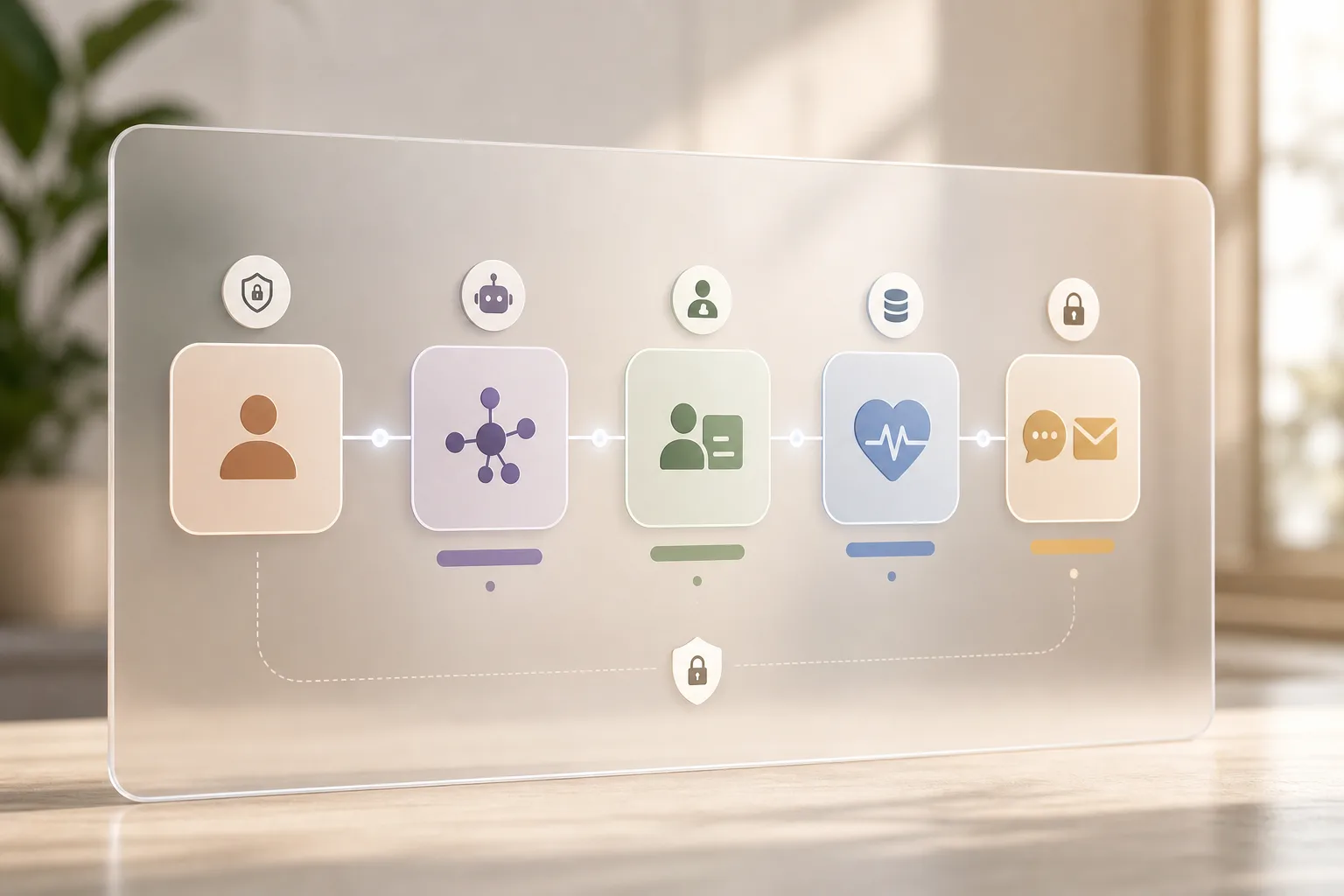
GlobussoftAI delivers system integration with CRMs and analytics tools while respecting clinical context. Data moves through defined flows with end-to-end encryption and role-based access. Moreover, runs can execute on a self-hosted server, so sensitive data stays under your control. That’s the core of ai-powered crm and business tool integration done right.
NLP Patient Triage and Voice
OpenClaw includes natural language processing systems plus Voice & Conversational AI. LLM-powered chatbots handle complex queries with human-like responses and safe escalation. In addition, you can fine-tune models on domain-specific data, so triage and follow-ups reflect your specialty and policies. This is not a one-size-fits-all bot; it’s tuned to your clinical voice.
Predictive Analytics and Retention Actions
Predictive analytics platforms plug into OpenClaw to flag risks and next-best actions. However, signals alone don’t help. Therefore, OpenClaw links predictions to CRM tasks, care gaps, and patient messages, all traceable in logs. Teams see fewer no-shows and better follow-through, because insights become scheduled work.
Multi-Agent Orchestration and Channels
OpenClaw supports Multi-Agent Orchestration. One agent can triage, another can draft a reply, and a third can update the CRM, all within guardrails. Instructions execution can happen through WhatsApp, Telegram, and email. In fact, you can trigger email management from a single WhatsApp message, which is great for on-call staff. Moreover, GitHub status reporting via a Telegram command helps IT track deployments with less context-switching.
Security-First Architecture
Security is built in: end-to-end encryption, role-based access controls, and a security-focused setup with access control and encrypted communication. Workflows can run on your self-hosted server for full data sovereignty. Over 1,000 hours of testing data were used to explore OpenClaw’s behavior and failure modes, and deployment follows enterprise-grade standards to keep changes predictable and safe.
For a deeper look at deployment patterns, see openclaw ai integration. You can also review a practical guide to patient messaging bots here: ai powered chatbot.
GlobussoftAI vs. Generic CRM Integration Providers
Generic automation stacks promise speed, but healthcare needs more than quick triggers. Compared to alternatives like Salesforce Health Cloud integrators or DIY setups on general automation tools, OpenClaw focuses on self-hosted control, healthcare-tuned NLP, and custom multi-agent design. Moreover, the core framework is free, a typical VPS is about $5/month, and total costs are usually under $10/month with AI model usage. That cost profile is hard to match while keeping data under your roof.
Where generic tools fall short is clinical nuance and access control. They sync fields but ignore who should see what and when. They run only in public clouds you don’t control. In contrast, OpenClaw runs autonomous workflows on a self-hosted server, with end-to-end encryption and role-based access out of the box. In 2026, that balance of control and price matters more than ever.
Key Differences at a Glance
| Area | OpenClaw (GlobussoftAI) | Generic Setups |
|---|---|---|
| Data control | Self-hosted option; full data sovereignty | Vendor cloud; limited control |
| Security | End-to-end encryption; role-based access | Basic app tokens; coarse roles |
| NLP | Healthcare-tuned; domain fine-tuning | Generic intents; limited tuning |
| Orchestration | Custom Multi-Agent Orchestration | Single-bot flows or simple triggers |
| Cost | Framework free; VPS ~ $5/mo; total usually < $10/mo | Licenses + add-ons; costs vary upward |
| Operations | Managed AI Operations available | DIY maintenance |
Furthermore, GlobussoftAI supports model training and fine-tuning on domain-specific data, so your triage and retention tasks respect your clinical language. The community signal is strong too: OpenClaw reached 100,000 GitHub stars in under eight weeks. If you need a partner to design, deploy, and support your AI agents instead of just handing you an API key, this matters.
Trust, Security, and Compliance Credentials
Security is non-negotiable in healthcare. GlobussoftAI builds with end-to-end encryption and role-based access controls as defaults, not add-ons. Workflows can run on a self-hosted server, which supports HIPAA alignment by keeping PHI inside your boundary. Moreover, enterprise-grade deployment standards govern how environments are set up, changed, and monitored.
Proof Points You Can Validate
Over 1,000 hours of testing data were used to explore OpenClaw’s behavior, edge cases, and failure handling. As a result, the team can show how the system behaves under load, during concurrent sessions, and when failures are injected on purpose. Furthermore, the open-source model brings full code transparency. Your security team can audit before rollout and during upgrades.
Community and Outcomes
OpenClaw reached 100,000 GitHub stars in under eight weeks, which shows remarkable developer interest and peer review. Businesses that add AI services of this kind report up to a 40% reduction in operational costs and a 30% increase in productivity. While every clinic is different, the architecture supports the same goals: fewer manual steps, clearer audit trails, and faster patient responses.
Therefore, if you need a partner who prioritizes risk reduction and operational efficiency, GlobussoftAI aligns with how clinical IT teams run change.
Also Read!
GlobussoftAI OpenClaw vs Botpress for Fintech: Which Is Better for Custom AI Chatbot Building?
Getting Started: Onboarding Your Healthcare CRM Integration
Rolling out AI in a clinic should feel controlled and calm. GlobussoftAI offers professional deployment and installation with security-first defaults. Moreover, the team provides performance optimization to ensure process efficiency, plus AI/ML consulting to build a roadmap you can defend in a review board. Throughout, the goal is a safe ai-powered crm and business tool integration that your staff can trust.
Step-by-Step Onboarding
-
Initial consultation: Define goals, risk posture, and data boundaries. 2) EHR/CRM audit: Map fields, APIs, rate limits, and role structures. 3) Security configuration: Set encryption, access control, and audit logging.
-
Pilot deployment: Run a 2–4 week pilot with scoped workflows and KPIs. 5) Staff training: Enable clinical and ops teams with clear playbooks. 6) Ongoing optimization: Add custom development for workflow automation and AI-driven reporting as results emerge.
As a result, your team sees value fast, with a pilot that can grow into a stable program without a re-architecture later.
Frequently Asked Questions
How much does AI CRM integration for healthcare typically cost?
The OpenClaw framework is free. A typical VPS is about $5 per month, and total costs are usually under $10 per month with AI model usage. Professional deployment and customization are scoped per project, based on your EHR and workflows. Compared to legacy vendors with five-figure annual contracts, this approach keeps fixed costs low and control high. Moreover, the self-hosted option can reduce third-party fees tied to PHI volume.
Is the integration HIPAA-compliant?
A self-hosted architecture means patient data stays on your servers. End-to-end encryption, role-based access controls, and a security-focused setup support HIPAA alignment. However, compliance is a program, not a product toggle. Therefore, always confirm the final design with your compliance officer and document the safeguards in your HIPAA risk analysis.
Can AI CRM integration work with our existing EHR system?
Yes. GlobussoftAI offers integration services designed to fit into existing systems including EHRs, CRMs, and analytics tools. Custom development ensures the data model and sync rules match your stack. Moreover, the team plans for API limits, sync frequency, and audit trails. As a result, you avoid brittle mappings that break during upgrades.
How accurate is the AI for patient communication and triage?
NLP systems are fine-tuned on domain-specific data so they speak your clinical language. Over 1,000 hours of testing data were used to validate how OpenClaw agents behave. LLM-powered chatbots can handle complex queries with human-like responses, and human escalation paths are built in. Furthermore, logs and feedback loops help you improve responses over time.
What alternatives to GlobussoftAI exist for healthcare CRM integration?
Salesforce Health Cloud and generic automation tools like n8n or Zapier are common alternatives. They may work for basic syncs, but they lack self-hosted data control and healthcare-specific multi-agent orchestration. OpenClaw provides those at a fraction of the cost, with a framework that is open-source and auditable. If your compliance team needs full control, this difference matters.
How long does implementation take?
Professional deployment covers installation, integration, and security configuration. Typical pilot deployments run 2–4 weeks with scoped workflows and KPIs. Moreover, scalability planning is part of the onboarding, so you can grow without rebuilding. After the pilot, you can expand channels and workflows in phases you can support.
Can this handle multi-channel patient engagement?
Yes. OpenClaw executes instructions through WhatsApp, Telegram, and email. Email management can even be automated via a single WhatsApp message, which helps staff on the move. Voice & Conversational AI also supports phone-based interactions with clear escalation. Furthermore, all actions route back to your CRM for tracking.
Is GlobussoftAI open source? Can we audit the code?
OpenClaw is an open-source AI agent framework that reached 100,000 GitHub stars in under eight weeks. Full code transparency allows your security team to audit before deployment. Moreover, enterprise-grade deployment standards guide how environments are set up and changed. As a result, upgrades are repeatable and documented.
Final Takeaways
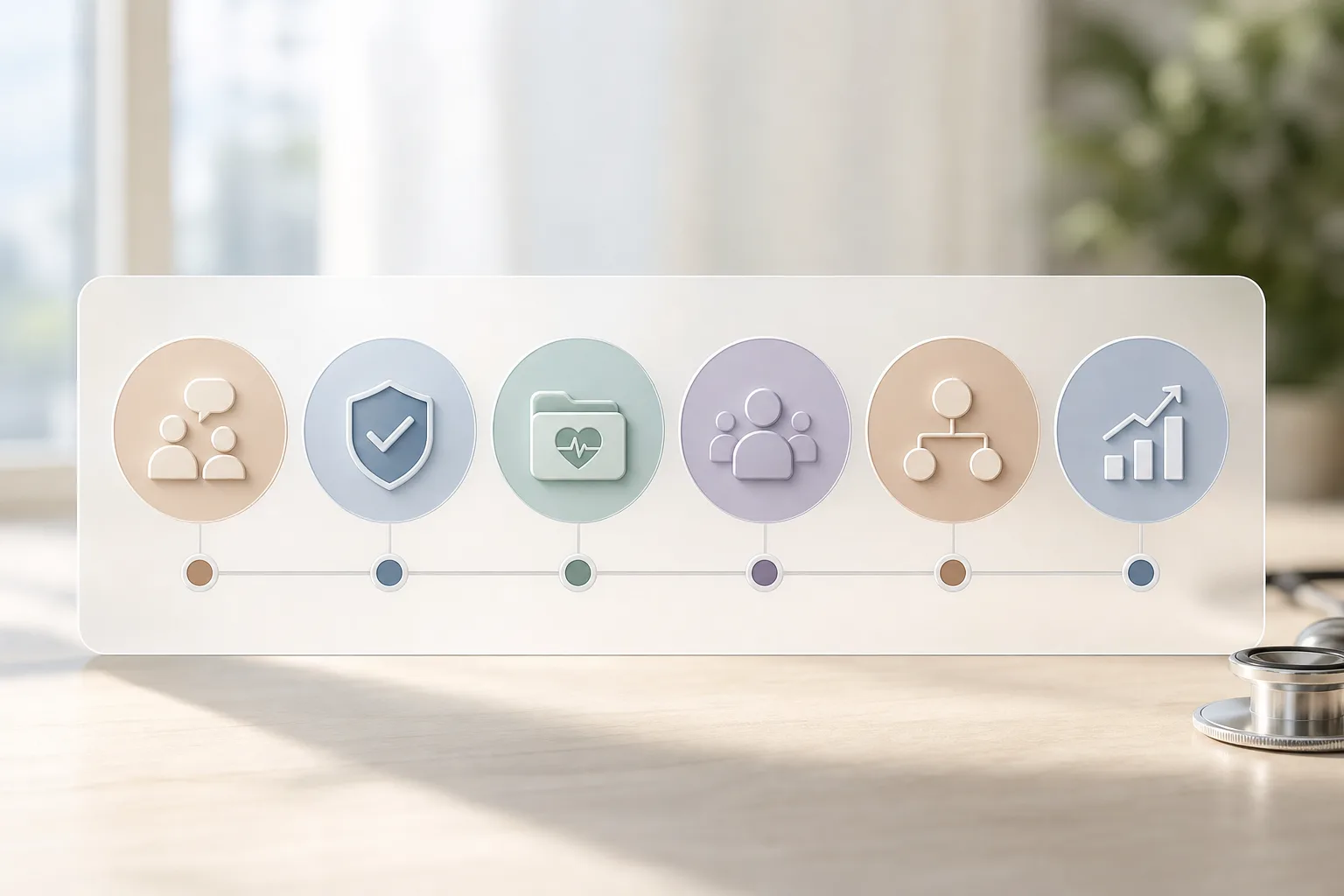
- Security first: End-to-end encryption, role-based access, and self-hosted options help align with HIPAA and cut third-party risk.
- Real outcomes: Up to a 40% cost reduction and a 30% productivity increase are possible with the right design and rollout.
- Built for 2026 and beyond: Healthcare-specific NLP, predictive analytics, and Multi-Agent Orchestration turn insights into action across channels.
If you want a safer path to AI in your CRM and EHR stack, GlobussoftAI’s OpenClaw services give you the control and clarity to move fast without loose ends.
Schedule a secure discovery call →
Moreover, if you prefer to start hands-on, you can explore deployment options and planning steps here: ai integration.