

Up to 40% lower operating costs come from AI-powered CRM and business tool integration, but only if your AI speaks the same language as your CRM and core banking stack. The best service for fintech in 2026 runs on your infra, locks down data by design, and gives you audit trails your risk team will accept.
This guide explains how AI-powered CRM and business tool integration should work for regulated stacks, and why GlobussoftAI OpenClaw is built for that job. You’ll see where generalist tools help, where they fall short, and how to deploy a secure, self-hosted pilot in days, not quarters.
Businesses implementing AI services report up to a 40% reduction in operational costs and 30% increase in productivity. Those gains are real when your agents can read from, write to, and orchestrate actions across CRM, KYC, and support channels without breaking compliance boundaries. In 2026, the winners ship safe automation fast while staying audit-ready.
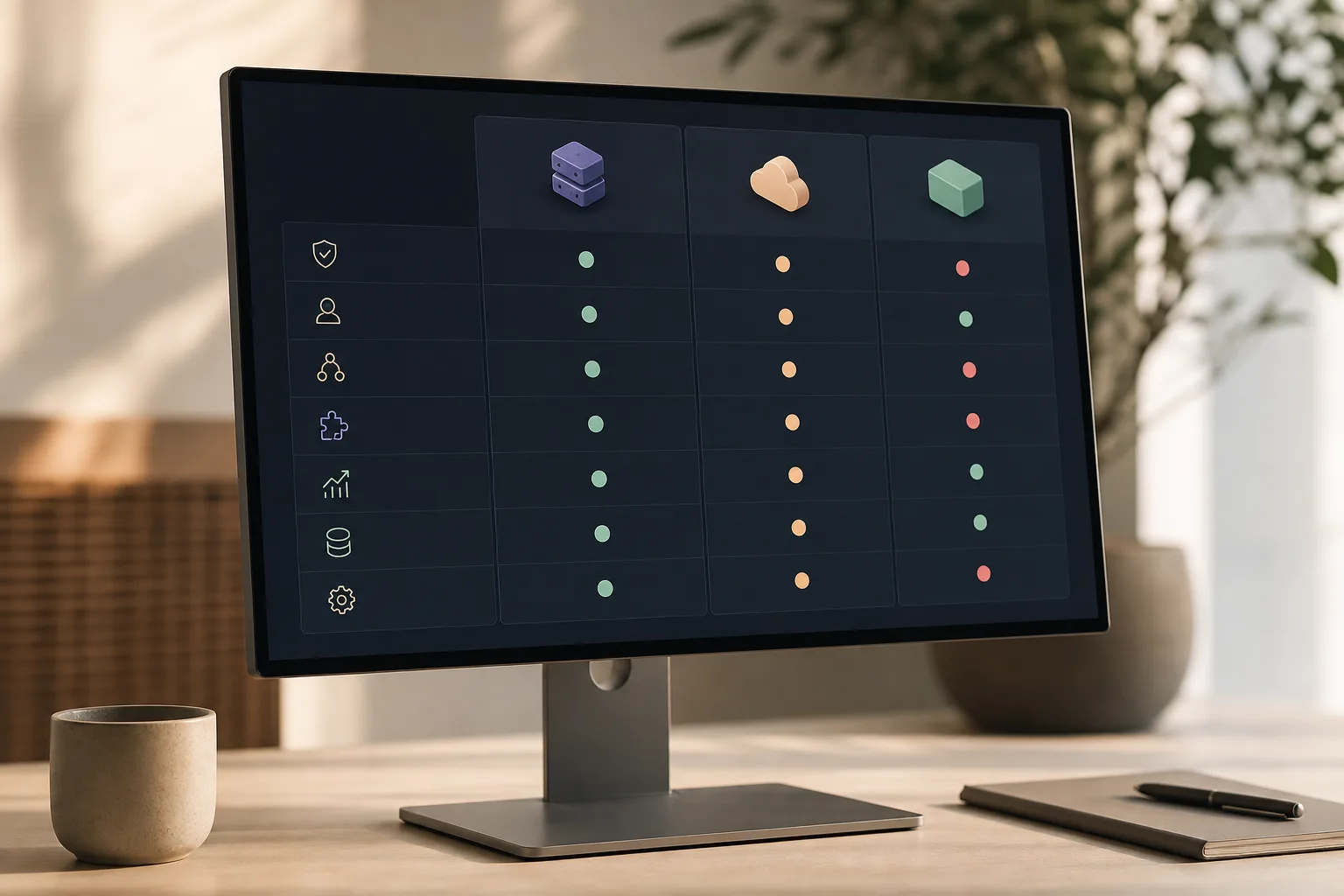 , data residency, cost under $10/month, channels (WhatsApp, Telegram, email), and predictive analytics; muted fintech blues and greys; enterprise UI style)
Why Fintech Companies Struggle with CRM Integration
Fintech stacks are stitched from old and new parts. You have a modern CRM on top, a core system from another decade underneath, and point tools for risk, support, and growth. Data lives in silos. APIs don’t line up. And your agents need to act in real time when risk or service events spike.
Compliance adds drag by design. For example, KYC checks require context that sits across onboarding, support chat, and transaction logs. According to Know Your Customer (KYC) standards, you must verify identity and watch for risk patterns. However, those checks spread across tools and teams. The result is manual swivel-chair work and missed SLAs.
Legacy cores make it harder. Mainframes and home-grown services expose limited endpoints. Rate limits, batch jobs, and overnight syncs block “instant” AI actions. As a result, your CRM has a stale view, your bot can’t resolve the case, and your agent asks the user to wait. That hurts trust and NPS.
Real-time needs clash with risk controls. You need sub-second scoring for fraud flags, but you also need approval gates, audit logs, and data residency. So teams create shadow spreadsheets, local caches, and one-off scripts that break when traffic doubles. Then your AI agents stall just when you need them most.
The fintech-specific friction points
- Multiple data owners and legal bases across onboarding, support, and risk
- Channel sprawl (WhatsApp, Telegram, email, phone) with no single source of truth
- Strict access rules that block bots from reading or writing sensitive fields
- High-volume spikes
To unlock value, you need an integration service that respects the constraints. It must route actions across channels, keep an append-only trail, and isolate secrets with role-based access. And it must align with AI-powered CRM and business tool integration patterns without forcing your data out of your control.
What to Look for in an AI CRM Integration Service for Fintech
Start with security that meets your bar on day one. End-to-end encryption for data in transit and at rest is table stakes. Role-based access controls (RBAC) must scope every action: which agent can read PII, which can write a KYC field, and who can approve a payout note. Without both, your risk team will block the project.
Next, insist on predictive analytics that help the business. Churn and risk scoring should run against your own signals, not a generic template. Models need a clear path to training on domain-specific data you already have. Otherwise, your scores won’t beat simple rules, and your team won’t trust them.
Customer support is where AI earns keep. Natural language processing should let agents and bots triage, classify, and resolve complex queries with clear confidence scores. Importantly, the system must escalate with full context and an audit log. That keeps human-in-the-loop guardrails in place.
Scalability matters in fintech because load isn’t linear. The system must handle high-volume loads, concurrent sessions, and failure injection scenarios. You want to see back-pressure, retries with jitter, circuit breakers, and dead-letter queues. Furthermore, you need run-comparison tooling so you can test agents against traffic snapshots before a change goes live.
Self-hosted control and multi-channel orchestration
Self-hosted options protect data sovereignty. In many regions, data cannot leave your boundary for KYC, AML, and PII fields. A service that runs autonomous workflows on your own server avoids cross-border exposure and allows full code audit. That helps you meet GDPR data residency rules while keeping the stack under your SOC 2 scope.
Finally, your users live across channels. The service should unify WhatsApp, Telegram, and email under a single orchestration layer. It should post updates back to CRM, kick off ticket workflows, and trigger risk checks without manual steps. In short, your agents should act on data, not just move it.
Tie these checks together, and you have an evaluation plan that fits AI-powered CRM and business tool integration in a regulated shop. If a vendor dodges any one of these, expect delays, exceptions, and rework later.
Also Read!
How to Build a Custom AI Chatbot for Your Small Business
OpenClaw vs Tidio for Small Businesses: Which Is Better for Custom AI Chatbot Building?
How GlobussoftAI OpenClaw Solves CRM Integration for Fintech
GlobussoftAI OpenClaw is an open-source AI agent framework with a security-first setup. It ships with encrypted communication, access controls, and deployment patterns that fit enterprise change windows. Because it runs on your infra, sensitive data stays within your compliance perimeter.
OpenClaw connects to major CRMs and analytics tools through system integration services. Once connected, its predictive analytics platforms score churn and risk with features tuned for fintech signals. You can train and fine-tune models on domain-specific data to reflect your fraud vectors and customer behavior.
On the front line, chatbots powered by Large Language Models handle complex queries. They read prior tickets, account notes, and recent transactions, then suggest actions with confidence and reasons. When confidence drops, they escalate with full context to a human. As a result, support gets faster while staying safe.
Multi-Agent Orchestration is where OpenClaw shines. One agent can monitor KYC doc status, another can read sentiment in WhatsApp threads, and a third can post clean summaries into your CRM. Together, they enforce checks and log each step. That way, you get auditable, autonomous workflows instead of brittle glue code.
“We needed strict controls, not black-box bots. OpenClaw’s encryption, RBAC, and audit logs gave risk the comfort to sign off — and support times dropped fast.”
Channel unification and instruction execution
OpenClaw executes instructions through WhatsApp, Telegram, and email natively. A risk agent can ask for a new proof-of-address on WhatsApp, store the file link with encrypted metadata, and mark the CRM task done, all with one traceable workflow. Meanwhile, a support agent can send a compliance-approved email draft from the same framework.
Security is not an afterthought. The setup includes access control, encrypted communication, and environmental parity for consistent test results. Over 1,000 hours of testing data was used to validate OpenClaw capabilities. That depth matters when you must prove change control and repeatability to your auditors.
Cost control is clear. The core framework is free, a typical VPS runs around $5/month, and total costs are usually under $10/month with AI model usage. In practice, businesses implementing AI services report up to a 40% reduction in operational costs and 30% increase in productivity. With OpenClaw, that saving comes without giving up data control.
Moreover, the community signal is strong. OpenClaw reached 100,000 GitHub stars in under eight weeks. For a fintech CTO, that means more eyes on the code and faster fixes. And if you want help, GlobussoftAI offers professional deployment, custom multi-agent design, and managed AI operations.
For architectural details and service menus, see the OpenClaw AI integration overview. You’ll find deployment patterns that map to AI-powered CRM and business tool integration without moving PII out of your boundary.
See a guided demo →
GlobussoftAI vs. Generic AI Integration Platforms: What's Different for Fintech
Generic iPaaS tools like Workato and MuleSoft excel at broad connector catalogs. They move data between hundreds of apps. If you need a quick sync between a CRM field and a billing system, they do that well. However, they focus on transfer, not on AI agents that act with context.
Horizontal AI CRMs, such as Salesforce Einstein, add predictive features inside their own suite. That’s helpful if you run fully on their platform. But if your data lives in a bank-grade boundary with a legacy core, a separate risk engine, and strict data residency, sending PII to a SaaS model is a blocker.
OpenClaw takes a different path. It’s an open-source AI agent framework that you can self-host. The core framework is free; a typical VPS costs around $5/month; and total costs are usually under $10/month with AI model usage. That cost profile is rare among generalists, where per-seat or per-connector pricing can balloon as you grow.
Where generalists win — and where OpenClaw fits
- Ecosystem breadth: Workato and MuleSoft win with hundreds of connectors.
- Deep suite ties: Salesforce Einstein shines inside its own CRM stack.
- Data sovereignty: OpenClaw wins with self-hosted control and full code auditability.
- Finetuning on domain data: OpenClaw supports model training and fine-tuning aligned to fintech risk and service signals.
OpenClaw’s Multi-Agent Orchestration is purpose-built for compliance workflows. Agents check KYC statuses, tag AML review notes, and post audit-ready summaries into your CRM. Compared to alternatives that only sync fields, this means your AI doesn’t just pass data along, it completes the next step safely.

If you want a side-by-side on channel automation and cost, the ecommerce-focused benchmark still offers helpful context: GlobussoftAI OpenClaw vs HubSpot AI for Ecommerce: Which Is Better for AI CRM Integration? The domain differs, but the trade-offs on self-hosting and model control apply to fintech as well.
For stacks built around regulated data, ai-powered crm and business tool integration should let you act across channels without handing your crown jewels to a vendor. That’s the gap OpenClaw fills.
Trust, Security, and Compliance Credentials
Security must be concrete, not a slide. OpenClaw includes end-to-end encryption and role-based access controls for enterprise security. You can scope agent permissions to specific fields and actions. Then you can export logs to support investigations and audits without extra code.
Testing and repeatability matter. Over 1,000 hours of testing data was used to explore OpenClaw’s features and edge cases. Environmental parity ensures that what you test in staging behaves the same way in production. That reduces regressions, which is key for safe rollouts under change control.
Scale is planned, not guessed. OpenClaw includes scalability planning for long-term growth and tools for run comparisons. You can push failure injection scenarios, watch circuit breakers trip, and confirm graceful retries under load. That helps you meet uptime goals even on peak payout days.
Built for regulated expectations
Open-source framework enabling full code auditability for regulated industries is a core advantage. Your security team can review the code path that handles PII. Data residency rules under the General Data Protection Regulation (GDPR) are easier to meet with a self-hosted design. And if ISO 27001 is in scope, OpenClaw’s RBAC and encryption patterns align with common controls.
Social proof helps too. The project reached 100,000 GitHub stars in under eight weeks. That level of community attention raises issues fast and drives quick fixes. Pair that with end-to-end encryption and RBAC, and you have a security story your board will understand.
All of this supports a fintech-ready path to AI-powered CRM and business tool integration while keeping your data and logs where they belong.
Also Read!
Getting Started: Deploying AI CRM Integration for Your Fintech Stack
A good rollout starts small and proves value fast. You don’t need a nine-month migration. You need a scoped pilot that touches one customer journey end to end, with clear controls and measurable wins.
First, run a short discovery. Audit your CRM, data sources, and event flows. Mark the PII fields, note which systems are the source of truth, and list the SLAs you must hit. Then define your compliance constraints so every step stays inside the line.
Next, deploy OpenClaw on a self-hosted VPS. The core framework is free and runs on modest hardware. A typical VPS costs around $5/month. Keep production keys in a vault, and set up RBAC early so only the right agents can read PII or write CRM fields.

Your five-step onboarding plan
- Step 1: Audit systems and data. Map sources, sinks, PII fields, and SLAs.
- Step 2: Define constraints. Document KYC/AML, residency, and approval gates.
- Step 3: Deploy OpenClaw. Self-host on a VPS with encryption and RBAC.
- Step 4: Integrate tools. Connect CRM and analytics; test end-to-end paths.
- Step 5: Fine-tune models. Train on domain data and iterate with real cases.
GlobussoftAI offers professional deployment and installation if you want a guided start. You can also get AI/ML consulting to build the roadmap, plus smooth integration services to fit AI into your current stack. Managed AI Operations keep things healthy after launch with performance tuning and support.
For extra background on patterns and pitfalls, this guide expands the playbook across industries: AI integration patterns and trade-offs. You can also review our 2026 primer for a broader view of AI-powered CRM and business tool integration goals in other verticals: 2026 integration guide. Both will help you pick the right first use case.
A tight pilot with one journey, say, “KYC refresh through WhatsApp with CRM updates and audit logs”, lets you show results fast while keeping risk low. That is how you build support for the next phase.

Frequently Asked Questions
How much does AI CRM integration for fintech typically cost?
OpenClaw’s core framework is free and open source. VPS hosting runs about $5/month, and total costs are usually under $10/month for the framework with model usage. Engineering time for deployment and tuning is a separate line item. Professional services and managed operations are quoted per project scope.
Can an AI CRM integration service meet fintech compliance requirements like KYC and AML?
Yes. With self-hosted deployment, end-to-end encryption, and role-based access controls, you can keep sensitive fields inside your boundary. OpenClaw runs on your own infrastructure, so PII and audit logs stay within your compliance perimeter. You still define the legal basis and retention per policy, but the framework supports those controls.
How does AI CRM integration differ from traditional CRM middleware like Zapier or MuleSoft?
Traditional middleware moves data between systems with triggers and actions. AI CRM integration adds predictive analytics, NLP-powered customer interactions, and autonomous multi-agent workflows. These agents act on data, post results back to CRM, and keep a traceable log. That shift turns syncs into outcomes while preserving guardrails.
What CRM platforms does GlobussoftAI OpenClaw integrate with?
OpenClaw provides system integration with major CRMs and analytics tools through its services team. If you use a legacy or custom platform, custom development bridges the gap. The focus is on safe reads and writes, with audit and rollback in mind. That way, actions count and remain reviewable.
Is the open-source framework secure enough for financial data?
OpenClaw includes a security-focused setup with encrypted communications and access controls. Over 1,000 hours of testing data were used to validate behavior and edge cases. With 100,000 GitHub stars in under eight weeks, the code has heavy community scrutiny. You still own hardening, but the defaults align with enterprise norms.
How long does a typical fintech AI CRM integration take to deploy?
A basic deployment with professional installation can be live within days. Adding custom multi-agent design, model fine-tuning on domain data, and compliance setup usually takes 4–8 weeks. The timeline depends on connector complexity, risk reviews, and change windows. A single-journey pilot helps shorten approvals.
What alternatives to GlobussoftAI exist for fintech CRM integration?
Salesforce Einstein, HubSpot AI, and Workato are common choices. They offer broad ecosystems and fast wins if your stack fits their guardrails. They don’t support self-hosting or full code audit in most cases, and per-seat costs can rise. OpenClaw’s open-source model fits teams that need data sovereignty and custom agents.
Can the AI handle real-time customer interactions across WhatsApp and Telegram?
Yes. OpenClaw executes instructions through WhatsApp, Telegram, and email natively. Your agents can manage customer queries, trigger CRM updates, and kick off reviews from one place. That unifies service work while keeping messages and outcomes linked to audit logs.
The Bottom Line
- Self-hosted agents with encryption and RBAC give you control and audit trails that pass scrutiny.
- Predictive scoring, NLP for support, and multi-agent orchestration turn data flows into safe, useful actions.
- A small, scoped pilot proves value fast while staying inside KYC, AML, and GDPR lines.
If you want a hands-on walk-through of your stack, we’re happy to map your first safe win and build from there.
For a broader strategy view across teams, you might also like this primer: Generative AI for Business. It pairs well with AI-powered CRM and business tool integration so you can pick the right next step.